Gassing up tires with nitrogen

Racing has used exotic gasses like nitrogen for years, especially F1. The Nitrogen molecules are larger than those of most other atmospheric gasses, so they don't tend to migrate through same gaps that the others do.
Nitrogen is also pretty inert, so no oxidation of surfaces.

On the other hand, you could accomplish pretty much the same thing by checking your tire pressure more often...

Which brings me to a minor rant...We are constantly being told that properly-inflated tires are better for gas mileage, tire life, the environment, world peace, etc.
Why then, is it so hard to find a service station with a properly-functioning air supply? If the things work at all (I once visited three stations in a row with broken air pumps) they put out so little pressure that it takes 5 minutes to fill one tire, and then they want to charge you for it!
If I had a secure garage, I'd buy a compressor in a minute, but no such luck.
 
Why then, is it so hard to find a service station with a properly-functioning air supply?

Perhaps this is another fine argument in favor of nitrogen? :D
 
Popular Mechanics has an interesting article on this topic.

Where can you get a compressor that will do this?

I wonder how long it will take your tires to become completely flushed of oxygen?
 
Isn't air 78% nitrogen anyway?

Seems easier just to moniter and maintain tire pressure.
 
I have the problem with our Dodge Stratus and the low wall tires of going up and down constantly, just like our weather.

That is the main reason I am interested. I am not going to take the time to gauge my tires every week. Lazy, but the truth.
 
Article's Author said:
“Nitrogen?” I asked. “Isn't that the stuff that was in the Hindenburg?”

If he really asked that question, I'm very skeptical about anything this guy writes.

(On the other hand, if he's just throwing that in to make sure that readers aren't confused and for a little humor, he's my kind of guy.)
 
costco puts it all their tires...dosen't get as hot ...the compressor they have removes the oxygen from the air before compressing it. they claim
that soon it will be standard...insurance,liability,safety etc..
hindinberg was filled with flatulence...ask his roomate from college.
 
Hmmm.....We have a 30-foot tall storage cylinder of the stuff at the university, right next to the physics department. Wonder if the hose will fit schraeder valves....
 
When I was in the Navy (1988-1992) we would fill the A-6E (intruder) aircraft tires with nitrogen, no contraction due to the cold, no expansion due to the heat. if I remember correctly was 400 psi for the main landing gear (under the wings) and 300 psi for the nose.
 
lizardman_u said:
When I was in the Navy (1988-1992) we would fill the A-6E (intruder) aircraft tires with nitrogen, no contraction due to the cold, no expansion due to the heat. if I remember correctly was 400 psi for the main landing gear (under the wings) and 300 psi for the nose.


Did they repeal the gas law aboard ship? PV=nRT

I think it doesn't get rid of the expansion/contraction it limits it.

Paul
 
The nitrogen does not contract and expand as much as other gasses and especialy water vapor. Very important for consistensy in demanding situations, not to big a deal for most commuters. Good stuff for paintball too, Doesn't lose pressure like CO2 at rapid fire.
 
mwerner said:
Racing has used exotic gasses like nitrogen for years, especially F1. The Nitrogen molecules are larger than those of most other atmospheric gasses, so they don't tend to migrate through same gaps that the others do.
Nitrogen is also pretty inert, so no oxidation of surfaces.

On the other hand, you could accomplish pretty much the same thing by checking your tire pressure more often...

Which brings me to a minor rant...We are constantly being told that properly-inflated tires are better for gas mileage, tire life, the environment, world peace, etc.
Why then, is it so hard to find a service station with a properly-functioning air supply? If the things work at all (I once visited three stations in a row with broken air pumps) they put out so little pressure that it takes 5 minutes to fill one tire, and then they want to charge you for it!
If I had a secure garage, I'd buy a compressor in a minute, but no such luck.

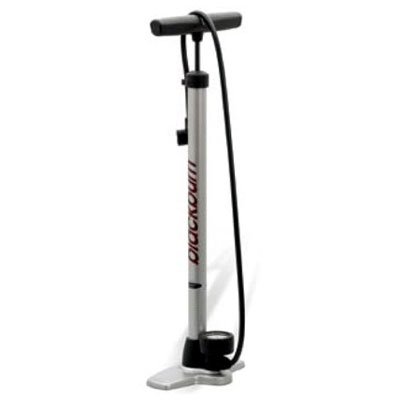
You can pump up a regular car tyre with a bicycle stand pump in less than 5 minutes, to top off would take 1 min tops.

$30.00 at Amazon

B000BNXKXA.01-A3N0HBHR81I3U1._SCLZZZZZZZ_.jpg
 
Sears sells a very nice electric air pump that plugs into your cigarette lighter. It has a detachable air pressure meter included and it costs about $35. I keep one in each car.
 
lizardman_u said:
When I was in the Navy (1988-1992) we would fill the A-6E (intruder) aircraft tires with nitrogen, no contraction due to the cold, no expansion due to the heat. if I remember correctly was 400 psi for the main landing gear (under the wings) and 300 psi for the nose.

Quite right. Although, IIRC, we would only run those high pressures when going to the boat. For normal airfield ops the pressures would be considerably lower.

Another advantage to putting nitrogen in your tires is that, due to the absence of oxygen and water, the rubber itself isn't being attacked from the inside out. This is especially important for folks that don't drive that much or who have secondary vehicles, trailers, RVs or motorcycles that sit idle for extended periods of time.
 
Back
Top