

- Joined
- Sep 14, 2006
- Messages
- 4,409
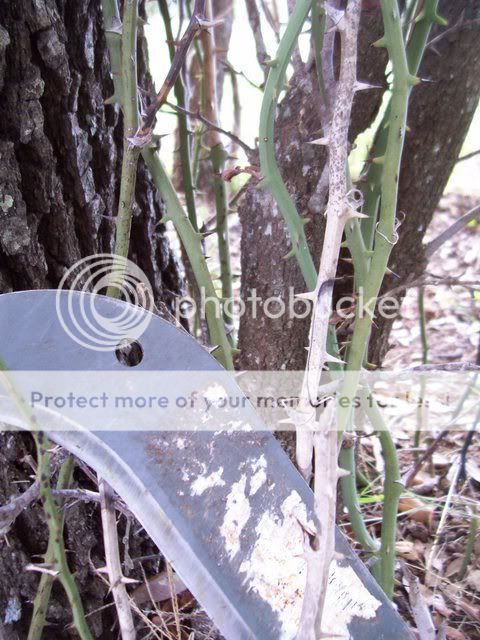
I use these all the time around our property. We have a horrible sort of brier that grows up inside the drip line of the oaks that are all over our property, they are tough and thorny and evil, and I hate them. I've been on an ongoing battle against them using various sizes of brushhook, the Gerber/Fiskers version being the smallest.
I prefer these types of tools to more traditional big knives like khuks or goloks for brier clearing because the hooks have, well, hooks! They are also inexpensive and quite tough.
The cutting I do often requires me to chop very close to the ground, and you never know what will be lurking in the brush. Could be fence posts, wire fencing, cable, or rocks, but the brush hook has an advantage over standard shaped blades in a couple of areas. First, they grab these tough, thorny devils and don't let them go until they are cut. Standard blades often just push the vines out of the way without cutting. Also, the tip of the hook usually will impact whatever object might be unseen, rather than wrecking the nice edge.
The brush tool is made of some kind of stainless steel, and it usually has a grayish coating as well. The handle is a hollow plastic which is nicely formed and lightweight. The knife blade is about 1/8th" thick.
The blade steel is pretty soft, I've not been able to break one. The edge will roll, but is easily resharpened. I usually do this on my belt grinder, but if you don't have one of those, a fine file will work as well.
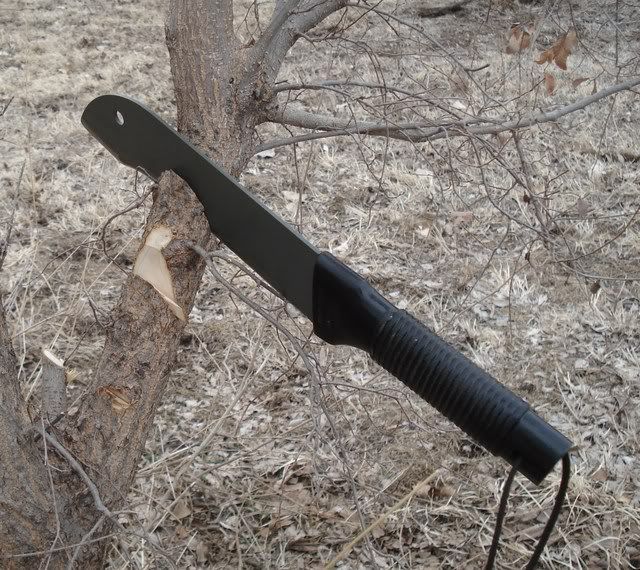
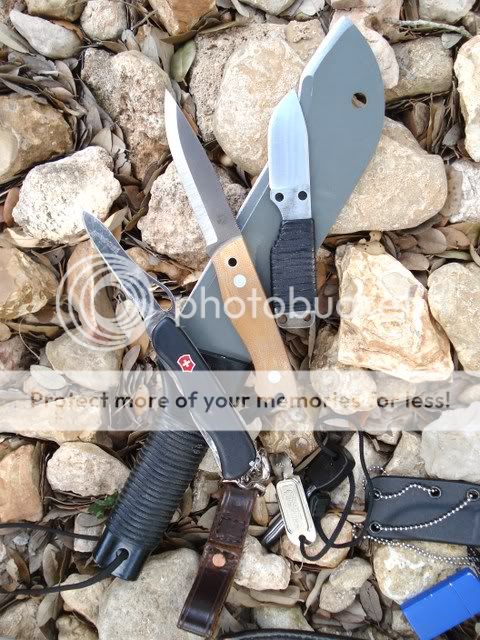
These hooks are also easily changed into something else, like a camp knife, which is what I've done here by just cutting off the hook and the end of the handle.
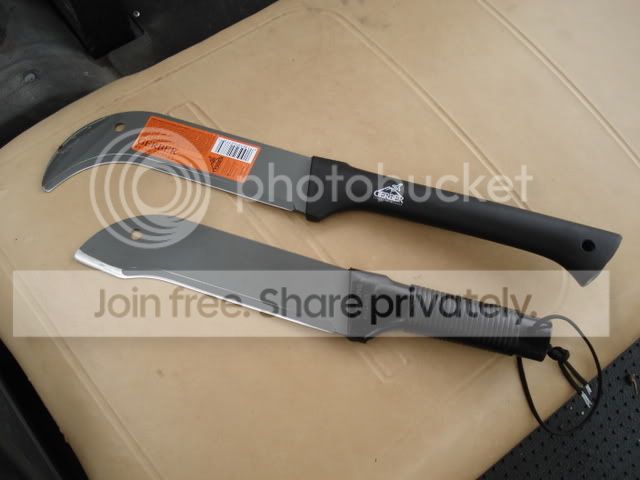
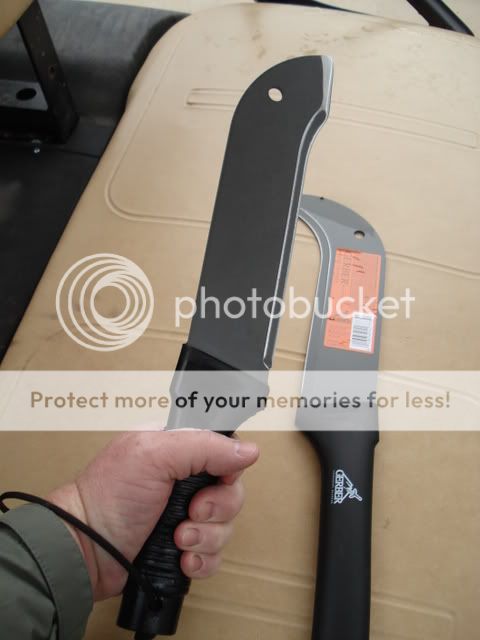
These tools could be of real interest to a person camping or hiking. They are lightweight, lighter than a hatchet of similar length. They are tough. They can be used to dig, or to clear a campsite. They can baton.
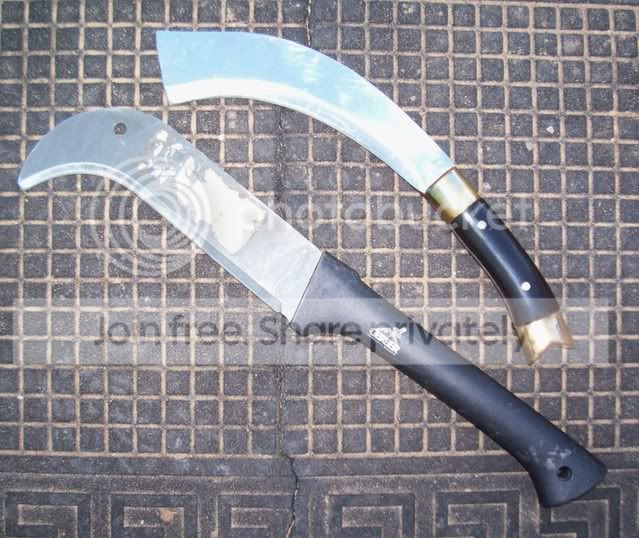

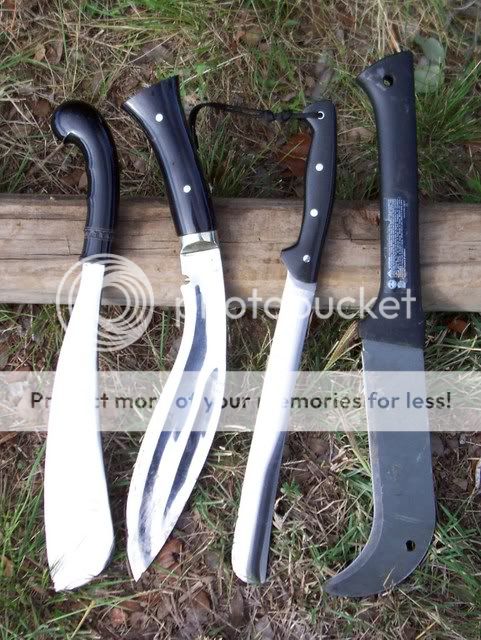
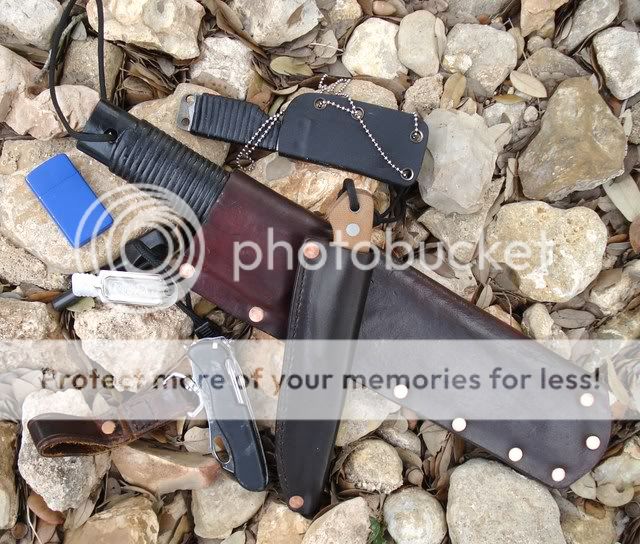
They are ugly and have no soul. But I keep coming back to them for the particular work I do so much of around our place, clearing brush. A downside to these blades is that they are usually sold without any kind of sheath, but they can be found separately.
Andy
I prefer these types of tools to more traditional big knives like khuks or goloks for brier clearing because the hooks have, well, hooks! They are also inexpensive and quite tough.
The cutting I do often requires me to chop very close to the ground, and you never know what will be lurking in the brush. Could be fence posts, wire fencing, cable, or rocks, but the brush hook has an advantage over standard shaped blades in a couple of areas. First, they grab these tough, thorny devils and don't let them go until they are cut. Standard blades often just push the vines out of the way without cutting. Also, the tip of the hook usually will impact whatever object might be unseen, rather than wrecking the nice edge.
The brush tool is made of some kind of stainless steel, and it usually has a grayish coating as well. The handle is a hollow plastic which is nicely formed and lightweight. The knife blade is about 1/8th" thick.
The blade steel is pretty soft, I've not been able to break one. The edge will roll, but is easily resharpened. I usually do this on my belt grinder, but if you don't have one of those, a fine file will work as well.
These hooks are also easily changed into something else, like a camp knife, which is what I've done here by just cutting off the hook and the end of the handle.
These tools could be of real interest to a person camping or hiking. They are lightweight, lighter than a hatchet of similar length. They are tough. They can be used to dig, or to clear a campsite. They can baton.
They are ugly and have no soul. But I keep coming back to them for the particular work I do so much of around our place, clearing brush. A downside to these blades is that they are usually sold without any kind of sheath, but they can be found separately.
Andy


