How To Grinding order of operations, and heat treat advice requested

Joined
Aug 13, 2009
Messages
118
First off im a hobbyist, so excuse my ignorance but I’m working on a style of knife I have never made before and have a few questions. I’m attempting to make a Chris Reeve Shadow copy for myself while I search for a real one. I’ve done the majority of the machining and now need to grind the blade.
Does a guy typically grind the swedge before or after the blade? Secondly, the gentleman that normally does my heat treating told me he cant heat treat this knife because of the handle. I believe he said he “plate quenches” and the round handle won’t allow it. The steel is A2. So is there a specific type of heat treat I need to search out for this? Is there a work around the handle shape?
Thanks in advance

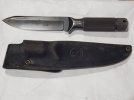
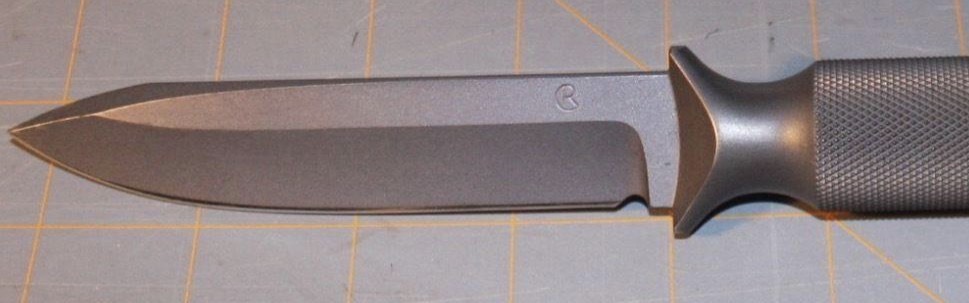
This is the blade I’m hoping to recreate:
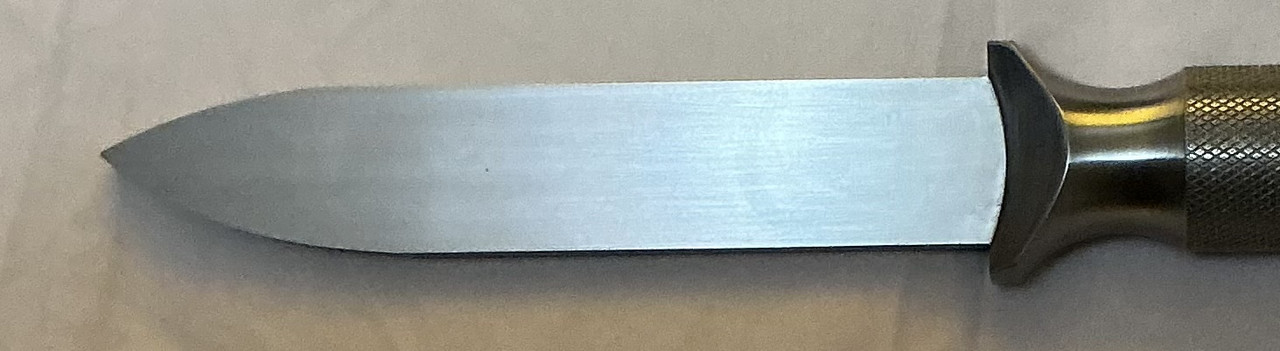
My progress so far:
 
Last edited:
I would grind the swedge first - I find it easier. I use an angle jig to keep the angle consistent and then I typically freehand the primary bevel.

For HT I would recommend looking for a facility that has a vaccum oven and will quench with gas overpressure in situ - that is what my facility does (as far as I understand).

Nice looking knife so far btw.
 
I would grind the swedge first - I find it easier. I use an angle jig to keep the angle consistent and then I typically freehand the primary bevel.
For HT I would recommend looking for a facility that has a vaccum oven and will quench with gas overpressure in situ - that is what my facility does (as far as I understand).

Nice looking knife so far btw.

Bos Heat Treating

Also agree about swedge first

For the O.P. your A2 steel is "air quenching" steel.
-thats what the A stands for.

Look for places that Air quench, NOT oil quench.
Like was said, vacuum might be best, but I don't think A2 warps much, idk if plates are absolutely required? Not sure.
 
The guy who normally does your heat treating could probably just plate clamp the blade portion leaving the handle exposed and get some air flow over it. Can always try it and see if it hardens well.
 
He didn’t seem interested in experimenting, he is busy and I think it wasn’t worth the hassle to him.
 
A-2 is quite stable in heat treat, but I would always prefer a plate quench vs air. And your heat treat guy would have no trouble using plates on the blade portion of that knife at all, as was mentioned above. Easy peasy lemon squeezy.

For whatever reason I have always done the swedge after the bevels have been ground, but there is no set rule.
 
Nice job on the replica!
Here's my CR Shadow. It saw a lot of use as my hunting knife a few years ago.
My only complaint is the handle ices up with water and blood when field dressing.
It was a custom I had them make because I wanted a single guard

20260316_113722.jpg
 
Beauty, I would love to find a 4” (shadow III) but they just don’t seem to pop up around here. Seems like the aviator is the most common one I come across and I’m not a big fan of sawteeth.

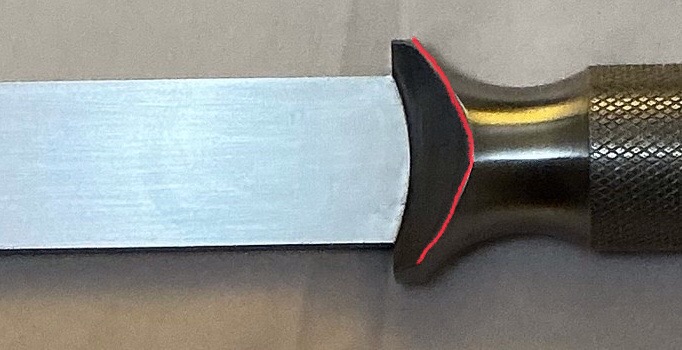
I would have loved to have had one to look over and measure when I started, but I just went off the general specs CRK listed and online pics. I believe they must have done some hand shaping around the guard, mine is as machined and the lines are sharper with some hotspots where the CRK appears to have softer more rounded edges - but without actually holding one it’s hard for me to pinpoint exactly what they did.
 
First off, thank you for the help. That said I’m not sure pictures will help in this situation- I think it’s one of those things that a guy needs to hold and look over. But it’s the line formed when you machine the blade flats into the round handle.

In pictures that line looks more pronounced on mine than real CRK. I think they must have done something to soften that edge.


I’m just not sure if it was machined, or hand done. It would surprise me if it was hand done, because of the extra time they would have spent blending it - but I also don’t see a super defined line that would indicate that they machined that transition. Just one of those secrets a guy wonders about… make me appreciate the CRK.

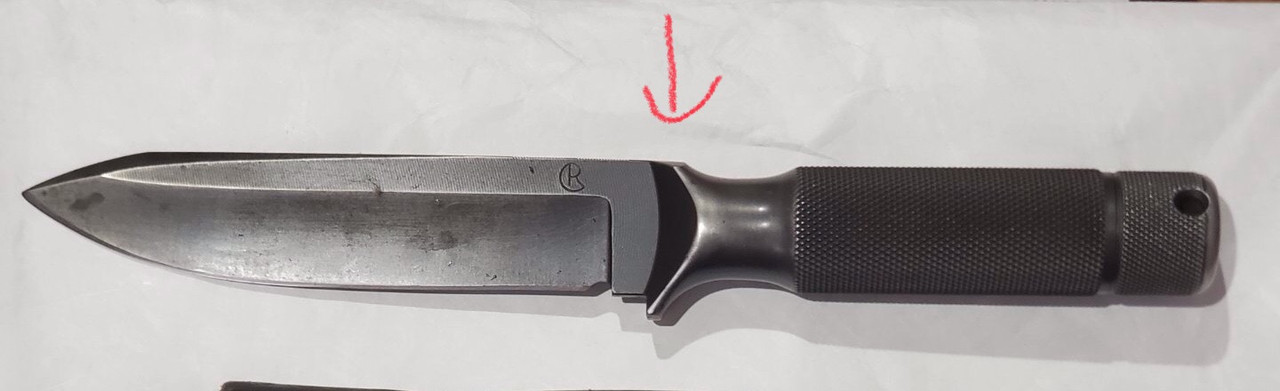
If it’s not too much to ask, maybe a picture straight down of the guard area of your shadow would help.
 
Last edited:
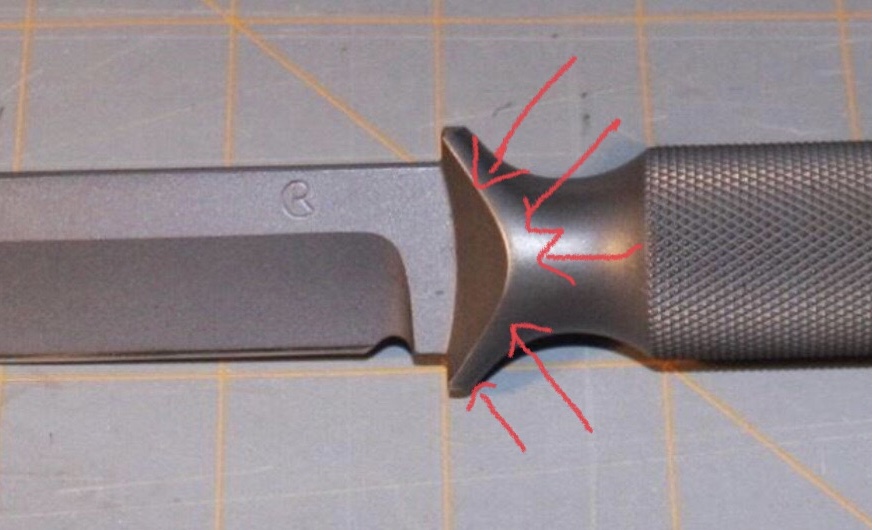
I have a 4" bladed Mountaineer I with the single guard and upon close inspection I do believe that line was blended out by hand. I can see a slight change in profile from the machined surfaces. There is some slight rounding on the end which makes me think it wasn't done in a machine. It is very nicely done, however.
 
I was about to say the same thing.
There is a slight variation from one side to the other.
A little blurry but you might be able to see the left side extends toward the handle slightly more.
I'll check with a micrometer later

20260317_113537.jpg
 
Last edited:
I usually have to fine tune the swedge several times and it is the last "touch-up" done before I say, "OK".
 
The knife (handles) turned in a lathe?
Could the softened line just been cleaned up with Emory cloth while spinning?
 
Possibly, and forsure worth a try but being so out of round it might be a bit of a rodeo. I will likely grind the blade before putting more time in the handle. My grinding skills aren’t great so there is a fairly good chance this whole thing will end up in the scrap bin yet.

Thanks to everyone for the help and suggestions, much appreciated
 
Okay I put a mic on it. The right side was sanded more than the left side which moved the shoulder towards the blade. The middle red arrow on the photo you posted earlier is of the left side but that shoulder is what I'm talking about.
I'd say it was done by hand.
 
Back
Top