"Hamon" on edge quenched 5160

Joined
Feb 28, 2011
Messages
131
I'll find out the answer soon enough, bit I thought I'd ask anyway because it's going to be 3-4 days until I can get back out to the shop.

I forged a blade out of 5160 and today I heat treated it. Two normalizing cycles, then I went to harden it. At the last second, I decided to edge quench it instead of just plunging the blade straight down into the oil. I dropped the edge into the oil for a long 5-count, then quenched the whole thing.

After I wiped off the oil, I put it straight into a 425 degree oven for an hour. When I took it out, it was obvious that there was a nice color transition between the 1/2" or so along the edge and the rest of the body of the blade. A clearly demarcated line, if you will. (Then I did a second tempering cycle, FWIW.)

Now I know I'm not going to have a true hamon in the sense of a wavy pattern caused by the patterned application of clay and all that, but I'm wondering if I'll wind up with a visible transition after I polish the blade up to 600 or 1000 grit wet/dry.

Any thoughts?
 
You should notice a transition zone on the blade. You will notice it better after you get it sanded back to 600 or so and do a light etch. After that, i would say take to at least 1000 grit and do light etch/polishing rounds on it. You wont see the true hamon, as in clouds, but you will notice a nice line running the length of the blade.
 
You should notice a transition zone on the blade. You will notice it better after you get it sanded back to 600 or so and do a light etch. After that, i would say take to at least 1000 grit and do light etch/polishing rounds on it. You wont see the true hamon, as in clouds, but you will notice a nice line running the length of the blade.

Thank you. I'll let everyone know how it turns out.
 
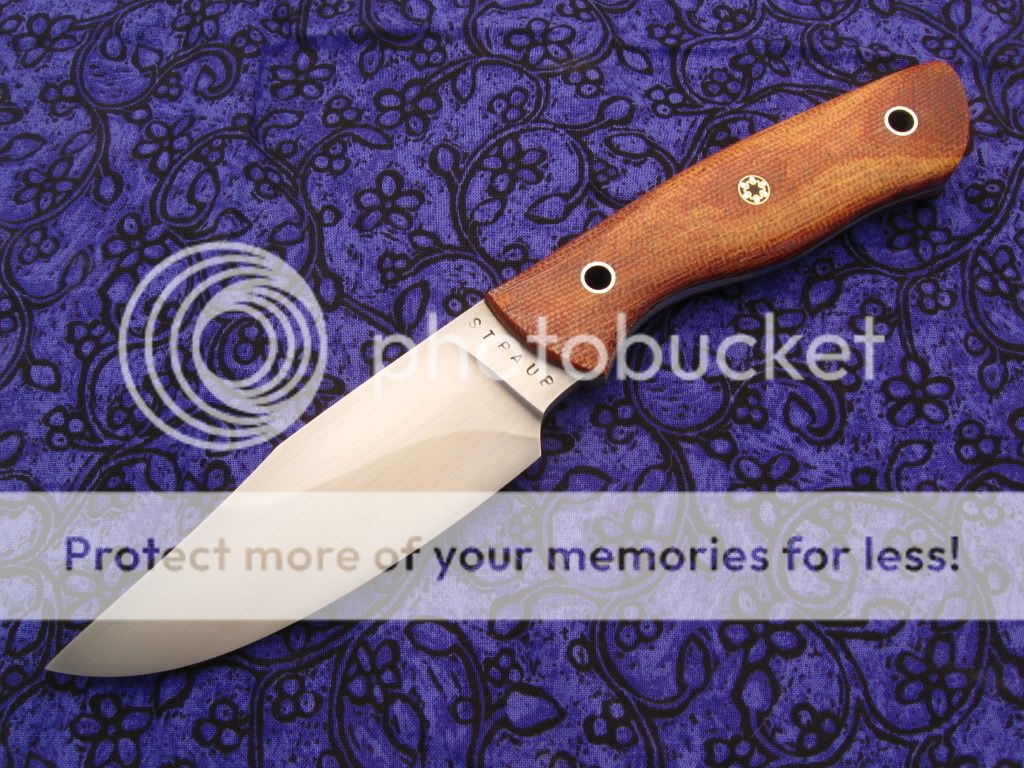
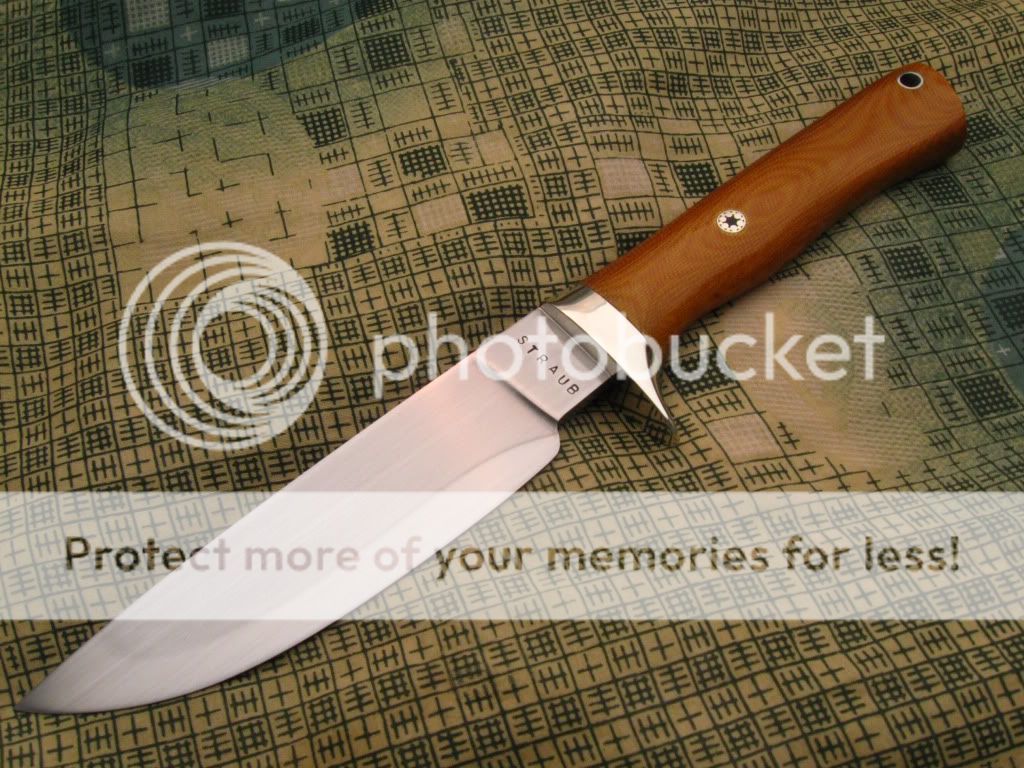
Like Don says, it would be a quench line- not really a hamon. Using 5160, it is possible to get quench lines that look pretty nice. Pics of a couple of mine are below- they were 5160, quenched using clay. The idea is not to actually let the spine get up to temp- so a much thicker clay coat. Edge quench lines look pretty similar to this, though.

IMG_5375.jpg


IMG_3032.jpg
 
Thanks, Salem. Man, those pics show some pretty quench lines! And the knives are nice looking, too. If you don't mind me asking, what method do you use when you finish your knives to make the quench line/hamon pop so vibrantly...or does it just naturally do that when you sand and buff the blade? (The reason I ask is I seem to remember reading something about talc and pumice and some other stuff that's more involved than just high-grit wet/dry sandpaper.)
 
The top one, I sanded to 600 grit, then etched in Ferric chloride 1:5 mix for a minute or so, then lightly scrub off with 1500 grit paper, then repeat the etch, maybe four times until the line was strong and clean enough, then instead of 1500 grit after the last etch, I scrubbed the blade down hard with Turtle brand automotive white polishing compound until I had a smooth, uniform satin look. The compound darkens the edge a little more.

The bottom blade was the same process without the final compound step. It's hard when cleaning the blade bright with 1500 the last time, not to erase the line too much before the blade looks bright enough and evenly finished. It requires a very light touch with the paper. That's why I experimented with the compound, it's less aggressive and takes the oxides off more gently and evenly without erasing the line. Other compounds will work similarly, notably Flitz.

No buffing, either knife.
 
The top one, I sanded to 600 grit, then etched in Ferric chloride 1:5 mix for a minute or so, then lightly scrub off with 1500 grit paper, then repeat the etch, maybe four times until the line was strong and clean enough, then instead of 1500 grit after the last etch, I scrubbed the blade down hard with Turtle brand automotive white polishing compound until I had a smooth, uniform satin look. The compound darkens the edge a little more.

The bottom blade was the same process without the final compound step. It's hard when cleaning the blade bright with 1500 the last time, not to erase the line too much before the blade looks bright enough and evenly finished. It requires a very light touch with the paper. That's why I experimented with the compound, it's less aggressive and takes the oxides off more gently and evenly without erasing the line. Other compounds will work similarly, notably Flitz.

No buffing, either knife.

Very cool. Thank you.
 
Back
Top