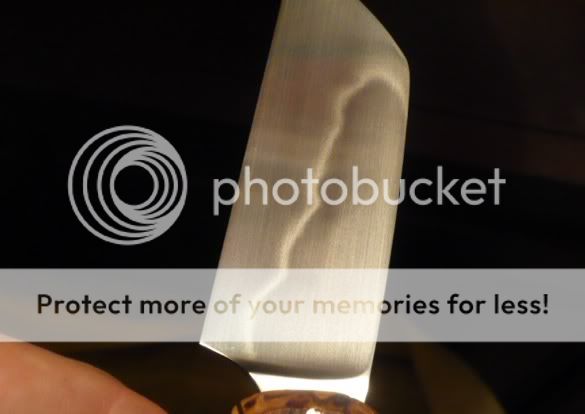
Having trouble getting a clean etch using alcohol and acetone

Joined
Sep 16, 2002
Messages
1,577
I'm etching in ferric chloride (for hamon) after cleaning with acetone or alcohol with paper towels. For some reason, I'm having a really hard time getting a clean etch.

Is there a trick to getting the blade squeaky clean prior to etching? I'm wiping pretty aggressively with a wet paper towel, and the surface tends to look a bit streaky when I'm done. I'm assuming the streaky appearance means it's not perfectly clean? Should I not be using paper towels?

Thanks for any tips or help!
 
Where do you get the ferric chloride? Have you tried 5% nitric acid? I've been reading up on hamons and read that some Japanese masters will use it to see the initial hamon after the heat treat and before the polishing process . Would other acids work like hydrochloric or less powerful ones ?
 
I've simply quit using any type of solvents that we would normally think of.
Never use any type of rag or paper towel at all. Waste of time. And paper towels always have some time of chemicals in them that ruin a decent etch.
Why dry them?
All I do is spray my steel down liberally with Simple Green and do a good job of cleaning the blade with a clean tooth brush.
Rinse off liberally in cool water.
Absolutely no need to wipe it off at all!!!!! Keep it wet - your etchant should be about 3 parts water to one part FeCl anyway. Why wipe the water off the blade when you're going to stick it right back in a batch of mostly water?
Right into your etch.
 
Pretty much the same as Karl. Bit of dish soap on the blade and clean it well, rinse in hot water so I'm sure it's clean (and warm) and straight into the ferric chloride.
 
+2 for what Karl says. I would add do a quick 15-30 second etch then bring it out and make sure the etch is even. I scrub the blade down at this time with 1500-2500 grit wet dry. This will ensure a clean bade surface even if there is a little something left from the clean up. Also is your etch tank aerated? Use a cheap aquarium pump and put the tube at the bottom of the tank. I used the bubbler stones but the new ones seem to get eaten up so I just use the open end of the tube. The bubbles prevent the etch from running down the blade causing streaks.
 
The simplest of solutions always seem to elude me...thanks so much Karl and Stuart for the suggestion!

Duffy, I got my ferric from a local electronics supply house during the time when Radio Shack was not selling it (they have it again now.) I think any acid will etch the hamon, but others with far more experience than me claim that weaker acids such as vinegar and citric acid (lemon juice, etc.) etch the steel differently and will show more subtle detail.
 
Chuck, thanks for the tips. My tank is not aerated, perhaps I'll look for a cheap aquarium pump and give that a try. I've been etching for 5-10 seconds at a time, and about 2/3 of the time I'm getting inconsistent etching. I have been cleaning off in between the initial etches with 1500 grit; for my final etch(s) I'd like to skip the paper but the polishes I'm using aren't aggressive enough to to 'fix' the uneven, streaky etch.

Thanks again for the help!
 
Are you neutralizing when you pull the blade from the ferric chloride? I take it out of the etch and give it a good spray with windex. Then soap and water then onto the rest of the process. If you aren't neutralizing, the etchant may be drying unevenly and etching longer in some "streaks".
 
Stuart, yes I have been doing the same (neutralizing with Windex w/ Ammonia.) I've only done a few blades with hamon so far, but here's more or less the process I've been following:

-hand sand up to 1200-1500 or so

-rub down with paper towel soaked with alcohol or acetone

-etch a few times for ~10 seconds in dilute ferric chloride, spray with Windex, and sand off oxides with last sandpaper grit

-etch a couple/few more times followed by polishing with Flitz/red compound/steel wool, etc.

I've also played around with vinegar and lime juice, but haven't really noticed any differences other than the smell and it taking a lot longer. I am however currently working with 1080, and the advantages of those milder acids might not come into play with this steel. I've noticed much more difference in detail and appearance of the hamon due to type of polish used as opposed to the actual etchant used.
 
Paul,

After my initial quick etch I leave the blade in for about 5 minutes. This gives the Fecl a chance to work. Make sure the Fecl is not too strong, this can cause an even etch over the whole blade that does not give the topography we desire. My etch is pretty old. I replace it about every 2-3 years. I just keep adding more water since the Fecl does not really evaporate. I might even put in a little new Fecl but when it takes too long to etch i replace the lot.
 
Hamons ore a completely different animal from Damascus. The short fast etches are required to bring out the activity in the blade. That is if there is any, many times there is little to none. I have the best results by soaking a cotton ball with diluted Fecl and rubbing it over the blade. I sometimes use pumice to aid in polishing with the Fecl. It takes a long time to bring out a Hamon, be patient.
 
5 mins?! My concentration must be higher but I usually go for about 30 secs. then windex, wash with warm soapy water, dry and then use liquid Flitz or Pikal to remove oxides then the last grit or 1200x loose abrasive (rock polish) with Wd40 as the carrier. (depends on how far it's been sanded initially)
Then wash with warm soapy water and take a look. Repeat if necessary. This is on W2. But, these days I only use ferric chloride on more "user" finishes. It's just too aggressive and tends to blur things a little. Maybe I should dilute it more but I've found that for a nicer hamon, I use warm lemon juice and warm the blade in hot water before I start. It will usually take more cycles and more elbow grease but it's a nicer look.

The loose abrasive works well to bring out detail if you've sanded to 2000x initially but won't do it's job if you stopped at 1000x before the etching. Trimite paper from 3M is good too because it doesn't scratch like sandpaper.
 
Great tip on the simple green and rise with water. I have been using warm/hot water and dish soap then FC Etch 30 Sec. rub with 0000' steel wool to clean oxidation, then repeat with shorter soaks until I have what I want.

If you want to see how to bring out a subtle "Smoky" (Ashi) Nick Wheeler did a great WIP found here, it is very time consuming and hard on the fingers but if done right it still wont look as good as Nick's... :D

Here is Nicks Thread: Click Me

Or copy paste: http://www.bladeforums.com/forums/showthread.php/765305-Hey-why-is-your-clay-hardened-blade-so-much
 
Thanks Ryan, I've read Nick's thread a few times and have experimented with some of the techniques from it, but I'm just not seeing any real difference from the additional time and effort required by them. I suspect it's because I'm working with 1080, and the detail just isn't there in this steel. I am seeing pretty significant differences in depth, contrast, detail, and overall appearance just from trying different polishing methods which is interesting, and they even seem to differ from blade to blade (in my so far limited experience.)
 
Just wanted to update that I tried the suggestion to clean (I used Windex), rinse under water, and go right into the etch wet and it worked much better, so thanks again for the suggestion!

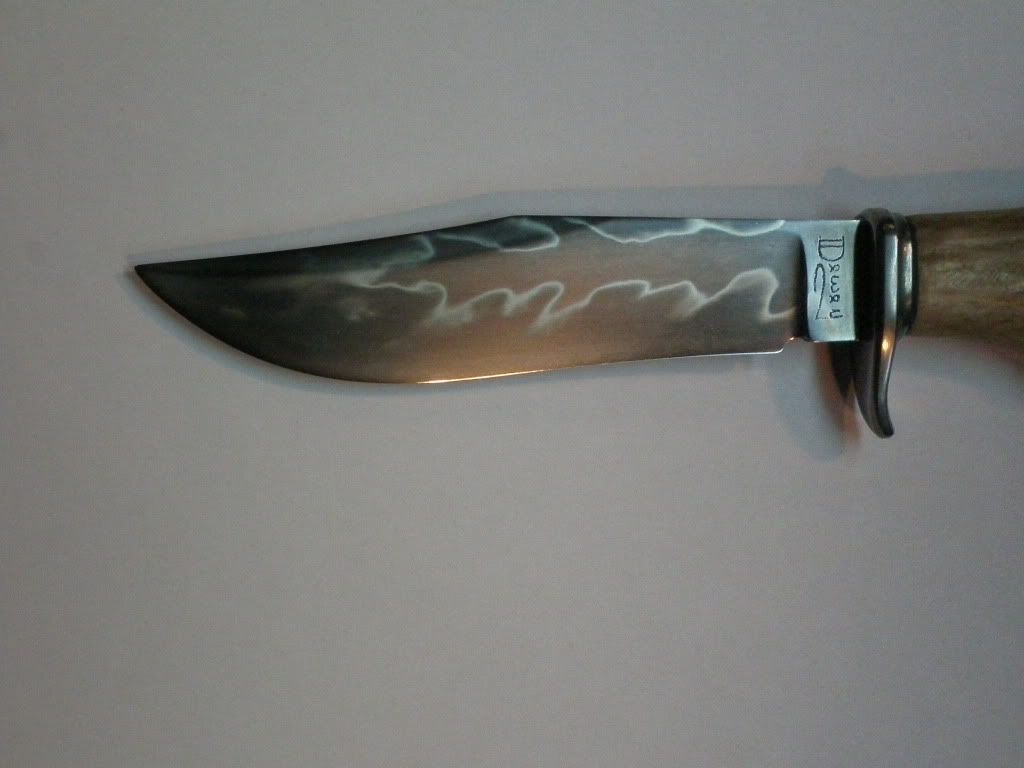
Here's how it turned out:

hamon003-1.jpg
 
Very cool stuff Paul!!!

Whatever you do, don't pay attention to Wheeler!!! :eek: ;) :D

I clean with Palmolive or Liquid Ivory right before etching.... whichever is closer on the shelf.

A heated blade will etch faster, so will heated etchant. Just be careful not to overdue it on either.

You're right about the hamon, the little whispy stuff isn't there in that blade, so the extra elbow grease for the other crap I do (in that thread) wouldn't do you any good. But that isn't an attempt at making this post a "back-handed" compliment. I just wanted to agree that you cannot pull something out of the steel with the finishing techniques if it's not in there to start with.

It's a beautiful line with a great finish! :) :thumbup: :cool:


BTW- I paid attention when Bill DeShivs pointed out that it made more sense to just get Ammonia rather than Windex with Ammonia.... I can buy Awesome Brand, 100% Ammonia cleaner at The Dollar Tree.... for $1 ;) :D
 
Thanks for the feedback, Nick! I was pretty sure most of your 'advanced' methods from that thread would be lost on a steel like 1080 (but that didn't stop me from burning a bunch of time trying them anyway!)

I was thinking about putting a container of baking soda solution next to my etch tank, and then just dunking in that on the way out. That should be really cheap, and I think would last for a while if concentrated enough...
 
If I have this correct?
1 sand blade to 1200-1500
2 CLEAN and rinse
3 etch for short period of time
4 spray with windex
5 (and this is where i've been struggling) lightly sand? I've evidently been sanding too much cause after 5 dips all I have is a shiny (mirror) blade, cause I just keep sanding untill smooth??? after reading this I don't think I should have been sanding so much cause it looks really cool when it comes out of the tank .
6 repeat steps 3 4 and 5 untill you get what you like?

One last question, will the black fade in time?

great thread thanks for the help.
 
Spent more than 6 months polishing this.........

W2Ashburl004.jpg


One thing I learned without question.......

It's not profitable to polish a hamon for 6 months!! :o:D
 
Back
Top