- Joined
- Jan 14, 2018
- Messages
- 15
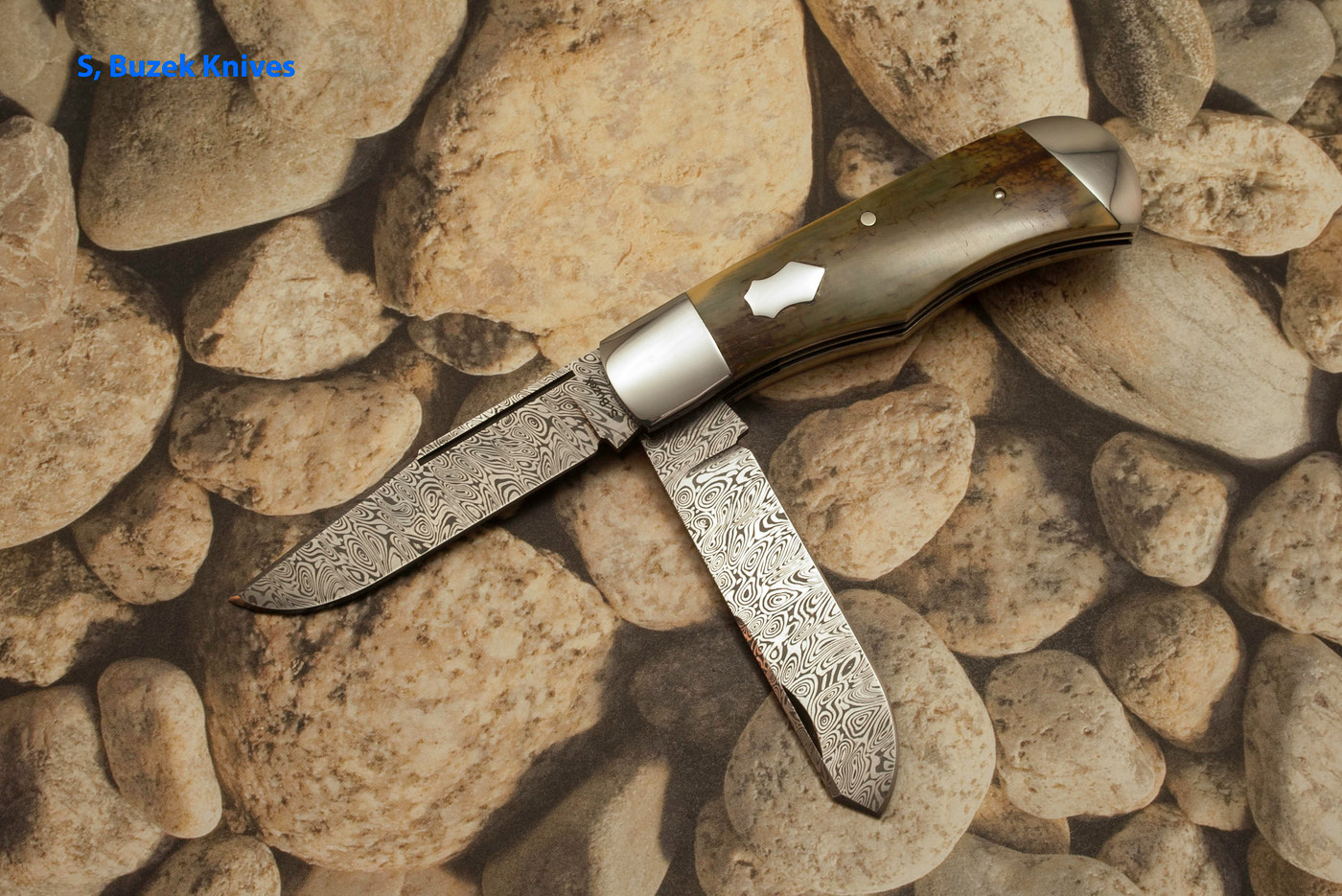
Before Christmas, I was finishing a couple of knives for a customer from Damasteel (Bifrost pattern). This was my first time using it. Everything was going fine until I went to etch. Both knives eventually etched, but took much longer than expected.
I used muriatic acid, 100% solution. Knives were washed (with rubber gloves) with dish soap, then wiped down with acetone, then wiped down with rubbing alcohol. Once dry, I dipped them (one at a time). Damasteel’s recommended time for 100% is 5 minutes, and every knifemaker I consulted with advised that it should just take a few minutes, and I could basically watch the pattern develop.
5 minutes had no discernible effect on the steel. At 10 minutes, no effect. At around 12 minutes there was a light pattern on the flats, but not the bevels. It took 20 minutes to produce a nice etch that looked the way I expected it to.
Any suggestions on why it took so long to etch? I took it to 400 grit, which while not as high as is usually recommended, shouldn’t haven’t mattered that much. I’ve seen several deep, contrasting etches at 220 from a couple of different makers. The steel was HT’d by JT to 61HRC. I have more damasteel to use, and don’t particularly want to give it a 20 minute soak.
I used muriatic acid, 100% solution. Knives were washed (with rubber gloves) with dish soap, then wiped down with acetone, then wiped down with rubbing alcohol. Once dry, I dipped them (one at a time). Damasteel’s recommended time for 100% is 5 minutes, and every knifemaker I consulted with advised that it should just take a few minutes, and I could basically watch the pattern develop.
5 minutes had no discernible effect on the steel. At 10 minutes, no effect. At around 12 minutes there was a light pattern on the flats, but not the bevels. It took 20 minutes to produce a nice etch that looked the way I expected it to.
Any suggestions on why it took so long to etch? I took it to 400 grit, which while not as high as is usually recommended, shouldn’t haven’t mattered that much. I’ve seen several deep, contrasting etches at 220 from a couple of different makers. The steel was HT’d by JT to 61HRC. I have more damasteel to use, and don’t particularly want to give it a 20 minute soak.