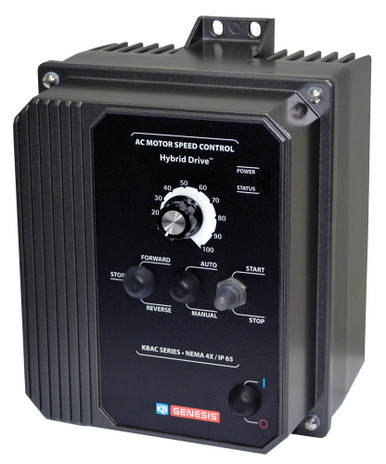
The drive wheel size is what determines the speed of the belt. The larger the drive wheel, the faster it goes. With a VFD the speed can be changed, so the drive wheel size is less important. Most folks use a 5" or 6" drive wheel.
The motor you have runs on 3-phase power. That is what the VFD provides. You can run a grinder on regular single phase power, but the motor must be a single phase motor.
To recap all the earlier info:
1) You really want a VFD running your grinder. It provides belt speed adjustment to run fast for hogging and slower speeds for finishing after hardening. The VFD needs to be rated for the power at your shop, which is usually single phase 220VAC.
2) The motor needs to be rated for the power output of the VFD. In your case, that would be 220V 3Ph. The motor and the VFD output must always match. Motor speeds come in (roughly) 1800RPM and 3600RPM. There are some technical reasons for choosing one or the other, but on a grinder with a VFD it does not matter much.
3) Drive wheel must match the motor shaft. Most grinders are run of a 56C frame motor, which has a 5/8" shaft.
4) Drive wheel size controls the belt speed. This is important on a fixed-speed grinder. On a grinder with a VFD, belt speed is variable, so a 5" or 6" drive wheel diameter is good.
Advice:
Unless you have all the knowledge, materials, and skills to build a grinder from scratch, buying a basic setup from a grinder manufacturer is wise. I highly recommend the Reeder Grinder Chassis Package. It runs $795 and has everything but the motor, VFD, and wheels. You should add the wheel kit for an additional $200.
That $975 plus a motor and VFD will set you up with a top notch flat platen grinder. They also sell contact wheels in all sizes. All their wheels are precision balanced.
Greg Reeder makes a great rolling bench that his grinders mount on. As with his grinders, it is all heavy aluminum and the bolts and inserts are hardened steel.