"Hidden" pins -- worth the effort?

Joined
Aug 16, 2005
Messages
149
I've been thinking about drilling holes through a knife's tang and shallow (not fully through) holes in the inner surface of the scales and then fitting them together with short pins and epoxy. This would add shear strength while not taking away from the continuity of the handles surface. I can't believe I'm the first to have done this -- I'm just not that innovating -- so besides the loss in strength from a "peeling" or lifting action that could pull off the scales compared to a peened pin, what's wrong with this plan? Any other suggestions?
 
You have a good idea there.

The Loveless shop has been doing this for many years, the tangs are etched with 60 grit abrasive and the "hidden pins" are actually 8-32 machine screws with the heads cut off that are screwed into threaded holes in the tang. The scales have shallow blind holes drilled in them and the bottom of the hole is enlarged with a dremel, when epoxied together it is a strong assembly - I've never heard or seen one come off.
 
Hidden pins are a tried and true technique. Yes, they are certainly worth the effort.
 
I've done some on a fillet knife that was gonna be in a salty environment to lessen the chance of corrosion, even though they were stainless. I could also see doing them because it would visually break up a particular handle design.
 
I think it's a matter of taste. I did two back in the eighties. I was not that impressed. Looked like something was missing.
 
I have problems with handles with no visible means of support, especially slab handles -- I want to see mechanical fasteners of some sort - I want to see pins, tubes, corby bolts, or whatever. Otherwise it looks like you simply glued it on - it always looks like amateur hour to me.
 
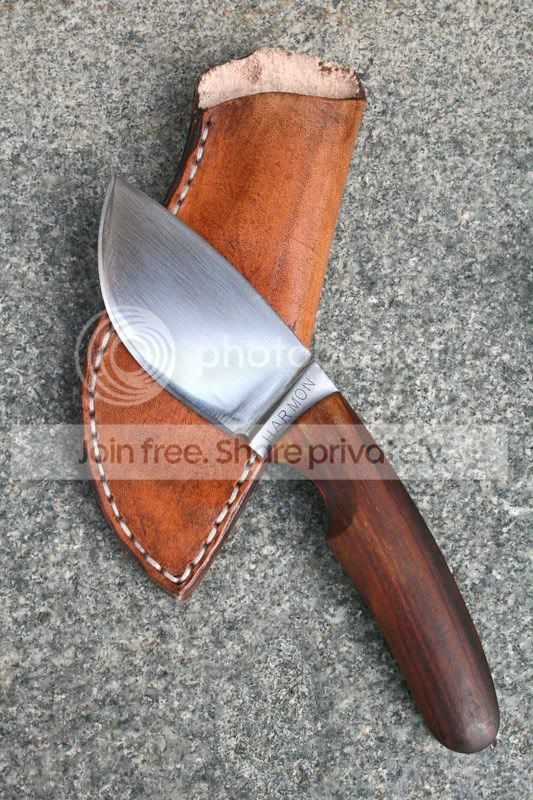
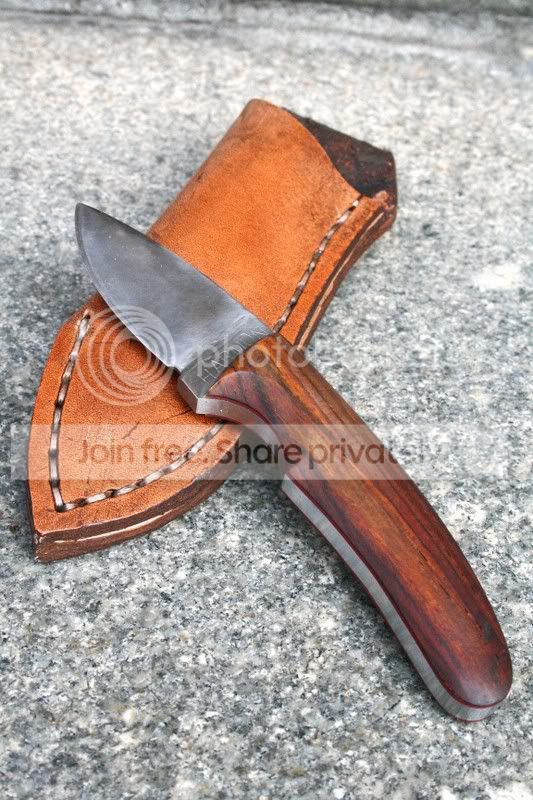
hidden stainless 'pins' (actually stainless machine screws with heads cut off). i like the look!

CIMG0669.jpg

IMG_8726_CC.jpg

IMG_8729_CC.jpg
 
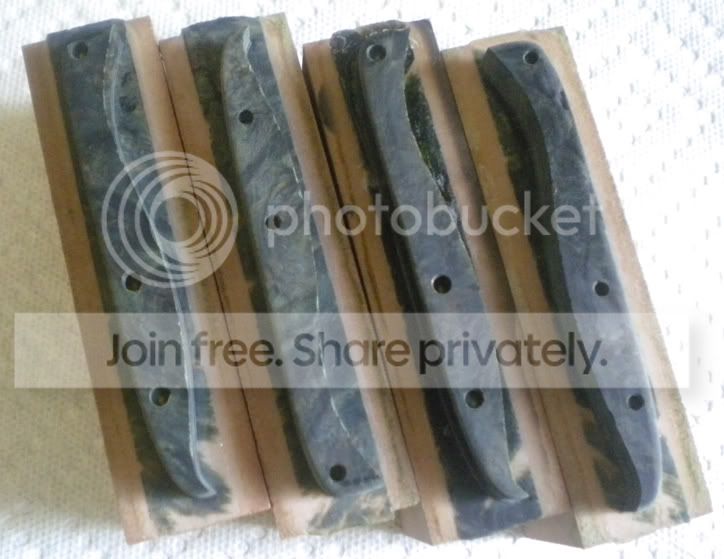
I cut square bottomed holes in the scales and cut threads into those holes. I then use next size down all-thread as pins. Epoxied into the threaded holes, I believe these are as strong as corbies or peened pins.

While this is more effort than just drilling through and pinning, it subsequently saves effort during finishing because there are no metal pins wanting to erode away at a slower rate than the scale material during shaping and finishing.
 
Thanks to everyone for the replies. Zerogee's was particularity something I didn't think of, a reminder than perceptions are important.
Thanks again!
 
I cut square bottomed holes in the scales and cut threads into those holes. I then use next size down all-thread as pins. Epoxied into the threaded holes, I believe these are as strong as corbies or peened pins.

While this is more effort than just drilling through and pinning, it subsequently saves effort during finishing because there are no metal pins wanting to erode away at a slower rate than the scale material during shaping and finishing.

How do you cut threads in wood? Can you just use a standard tap that you would use for metal? When I was bedding stocks with Acraglass we were always looking to prevent a "hydraulic lock", now I'm trying to create one. Does anyone have other suggestions?
 
How thin can the scales be and still allow you to use this technique?
 
if done right a set of pinless scales will stay on just fine. i would not put a set on a chopper but a skinner would be no problem.
 
I have used as thin a 1/4" scales using hidden pins, and i do them all the time now.
This knife has 3 pins, 2 hidden and one visable.
Del
 

Attachments

  • blackwood maple gyuto.jpg
    blackwood maple gyuto.jpg
    77 KB · Views: 34
While obviously you want to make them as deep as you have room, you need to leave a little meat between the end of the hole and the outer surface of the part.

This is a relatively extreme example of it, the deepest hole is 1/8" deep, the shallowest is only 1/16". The pocket is square bottomed and the thread goes full form all the way to the bottom to maximize "bite".


e.jpg


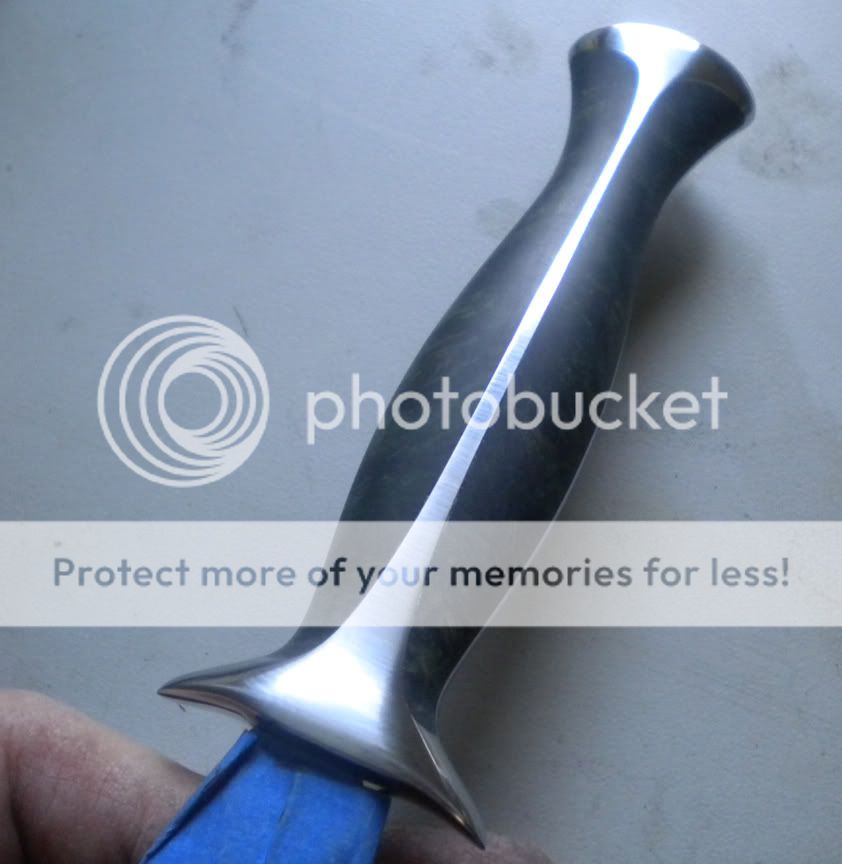
and the finished hidden pin scales on the knife:


a.jpg


You can see why I didn't want pins showing in this particular piece.

I mill these threads, but I'm sure you could tap them with a bottoming tap followed by a tap modified with the end ground off so you could engage the full thread.
 
I have used them a couple of times, and have had no problems, one did have 2 visable pins and one hidden because of the planed schrimshaw to be done on the black buffalo horn.
Dale
 
Back
Top