Homemade satin finishes on blades

Joined
Apr 29, 2010
Messages
108
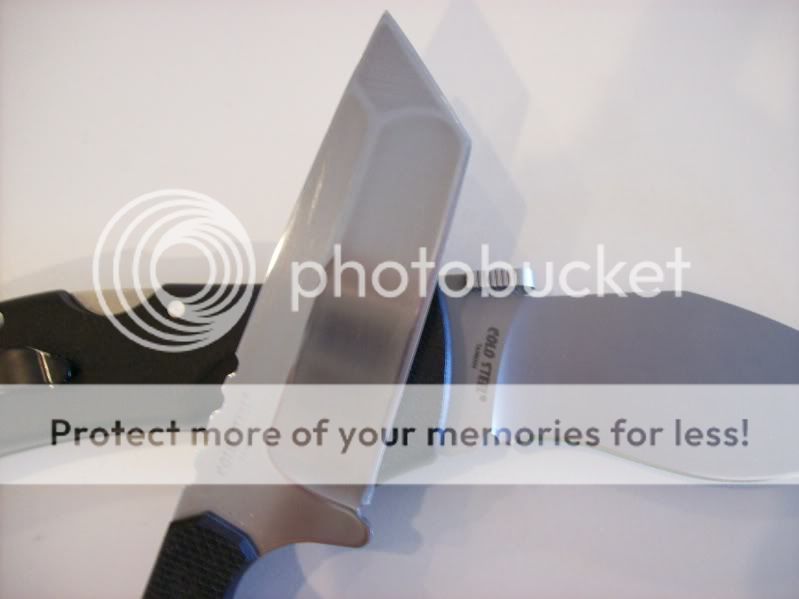
I have several bead blasted knives that I would like to turn into a satin finish on the blade. I've done this once using varying grits of sandpaper, and it worked okay. The problem was it used a lot of sandpaper. What's the easiest/cheapest way to do this for several knives? Perhaps a dremel-type tool with some specific attachment?

Here's a picture of the one I did:

100_0757.jpg


Thanks for any help!
 
Well sandpaper is a good way, but stonewashed in a tumbler makes a great finish. Dremels tend to be to small and run too fast to get professional looking results. Maybe a sanding pad on a cordless drill to start and finish with hand sanding. A belt sander is a good way, but takes some skill to get it right. Using good quality Silicon Carbide paper makes it go quicker, nd using a good lube helps extend the life of the paper.


-Xander
 
The notion of a Dremel being 'too fast' is mis-leading. The small wheel size effectively reduces the actual speed, in terms of how many linear inches of abrasive go past per second. A Dremel at 10,000 rpm is actually slower than many 'standard' bench-style buffers with 6" or 8" wheels, running at 1725 rpm. Again, due to the much smaller wheel size on the Dremel (1"). A Dremel does require a steady hand, and a flex-shaft attachment makes control easier. And, I'm not sure if a suitable attachment is available to put a satin finish on. I've used mine, with a cotton wheel, to polish a blade.

Having said that, good quality wet/dry sandpaper (3M or Norton) lasts a good long while, especially at the medium & finer grits. The coarser stuff, like 220/320, will lose some of the aggressiveness that it needs for taking a lot of metal off quickly. Grits from 400 - 800 or so will produce varying degrees of a satin finish, all of them quite attractive. I've used a rubber drafting-type eraser (Magic Rub) as a sanding block, around which the paper can be wrapped. The rubber eraser is flexible enough to mold itself to the contours of the blade, and it also evenly distributes pressure, which minimizes flat-spotting. When the paper gets loaded up with metal swarf, it can easily be cleaned off (wiping, brushing, rinsing) to restore much of it's aggressiveness. Another possibility, that many have used & recommended, are the ScotchBrite type pad abrasives. The most common is the green type, which isn't very aggressive, but can produce a nice satin finish.

 
i would not use a dremel to put a satin finish on a blade. i have played around with mine trying to see what they work best for and finishes are not what they are made for. i'm in ohio also and if you are close by you can come over and i'll show you how to put a nice satin finish on your knife and if you want to learn how to make a knife i can show you that too. send me an email. rje196021@gmail.com

i would get some 3m wetordry sandpaper from an auto supply store and a block of wood backed with leather. rubber cement the paper to the leather on the block.

you must not go back and forth or you will end up with a messed up finish. with the knife clamped down lay the block down and pull or push the block the length of the blade. go slower and use lighter pressure when reaching the tip if you are going in that direction.
 
Last edited:
I did a satin finish on a Kershaw Chill which had a pickled finish on it. I started with 400, 600, then 800. After I got it up to 800, I went back to 600 to do the final finish. I did what richard j said to do for the final 600 grit sanding:

"you must not go back and forth or you will end up with a messed up finish. with the knife clamped down lay the block down and pull or push the block the length of the blade. go slower and use lighter pressure when reaching the tip if you are going in that direction. "

And it came out really nice.

Ric
 
I did okay with a buffing wheel and aluminum oxide powder, though the finish wasn't exactly even all around. Probably would've been smoother if I could spin the wheels slower. I'm interested in trying one on a belt sander, though I suspect that won't turn out very well on hollow ground blades.

I think the key is using low speed. Perhaps a small buffing wheel loaded with AO powder attached to a hand drill?
 
Back
Top