How do I get black dye to stick better?

Joined
Jun 17, 2006
Messages
1,108
I have been making sheaths for just a little while now in my studio apartment. I have very little tools and materials, and it has been brought to my attention that the shoulder of leather that I had bought, and am still using, is not a great quality. (craftsman oak shoulder from tandy)

I'm using Fiebings spirit dyes, and I've had some problems with the black. I've used dark brown with no problems or inconsistencies, but my black dye does not want to stick for anything. It's like it wipes right off and you can see the splotchy leather underneath. It's not penetrating.

I've deglazed with alcohol, dyed wet, dyed dry....I can get it to eventually stick, but it's always a pain. What can I do to make this easier?

Also, what about a black oil dye? Do oil dyes work better? What are the pros and cons?

Unrelated - Mink Oil. I use it after it's all done. Seems to give everything a nice soft look that I like. I use it on the insides and outsides, and on my edges too. Is this a bad thing?
 
I like oil dye and have found it to give more consistent results than black spirit dye.
I've never had any problems with the craftsman oak tanned leather from Tandy (or the Leather Factory before them)
mink oil is good.
so is "Sno-seal"
 
Sno-Seeal +1. Goes on all my stuff, inside and out. Moose
 
For black you really need to use the oil dye. The spirit dye is alright for edges but it never seems to fully set unless you cover it with acrylic resolene. That stuff is ugly though.
 
I have been experimenting a bit with dyes lately. I am using Fiebings standard dye, which is alchohol based. So along with deglazing with alchohol, I am using a wool dauber, and wetting the leather pretty good with alchohol. The alchohol seems to help the dye penetrate better, at least in my experience. I am getting better color out of it as well, over just wetting the leather with water before dyeing.
 
Good advice guys. i'll try the oil dyes. (hey that rhymed!)

Does an oil dye leave a oily kind of soft finish on its own? I like that kinda.
 
FWIW - there is NO oil in Fiebings Oil Dye - why they called it that is a mystery - it is nothing more than an improved version of the Spirit dye and is alcohol/solvent based as well - don't believe me? look up the MSDS.......

IMO the best options for black:
1) Buy pre-dyed black hides from Wickett & Craig like Paul aka sheathmaker does
2) Use vinegar black aka vinegaroon - do a search here for more info. Vinegar black will NEVER rub off since it colors via a chemical reaction between the tannins in the leather and the iron in the blacking unlike standard dyes which are powdered pigments in a carrier such as alcohol or toleuene.

When using ANY standard i.e. pigment based solvent dyes you should:
1) Deglaze the surface befored dying - use denatured alcohol with or without some lemon juice added, acetone, or oxalic acid aka wood bleach
2) Dampen the leather prior to dying: use water or 70% rubbing alcohol. This opens the leather pores and allows for better penetration. Some folks suggest dampening with a light coat of mineral or saddle oil and that will work, but the piece then needs to be sealed well with one of the acrylic types since as the oil dehydrates over time it will carry the pigment back to the surface.
3) DO NOT use those Mickey Mouse daubers - they are fine for edges, but they don't load enough dye at a time for larger areas. Instead use a sponge wrapped in a piece of toweling, those cheap sponge rubber paint brushes, or IMO the best/easiest way - dip dye the whole thing.....You need to really load the surface with dye to get the best job, let set, and before completely dry wipe off any excess.
4) After dying buff the piece well with a clean, dry cloth. All pigment based dyes leave a coating of dry pigment dust on the surface. If this is not wiped off completely you will get rub off no matter what post dye finish you use.

Anyway those are my suggestions based on 50 years of dying leather - others mileage will vary...........
 
Pay close attention to the previous post, because word for word it is a true story.!!!:thumbup:

Especially the part about buying pre dyed black leather from Wickett & Craig.

I still use dyes for the edges, but I haven't dyed a whole project since I found the W & C stuff, and that has been over 5 years now.

Paul
 
I started working with the Pre-dyed leather from W&C this spring and really like it. Lot less mess, fuss and speeds up the whole sheath making process.

If you don't want to go that route I would use Fiebings Pro Oil dye in black. You'll need 2 to 3 coats to get a good even black, or dipping it works too (dip the piece of leather in a bowl of black dye).

Heber
 
The fiebings standard spirit dye left a really dull finish after it dried. I knew to wipe it all off, but it wouldn't come off as easily as the brown I tried. And it left kind of a weird rainbow effect....Like I was seeing alot of reds and blues etc. Took forever for that crap to come off. I thought I'd get the cloth a little damp to help, but it rubbed the dye right off, and you could see splotchy areas where the black just didn't get in. Strange stuff...lol

I ended up finishing the sheath though, and it turned out ok I think.

I'm just going to dunk the whole thing like Chuck, or do what Paul does....buy some already dyed leather! lol :p :thumbup:

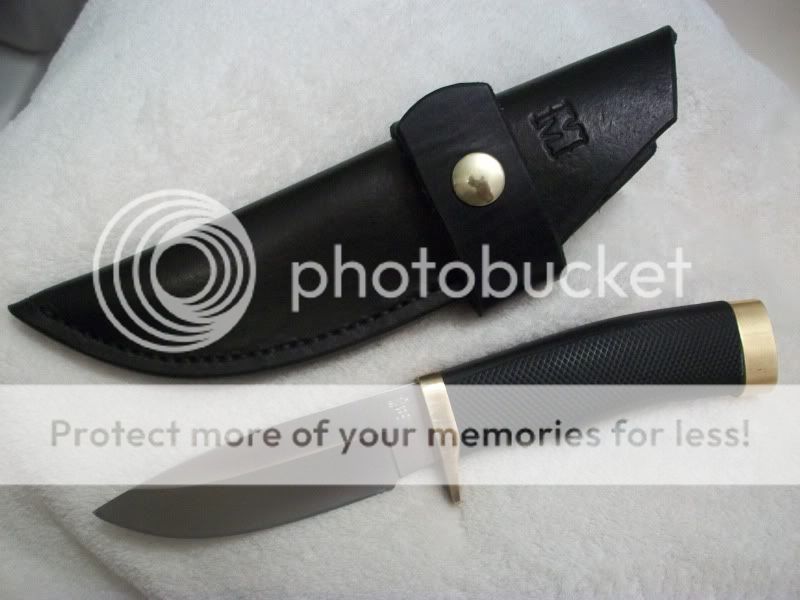
Oh btw....here's the sheath I had some trouble with.

vanguard3.jpg
 
FWIW - there is NO oil in Fiebings Oil Dye - why they called it that is a mystery - it is nothing more than an improved version of the Spirit dye and is alcohol/solvent based as well - don't believe me? look up the MSDS.......

IMO the best options for black:
1) Buy pre-dyed black hides from Wickett & Craig like Paul aka sheathmaker does
2) Use vinegar black aka vinegaroon - do a search here for more info. Vinegar black will NEVER rub off since it colors via a chemical reaction between the tannins in the leather and the iron in the blacking unlike standard dyes which are powdered pigments in a carrier such as alcohol or toleuene.

When using ANY standard i.e. pigment based solvent dyes you should:
1) Deglaze the surface befored dying - use denatured alcohol with or without some lemon juice added, acetone, or oxalic acid aka wood bleach
2) Dampen the leather prior to dying: use water or 70% rubbing alcohol. This opens the leather pores and allows for better penetration. Some folks suggest dampening with a light coat of mineral or saddle oil and that will work, but the piece then needs to be sealed well with one of the acrylic types since as the oil dehydrates over time it will carry the pigment back to the surface.
3) DO NOT use those Mickey Mouse daubers - they are fine for edges, but they don't load enough dye at a time for larger areas. Instead use a sponge wrapped in a piece of toweling, those cheap sponge rubber paint brushes, or IMO the best/easiest way - dip dye the whole thing.....You need to really load the surface with dye to get the best job, let set, and before completely dry wipe off any excess.
4) After dying buff the piece well with a clean, dry cloth. All pigment based dyes leave a coating of dry pigment dust on the surface. If this is not wiped off completely you will get rub off no matter what post dye finish you use.

Anyway those are my suggestions based on 50 years of dying leather - others mileage will vary...........


It is posts like these that keep me coming back here to search for more nuggets of wisdom. I have some foam brushes - and will be using them ASAP.

Thanks Chuck and the rest of you old hands for helping us little guys out.

TF
 
It is posts like these that keep me coming back here to search for more nuggets of wisdom. I have some foam brushes - and will be using them ASAP.

Thanks Chuck and the rest of you old hands for helping us little guys out.

TF

Same here. Thanks guys!
 
Back
Top