How many free hand sharpen?

and its been a long hard road,but i am now able to get my knives sharp enough for me, i still have a ways to go but getting better... i just have a hodge podge collection of sharpening tools, a smiths trihone an old stone that was my grandads and various pocket hones...
it gets it done once you get your technique down
regards
gene
 
me - I first learned on a 4" medium washita (arkansas) stone and other than moving up to a diamond stone for EDC/touch up type stuff have never really felt the need for more on my carry knives.
OTOH, I use a guide for my wood chisels.
 
That's all I ever have done. Learned when I was kid, and never saw the need to change, or buy gizmo's.

For the last 15 years or so, most of my sharpening has been done with the little Eze-lap model L in my wallet. I cut most of the plastic handle off the medium one, and carry it in my zipper part of my wallet. I can resharpen my knife anywhere at any time in a few minutes that way. I don't believe in an sharpening tool that can't travel with me.


Carl.
 
I do also; I am happy with my ability to use the stones freehand (I use DMT "stones" for reprofiling and Shapton waterstones for finishing and microbevels with a light chromium oxide stropping afterwards. I can easily shave my face with resulting edges.
 
I sharpen free hand, but only about twice a week. I have multiple users (EDC, recreational, kitchen) so edge degradation is limited. For my 1095 blades I use a circular motion on a fine arkansas (very easy to get a precise edge). For higher alloys I use DMT bench stones; it is harder to maintain a constant angle but the results are superb. The only problems are with saber ground blades (Marbles D2 hunter), it can take awhile to get the edge just right. Since I am accustomed with hand sharpening, developing a proficient stropping technique was relatively easy. If I polished my edges and bevels things might be different.
 
Aside from some larger knives/machetes that I do on a belt sander I'm 100% by hand with no guides.

HH
 
I tried most of the guide tools, and could never get the results I wanted. I went back to free hand, and viola! I guess I did learm useful stuff in Boy Scouts!
 
I free hand with no guides. I have DMT Diasharp diamond plates and that makes it easier.

There are 5 simple steps to frehanding.

  1. At each grit level, work one side at a time until you raise a burr along the entire length. Staying on one side facilitates the formation of a burr and it also sort of gets muscle memory going and you will make more consistantly angle strokes. Once you have a burr at a grit, flip it over and repeat. Then move up a grit or two (if need be) and repeat the whole process). I don't go from side to side until I am on a strop.
  2. Practice.
  3. Practice more.
  4. Practice until you're wife complains that you are neglecting her .
  5. Practice until she just gives up in disgust and your arm starts to hurt all the way from the wrist to the elbow...maybe you're back will hurt too if you don't have a good set up.

Five simple steps.

PS. On step 5. I am halfway kidding. Don't use too much pressure. That is a mistake. That will minimize the carpal tunnel / repetitive motion injury to which I refer.
 
Last edited:
My 'learning curve' (over 20 years or so) has gone something like this:

1. Buy nice, new, wicked sharp knife. Buy 'whatever' sharpening stone/hone that 'seems' to look useful (I had no clue at that point), and quickly ruin the edge on nice, new, wicked sharp knife. Buy more, nice, wicked sharp knives to appease my frustration. Amass very large collection of nice, new, wicked sharp knives that I still don't know how to properly maintain.

2. Buy guided sharpening system. Become frustrated at my own apparent inability to make it work. Put it away and forget about it for about 15 years. Buy more knives.

3. Buy ceramic pocket stone. Finally figure out how to 'freehand' a decently touched-up edge on my knife. Keep doing this for about 5 years. Still buy more knives.

4. Accidentally stumble across old guided system, which was previously stashed away and forgotten about. Decide to give it another go.

5. Using newly acquired knowledge of things like using LIGHT pressure and making sure I've formed a burr before moving to finer grits, I FINALLY put an 'OH MY GOD' edge on my knife using guided sharpener. Round up as many knives as possible, so I can put an 'OH MY GOD' edge on them, too. Don't quite feel the need to buy too many more knives. Starting to actually believe I can now sharpen the ones I've already got.

6. Decide to learn about stropping. Spend hours and hours stropping my 'OH MY GOD' edge, hopefully without making it duller. Do this for about 2 -3 years, to develop the 'feel' of the bevel being properly flush on the strop.

7. Out of the blue, one day just decide to put some sandpaper on my strop block and try convexing. Epiphany moment. Finally realize that all that time spent with previous gadgets & such had, in it's own convoluted way, paid off. Realize that I now have some decent 'feel' and muscle memory for maintaining proper angle and pressure.

8. After the previous epiphany moment, now 'experimenting' with freehanding on diamond hones. After all these years, have come full circle. Can finally, actually IMPROVE the edge on my knives using freehand technique, still applying the universal fundamentals of maintaining proper angle and pressure. This is where I am today.

Now, it's just a matter of PRACTICE, PRACTICE, PRACTICE to make sure I never forget.
 
One more here. Been playing with free-handing since I was kid, mostly on Arkansas stones and such back then. Full set of DMT's now, best money I've spent in years. I get tree-topping edges off the EE with no issues what so ever. Pretty much quit bothering with stropping since I got that stone. Though I feel like I constantly refine and tweak my technique. I've tried a guided system or two over the years, and had some success with them, but nothing like now with the DMT's and a solid knowledge of free-hand technique.
 
Likewise, I've always free handed sharpening (for about 60 years), until fairly recently with a variety of stones; washita, soft and hard arkansas, but now mostly use diamond hones; much faster. Still do "touch ups" with an arkansas. Main thing is to keep the bevel, whatever angle you prefer, straight and even. With most Nordic knives that is very easy as they sharpen flat on the stone/hone.

Rich
 
Like most I've tried most systems but could never get the results like freehand, so I've stuck with what I know.

But.........

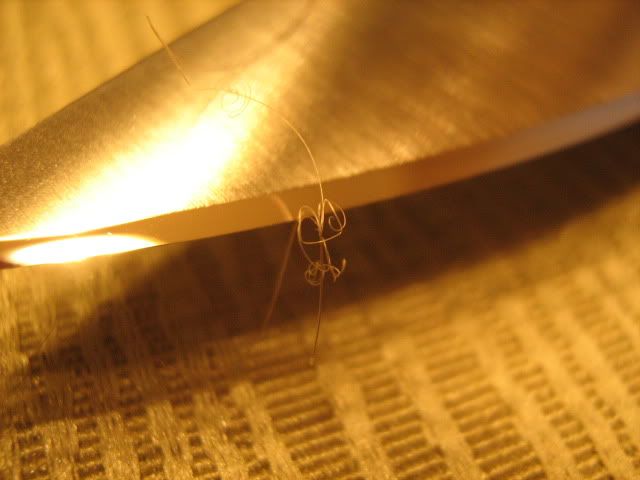
This thread is useless without pic's :D

Picture1632.jpg
 
hey dave, been a long time since i havent followed ITK forum,

nice to see you there.

i freehand all my kitchen knives on japanese waterstones, but i use the edge pro and hand held pocket stones for pocket knives.

i learned sharpening japanese knives freehand first ( gathered a lot of infos from this guy) and then got into pocket knives ...been a major pain to match the factory bevels (or get and edc-able edge) on bench stones because my muscle memory was set for waaayy lower angles, that's why i bought an edge pro, didn't want to mess this, my kitchen knives are my work tools and i'm pretty anal about their sharpness ... plus sharpening afolder on bench stones feels weird to me.
 
Freehand is the only way I've ever known. It started when I saw my dad freehand sharpen his kitchen knives on stones. Ever since then I've been intrigued by it. A few years ago, I took the time to learn the skill. Now I can get hair popping, and occasionally hair whittling edges. I use 1000 grit and 8000 grit waterstones for all sharpening from pocket knives to machetes to hatchets and axes.

But like many things, it's what you learn when you think you know it all that counts the most.

I learned from bladeforums how little I truly understand about sharpening. My quest continues.

JGON
 
I've never used a guide of any kind. I started freehand sharpening on a Buck/Smith's branded 3 stone rig but now exclusively use DMT & Smith's diamond stones. I'm getting pretty good results but not consistently. Some knives are just easier to sharpen than others. Fortunately I have picked up quite a few tricks here which has helped improve my skills greatly.
 
I free hand a lot but I'm not adamant about it or anything. I like to use a DMT aligner clamp as a guide for my bench stone because it winds up with bevels so flat it looks like a machine did them. It's kind of slow and clumsy though, and ultimately the actual quality of the edge over my free hand ones comes down to cosmetics.

I learned how to free hand when I was a young kid too. I took one of my dad's Norton benchstones and just start grinding on it and figured out how to make a basic edge. I never really had much need to sharpen though, so I never had my own bench stone until recently when I started sharpening out of hobby.
 
pretty much anyone doing any type of belt or paper wheel system is freehanding as well as most stone systems.

i use a paper wheel system now so I guess I do.
 
I learned to sharpen free hand. I was taught by a wonderful old man who drilled me in the art of making a great edge. He was a shoemaker and I had to be able to get my edges sharp enough to easily go through sole leather without much effort. It took me some time to reach that level, but eventually I learned how.

Same thing happened when I learned to prep foods for cooking. Dicing, slicing, mincing, kneading dough, etc. Took some time, but I learned. Then I discovered "The Food Processor." Same results in 1/4 the time.

Same thing happened with knife sharpening. :D

EdgePro, DMT Aligner, RazorEdge, Sharpmaker. They get my knives sharp. I get my "Zen" of sharpening from stropping afterwords. Oooooooommmm.

Stitchawl
 
Back
Top