

- Joined
- Jul 27, 2003
- Messages
- 5,686
Short answer - I don't know.
I've never broken one.
The previous thread about the take-down chopper nudged me to perform an experiment I've been meaning to do for some time. I just wanted to know how strong the threaded take-down tang is.
To describe my method briefly, I either use a butt cap with a stepped recess to accept a finial with a ledge turned into it, or I use a hidden sleeve inserted into the handle butt that also has a stepped shelf in it to accept the ledge turned onto the finial.
No matter what, it's steel against steel, and either one of these is stronger than the handle material itself.
I think we can all agree that the old saying "A chain is only as strong as the weakest link" holds true.
So, if the threaded portion of the tang is the smallest, I'm thinking we can agree it is the weakest "link" in the take-down assembly, not withholding the finial itself!
So, for the record, on my smaller hunter sized blades, I use a 10-32 thread, and on the larger Chopper sized knives I will use a 12-28 thread.
I want to point this out right now, at the end of my forging, I go through extensive grain reducing steps which include controlled thermal cycling, austenizing, quenching and spherodizing. These steps make a tang that is so tough, I have to lock the knife in a vise and put gloves on to bend the tang.
This experiment uses off-the-shelf weld steel with quite questionable character!
So, this set-up should fail long before my normal materials would fail.
During the creation of my knives, I may assemble and dis-assemble each knife up to 100 times. Each time I do so, I use a temporary finial I have made up and when I crank the knife together, I use VISE GRIPS!! Which apply ffffaaaaaaaarrrrrrrrrrr more torque that will ever be applied with the take-down wrenches I supply the customer for his use.
I've always wondered just how far I could crank it before something broke!
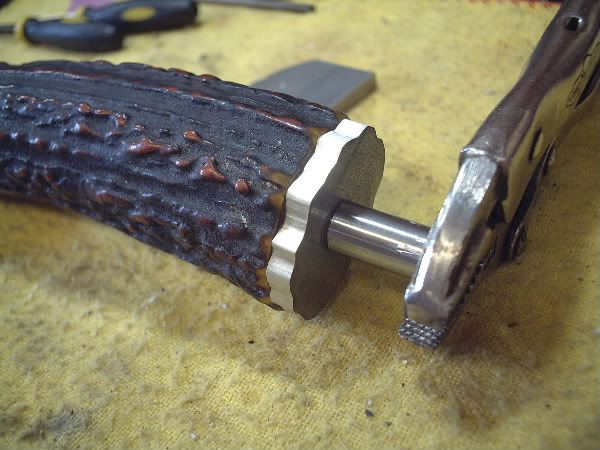
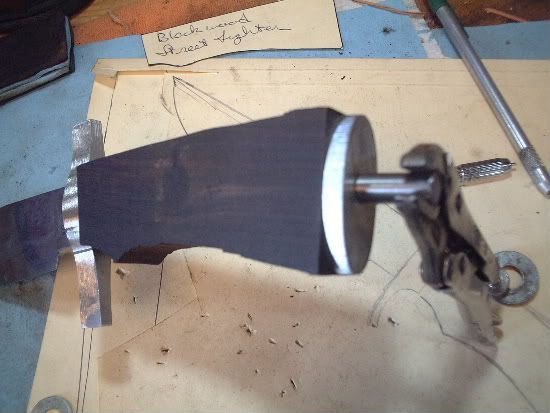
So, in this experiment, in light of Jon Brand's Chopper thread, I used the combination I will use on his - 12-28.
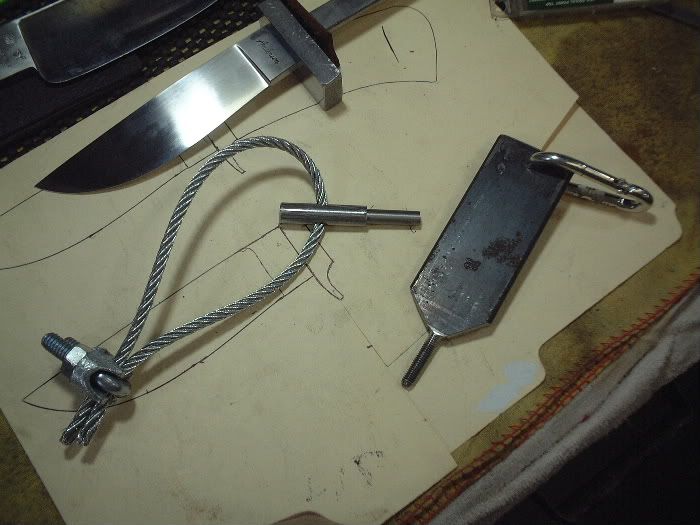
I used a simple piece of weld steel for the threaded tang, so I could conveniently hook up a lift hook to it, and I used a piece of 1018 exactly like I would use on a knife with hot-bluing, on a non-hot-blued deal, I would use stainless 416.
You can see the pieces I made here.
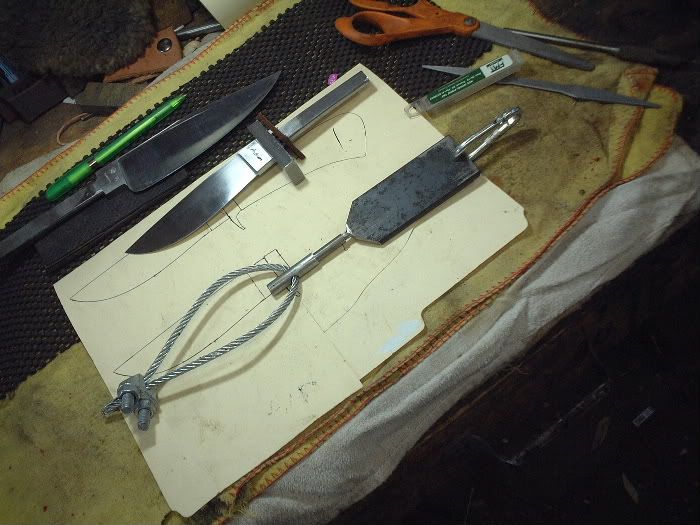
Assembled:
The testing area is where I lift my deer for dressing and skinning:

The "rig"
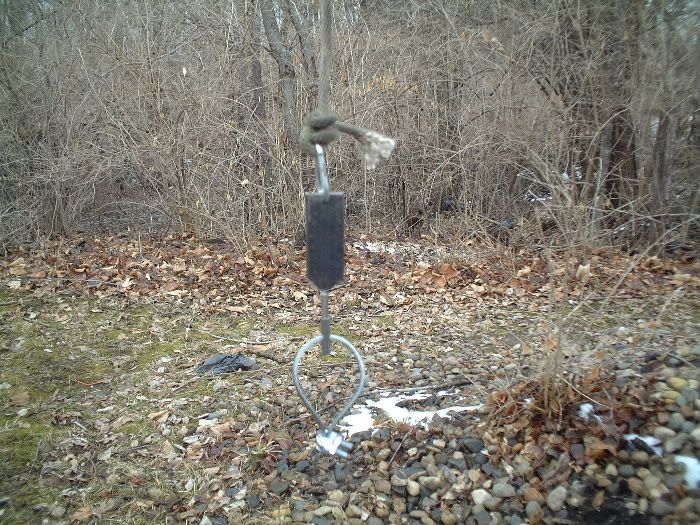
I had a pile of concrete blocks, so the control was easy.
1 block:
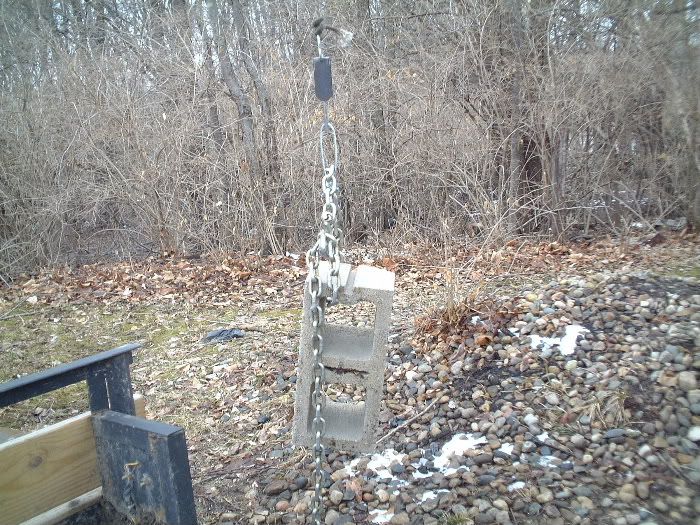
2 blocks:
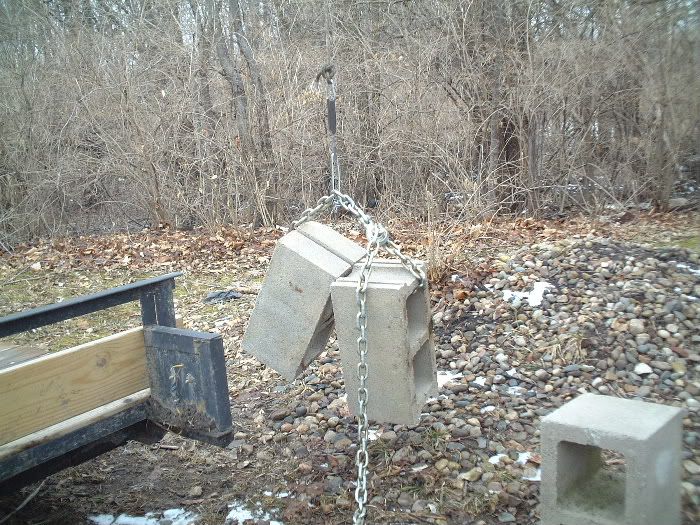
3 blocks:
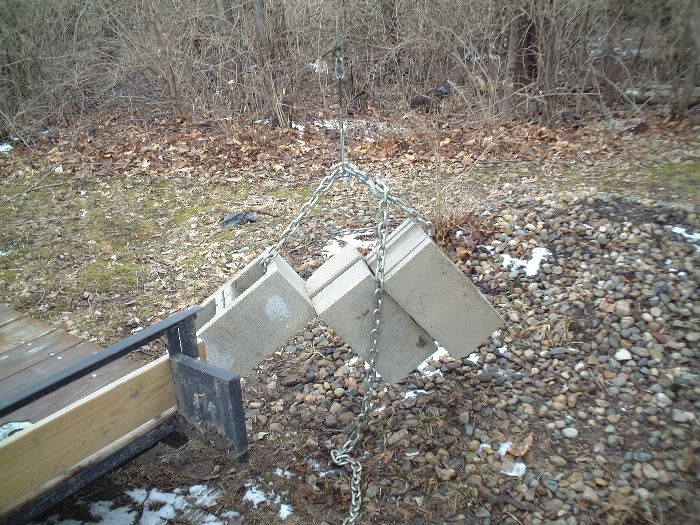
4 blocks:

5 blocks:
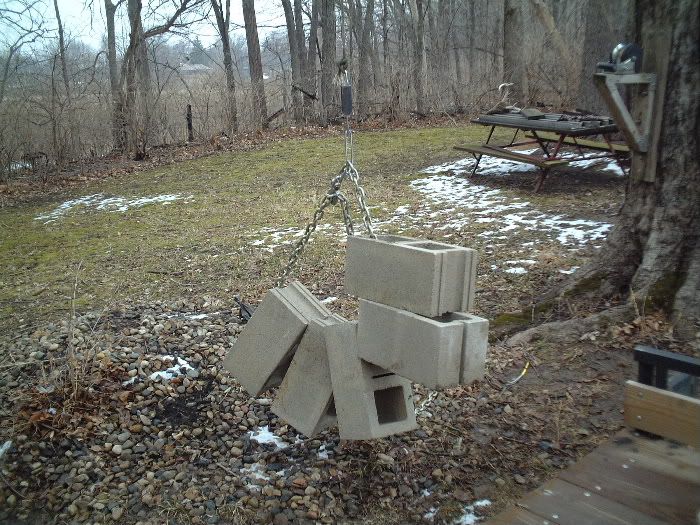
6 blocks:
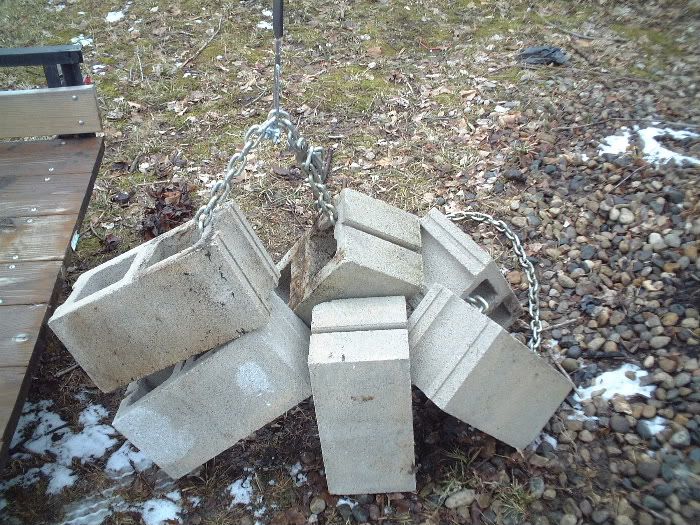
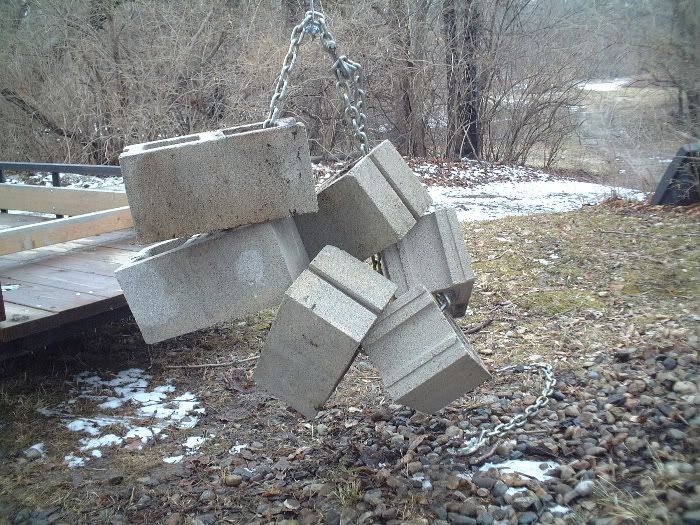
7 blocks:
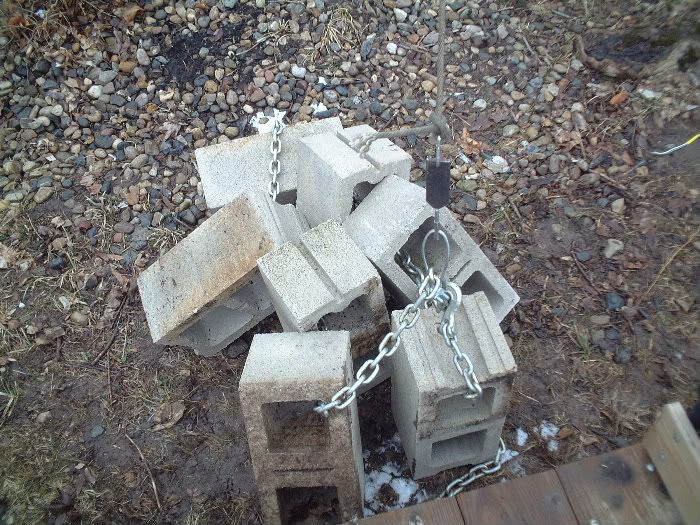
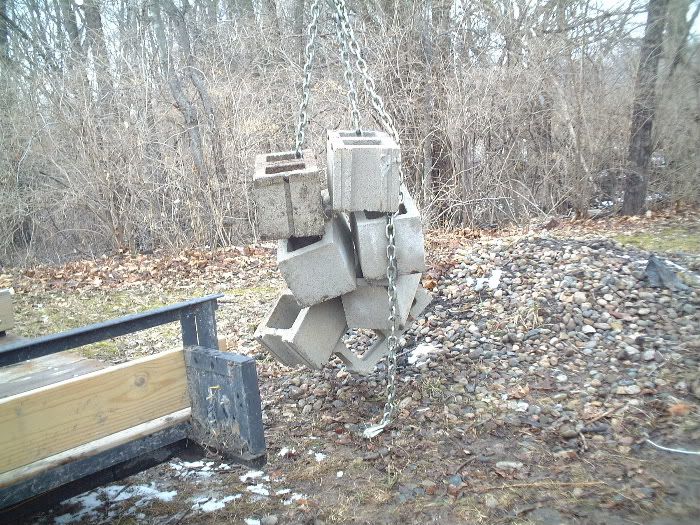
Then, I ran out of blocks.
Probably a good thing because on the 7 block lift, it started to pull the mounting bolts out of my lift bracket!!
And it was starting to rain and I feared for my camera.
Regardless, I have no fear - WHATSOEVER! - about the strength of my take-down assembly.
None.
I hope this helps to minimize any possible considerations on the strength of the PROPERLY EXECUTED take-down assembly.
I would say that in conclusion, when done right, the handle material itself will fail before the assembly does.
Not only did nothing break, but the threads did not strip out either, which is why I always use a fine thread - simply more contact and strength.
That was kind of fun!
I've never broken one.
The previous thread about the take-down chopper nudged me to perform an experiment I've been meaning to do for some time. I just wanted to know how strong the threaded take-down tang is.
To describe my method briefly, I either use a butt cap with a stepped recess to accept a finial with a ledge turned into it, or I use a hidden sleeve inserted into the handle butt that also has a stepped shelf in it to accept the ledge turned onto the finial.
No matter what, it's steel against steel, and either one of these is stronger than the handle material itself.
I think we can all agree that the old saying "A chain is only as strong as the weakest link" holds true.
So, if the threaded portion of the tang is the smallest, I'm thinking we can agree it is the weakest "link" in the take-down assembly, not withholding the finial itself!
So, for the record, on my smaller hunter sized blades, I use a 10-32 thread, and on the larger Chopper sized knives I will use a 12-28 thread.
I want to point this out right now, at the end of my forging, I go through extensive grain reducing steps which include controlled thermal cycling, austenizing, quenching and spherodizing. These steps make a tang that is so tough, I have to lock the knife in a vise and put gloves on to bend the tang.
This experiment uses off-the-shelf weld steel with quite questionable character!
So, this set-up should fail long before my normal materials would fail.
During the creation of my knives, I may assemble and dis-assemble each knife up to 100 times. Each time I do so, I use a temporary finial I have made up and when I crank the knife together, I use VISE GRIPS!! Which apply ffffaaaaaaaarrrrrrrrrrr more torque that will ever be applied with the take-down wrenches I supply the customer for his use.
I've always wondered just how far I could crank it before something broke!
So, in this experiment, in light of Jon Brand's Chopper thread, I used the combination I will use on his - 12-28.
I used a simple piece of weld steel for the threaded tang, so I could conveniently hook up a lift hook to it, and I used a piece of 1018 exactly like I would use on a knife with hot-bluing, on a non-hot-blued deal, I would use stainless 416.
You can see the pieces I made here.
Assembled:
The testing area is where I lift my deer for dressing and skinning:
The "rig"
I had a pile of concrete blocks, so the control was easy.
1 block:
2 blocks:
3 blocks:
4 blocks:
5 blocks:
6 blocks:
7 blocks:
Then, I ran out of blocks.
Probably a good thing because on the 7 block lift, it started to pull the mounting bolts out of my lift bracket!!
And it was starting to rain and I feared for my camera.
Regardless, I have no fear - WHATSOEVER! - about the strength of my take-down assembly.
None.
I hope this helps to minimize any possible considerations on the strength of the PROPERLY EXECUTED take-down assembly.
I would say that in conclusion, when done right, the handle material itself will fail before the assembly does.
Not only did nothing break, but the threads did not strip out either, which is why I always use a fine thread - simply more contact and strength.
That was kind of fun!


 Cool Test Karl:thumbup:


