How to cut handle scales - Safely and Accurate

Joined
Dec 7, 2008
Messages
7,187
Talking to a lot of knife makers I hear how different people will cut a block into scales. Sometimes what I hear will scare the spit out of me. My first question is usually "How many fingers do you still have?".

This is just a quick step by step how I do it with really bad photos.

The tools I am using are a bandsaw with a fence and a drum sander. I use a bandsaw to make the cuts because the blade eats up less wood when you make a cut than if you were using a table saw. The drum sander is used to true up the cut pieces to insure they are flat and evenly thicknessed as well as to remove the little ridges in the surfaces from the blade.

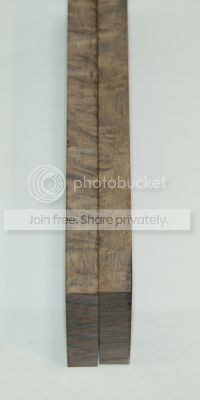
Here I am starting out with a block about 1&1/8" thick. I need to cut this block into 2 evenly matched pairs of scales. The block has flat faces and edges that are square to the faces. This way when the block is set with the edge flat against the table, the face is flat against the fence.
1-1.jpg


===================================================

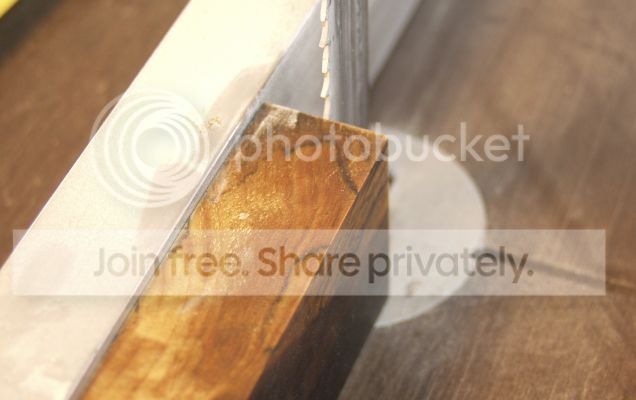
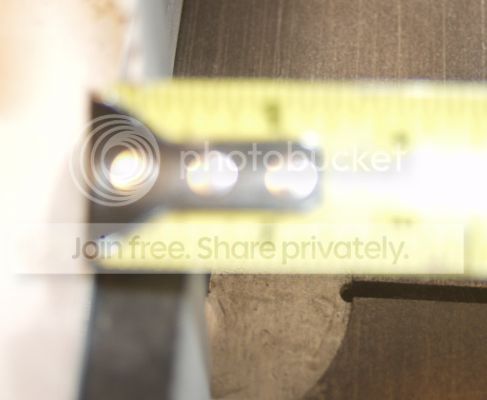
With the block flat against the fence I measure from the surface of the fence to the inside of the saw blade.
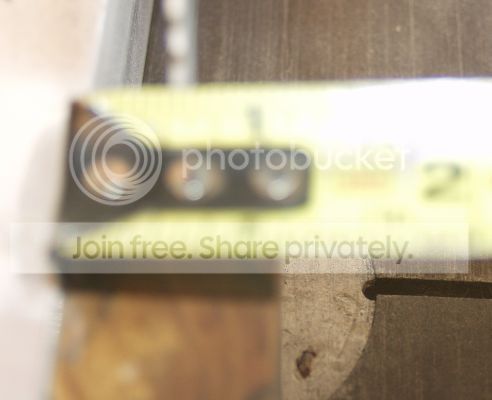
2-3.jpg


====================================================

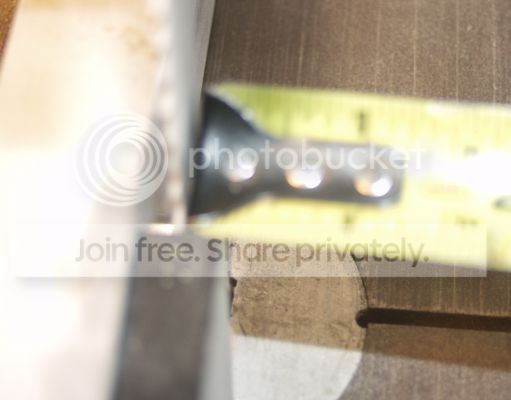
Next I measure from the outside of the saw blade to the outer edge of the block.
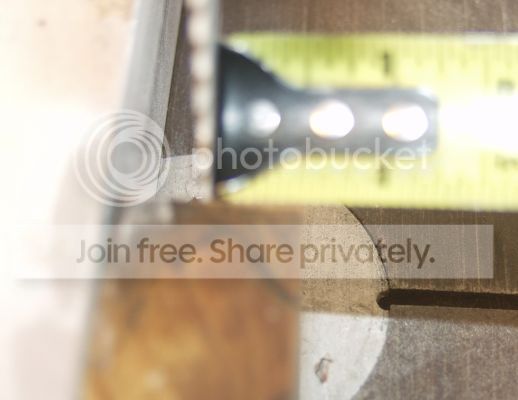
3-1.jpg


=====================================================

When I have made adjustments to the position of the fence so both of these measurements are the same, I make a very shallow cut to make sure I didn't mess up with my measurements.
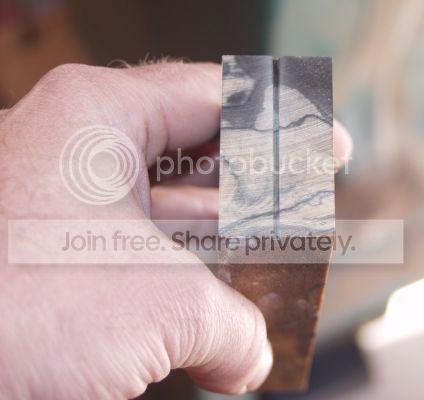
4.jpg


This won't always be exact but you want to get as close to even as possible.
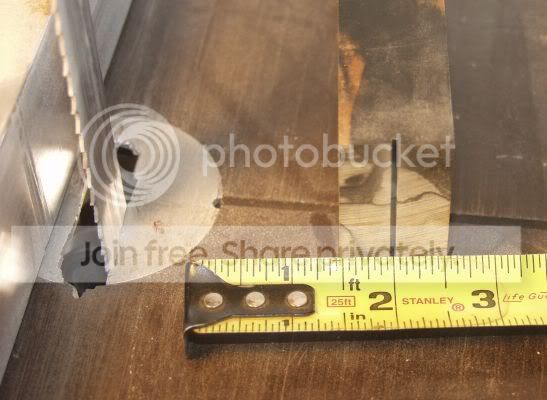
5.jpg


========================================================
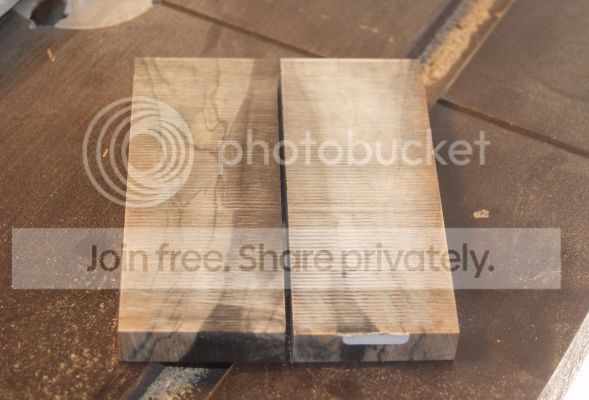
 
Now that I have double checked everything I am ready to make the first cut dividing the block into 2 even thickness pieces.

6.jpg


Here the 2 pieces are placed next to each other on the flat surface of the saw table. Feeling with my finger I check to see if one block has a higher surface than the other. I got lucky and both are really even with a barely noticeable (couldn't tell by measuring, but could by feel) difference in thickness.

====================================================
I took the half that seemed just a fraction of a hair thinner and placed it against the fence. I repeat the procedures as before to cut into even thickness pieces.

7.jpg

8.jpg

9.jpg


=====================================================
 
After cutting the two pieces into equal halves I have two sets of scales that have been cut equally. This finishes the part done with the band saw.

10.jpg


=======================================================
As you can see from the photos, the bandsaw cut leaves little ridges in the surface that will need to be sanded away. The blade can also wander a bit as you are cutting so the thickness of the pieces will need to be trued up with the drum sander.

Here I have the 2 bookmatched sets separate from each other.

11.jpg


=======================================================

The first couple of passes through the drumsander are to true up the thickness of the scales. The scales are placed face down so the majority of material to be removed will come from the backsides.

12.jpg


=========================================================
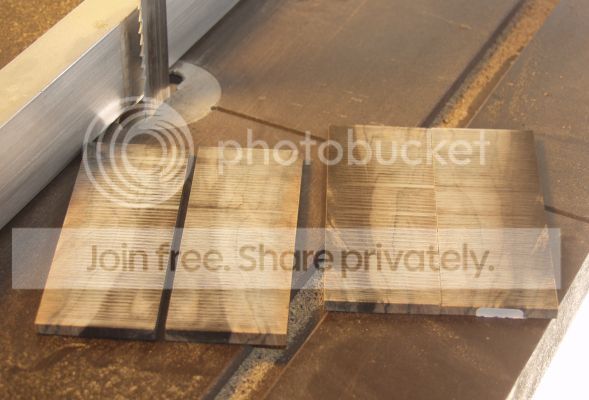
You want to run one set at a time through the drumsander to keep from getting things mixed up. After a few passes the backsides are even.

13.jpg


========================================================
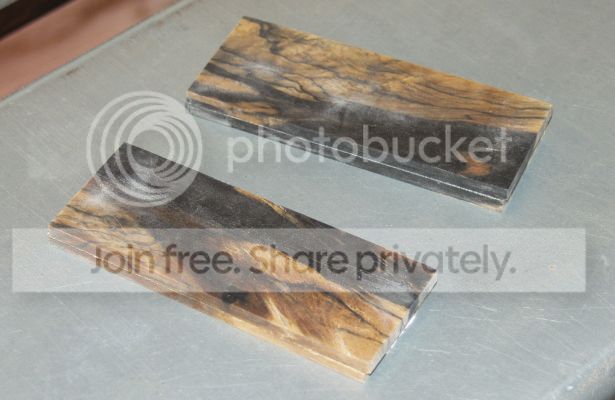
Now you flip the scales over to sand the faces.

14.jpg


=========================================================
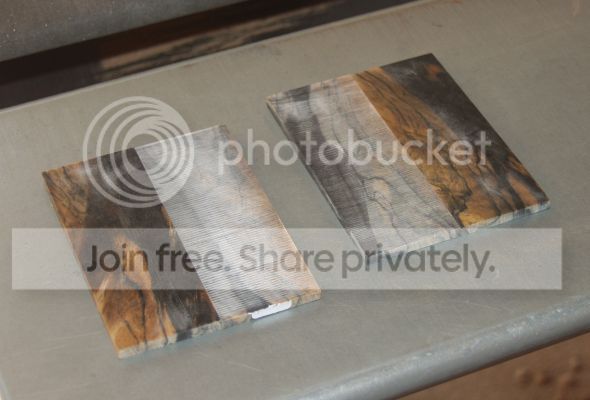
All you are doing here is sanding away the saw marks. You want to remove as little material as possible so you will have a good match between the two pieces.

15.jpg


=========================================================
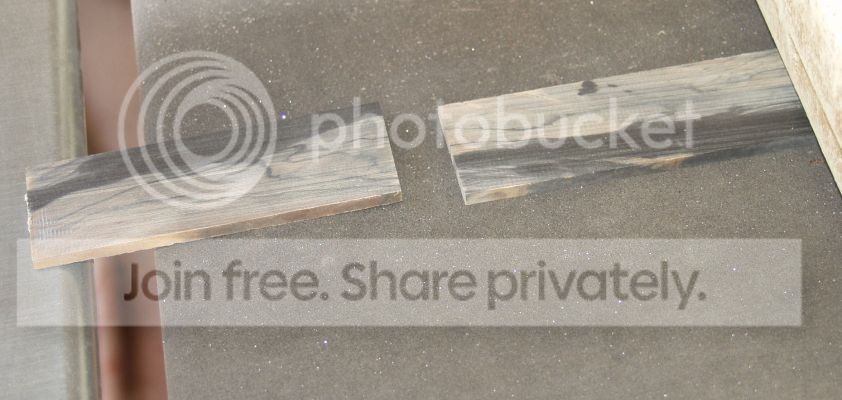
 
Nicely done. I have done the sanding portion on a belt sander as well. Requires a bit more care - but it will work as well.
 
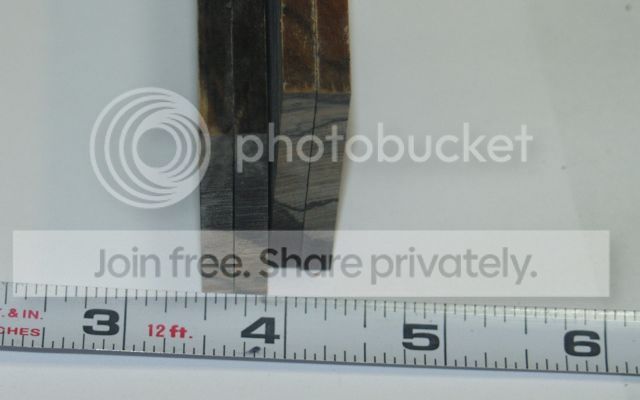
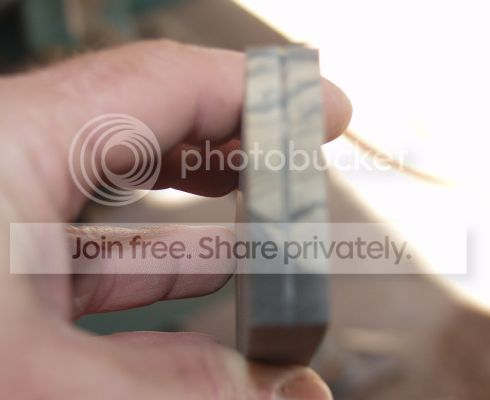
Standing a set that has been drumsanded on edge you can see that both pieces are flat and equal thickness.

16.jpg


=====================================================
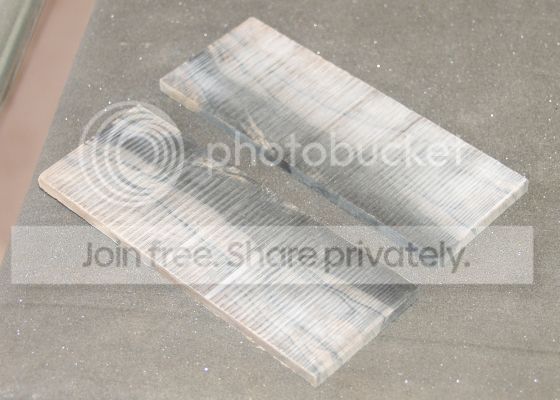
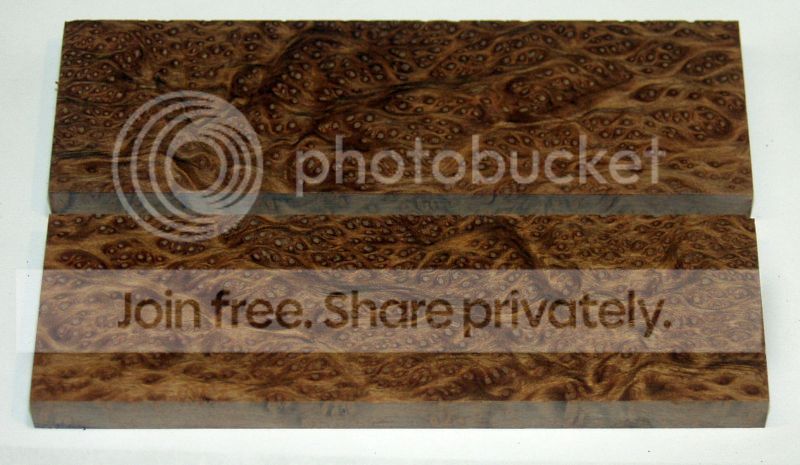
Here both sets are laid out showing the bookmatched surfaces (faces).

17.jpg


======================================================
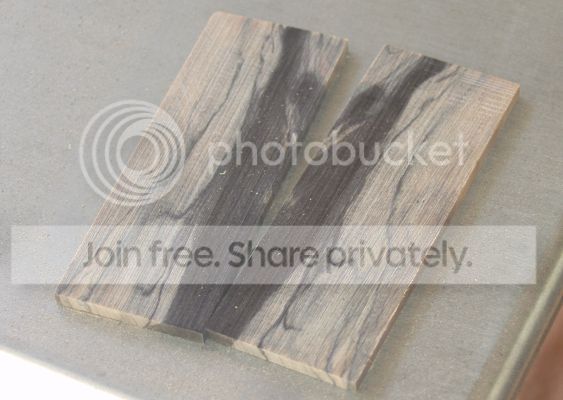
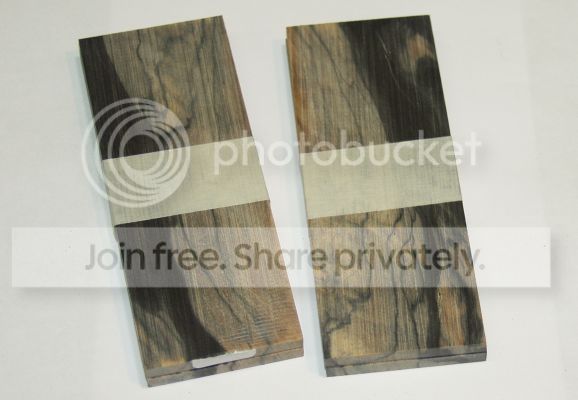
Next I just close each set like a book and wrap a piece of tape around them so I don't get things mixed up. These were pretty obvious which pieces matched each other and which surfaces are the faces but some pieces can be really close in appearance and easy to get turned around or mixed up.

18.jpg


======================================================
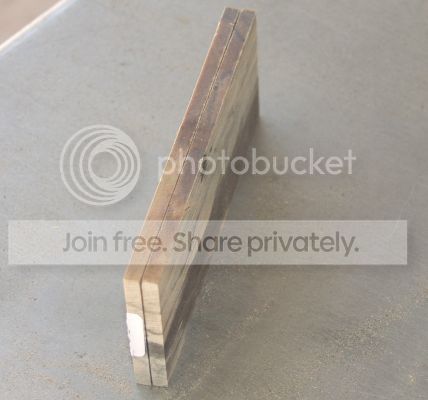
In the end I have two matching sets of scales that are about 3/16" thick. This was starting out with a block that was about 1&1/8" thick. I got lucky with this set as there is usually just a hair more waste than happened with these.

When these scales are finally used on a knife the only thing left to do is true up the backsides on a flat piece of glass or granite slab with sandpaper. I would advise against doing it any other way if you want to be sure you have a perfectly flat surface to go against the surface of your knife tang.

19.jpg


======================================================
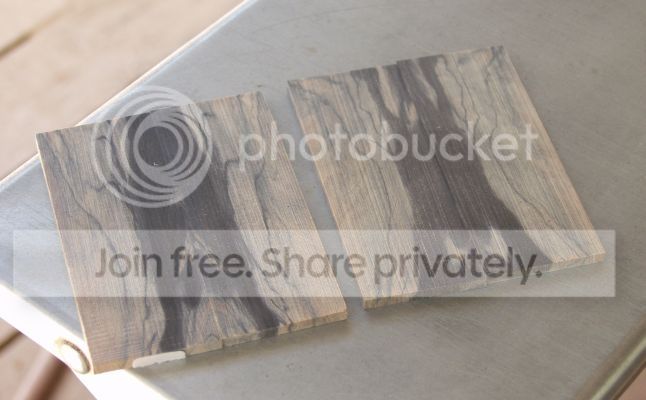
I forgot to mention that I always use a push stick when making my cuts on the bandsaw, especially when making cuts this thin. When you are cutting wood or anything else unexpected things can happen. When they do, I prefer that chunks get cut off of my push stick instead of my fingers.

I hope this helps, and maybe keeps someone from wasting wood or fingers by doing things wrong.
 
Neato man.
Would I be hijacking this thread if I showed a "metal shop" mentality way of doing this?
 
Neato man.
Would I be hijacking this thread if I showed a "metal shop" mentality way of doing this?

OOPS, I thought you said a "Mental Shop"

Post whatever you like. Between all of us maybe we can stop people from doing crazy dangerous stuff. Like using a radial arm or chop saw, or having their table saw kick a piece across the room and stick in the wall (if you're lucky).
I was just showing the way I do it to get accurate pieces and keep my fingers. I am sure it is not the only way and maybe not the best way. But it works good for me with the tools I have available.
 
OOPS, I thought you said a "Mental Shop"

Post whatever you like. Between all of us maybe we can stop people from doing crazy dangerous stuff. Like using a chop saw, or having their table saw kick a piece across the room and stick in the wall (if you're lucky).
I was just showing the way I do it to get accurate pieces and keep my fingers. I am sure it is not the only way and maybe not the best way. But it works good for me with the tools I have available.


It looks like a good way to me. :thumbup: But being a rather mental metal shop, I don't have a good vertical bandsaw or a Timesaver planer thingy like you guys have.

So, two other ways of doing it for those of us in metal shops that keeps blades far away from fingers and results in flat cuts:

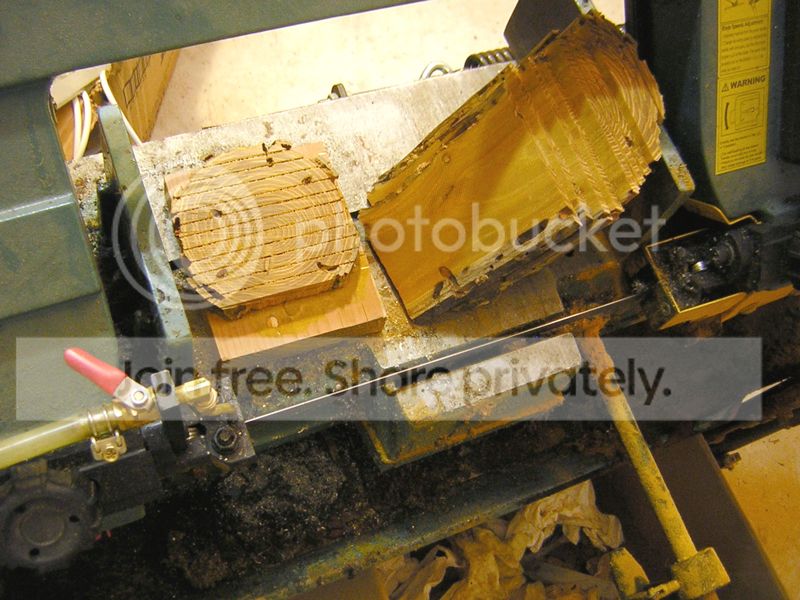
Glue to a sacrificial board, and feed through a horizontal bandsaw

18.jpg


With a fine feed, this approach frequently results in surfaces that are straight and flat and smooth enough to require no additional work.

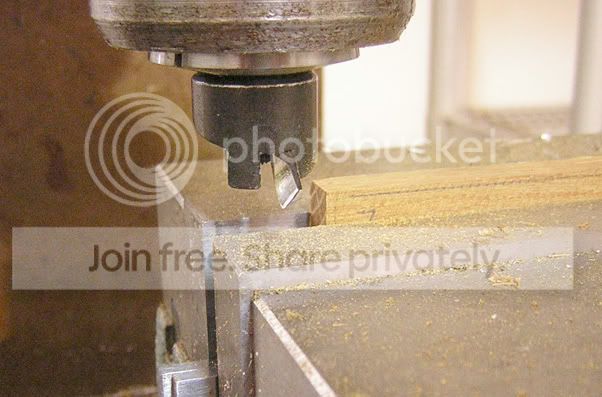
And squaring up rough sawn edges with a chisel ground fly cutter

23.jpg


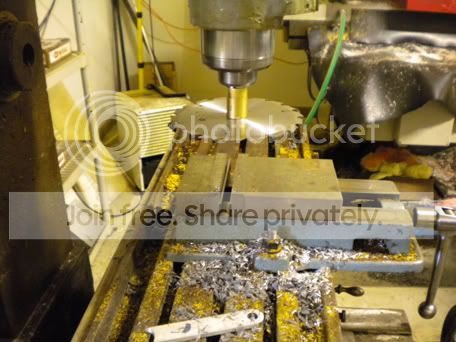
or put it into a mill vice and slit it with a thin slitting wheel

16.jpg


Again, the finished result is frequently ready to go as is. I use this approach when cutting up expensive wood because it is very accurate and takes a narrow kurf, so there is little waste. You'd be amazed how much more yield you can squeeze out of a stick of wood this way. I'm doing some of this today on some spendy buckeye burl.
 
all i want to know is what kind of wood that is. that is pretty.
great tutorial. this is very good info.
 
all i want to know is what kind of wood that is. that is pretty.
great tutorial. this is very good info.

What kind of wood which is? Mark's stuff looks like it might be ebony with sap wood (do I get a prize if I guessed right?). The stuff I posted was osage orange.


Something that occurred to me after actually doing this today with the slitting wheel that I failed to mention earlier:

I'm running that cut where it is climb milling and the cut is just barely through the backside of the wood. It is turning about 600 RPM, which is about an order of magnitude slower than wood working tools. The piece that gets cut off gets thrown off the top of the blade, away from me. The blade is turning slow enough the piece only travels a few inches and usually lands on the table behind the cut, though sometime it falls to the floor. By keeping things slow and pointing trouble away from me, I'm cutting a loose drop (a machining sin) without a lot of drama.
 
What kind of wood which is? Mark's stuff looks like it might be ebony with sap wood (do I get a prize if I guessed right?). The stuff I posted was osage orange.

OK Nathan,
You were close enough with your guess so you win a prize. The wood was some stabilized Black and White Ebony.

I am just making a guess with your Osage Orange. But........have your neighbors figured out where their fence posts have been disappearing to? Just Teasing.

Here is your prize.
Can you guess what this wood is. I'll give you a hint.
........It's stabilized by K&G. Not much of a hint.

s021.jpg


Send me a PM with your mailing address and I will mail you your prize tomorrow.
 
Last edited:
oh man, I don't know...

Is it birds eye maple burl?
 
Back
Top