

- Joined
- Oct 16, 2010
- Messages
- 5,776
Fellow knifemakers:
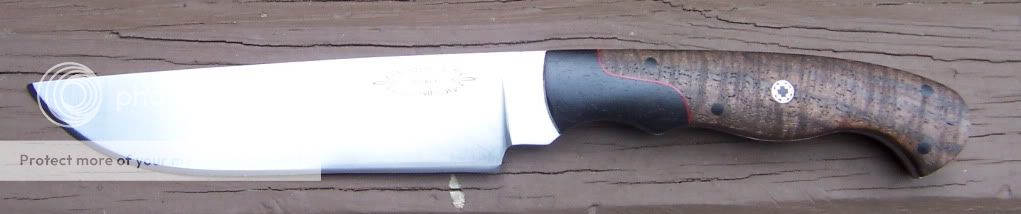
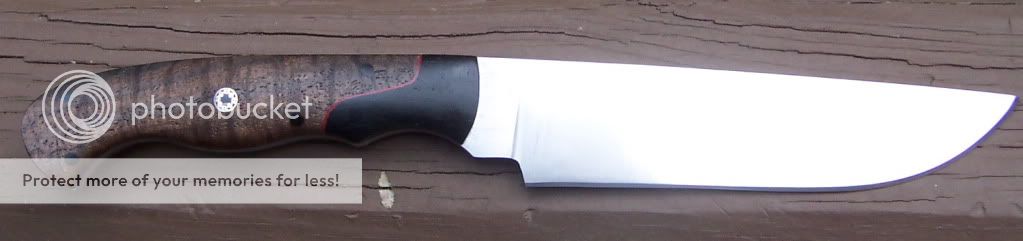
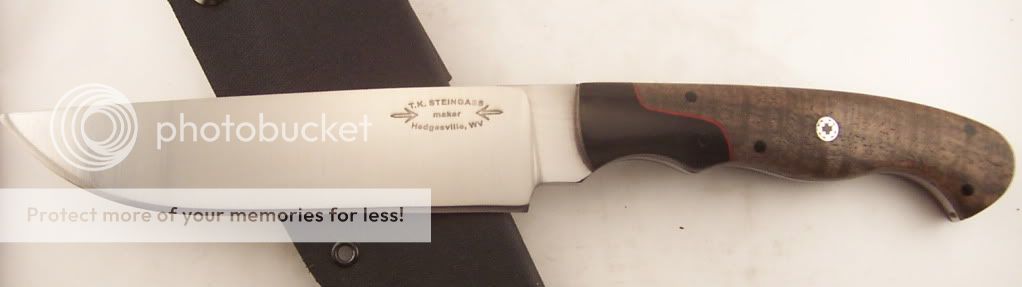
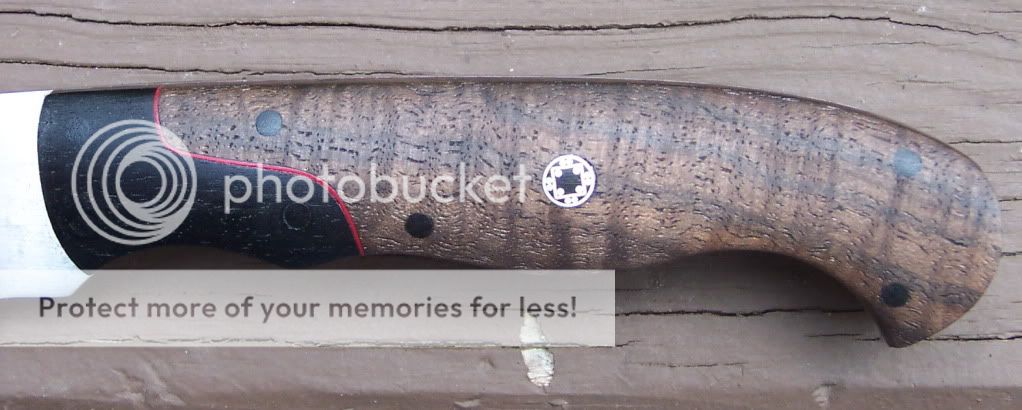
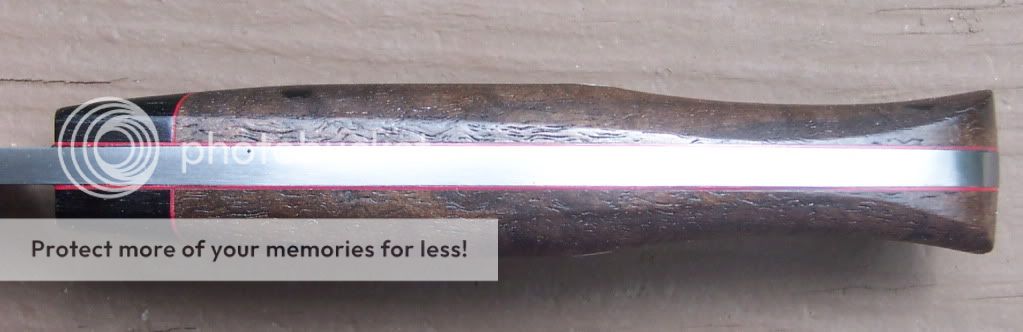
Here's a sole authorship camp knife I just finished and gave to my son. 3/16" O-1, 6" flat ground blade with distal taper and convex edge, 10 3/4" OAL, gabon ebony s-bolsters, red lines on fiddleback walnut with black micara pins, extra fine scotch brite finish. My question is when you guys design a knife, how do you work the design so that you get the correct balance point? When building the knife, I didn't know whether to leave the tang full thickness, remove metal by skeletonizing the handle it or tapering it. I left the tang full thickness and I just got lucky with this one - it's at the index finger. Is this just a trial and error thing until you've refined a design by making many knives of a specific design but with different tang treatments? Or, are there any rules of thumb you guys use? Right now, I'm working in the dark until I get a design 100% completed - there has to be a better way.
TK

Here's a sole authorship camp knife I just finished and gave to my son. 3/16" O-1, 6" flat ground blade with distal taper and convex edge, 10 3/4" OAL, gabon ebony s-bolsters, red lines on fiddleback walnut with black micara pins, extra fine scotch brite finish. My question is when you guys design a knife, how do you work the design so that you get the correct balance point? When building the knife, I didn't know whether to leave the tang full thickness, remove metal by skeletonizing the handle it or tapering it. I left the tang full thickness and I just got lucky with this one - it's at the index finger. Is this just a trial and error thing until you've refined a design by making many knives of a specific design but with different tang treatments? Or, are there any rules of thumb you guys use? Right now, I'm working in the dark until I get a design 100% completed - there has to be a better way.
TK
Last edited:


