How to Prevent Stains on Natural Leather prior to treatment?

TK Steingass

Troglodyte Knifemaker
Knifemaker / Craftsman / Service Provider
Joined
Oct 16, 2010
Messages
5,776
Hi Fellas:

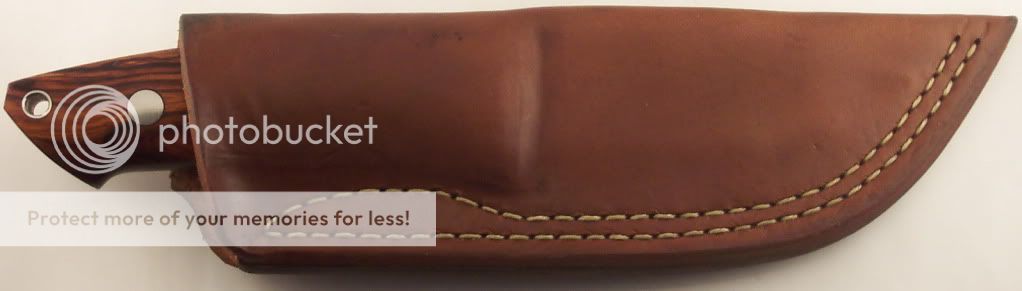
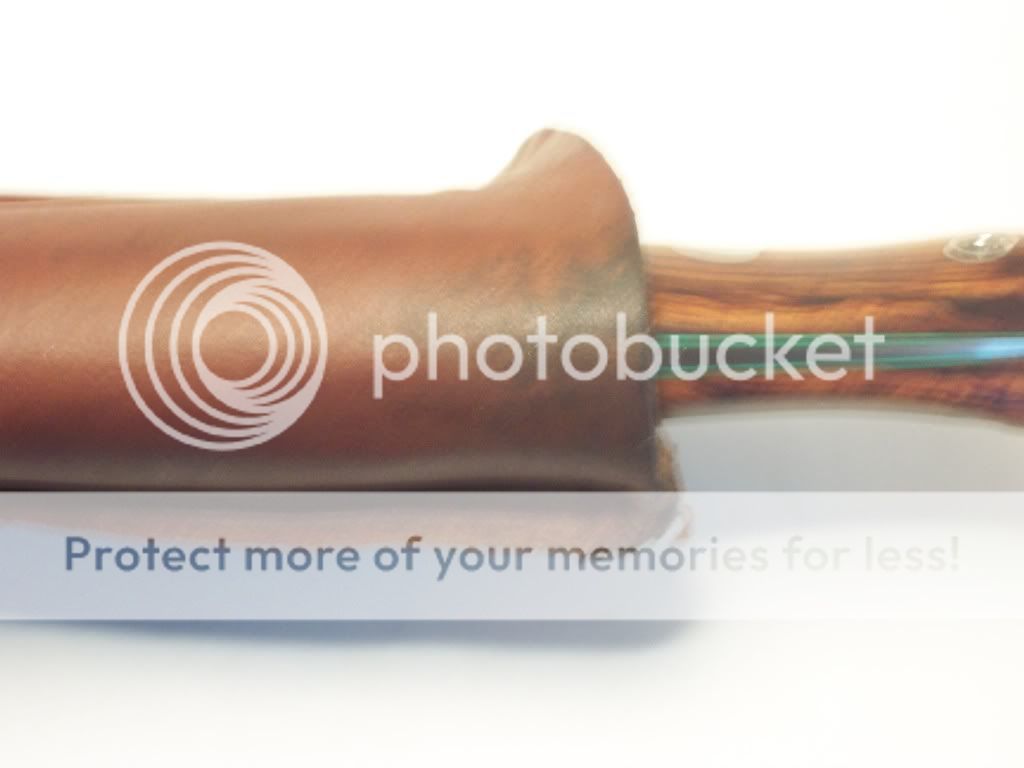
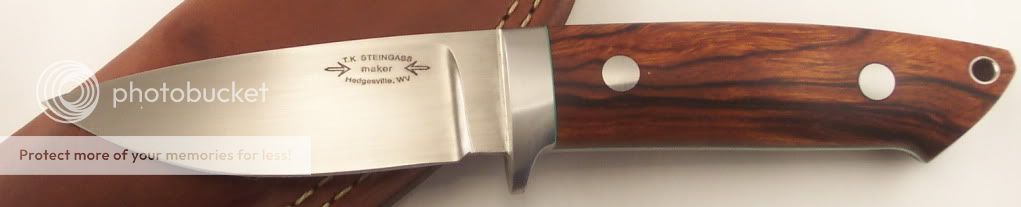
Here's a Loveless Dropped Hunter I just completed for a customer. I have a recurring problem with stains showing up on the sheaths. I like to use natural vegetable tanned leather and neadsfoot oil which gets the color I like. I use warm tap water to mold the sheath, with clean hands or rubber gloves, and leave the sheath on a clean surface while working it. I usually end up with dark stains somewhere on the sheath - see picture. There's a rather large one near the hilt area and another stain on the front.

I've tried using acetone to remove them - no dice. I've used rubber gloves - no dice. Are these mineral stains from the hard water? Does using distilled water make a difference? Any suggestions to prevent these "phantom stains" from surfacing would help greatly. I don't like the idea of using leather stains to cover an existing stain......I'd rather prevent the stain from starting in the first place.

TK
100_3660.jpg

100_3663.jpg

100_3666.jpg
 
No he is talking about the dark areas that apper after using water to form the sheaths. The sheath he is showing is undyed but had dark areas. I don't have an answer. I have had the same problem thouhgh so will be watching this thread with interest. :confused:
If you don't get an answer contact this man, Gary W. Graley. He is part of the forum and maybe he will chime in. He hangs out a lot at in the sheaths and such end of the forum. He is one the most knowledge I know of with formed sheaths, not to menntion how fantastic his sheaths look! :cool: I have picked his brain on several ascpects of formed sheaths and even though I have had this problem I have never asked him about it!

You might try posing this question over here as Gary hangs out there and I am sure he would probably be more apt to answer. http://www.bladeforums.com/forums/forumdisplay.php/820-Sheaths-amp-Such
 
Although difficult to tell for certain with the picture, it may be iron contamination. If even very tiny particles of iron get on the leather, it will turn almost black and be imposssible to get out as soon as water contacts it. Making knives and doing leather add up to a problem waiting to happen since we almost always have some residual dust from grinding or sanding on us. It is critical to keep those two activities isolated. I learned that a long time ago but recently I used my belt grinder to smooth some edges on a sheath and then had the edges turn black when I wetted them for finishing. I realized later I had picked up a belt I had used on a blade rather than the one I keep reserved for only leather. The metal dust on the belt transferred to the leather. It looked clean but when the water hit it, the black showed up immediately.

Although I have never experienced it, heavy iron concentrations of iron in the water might do it although I suspect it is remote. I have a deep well with iron casing and we get enough iron to turn my filter red in a matter of weeks but I have never had a problem from the water. I do use a 50 micron whole house filer but iron does get through.
Randy
 
I had a similar problem and showed it to the guys at the local Tandy which is about 5 minutes away. He did tell me to use distilled water as the iron and minerals in tap water can discolor leather. I have switched to using the distilled with good results. Buy a jug and give it a shot.
 
Well I just went over to sheaths and such and the one man I thought might nail it right off the bat didn't know what it is. I never do sheaths in the same area as my knives and I always clean my hands before starting sheath work. I think its something in the water. Question do they add flouride to your water where you are at? Is there a lot of iron in your water? I don't know I am just taking a shot at it because I knew exactly what you were talking about as soon as I heard and saw your pics. I have had that same thing appear. I origionally thought it had to do with not getting the piece the same wettness at one time. I have even tried plunging the whole piece into the water when shaping and if I need to rewet while working on it and rewetting the entire sheath. And I still have had it appear. I wonder if it could be sweat getting in with the water???? Heck I don't know but I feel your pain here!

I will have to give the distilled water a shot next time!
 
Those spots look like mildew to me. My last side I bought from Tandy had a couple of spots I thought I could work around. After drying from the wet molding, I had groups of tiny bluish black specks here and there. My spirit dye hid them, but I really did not want to dye the sheaths.
 
I think I read every response, but may have missed something. Have you tried oxalic acid (wood bleach) ? Not sure it would work on your stains, but it works wonders for removing finger smudges and ordinary "dirt" stains from natural leather.

About a teaspoon into about a pint of warm water. Clean the sheath using a clean rag wet with the mixture. It will "magically" remove most stains. When clean, mix a little baking soda in some water and go over the sheath. Then rinse well.

Thanks to Sandy Morrissey for giving me this tip several years ago.

Robert
 
I have a similar situation; no matter what when the sheath is wet formed I end up with stains. I thought it was the shop, so I did a sheath in the house; no difference. I have let them dry in the shop, house and outside; no difference. I have very soft water/decent water were I live (at one point they bottled it and gave it away at real estate offices as a marketing ploy). The guys at Tandy seem to think it is something coming out of the leather from processing?

I will have to try the oxalic; Robert where is it readily available?

David Sharp
 
Those spots look like mildew to me. My last side I bought from Tandy had a couple of spots I thought I could work around. After drying from the wet molding, I had groups of tiny bluish black specks here and there. My spirit dye hid them, but I really did not want to dye the sheaths.

I think LRB hit on it . I started using a dehydrator to dry my sheaths and it has helped a lot . I still get that at times but it is usually on the untanned side .
 
I will have to try the oxalic; Robert where is it readily available?

David Sharp

David,

You can find it at Lowe's, Home Depot, Ace Hardware, or just about any big box store that sells wood, paint, etc. It is sold as "Wood Bleach". A small plastic tub (maybe 1 pint size) will last forever. Test it on a piece of scrap leather that has all kinds of dirt and smudges on it. I think you will like it.

Robert
 
Back
Top