How to sharping a Hawk Bill or Karambit curved blade?

Joined
Jun 21, 2011
Messages
108
I'm getting a KME Knife Sharpening System that are principally the same as the Lansky and Smith.

With the width of the stones how do you get a good sharpen edge on a dramatic curve of a Hawk Bill or Karambit curved blade?
Thanks

IMG_4327.JPG

1002472_2590282_A_400.jpg
 
dan, i sent you an email. you might change your mind about a clamp type system after you read it.
 
Sounds like you right about those clamp systems to set in the same spot every time
this look like your setup?
Thanks
[youtube]yKIC2Q9_g5o[/youtube]
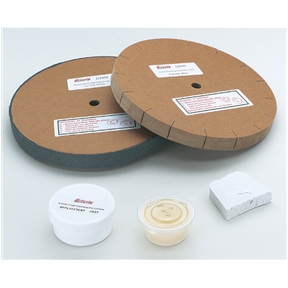
Product_kit.jpg
 
sure is daniel. most people never think about the clamp systems and how they work (or dont work).
 
sure is daniel. most people never think about the clamp systems and how they work (or dont work).

if I'm right about this "hidden" conversation, you are recognizing the fact that you can clamp on the blade, and not always be in exactly the same spot, chiefly changing the angle on the further point from the clamp. simple solution is to make small scribe marks on the blade, and you'll be about as close to exact as possible when clamping. I personally use a 6" ruler with small increments to stay maintain position.

at any rate, to get back on topic, I still haven't heard a decent method to sharpen a reverse curved blade. it's almost like it's taboo, or we should already know. I, for one, would like to hear of & possible see a good, tried and true method for sharpening these things.
 
i for one woud not want to put scribe marks in any blade no matter how small. in all the years of sharpening and all the methods i have came up with until i was introduced to the paper wheels, the only other method i know of that works real good and fairly fast is a pringles can with abrasive paper glued to it. either that or convex the edge done on a belt sander.
 
Most stones on those guided systems are pretty narrow, they should make enough contact on their edges to get your knife sharp.

About Richards view on guided systems, you use the guided system once to set a beautiful flat even bevel which can now be maintained free hand with ease. Unless you have 100s of knives it shouldn't be an issue.

If cosmetic edges are not important then free hand (on wheels or any other abrasive) will serve you just fine.
 
rounded edge stones will not sharpen the full length of a knife unless the knife has a sharpening notch or small choil. the first picture daniel boon posted is an example of a knife that would be hard to get the full length sharpened with a rounded edge stone. a narrow stone. paper wheel or a pringles can with one side flattened to fit in the corner by the ricasso.
 
I've seen that a fixed rod system like the Sharpmaker with round ceramic rods works well for knives with weird curves and recurves.

By using the corners , not the flat side , on the sharpmaker rods you can sharpen curves , and serrations .


1234,,,,,,,,:)
 
My first choice for sharpening recurves would be wet/dry sandpaper wrapped or glued to a cylinder. Choose a cylinder size that best fits the recurve. As mentioned, the Pringle's can is one possibility. Could also use a section of pipe, a glass jar, etc. Lots of simple, cheap ways to get it done (which is why I like this method).

As for clamped systems, narrower is always better in this case. I have the Lansky (2 sets), Gatco and DMT Aligner/Magna-Guide. The narrowness of the Lansky's hones was an advantage for the recurved blades I've done. Not the perfect solution, though. It's doable, but care must be taken to use very, very light pressure. The edges of the hones will be the primary contact point, and they'll exert a lot of force on the edge if pressure is excessive.
 
Back
Top