I appreciate you all putting up with me.

Joined
Apr 8, 2009
Messages
1,367
I've put up a couple of completed knives these last few days and I can honestly say I've learned more after posting those last two than I did in the last 3 months. I have two more to complete after this one, so I figured I'd just put them all in this thread and stop cluttering up the Shop Talk forum.

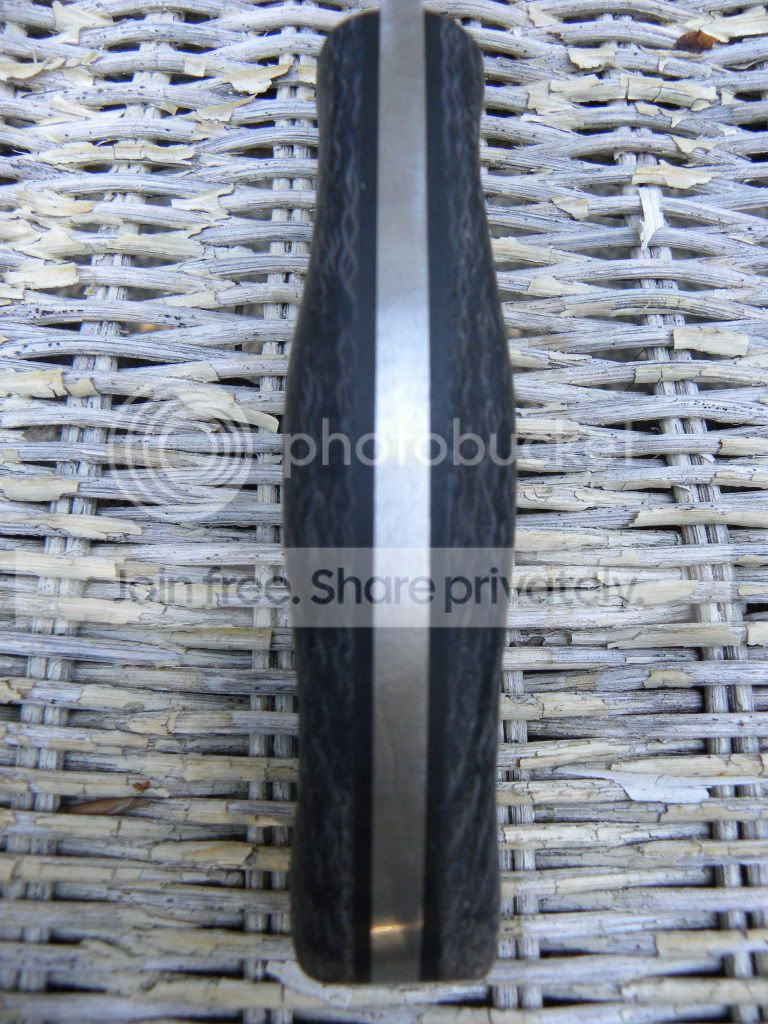
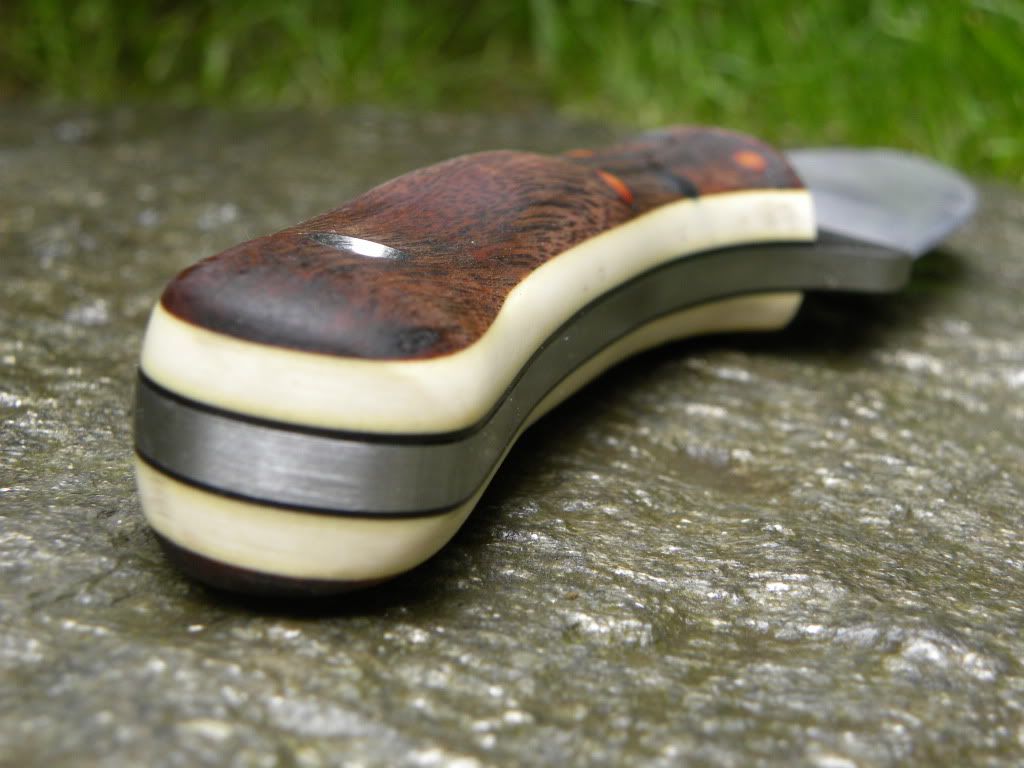
Some of the advise I had gotten was on the contours of the handles. I 100% agree with everything that was said and I've been focusing on getting it right. The last knife I did had a solid piece of micarta over G10 liners and I think I achieved a good contour. I love the feel of this knife.
DSCN2241.jpg


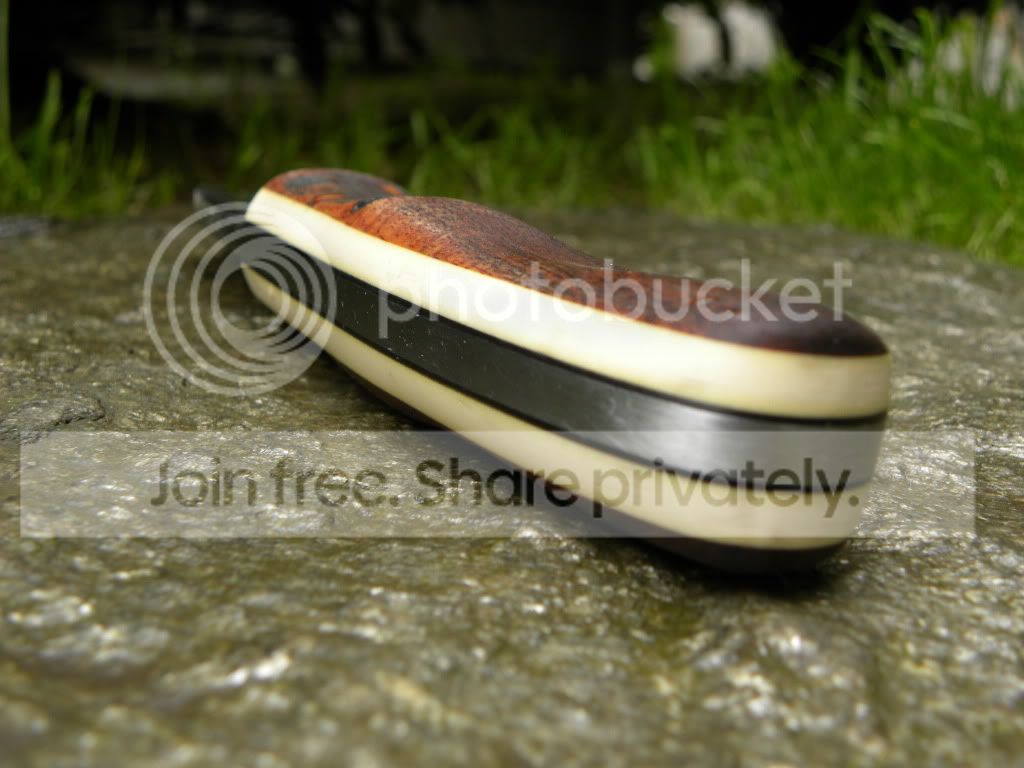
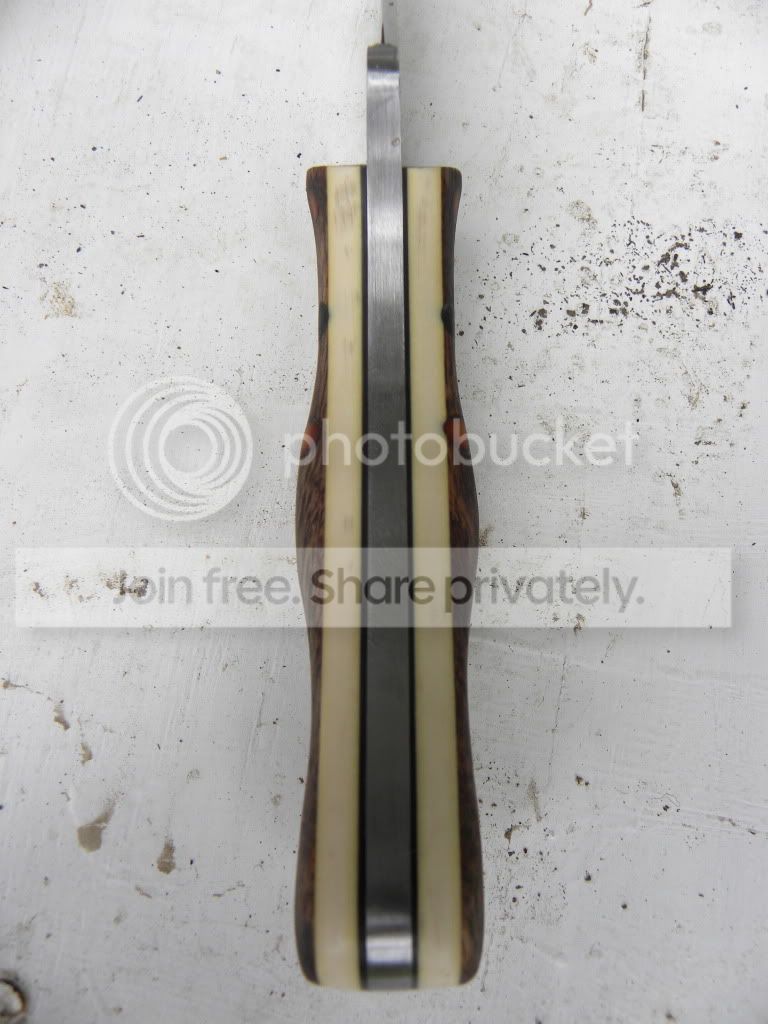
What I found out today however was that by stacking the wood over the micarta, the micarta was too thick and prevented me form getting in there and achieving the contour I did on the above knife. Lesson leaned.
DSCN2257.jpg


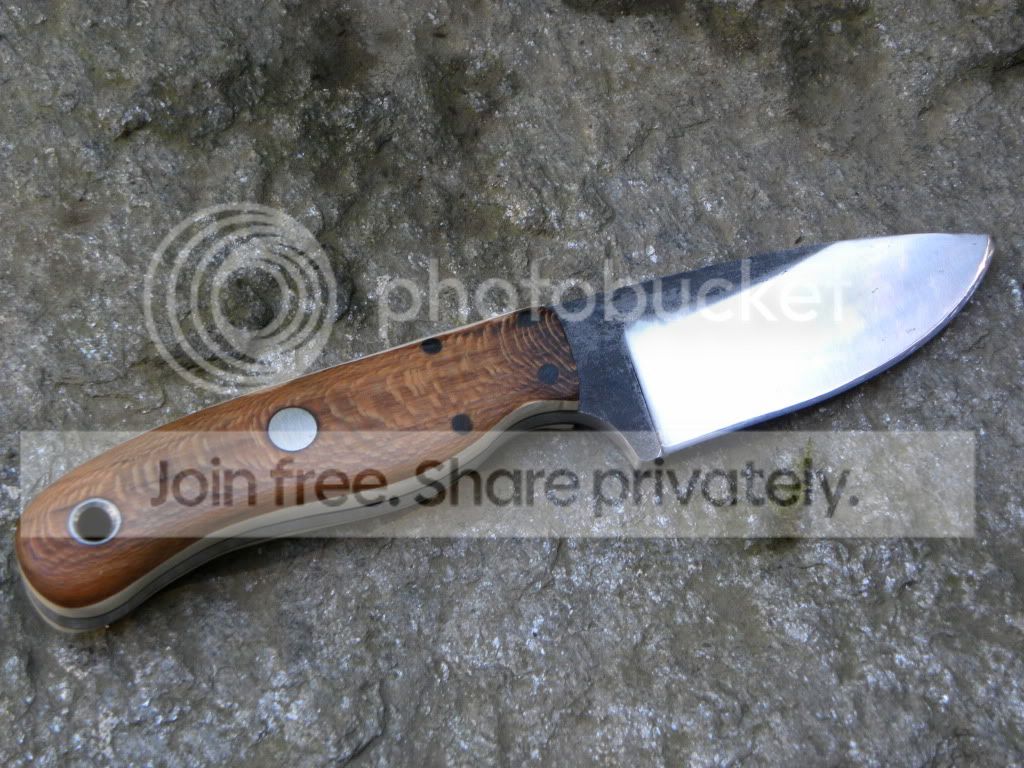
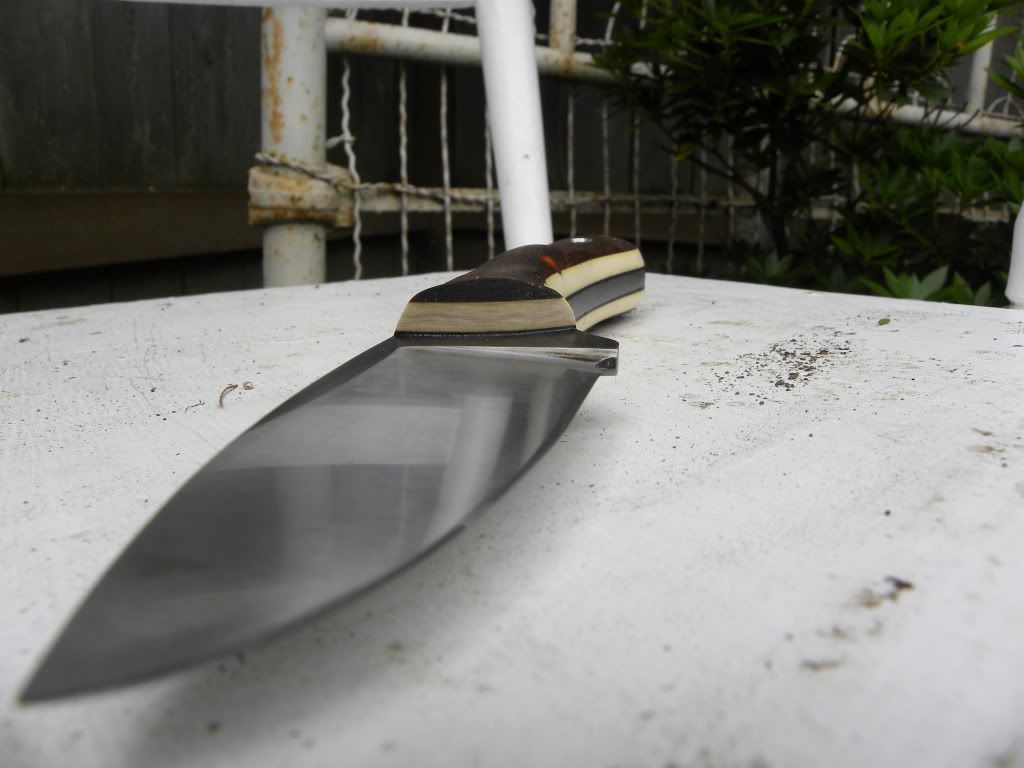
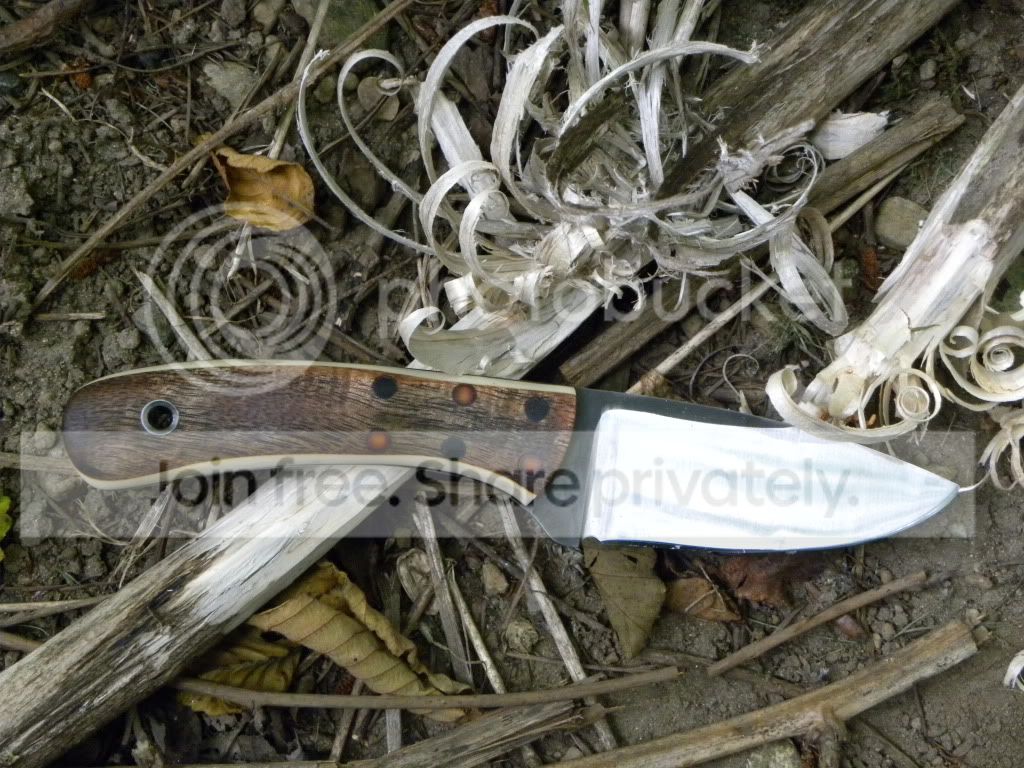
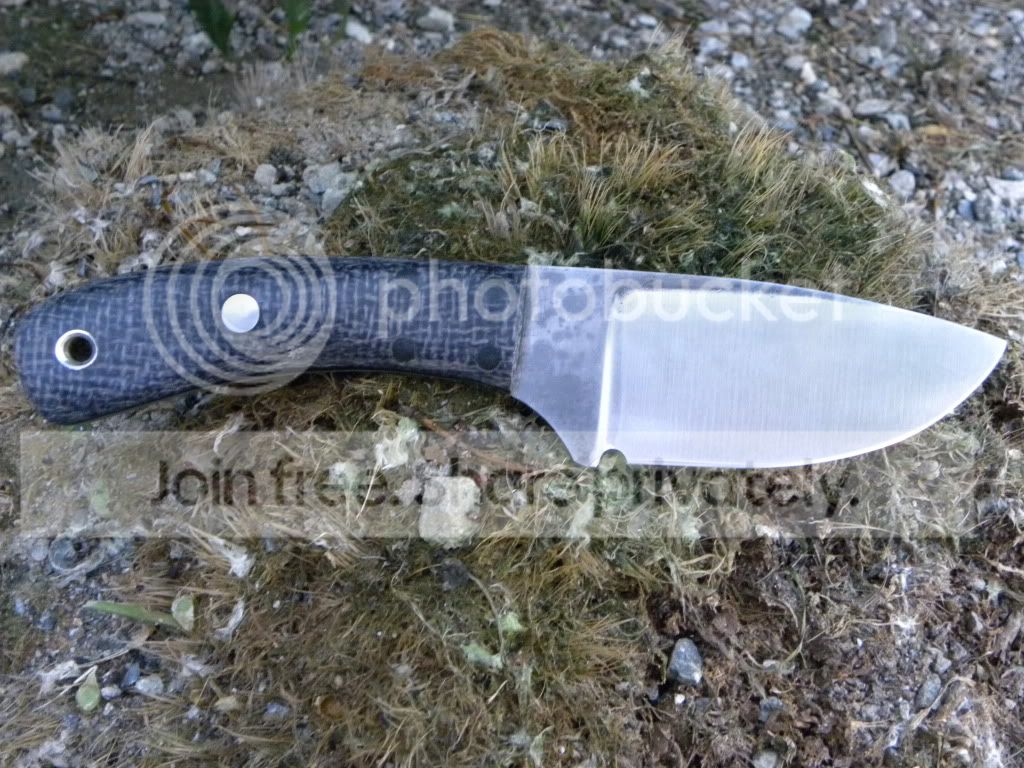
An area where I really am stuck is the area right before the plunge line. My grinds are looking cleaner and crisp but I cannot get that area right before the plunge line cleaned up properly. If you look from knife to knife you'll see the same thing in that area. Not crisp at the plunge and not a very good circular radios from the spine to the plunge.
DSCN2259.jpg


DSCN2245.jpg


DSCN2205.jpg


I'm taking the belt over the platen and rounding the paper over the edge before I start. Is this just a grinder time issue or does anyone have any other suggestions or tips?

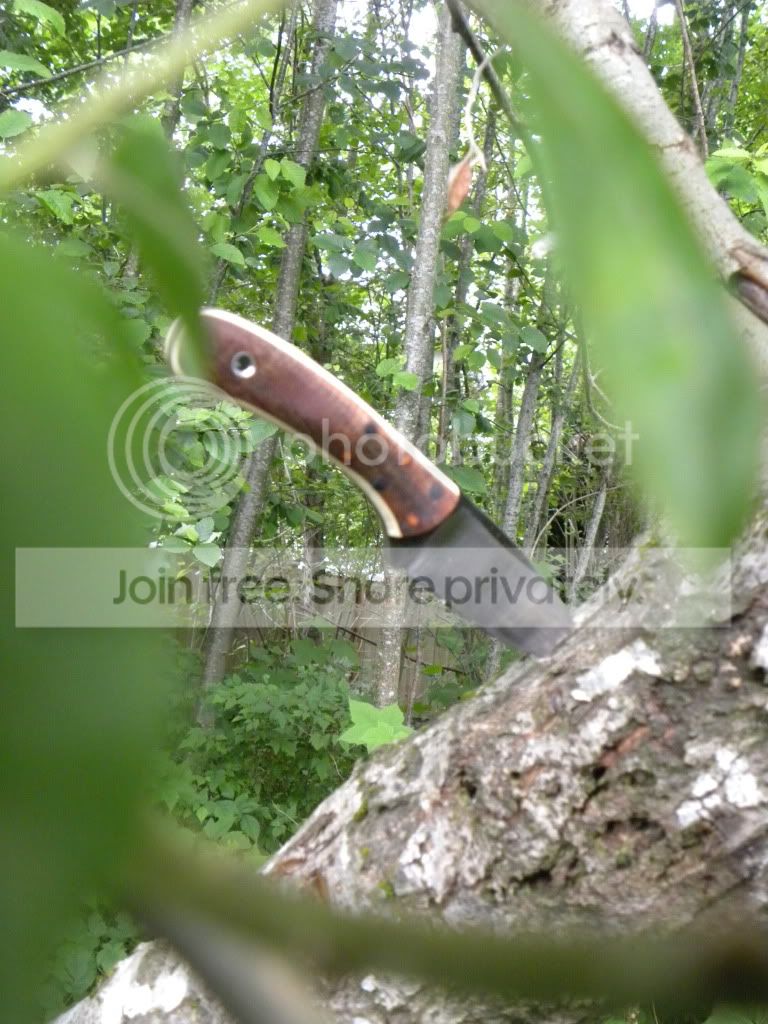
Here are a few more of the last knife I finished this morning.
DSCN2253.jpg


DSCN2254.jpg


DSCN2256.jpg


DSCN2260.jpg
 
Just my 2 cents worth of opinion.
I try not to use the "M" word.
But.......you are making things look pretty good with your combos.
Maybe stacking with thinner pieces of m#@%$ , so less wood ends up being ground away.
 
I completely agree with you. I really like working with the wood but everything underneath the wood is too thick.
 
Your work overall is looking very good especially for the very few knives you have made ! I love contoured handles and always try to build in some handle shape that has look appeal as well as feel appeal. Perhaps you are "rolling over" too much sandpaper? Some people make a hardened piece of two separate bars with screws on each end that they slide over the blade and acts as a positioner for both sides of the blade. If you go to this don't try it with a 60 grit or it will be ruined in a flash. 220 might be a place to start. Perhaps a bit of testing on a mild piece of steal in a blade shape will help? Stay with it, I think you have something good going !!! Frank
 
Are you referring to the high spot in your grind line right as it meets the plunge (I'm not 100% sure what you are referring to, but I've wrestled with that issue a little bit.) If so, I would first make sure you are using sharp, fresh belts. Unevenly worn belts seem to produce uneven results in my hands. Also, you might be torquing the blade into the left side of the platen in the plunge area or just applying uneven force across the platen. Paying attention to those things has helped me with that problem.

In one pic, it also looks like you might have a dip at or near the plunge, which I have also had. Sort of the same problem as above with torquing the blade into the left edge of the platen. It's tricky in that area, because you will tend to either get a dip at the plunge or a 2" dip (or both!) as the platen meets the plunge area.
 
Just my 2 cents worth of opinion.
I try not to use the "M" word.
But.......you are making things look pretty good with your combos.
Maybe stacking with thinner pieces of m#@%$ , so less wood ends up being ground away.

Bwuahahahahahaha! Mark, you kill me!
I like the look of the stacked m!*@^+@ and the wood...But, i suggest thinner pieces also. The profile of the handle is looking good. For the plunge area, What i might suggest is to get a couple J Flex belts in about 400-800,(They are thin and fold over the platen easily) overlap your platen by about 1/8th-3/16th inch so that when you "plunge", you actually sand the face of the plunge and round out your grind. Makes clean up a ton easier. After that, get a small 1/8 dowel, wrap it with your desired sandpaper, drop directly into the plunge and pull nice straight lines to the tip.
Just my 2 cents.
Mike
 
In one pic, it also looks like you might have a dip at or near the plunge, which I have also had. Sort of the same problem as above with torquing the blade into the left edge of the platen. It's tricky in that area, because you will tend to either get a dip at the plunge or a 2" dip (or both!) as the platen meets the plunge area.

Yes, I have a lot going on right there near the plunge and none of it is good. It's that last 1/4" on the blade that is so frustrating. I've done everything you described from the dip at the plunge to the 2" dip to both. Not only that, but that last 1/4" just doesn't belt finish consistent like the rest of the blade. I'm left with a few scratches of a discolored metal. Not a "burnt" metel coloration, just a more dull, less scratch pattern color.
 
Bwuahahahahahaha! Mark, you kill me!
I like the look of the stacked m!*@^+@ and the wood...But, i suggest thinner pieces also. The profile of the handle is looking good. For the plunge area, What i might suggest is to get a couple J Flex belts in about 400-800,(They are thin and fold over the platen easily) overlap your platen by about 1/8th-3/16th inch so that when you "plunge", you actually sand the face of the plunge and round out your grind. Makes clean up a ton easier. After that, get a small 1/8 dowel, wrap it with your desired sandpaper, drop directly into the plunge and pull nice straight lines to the tip.
Just my 2 cents.
Mike

Mike, I'll try those "J-Flex" belts. I have been using those Gator belts up till now. I'm trying to stop at a belt finish, but if I am unable to get this figured out, I'll try the dowel. It makes complete sense what you're describing. Thank you.
 
I'm not sure why you would get a discoloration in that area unless it's just from having deeper scratches and a less uniform finish, making it appear different than the rest of the blade. Since you mentioned Gators...

I chased uneven grind lines, etc. on several blades and I finally figured out that it was because my Gators were getting pretty well used and worn unevenly from grinding spines, etc. with them. They will last seemingly forever, but they will also wear unevenly, so I would suggest fresh ones and only using them for bevels and nothing else, or try J-flex belts instead. They will give you a differently shaped plunge than the Gators, which you may or may not care about.

If you want super clean plunges, I'm not sure any machine finishing will truly get you there. My plunges usually look about the same to me as the rest of the bevels when they come off the grinder, but there are almost always some deeper scratches hiding in there that I discover once I go to hand sanding.
 
Maybe try a scotchbrite belt.....If you are going for a belt finish look....J flex belts will give you a more rounded plunge, as they take off material on the blade and plunge face, but it will be easier to hand sand out.
 
I spent the last hour trying to find some j-flex belts, but it appears they don't make them for the 2X42, at least I can't find any.

I bought a scotchbrite belt a few months back, but it will not fit with the bottom clearance on the Craftsman. I have the frame completely assembled for the No Weld Grinder, so as I can afford wheels and a motor, some of these problems should be solved. Until then, it's just me and the trusty Craftsman. I put a piece of ceramic tile on the platen of the craftsman. I'm thinking I should have sanded the edges round and not so blunt.
 
I was going to say your platen is what is most likely causing your problems at the plunge, If you have a sharp edge on ceramic tile it will cut a sharp edge into your plunge. I really like the Gators for cleaning up the entire grind, they are stiff enough to make an even clean plunge. I find the JFlex (Or other thin belts) shape to the platen and you end up with a very sharp plunge.

I agree on the Scales, thinner M&*$)# and more wood!
 
I'm with the others. More wood! It might pay to check that you're blades aren't bent/have any humps in them. It's probably only a problem I have because I'm currently using a 6" wide belt, but if the blade isn't completely straight I don't get an even grind. Man, trying to grind bevels straight pissed me off until i figured what was going on.
 
I'm with the others. More wood! It might pay to check that you're blades aren't bent/have any humps in them. It's probably only a problem I have because I'm currently using a 6" wide belt, but if the blade isn't completely straight I don't get an even grind. Man, trying to grind bevels straight pissed me off until i figured what was going on.

good point Tiiiim I went through that too! that may actually be your issue where the grind line rises up in your photo.
 
The forums enjoy spending time and energy with new makers that not only ask pertinent questions but actually make knives, using the information they harvest.

There is no need to thank us for putting up with you.:)

It has been a pleasure, Fred
 
The forums enjoy spending time and energy with new makers that not only ask pertinent questions but actually make knives, using the information they harvest.

There is no need to thank us for putting up with you.:)

It has been a pleasure, Fred

I really appreciate your sharing your work. New maker WIP's are extremely helpful when they share all their success AND struggles like you.
I REALLY appreciate your scorched corby's for example... :D:D I'll be sure to file them down in hopes of keeping them cool in the future and avoiding the burned ring. Though, on that knife I thought it looked cool. :thumbup:
 
I think we can all agree we like reading WIP threads. It gives new maker's like myself a chance to look at how other new maker's do their thing, and see how experienced maker's can help them. I like your hard-use and practical designs, and can appreciate the difficulty it must have taken to hand-file 5 knives from 1/4" material :D (this subsequently told me I would never work material that thick with only files! lol)

I was first inspired to start making knives myself when I saw your first knives being made on the late ESEE forums and their newer official one. I can thank you for getting me into this great hobby, and continuing to see your skills progress is amazing. You do what you do with minimal tools, and a limited budget much like myself.

Again thank you for posting, and starting me off in this direction :thumbup:

PS: For some reason I'm addicted to G-10 much like you prefer Micarta it seems... more wood is on the way for my future batches as that seems to be a common theme spouted from the knifemakers here towards you!
 
I think we can all agree we like reading WIP threads. It gives new maker's like myself a chance to look at how other new maker's do their thing, and see how experienced maker's can help them. I like your hard-use and practical designs, and can appreciate the difficulty it must have taken to hand-file 5 knives from 1/4" material :D (this subsequently told me I would never work material that thick with only files! lol)

I was first inspired to start making knives myself when I saw your first knives being made on the late ESEE forums and their newer official one. I can thank you for getting me into this great hobby, and continuing to see your skills progress is amazing. You do what you do with minimal tools, and a limited budget much like myself.

Again thank you for posting, and starting me off in this direction :thumbup:

PS: For some reason I'm addicted to G-10 much like you prefer Micarta it seems... more wood is on the way for my future batches as that seems to be a common theme spouted from the knifemakers here towards you!

Very cool Wolf!
 
Back
Top