
- Joined
- Feb 3, 2011
- Messages
- 127
I was given a lot of eBay knives for Christmas this year by a family member, and although most of the knives are admittedly crap (although I'll still cherish them, because I'm oddly sentimental like that), this gem was among the mess.
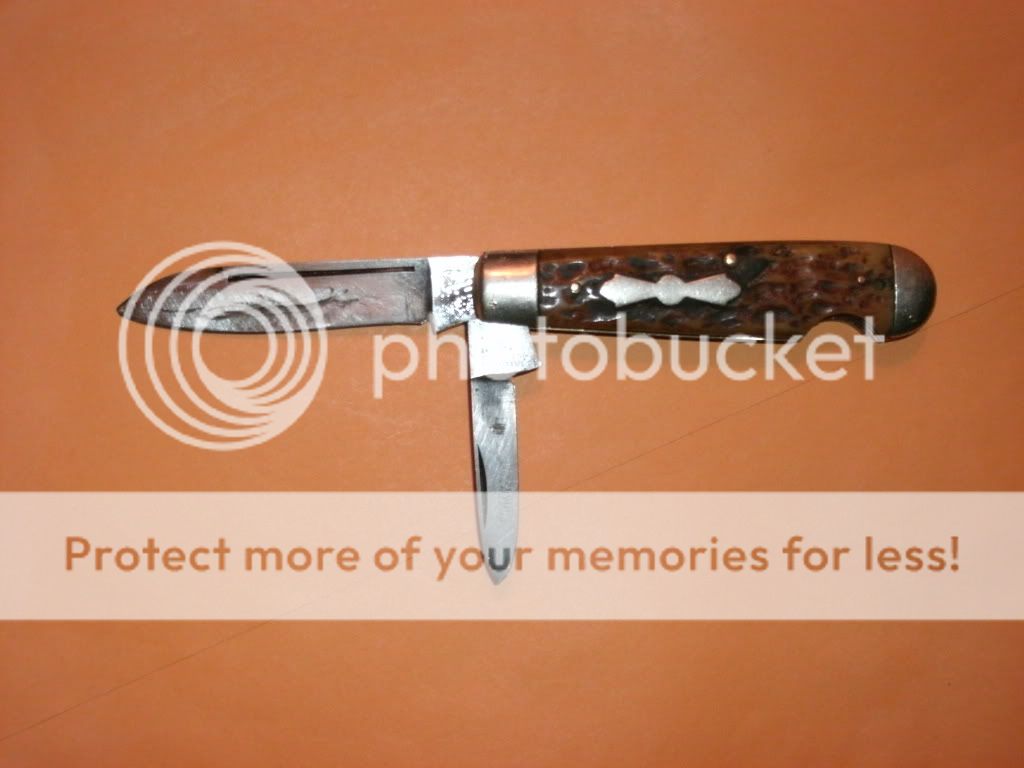
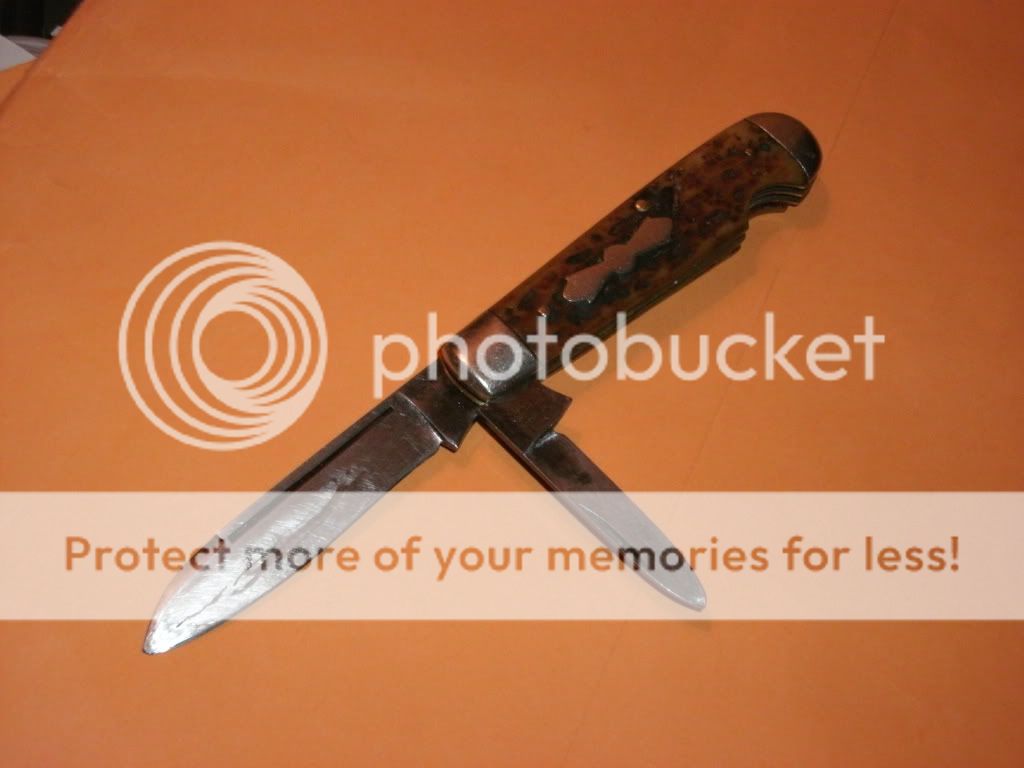
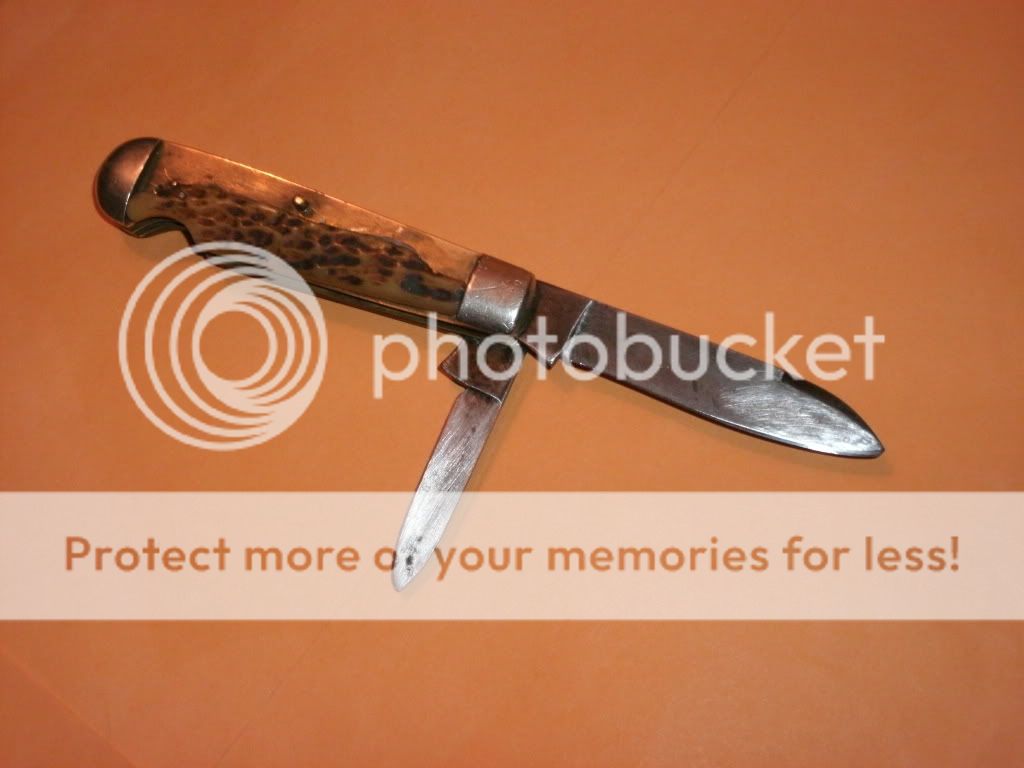
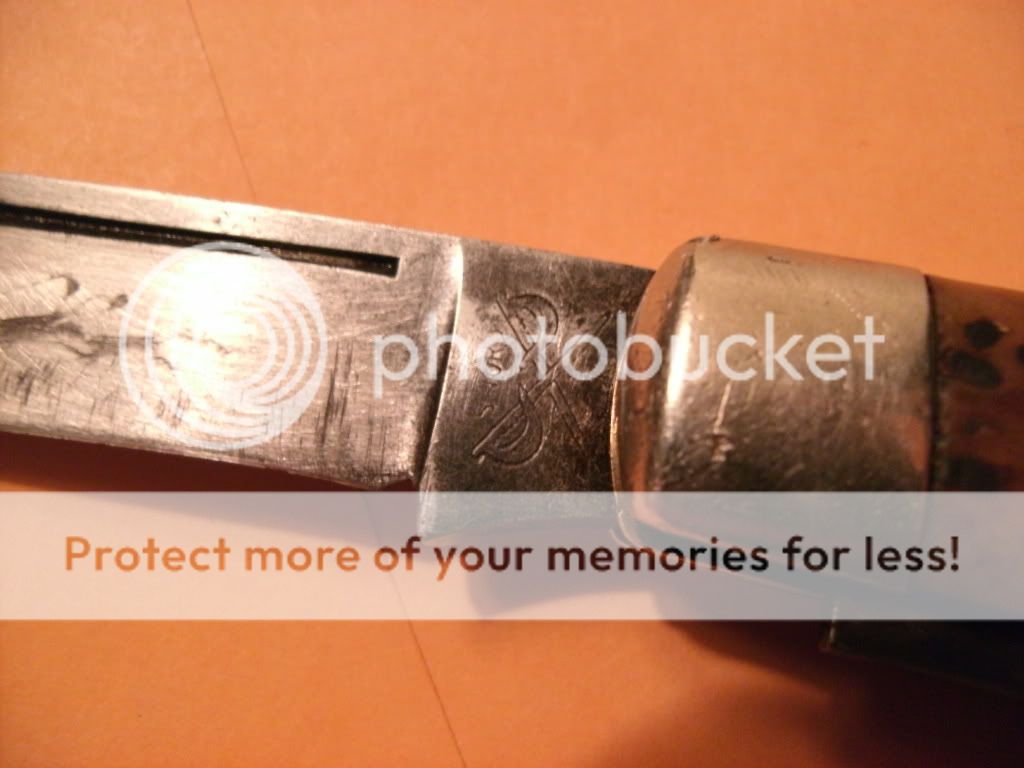
I spent some time cleaning it up, and after a bit of research, learned that this particular model is the "Easy-Open Jack". What I'm hoping someone much more knowledgeable about vintage knives than myself can tell me is how old this knife might be. If not the year it was produced...perhaps a decade. Just something. I think this is a cool piece of history, and I'd love to learn more about it.
And, second on my quest (which may be better suited for the Maintenance forum...but I figured I'd try here just in case anyone had run into a similar problem with an older knife), is to figure out how to get the damned thing back to useable condition. I'd like to carry it every now and again. As I received it, both blades were dull as butter knives, and the main blade had a nice chunk taken out of the front, like someone had used it as a screwdriver. Using my Lansky Turn Box, I managed to fix the chip (not the best re-profiling job, but it will do), but my main problem is that this steel, whatever it is, simply refuses to take an edge. I'm not claiming to be an expert sharpener, but I have had nothing but success with the Lansky system, and have been able to keep all of my knives razor sharp at my preferred 40 degree bevel. I spent probably an hour on this knife, stepping the blades through first the medium, then the fine grit rods, and aside from working out that nasty chip in the blade, all I managed to do was sharpen the rear portion of each blade. From about midway, all the way towards the tip, the blade is still dull. Thinning out but dull.
So, today I threw caution to the wind and ran the blade through a Smith's carbide pull through sharpener I had lying around. I hate using it because it takes off so much metal, but I figured that this may just need a bit of a kick start. After a couple of runs on that, the blades were still dull up front, and sharp in the rear. Sharper to the touch than they had been,but I can still run my finger along the front portion of the blades with no problem.
Is this an issue commonly encountered with older knives? I have encountered steels that will simply not take an edge, like crappy steels you find in dollar bin knives and such, but it seems to me that an old work horse like this ought to be able to take an edge...and it's been proven by the fact that half of each blade has thus far taken an edge, and quite a tolerable one at that. Any suggestions on this front short of sending it off to be professionally sharpened?
I spent some time cleaning it up, and after a bit of research, learned that this particular model is the "Easy-Open Jack". What I'm hoping someone much more knowledgeable about vintage knives than myself can tell me is how old this knife might be. If not the year it was produced...perhaps a decade. Just something. I think this is a cool piece of history, and I'd love to learn more about it.
And, second on my quest (which may be better suited for the Maintenance forum...but I figured I'd try here just in case anyone had run into a similar problem with an older knife), is to figure out how to get the damned thing back to useable condition. I'd like to carry it every now and again. As I received it, both blades were dull as butter knives, and the main blade had a nice chunk taken out of the front, like someone had used it as a screwdriver. Using my Lansky Turn Box, I managed to fix the chip (not the best re-profiling job, but it will do), but my main problem is that this steel, whatever it is, simply refuses to take an edge. I'm not claiming to be an expert sharpener, but I have had nothing but success with the Lansky system, and have been able to keep all of my knives razor sharp at my preferred 40 degree bevel. I spent probably an hour on this knife, stepping the blades through first the medium, then the fine grit rods, and aside from working out that nasty chip in the blade, all I managed to do was sharpen the rear portion of each blade. From about midway, all the way towards the tip, the blade is still dull. Thinning out but dull.
So, today I threw caution to the wind and ran the blade through a Smith's carbide pull through sharpener I had lying around. I hate using it because it takes off so much metal, but I figured that this may just need a bit of a kick start. After a couple of runs on that, the blades were still dull up front, and sharp in the rear. Sharper to the touch than they had been,but I can still run my finger along the front portion of the blades with no problem.
Is this an issue commonly encountered with older knives? I have encountered steels that will simply not take an edge, like crappy steels you find in dollar bin knives and such, but it seems to me that an old work horse like this ought to be able to take an edge...and it's been proven by the fact that half of each blade has thus far taken an edge, and quite a tolerable one at that. Any suggestions on this front short of sending it off to be professionally sharpened?


 I'll return it to the Lansky on the finer grit rods and see if anything improves...if not, then this puppy will become a drawer queen, like meako suggested. I never planned on it becoming a real heavy user anyway, just something to carry on occasion. My main goal was to work the chip out of the tip, so putting a workable edge on it is a bonus...either way this knife is currently one of the gems of my slipjoint collection.
