
- Joined
- Nov 27, 2010
- Messages
- 3
Hello everyone,
I use a sharpening stone that is fixed at 20° off vertical and you bring the blade downwards and towards you (slowmo downward slash) along the stone.
I am trying to think of a way that a machine could successfully perform this sharpening activity, ideally better than a human. WTF I'LL SLAP U. I know, I know. There's not a machine out there that even comes close to craftsmanship. But I needed something interesting to do the project on.
And there could be.
The idea is not to make a sharpener that people would buy, its to think about what it would take to perform a better operation.
The device would need to alternate sides of the blade for each stroke. Also, it needs to be able to follow the sharpening "rules" for basically any blade profile.
I am thinking at least 5 DOF. Below is the basic idea so far.
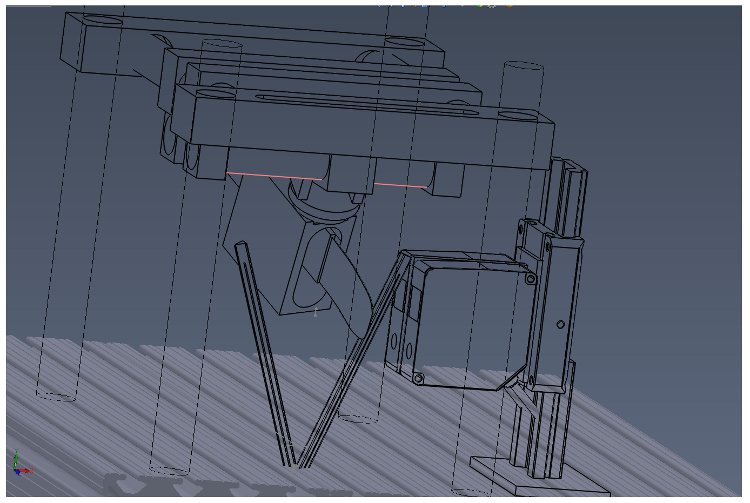
Not focusing on motor sizes or friction requirements, just assume we have the motors and bearings to make anything happen
Also, assume that as long as a sensor exists, it can somehow be implemented. On the right of the photo are two mighty accurate distance sensors.
I am happy to discuss what math i've got so far, I'm just now arriving at coordinate system definitions. If this discussion moves forward I'll share what i got!
Brian
I use a sharpening stone that is fixed at 20° off vertical and you bring the blade downwards and towards you (slowmo downward slash) along the stone.
I am trying to think of a way that a machine could successfully perform this sharpening activity, ideally better than a human. WTF I'LL SLAP U. I know, I know. There's not a machine out there that even comes close to craftsmanship. But I needed something interesting to do the project on.
And there could be.
The idea is not to make a sharpener that people would buy, its to think about what it would take to perform a better operation.
- How many degrees of freedom (DOF) would be required?
- What "rules" should be enforced by the control system?
- Is it more important for the robot to be told where to go or how hard to push?
- How to compensate for flexing / twisting in the blade?
The device would need to alternate sides of the blade for each stroke. Also, it needs to be able to follow the sharpening "rules" for basically any blade profile.
I am thinking at least 5 DOF. Below is the basic idea so far.
Not focusing on motor sizes or friction requirements, just assume we have the motors and bearings to make anything happen
Also, assume that as long as a sensor exists, it can somehow be implemented. On the right of the photo are two mighty accurate distance sensors.
I am happy to discuss what math i've got so far, I'm just now arriving at coordinate system definitions. If this discussion moves forward I'll share what i got!
Brian

