inclusion?

Joined
Aug 28, 2009
Messages
7,951
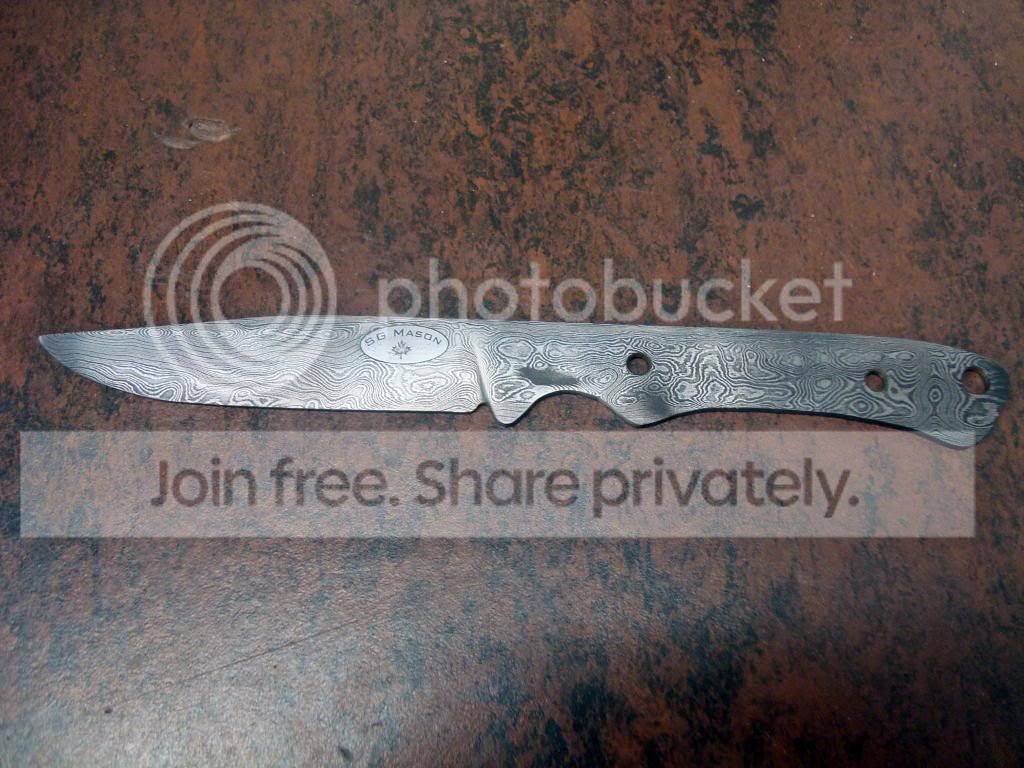
So I am sanding out my Ht'd Damascus blade and found this right at the front of the finger choil. It is going away with sanding but I would think I would have to take away too much material to make it completely disappear.

I would lay under the scales and is only on one side, so I am not worried about it ruining the look of the blade, but will it compromise the integrity of the knife? I am hoping that it is not a problem because that would mean that I have wasted the money to buy the steel, get it heat treated, and all the time I put into getting this far.

I have stopped working on it till I get some answers back. This wasn't visible before heat treat, only after I started sanding it out.
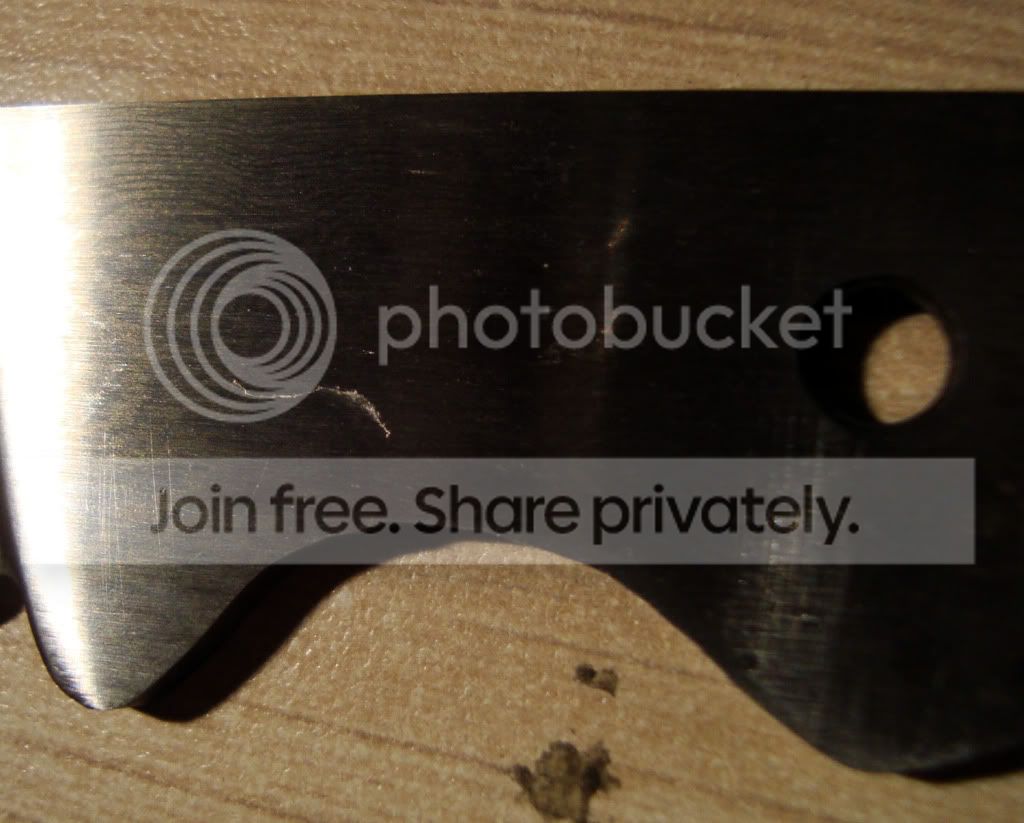

DSC02100_b.jpg


DSC02100.jpg


I don't know if you can see it or not but it is following a pattern line, and being that I do stock removal that line ends in the middle of the choil.
 
cold shut, incomplete weld, inclusion, whatever you want to call it
yes it is a structural issue, it is a weak point of unknown extent, if it has flux in it it will attract moisture and become a rust hole, it will suck in etchant when you etch, and be almost impossible to completely neutralize. That will eventually become a rust hole, The only solution is to get it out, whether that means grinding to the bottom of it or changing the design. Sorry for the bad news.

-Page
 
That is what I was afraid of:( guess I will try sand through it, like I said it is under the scales and only visible from the one side, if it gets too deep I will just have to scrap it.
 
Looks like I got lucky, I was able to spot sand it out, only had to go down .003" to get it all. It stayed behind the front of the scale, and above the choil so once everything is put together and finished the dip shouldn't be visible to anyone. I wasn't planning on selling this one any how, but I was thinking of giving it to my brother.

Thanks for breaking the bad news to me straight and letting me know what had to happen to save it. Now I can get back to sanding and hoping I don't find any more surprises.
 
I take a ball burr to those cold shuts and get the thing out. Then I decide what to do with sanding/grinding the blade to remove the ground out divot,. If it is in the tang, I just leave it a divot. If it is in the blade, I either make it thinner, or reshape it to remove the area.
 
I got it out, and am zooming towards etching this bad boy:D When the maker of the billet heard about it he offered to replace the piece. The blade is still functional so I turned him down, not because I am afraid of doing all the work again and finding another mark, but because if the steel is still good why should he replace it. I am satisfied with what I have, and when I buy another piece from him I am sure I will be satisfied again.
I fully understand that these things can happen and this didn't show up till after HT and some sanding, so I see no fault in the making of the billet. The cold shunt, inclusion, what ever you want to call it was far enough below the surface that it had stayed hidden through surface grinding, profiling and creating the bevel.

Now for my next Damascus question. A lot of people use TSP to neutralize the etch once they get the depth and color they want, so that is the way I am going too, but what strength are they using it at? I got the powered form and it says for general use to mix at 20:1. Does that sound right for neutralizing the etch? and what temperature should I have my FC/water at? With any luck I will have pictures of the etched blade up tonight.

Thanks George
 
This is maybe a stupid question, and I know it would show up, but could you grind it down, and TIG weld in filler metal if it was hidden by the scales?
 
Unless it was a huge or deep divot, or you could not blend in the divot as a smooth transition in shape, it would be better to just fill it with extra epoxy under the scale or reshape the tang. TIG welding will affect the heat treat in the area near the weld, and you'd have to prevent heat from traveling down the blade and drawing the temper. If you weld on just one side on the tang, there's a good chance the tang will warp. There's significant risk of making things worse by trying to fix the problem. It's not impossible to fix this type of problem with TIG, but changing the blade or tang shape might be simpler most of the time.
 
Hey Unky,

Glad to read you sorted it out. In the future, if it's an inclusion that will fall under the scales, just drill it out and use it as a way of increasing the surface area that the epoxy get's to grab on to. I always run a bunch of 1/16" divots down the length of my tangs and scales to assure plenty of "epoxy rivets" in addition to whatever else I'm using to attach the scales.

If it runs through to the other side, then drill it out completely. Otherwise, you have nothing to worry about structurally, as long as you remove it.

From everything I've read, Page knows what he's talking about when it comes to forge welding, so I'd pay special attention to what he has to say.

Good luck and hope it works out!

Taylor
 
Glad it didn't ruin the project, Unky:thumbup:

Looking forward to some pics!

I got it out, and am zooming towards etching this bad boy:D When the maker of the billet heard about it he offered to replace the piece. The blade is still functional so I turned him down, not because I am afraid of doing all the work again and finding another mark, but because if the steel is still good why should he replace it. I am satisfied with what I have, and when I buy another piece from him I am sure I will be satisfied again.
I fully understand that these things can happen and this didn't show up till after HT and some sanding, so I see no fault in the making of the billet. The cold shunt, inclusion, what ever you want to call it was far enough below the surface that it had stayed hidden through surface grinding, profiling and creating the bevel.

Now for my next Damascus question. A lot of people use TSP to neutralize the etch once they get the depth and color they want, so that is the way I am going too, but what strength are they using it at? I got the powered form and it says for general use to mix at 20:1. Does that sound right for neutralizing the etch? and what temperature should I have my FC/water at? With any luck I will have pictures of the etched blade up tonight.

Thanks George
 
Well I have it etched now, I mixed 3:1 like I had read most people here do, and I think it may be a little strong of a mixture. I had a deep etch in about 3 minutes:eek: I am going to have to find a way to water down my etch tank, I am thinking of pouring about half of it out into another container and adding about another liter to liter and a half of water to it. Then topping it off with the stuff I pour out. It could have been the temp of the tank too, I had it a 100F. I think if I had just left it for some of the times I have seen mentioned that I wouldn't have had a knife left. I also almost forgot to nail polish in my makers mark:o I had the blade hanging over the tank ready to go in when I noticed it. Out of a share stroke of luck my etch tank is just over 4L so it makes finding the 3:1 ratio easy even if it was strong.
I was up late last night reshaping the handle a bit on the EDC to fit the buyers hand better, so I am just getting up now and having my first coffee of the day, after I wake up all the way I will try take some pictures of what I have done.
 
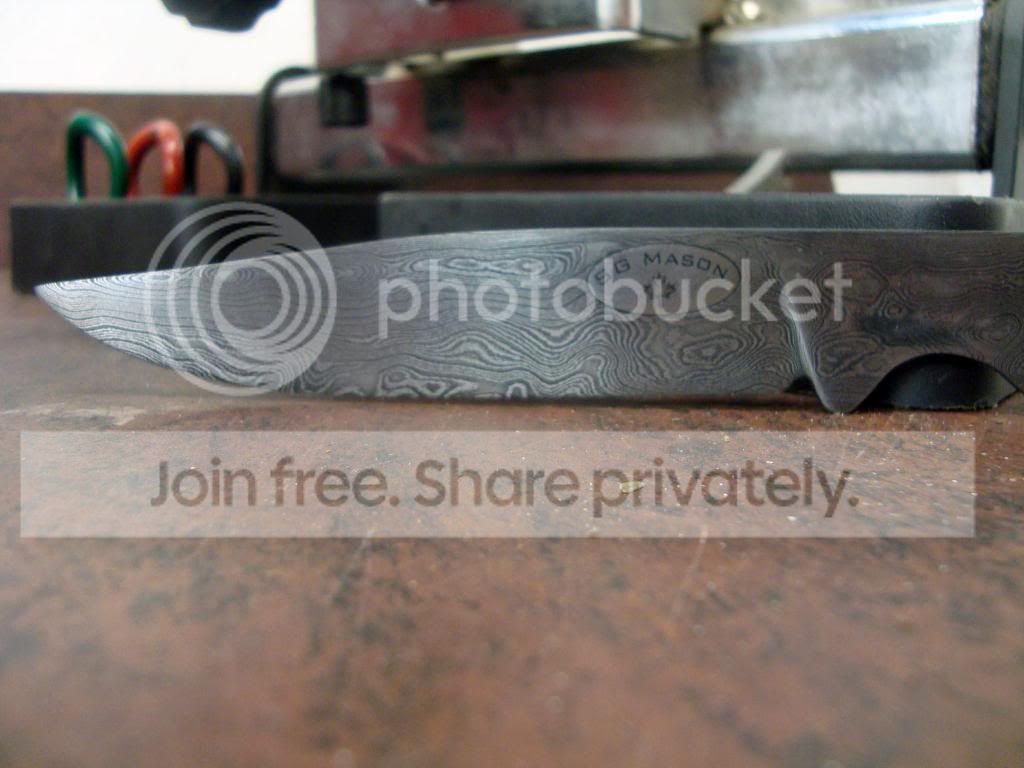
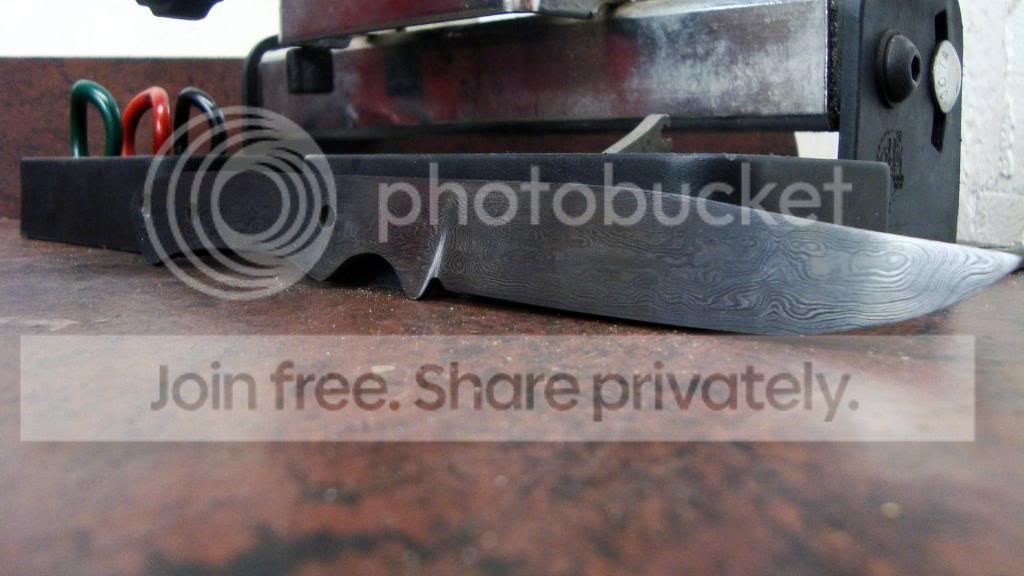
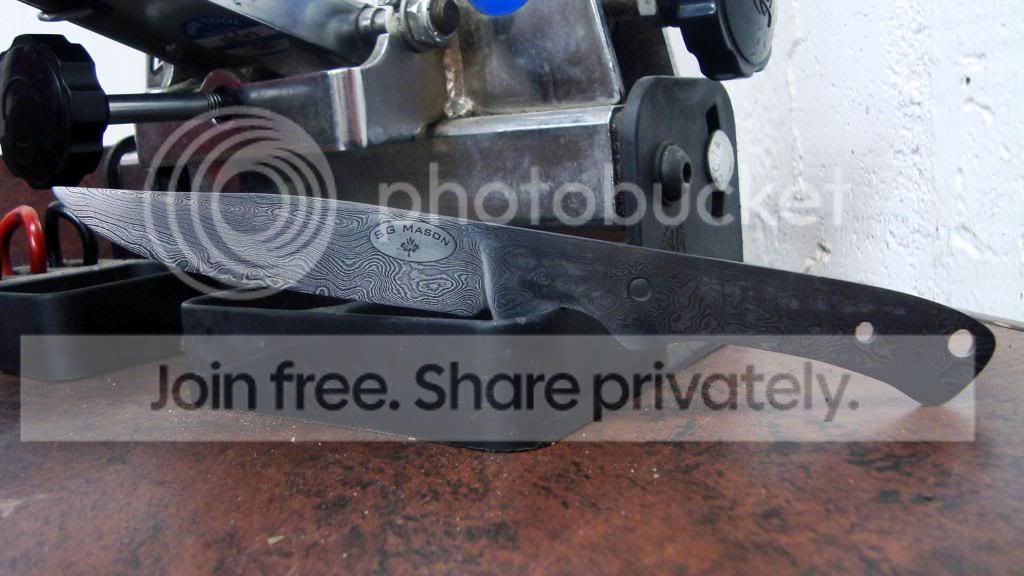
OK all etched and I am working on the scales now, the large dark spot is where the shunt was, it doesn't come into play at all.

DSC02116.jpg

DSC02118.jpg

DSC02121.jpg

DSC02123.jpg
 
Back
Top