
infi vs. kevlar

Joined
Oct 29, 2005
Messages
19,834
i had an old trauma plate, paul's eu-17, and a new sage meaner. what else could i do???

kevlar being pretty tough stuff, it took a fair amound of force to get a through and through penetration.
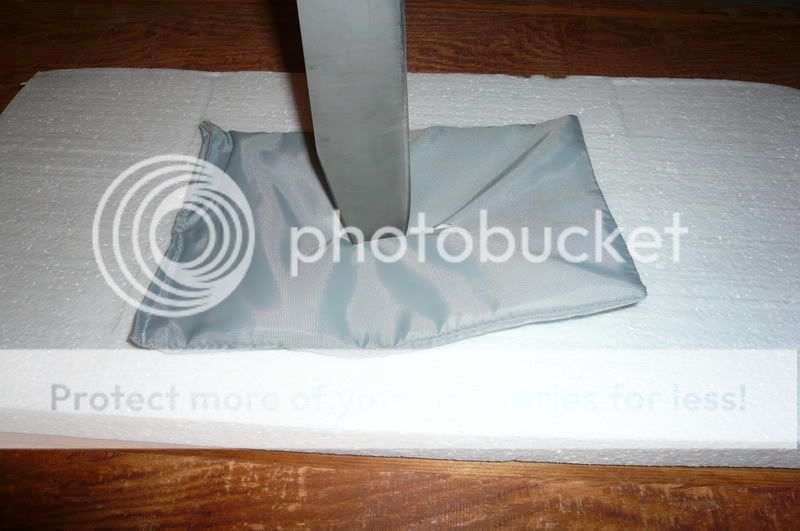

P1000787.jpg

P1000788.jpg


the meaner penetrated a little easier, the tip being better shaped for piercing.
when slicing, it took medium effort to cut through the panel.
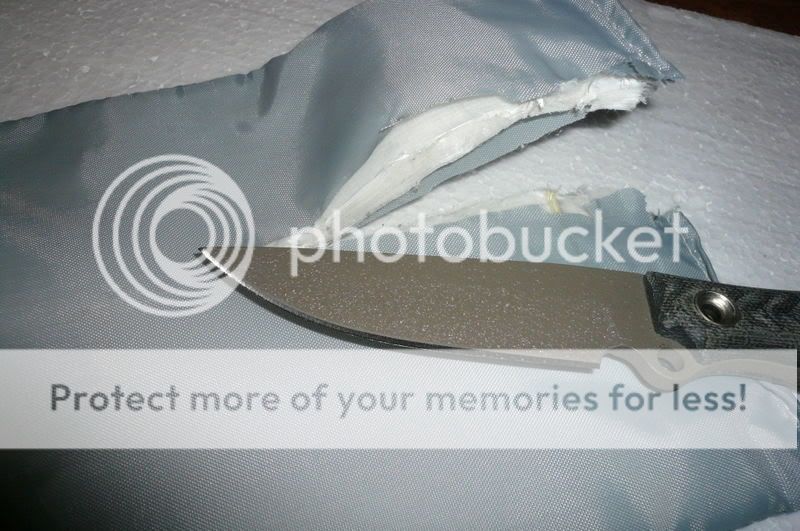
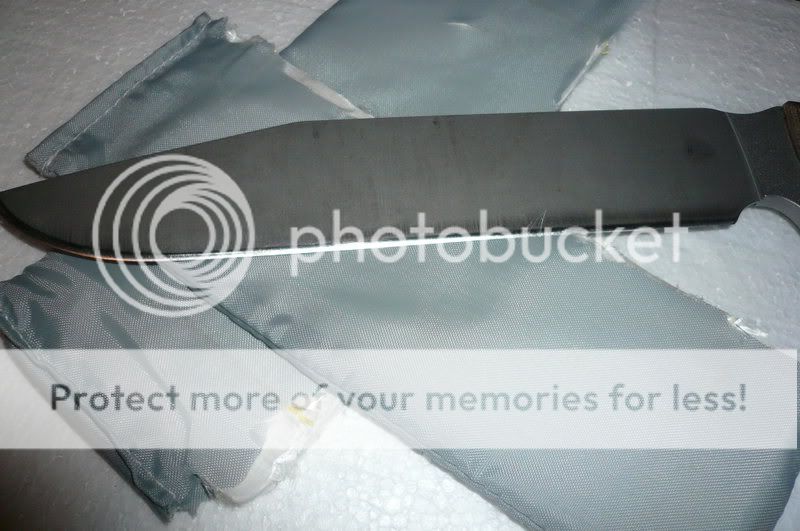
P1000789.jpg

P1000790.jpg


i had to use quite a bit of force to get the meaner to penetrate the two halves. after several stabs, about 1/8" was poking through.
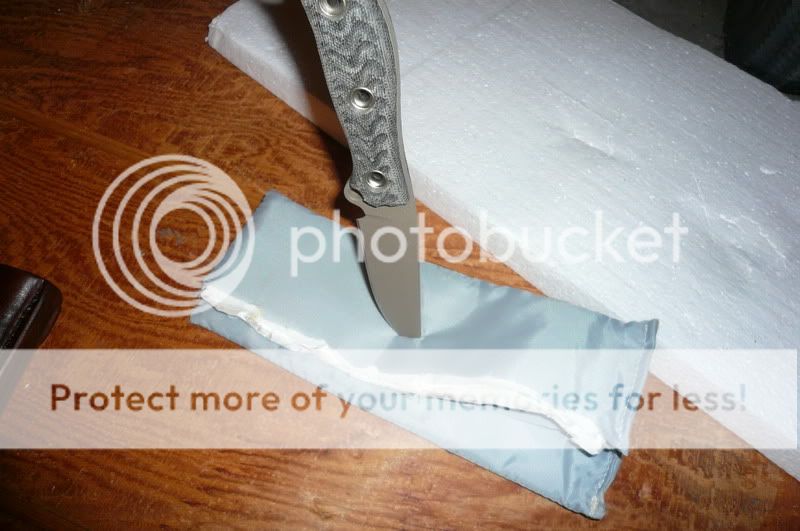
P1000791.jpg


i had always wondered how kevlar would stand up to a knife, but never personally tried. pretty much what i expected, though i have read a sharp blade will cut through kevlar like a hot knife through butter. not so. now i know for sure. i sure am glad i wear a hard trauma plate! enjoy.
 
and the kevlar definitely took the edge off both knives, though i had expected more "dulling". a quick pass on a steel, and just like new!
 
Yikes!!! :eek::eek: ...Keep wearin' that plate! I had heard what you had heard, and I just didn't believe it... Until NOW! Thanxx for sharing. Nice pix! :)
 
Thanks for the info. But I think that the sage meaner didn't do too well against the kevlar is because the edge and tip is left very thick. I am sure that a thinner tip and sharper edge will penetrate it much easier.
 
Just remember, as much as I love INFI, kevlar is designed to resist blunt force trauma, ie; lead, not pucture or slicing from sharp objects. Though still nice pics! I agree on the hard steel trauma plate!!
 
Nice pics Mark! Thanks for the post! Now go chop some wood with that thing!! :D

Just a thought: I wonder what my Eu would do to dragonskin?
 
Just remember, as much as I love INFI, kevlar is designed to resist blunt force trauma, ie; lead, not pucture or slicing from sharp objects. Though still nice pics! I agree on the hard steel trauma plate!!

though not desinged, necessarily, to prevent puncture by a sharp object, the trauma plate did fairly well. consider the main panels will most likely be thicker than the plate.

also, i was using a hard backing. a stab, or even repeated stabs, unless delivered with significant rapid force, will produce mostly blunt trauma. i would think the body would absorb much of the impact.

the weave seemed to halt much of the force.

a swinging slice would also probably not produce much damage to the kevlar, being that it is many layers of the fabric.

something like an ice pick might produce more damaging results.
 
Kevlar and other aramid fibers (Spectra etc.) used in ballistic vests aren't designed to resist cutting. I can tell you from first hand experience that it's possible to cut Kevlar webbing with shears.

The character of a good vest comes from the tensile strength of the fibers. The projectile point goes right into the weave, and its energy is transferred into stretching the fibers. Imagine you were poking your finger into a sweater. Eventually your finger will go through, but not before some of your energy has gone into just stretching the yarn. Likewise, the Kevlar fibers absorb the energy by elongating a little. If the vest resists the threat, it's because the projectile's energy was all used up before the weave gave way.

If you still have some of that material to play with, I recommend doing some push tests with an icepick. You'll have a much more difficult time. ;)
 
Well I guess I know who I am standing behind if we have another school "Incident". :D:thumbup:

Excellent info. Mark. :thumbup:

We need to get together and get this on video. :)

definitely! i am going to check with the training unit this week and see if i can get a few old panels to take to the range and shoot up.

if i can get a few, we need to get together and conduct more "scientific" tests. :)
 
Vanadium has the jist! Remember also that a bullet is also revolving on its long axis. This also causes the fibers to bunch as they stretch.

Remember also that ballistic vests were designed to stop very fast, relatively blunt objects, not slow pointy ones.

The folks at Second Chance make a "stab vest" for use in prisons....interestingly enough, it is not bullet resistant.

Mark,

When you get a chance to shoot one of those panels, take a close look at the orientation of the fibers around the impact point. You will see some "twisting".

Back to the grinder!
 
I thought that Kevlar could not withstand an edged weapon also. Or a punturing weapon for that matter. Is the twisting of the Kevlar fibers actually the result of the spinning of the bullet? Since the rifling is 1:7 - 1:9 in most modern firearms, it would take 7 - 9 inches for the bullet to make one revolution. Does the bullet continue to spin after inpact once the Kevlar "catches" the bullet, therefore creating a spin in the Kevlar fibers? I always though that Kevlar acted like a catchers mit and plain stopped the slug.

Interesting to say the least.
 
Vanadium has the jist! Remember also that a bullet is also revolving on its long axis. This also causes the fibers to bunch as they stretch.

Remember also that ballistic vests were designed to stop very fast, relatively blunt objects, not slow pointy ones.

The folks at Second Chance make a "stab vest" for use in prisons....interestingly enough, it is not bullet resistant.

Mark,

When you get a chance to shoot one of those panels, take a close look at the orientation of the fibers around the impact point. You will see some "twisting".

Back to the grinder!


we ran some tests on a smith and wesson, who no longer produces armor. we shot about 50 rounds, 9mm. .40, .45, .44 mag, 12ga slugs, buckshot, and no penetrations.

the twisting of the fibers was obvious on the first few rounds, then we put rounds right on top of each other, and they would just drop to the bottom of the panel.

of course, the .223 hornady tap zipped through, but what was interesting was the wound channel in the clay. it was about the size of a coke can and not through and through. good round.

the 12 guage slug failed to penetrate, but the blunt force trauma was so substantial, i imagine it was likely fatal. at least at three yards, where we were set up.

yes, gatorzingo, the tensile strength and the twisting of the fibers is what stops the penetration. once the round is "stopped" it continues twisting on its axis until momentum ceases.
 
Also "most" kevlar vest are rated to stop certain levels of pistol rounds. Most vest need and additional trauma plate of kevlar, steel, or ceramic to be effective against rifle fire.
 
Also "most" kevlar vest are rated to stop certain levels of pistol rounds. Most vest need and additional trauma plate of kevlar, steel, or ceramic to be effective against rifle fire.

a hard ceramic plate is generally accepted as the best defense against rifle fire. i have never seen a kevlar panel rated to stop a rifle round.

in order to meet nij standards a rated panel must stop handgun rounds on its own, without a trauma plate.
 
Well I guess I know who I am standing behind if we have another school "Incident". :D:thumbup:

Excellent info. Mark. :thumbup:

We need to get together and get this on video. :)

Well, that seems reasonable. :)

As long as Tyrkon can refrain from actually THROWING the knives at Mark as he wears the kevlar!!:eek: :eek:
 
definitely! i am going to check with the training unit this week and see if i can get a few old panels to take to the range and shoot up.

if i can get a few, we need to get together and conduct more "scientific" tests. :)

Right on. Just let me know when and where. :)
 
Back
Top