
Injury in the wild.

Joined
Aug 26, 2005
Messages
4,106
You know I think one of the main reasons some of us would be in a survival situation would be accidentaly. Accidents happen and they can involve ijury to ourselves.

Would you say a badly sprained ankle would be a common injury? It would certainly slow you down enough where you may have to spend the night in the woods.

What about more debilitating injuries? A couple of broken fingers with accompanying collateral injury. Let us say a hand you cannot use for more than clamping something to your chest.

What about the galloping trotsksys? I,m not talking about the inconvenience of soiled drawers here. I'm talking about cramping, knee wobbling incapacitance.

Eye injury. You are late, trotting along and if you are reasonably tall you poke your eye with a low hanging branch. Not only would you lose at least some sight in that eye you may end up on your butt with collateral injuries. A badly bruised butt would be merely an inconvenient cause for a joke back at camp. It could be a real pain in the a$$ in the woods.

Thats enough for now. Add to it,take away. First aid,ways to get out of it.
By getting out of it I mean "yes you have hurt yourself.If you know what you are doing you can get out the same night or the next morning". If you don't know what you are doing you are in for the long haul.
 
I was hiking solo on the Appallatian Trail about 9 years ago and sprained my ankle pretty badly. I was about 6 miles of rocky terrain from the next pass.
It was very tired and I was near a shelter on the trail.
I made it to the shelter (less than 1 mile) and my ankle was hurting too much to go on, so I made camp to get rest and see to the ankle.
I had a small roll of duct tape and used it to make a figure of eight type splint around my ankle. I took both motrin I had in my first aid kit and went to sleep after supper.
Early the next morning I limped five mile to the road. It took me about seven hours! Before setting out I made a crutch/ walking stick, left a lot of my non-essential gear at the shelter with a note saying to look out for me if they were heading north towards the road (the note had the time and date and a brief description of my condition).
When I got to the road I hitched a ride to a payphone and waited about five more hours for my rescuer (DAD).
Good thing I was in podiatry school at the time!

I learned a few things:
-always have a mode of communication (this was before I had a cell phone)
-always carry more than just a few motrin in the first aid kit
-never sprain your ankle on a solo hike while in podiatry school (you will never hear the end of it)

The situation was not that dire and I was lucky to be fairly close to civilization.
 
You know I think one of the main reasons some of us would be in a survival situation would be accidentaly. Accidents happen and they can involve ijury to ourselves.

Would you say a badly sprained ankle would be a common injury? It would certainly slow you down enough where you may have to spend the night in the woods.

What about more debilitating injuries? A couple of broken fingers with accompanying collateral injury. Let us say a hand you cannot use for more than clamping something to your chest.

What about the galloping trotsksys? I,m not talking about the inconvenience of soiled drawers here. I'm talking about cramping, knee wobbling incapacitance.

Eye injury. You are late, trotting along and if you are reasonably tall you poke your eye with a low hanging branch. Not only would you lose at least some sight in that eye you may end up on your butt with collateral injuries. A badly bruised butt would be merely an inconvenient cause for a joke back at camp. It could be a real pain in the a$$ in the woods.

Thats enough for now. Add to it,take away. First aid,ways to get out of it.
By getting out of it I mean "yes you have hurt yourself.If you know what you are doing you can get out the same night or the next morning". If you don't know what you are doing you are in for the long haul.

I would think that a sprained ankle would be a common accident with all the low topped hiking shoes I see on people. A good pair of over the ankle boots that fit properly and a good hiking staff/stick would help to keep the injury at bay. Knowing that I left my whereabouts with the wife, when I didn't show up that night and she couldn't get ahold of me, she would set the hounds on me for sure, so if it were bad enough, I would just hold up, take some pain pills and get cozy as possible with a smokey fire for easy rescue. If I could put a little weight on the ankle, I would try to make my way back to the vehicle and get help.

I'd immobilize and try to protect the hand in question, take some Advil and unless I'm feeling like I can't make it, I would make my way back to help. This type of injury, where I am one handed for whatever reason, is why I carry gear that can be easily operated with one hand.

Hopefully my water filter and chems didn't let me down, because I would need clean water to stay hydrated. I carry Imodium AD in my FAK and would take it immediately. I wouldn't try to make it back to the vehicle, but if I needed water, I would definitely get to some as quick as I could.

I usually hike alone and have a 5' hiking staff, so don't normally have to worry about low hanging branches, etc. But, in the even it did happen, I would put an eye pad (yep, got one) over the injured eye and get it looked at.
 
I would like to be very polite, and with good intention suggest to others to that this is good reason NOT to hike solo.
I am not passing judgement on Hog Feet, saying he did anything wrong, or question him, just, a note to others, think about it.
Hog Feet, please don't take this as any kind of attack on you, I don't mean it that way.

Kevin, correctomundo, I would say that Sprained Ankle is probably the #1 injury out there in the wild. This goes back to knowing some first aid. Basic splinting, wrapping, and such.
A preventative measure would be good footwear, and that includes ankle support. When i was younger I was an offender, and sometimes did not wear boots with good ankle support, or, back in those early days (it was the big fat heavy Vibram soled frankenstein hiker boots) we would lace tight up to Low top level, then lace super loose the last few eyelets, gave great range of motion, but, negated any kind of lateral support.
I sprained my ankle dammed good in about 1999, playing paintball. On crutches for several weeks, ripped some tendons off the top of my foot bone, it was fun fun fun. Hurt like hell.
From that day forward, it is at least Mid cut boots, laced up tightly, all the way up. Broken fingers or gash in the arm, at least you can walk out.
breaking a leg or severely spraining an ankle, wow, that is a spot you don't really want to be in.

Duct tape to the rescue again. Don't leave home without it.
Pain pills and anti-inflammatories, [x] check.
Limping 5 miles , while in pain, sounds like the absolute pits.

Always good idea to let someone know where you are going, when you plan to be back, what route you plan to follow, etc. Another thing, with cell phones, let the person know when you are expected to call them to tell them you are back at the Main camp or cabin area, or in your car driving home. This can put searching for you way ahead of schedule, because you are expected to be heard from before nightfall, not when you arrive home at 10 pm.
You can even set-up a Drop Dead time for contact.
"If you don't hear from me by XX time on XX Day, call the Rangers."

Make sure your cell phone is charged, and turned OFF when you set out. Don't drain it unnecessarily.
Check for a signal when you stop and/or make camp. We now have cell signal in the mountains at one of our camp sites, as of last Fall. we were stunned, but, it's good to know. We were on the top of a mountain, as soon as we dropped down the backside, nothing, dead air. but if there was an emergency, someone could go to the last known place with a signal, rather than potentially having to hike all the way out for help.
 
You know I think one of the main reasons some of us would be in a survival situation would be accidentaly. Accidents happen and they can involve ijury to ourselves.
Would you say a badly sprained ankle would be a common injury? It would certainly slow you down enough where you may have to spend the night in the woods.
I broke my ankle in the mountains when I was 15 on a school camping trip. Dispite having trained mountain guides, lots of people to aid with the decent and a very well stocked first aid kit it still made for a very long day. Infact I can still feel the effects almost 7 years later. An ankle injury is a very common thing in the woods, even on a clear cut trail one misplaced foot can result in a sprain. Spend the money on some decent hiking boots. You feet are your best way out.
What about the galloping trotsksys? I,m not talking about the inconvenience of soiled drawers here. I'm talking about cramping, knee wobbling incapacitance
Been to Mexico, THNAK GOD FOR PEPTO BISMO!:barf:


Thats enough for now. Add to it,take away. First aid,ways to get out of it.
By getting out of it I mean "yes you have hurt yourself.If you know what you are doing you can get out the same night or the next morning". If you don't know what you are doing you are in for the long haul.

A well stocked first aid kit should be should be in everyones pack. After my experiances, my first aid kit would make a combat medic prowd.:)
 
It is not the wisest thing to go solo! No offense taken SkunkWerx.

Now I also carry a GPS so that if I do have to call for help I can give EXACT coordinates!

My first aid kit is now VERY well stocked!!!!! More than just OTC pain meds!!!!!
 
I almost exclusively hike and ski solo, and often for multiday trips. This is one reason I take survival and being prepared quite seriously. I have no one but mylself to depend on.
 
First The ounce of prevention:D

Sprained ankle: Propper fitting boots with good support, a walking stick might help and paying attention to foot palcement

Broken Finger: Gloves may help, just general caution when moving heavy objects

Diahrea : Purify your water, dont eat at White Castle the night before a hike, and of corse make sure soap is rinsed compleatly off all dishes being washed in the field:barf:

Eye Injury : National Association of Search and Rescue list saftey glasses as a required item for field searchers. these are cheap and light and a good idea if you are traveling through dense brush. I wear a boonie hat in the field and i find that this can protect my eyes ears and face from brush.


Universal: Carry a Good Light even on "Day Hikes". Its amazing how much esier it is to remain injury free when you can see where you are going

Pound of Cure::)

Sprained ankle: Ice pack may reduce swelling, wrap or splint as well as possible, DO NOT REMOVE BOOT, you may not be able to get it back on
Use assistive devices such as walking stick or crutch, pain killers

Broken fingers: Splint(fingers can be splinted to eachother for support if only one broken), Ice Pack, pain killers

Diahrea: Imodium or Imodium AD. Drink fluids, Gatorade powder, or soup mixes are good as inducements to drink and may help restore some lytes.

Eye injury: cover it and be extra cautious walking: use a walking stick on the effected side to help you not to bump into things.

Universal: A Good First Aid kit goes a long way if any of these occur.
 
I'm an ex construction worker. My boots are a bit clunky. Nothing short of a grizzly bear sitting on my ankle will bother me.

You know Immodium seems to be a basic in most peoples estimation. Gravol being right up there. Does immodium have an expiry date?

I do have an awareness problem with low hanging branches. I seem to keep my eyes on the ground or the terrain ahead of me.
 
Good topic, Kevin :thumbup: I have *a bit more* personal experience with this than I'd ever wish to repeat...

4.5 years ago, while taking a land navigation/orienteering course, I was in the midst of taking the field final. The course was/is taught by a group of retired, Silver Star recipient Air Force Pararescuemen (pj's). I was using topo map 'n compass to navigate some wooded mountains here in New Mexico. While stepping off of a 10' tall rock face to a lower boulder, an (estimated) 600-800 pound piece peeled out from under me. I fell down to the lower boulder, landing on my feet, and the dislodged chunk fell right in front of me. It continued its fall, throwing me into a rock, pining my right leg in a crevice, and finally settling onto my right leg and foot. I watched, listened, and felt as it completely shattering the tarsals, metatarsals, tibia and fibula of my right leg. It also destroyed the muscles, tendons, blood vessels and nerves from the knee down. If I had wanted to, I could've swung my leg like a pendulum from the middle of my shin...

I was fortunate to have 1 of the instructors with me when this happened. The boulder fell in such as way as to make levering it off my leg possible, which the instuctor did when he was able to safely get down to me. The head instructor also happened to be in the valley directly below me at the time of the crushing. The 2 of them together pulled traction on my leg that, according to the surgeon later on, saved my leg from amputation. All of the bone shards were expertly put right back into place and held there by the 2 PJ's. They radioed the third instructor, another PJ, and with the help of a student, the 4 carried me down the mountains to a class suburban on an improvised stretcher - a sleeping cot that an instructor had brought. Using the cot was actually my idea :) It took a total of 3.5 hours to get me from the mountainside to an ambulance to a helicopter to the only Level 1 Trauma hospital in the state. For the first 3 hours, the only pain meds I had were 4 Motrin.

That was 4.5 years ago. I can do some light hiking and walking; I go in for a check-up in 3 weeks in which I'll find out if I need a 3rd surgery for a total reconstruction.

I'm not meaning to hijack the thread. The lessons I learned from this experience have been numerous and profound:

- always have your essential survival gear with you whenever you're in the wilderness

- keep certain, crucial items, such as your knife, firestarter, and signaling devices on your person, not merely in your pack, at all times.

- know how to do what you need to in order to survive. Keep those skills sharp.

- hiking alone, while potentially peaceful, can be deadly. Had I not had the instructors in the immediate area, I would have, at best lost my leg. That's a best-case scenario... Solomon said it well - "Better two than one for, if one falls down, the other can lift him up."

- have a route pre-selected, leave your trip plan, your travel route, a map, and your timetable with someone trusted at home. Stick to your plan unless you must deviate to avoid unforseen danger.

- do not trust solely to cell phones for help. We had cell phones and a New Mexico Emergency Medicine radio, which linked us into the emergency channels; we didn't even get reception on it!

- have quality gear and reliable skills

I thank the class instructors for their awesome recovery job. In over 15 years of teaching survival and land nav, I'm the only injury they've ever had :rolleyes: Fortunately, I'm still alive and kicking, and fixing to get back into the woods soon. I went for my first camping trips in 4 years this past summer :thumbup:
All right, this was long, so I'll sign off. Keep 'em coming, guys; this is a thread that needs to be seen.
 
Wow, Trout Tamer, good thing you were with other people. Had that happened while you were alone, oh man, I shudder to think.
Glad to hear your recovery is going well.

GOOD ADVICE WORTH LISTING AGAIN!

- always have your essential survival gear with you whenever you're in the wilderness.

skunk note: This is whay I have been working on the "minimalist kit" if it's not easy and compact, people (ME) will leave it at base camp. It has to be easy to carry, but, more importantly it has to contain the essentials.

- keep certain, crucial items, such as your knife, firestarter, and signaling devices on your person, not merely in your pack, at all times.

- know how to do what you need to in order to survive. Keep those skills sharp.

- hiking alone, while potentially peaceful, can be deadly. Had I not had the instructors in the immediate area, I would have, at best lost my leg. That's a best-case scenario... Solomon said it well - "Better two than one for, if one falls down, the other can lift him up."

- have a route pre-selected, leave your trip plan, your travel route, a map, and your timetable with someone trusted at home. Stick to your plan unless you must deviate to avoid unforseen danger.

- do not trust solely to cell phones for help. We had cell phones and a New Mexico Emergency Medicine radio, which linked us into the emergency channels; we didn't even get reception on it!

- have quality gear and reliable skills
 
Wow Trouttamer!

Now I feel like an overmedicated baby (needing 2 motrin after my sprain)!

I'm glad they saved your leg! As a foot and ankle surgeon I can say you had more than just good skills and good people with you that day. It sounds like a miracle you still have your foot.

You gave great advice too!

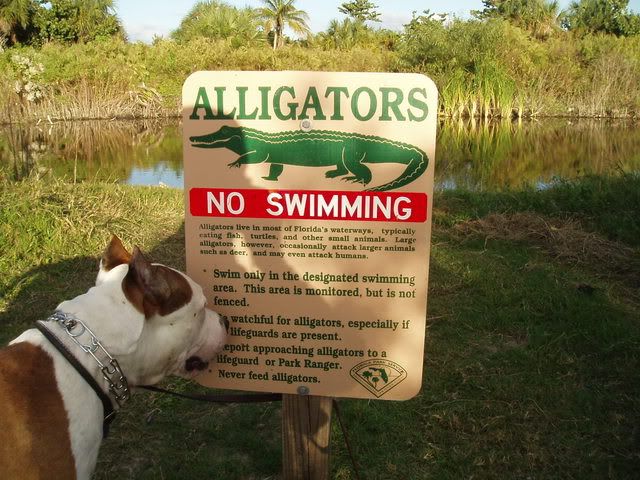
Today I am going for an 8 mile day hike in the Everglades. I don't have anyone that can go with me today so I am going solo again. I've done this loop before and got caught in a severe thunderstorm (had to stop hiking and take off all metal objects and sit / lay on the ground for 1/2 an hour until the lightning strikes got further away, I saw several trees get struck within sight).

Not only do I have my cell phone, but I have a walkie-talkie that can reach the ranger station. I am leaving a trip plan with my wife and am checking in at the ranger station at the park. The rangers will search the trail if you are not back by dark and you told them you will be.
I have my kit and my skills, but things can always go wrong. The best we can do is prepare and not take risks we can't handle. No more swimming with alligators for me!
P1010051.jpg


Trout Tamer: I hope the leg gets better. If you would like to talk about your injury or ask any foot and ankle questions email me at dochannon@hotmail.com
 
Hog Feet,

Does your dog need glasses?
He is needing to get way too clsoe to read that sign.
I'll bet he has trouble seeing the blackboard in class. :rolleyes:
 
Hog Feet,

Does your dog need glasses?
He is needing to get way too clsoe to read that sign.
I'll bet he has trouble seeing the blackboard in class. :rolleyes:

He is getting Laser surgery in a few weeks! He has no trouble seeing the board in class. He just needs his glasses for reading.

Since this trip my dog now has his reading glasses in his kit.;)
Seriously folks, having an extra pair of glasses in a protected case is a must have for those with bad vision. I lost a pair on a boat in the Florida Keys and I was lucky enough to have someone else navigate us back home. Ever since then I always had extra specs (until I got Laser surgery). I do however, wear eye protection on the trail at all times.
 
Hog feet, that is unfair to bring a pit with you. The gators wouldn't stand a chance.

My American Staffordshire Terrier is a big baby. After reading that sign he won't go anywhere near the water!

Seriously, he is afraid of gators (good thing because they like dog).
He is not afraid of little black bears or hogs! He can hold his own;)
On the other hand, my wife's cat can kick his butt!:o
 
Out in the forest a person is on their own, it is best to be prepared since the only person who can help you is yourself. I carry basic gear when I hike or cross country ski. I carry a knife and a means to start a fire, in addition to cutting tasks a knife can get you out of the water if you break through the ice. Getting out of the hole is not easy. Ice will contually keep breaking as you struggle to get out. All that splashing around makes the ice very slippery, and I had to use my knife as a pick to get me out of the hole nearly 20 years ago when I went through at the beaver pond.

Then there are the injuries. A broken leg on the cross country ski trail could be fatal. Nobody uses this trail but me. I have a basic plan involving building a splint, but I have misgivings if it would work at all because of the limitations imposed by the lousy human body only having only 2 legs, and that involves shifting one's entire body weight from one leg to the other- a lousy combination that is further complicated by the fact that deep snow makes movement nearly impossible when only one limb works. The solution is communication here. Cell phones are out, so that leaves fire building and a smoky fire to draw attention- that is the hope anyways. Hand guns would be of huge help since the universal call sign of three shots is understood by most people, but the problem are the stupid gun laws in this country.

The best thing is to avoid an accident at all. Whenever there is a risk, I think of the things that could go wrong first and try to reduce those risks, or use an alternative method. Eg; if the slope is too steep for comfort, walk down and put the skis on at the bottom of the hill, rather than breaking a leg and being stuck in the bush far from home or help.
 
Universal call sign? Three shots? Around here people wouldn,t even know they were shots. They might call the police cause you were disturbing the peace.
 
Universal call sign? Three shots? Around here people wouldn,t even know they were shots. They might call the police cause you were disturbing the peace.
Three shots in a hunting area is often not understood as a distress signal - even when it is.

Lots of sprained ankles begin where the heel fits the boot - or does not -- the heel bed and the counter that circles around the back of the heel. Good fit there is more critical than a high "top" on the boot.

Walking stick. :thumbup: :thumbup: :thumbup:
 
Back
Top