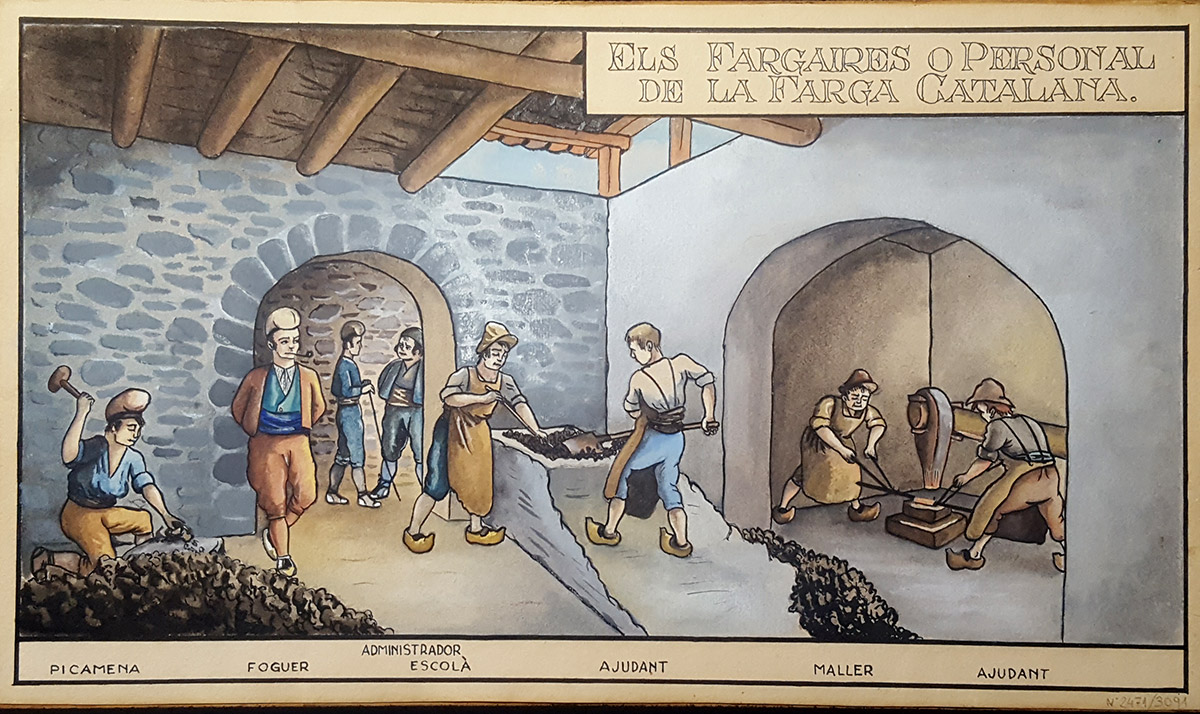
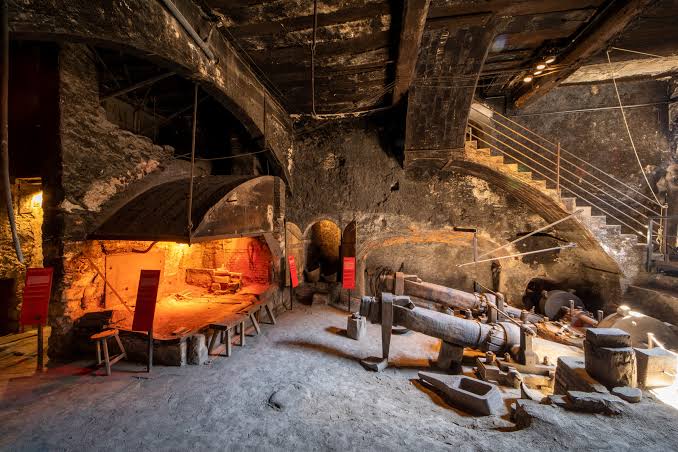
"From the Middle Ages until the 19th century, Western European countries—France, England, Austria, and Italy, among others—obtained iron using the metallurgical method known worldwide as the 'Catalan process' or 'Catalan forge.' The natural resources essential for its operation, namely iron ore, wood for charcoal (for the furnaces), and water (used as driving force), were found in abundance in our region where, up until the 18th century, more than twenty forges have been documented.
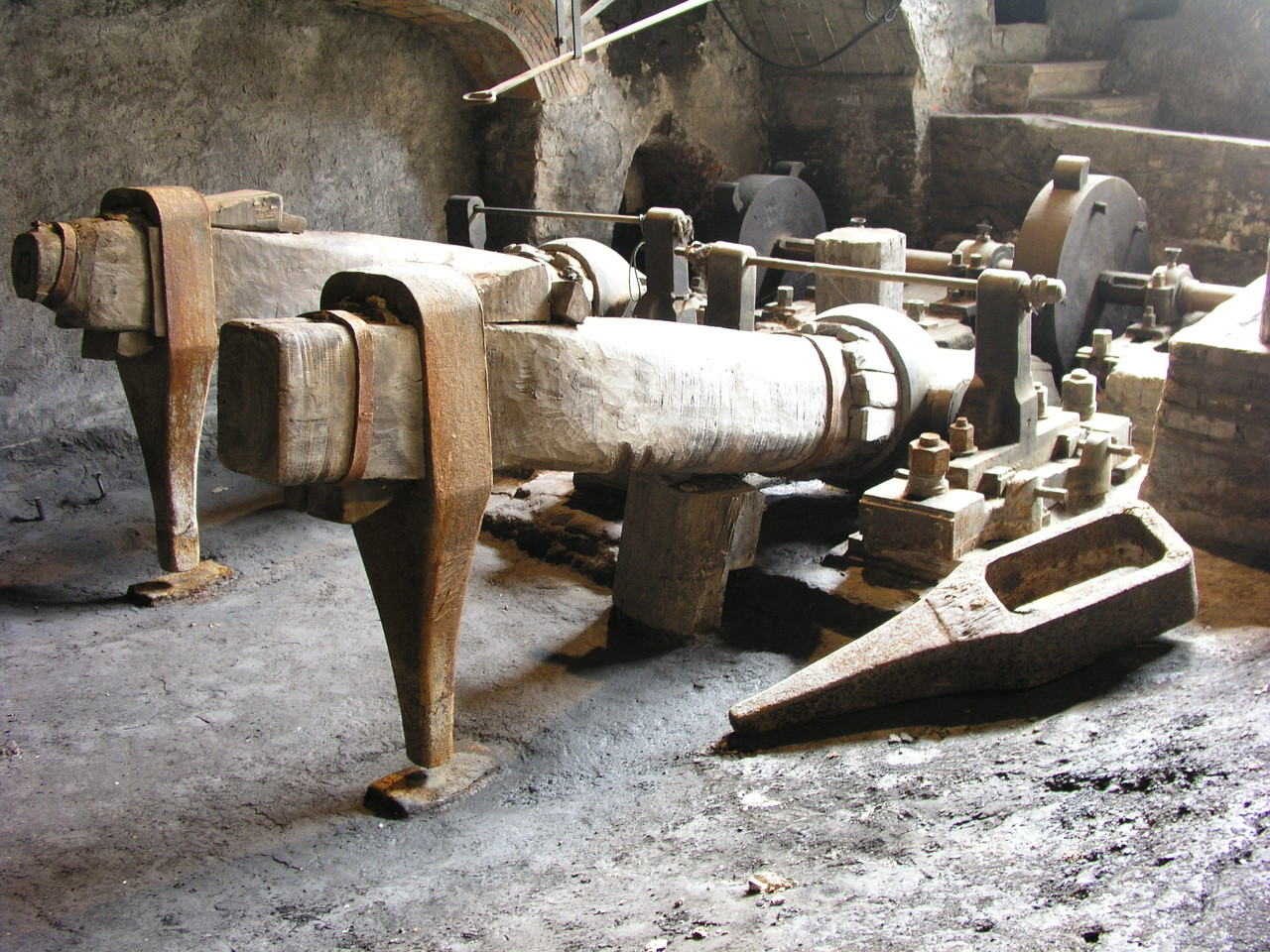
The trip hammer (
martinete) was used in the ancient Catalan forge to compact the
masser (the bloom or mass of iron), to clear it of slag, and to forge it. It was a device of such considerable dimensions that it required hydraulic energy to operate. It consisted essentially of a hammer that functioned by applying force to the rear end of the handle, acting as a lever to lift it, and then letting the front end—where the head was located—fall upon the
masser placed on an anvil."
Source: Ethnographic Museum of Ripoll (Girona, Spain). Section:
The Catalan Forge and Iron Metallurgy.

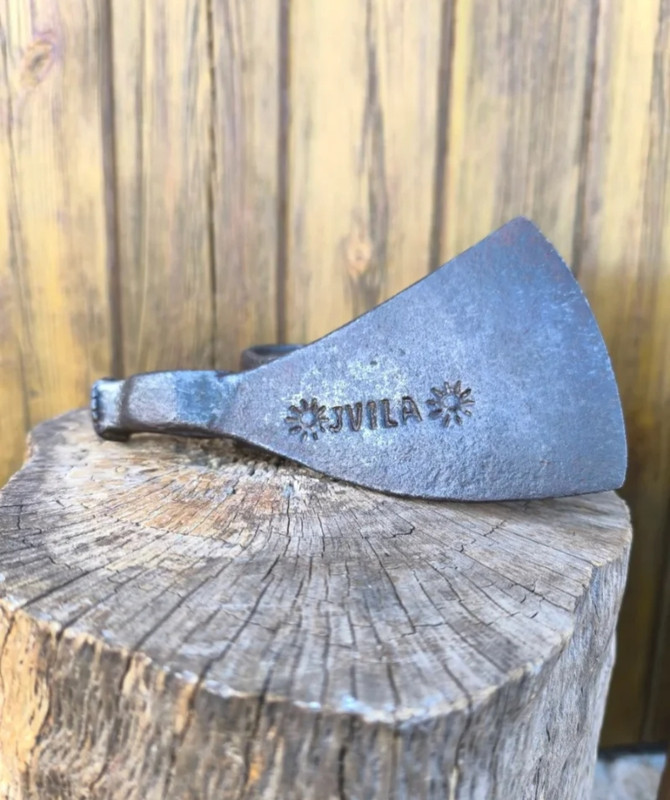
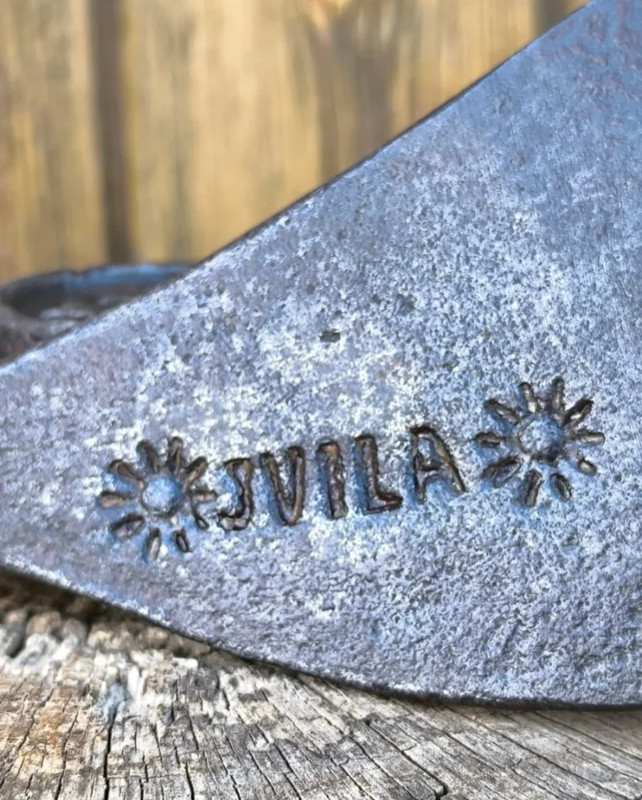
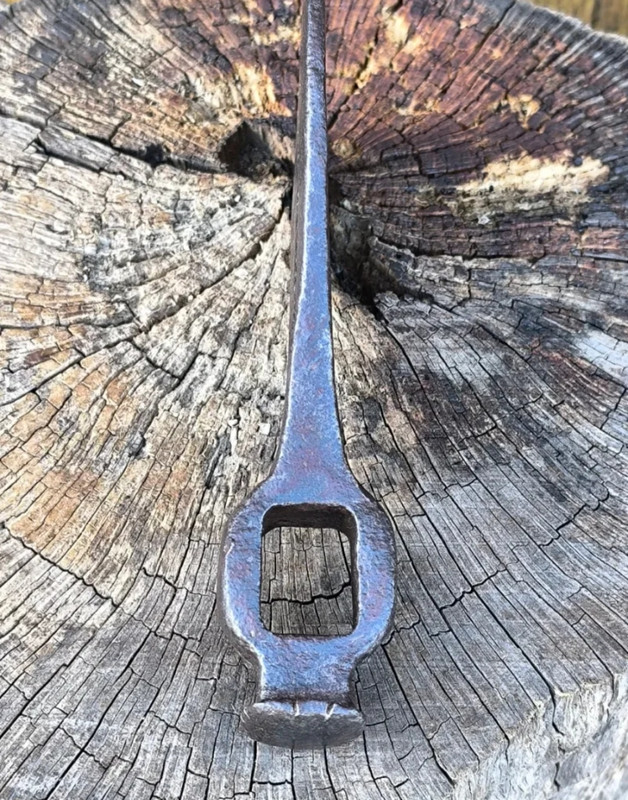
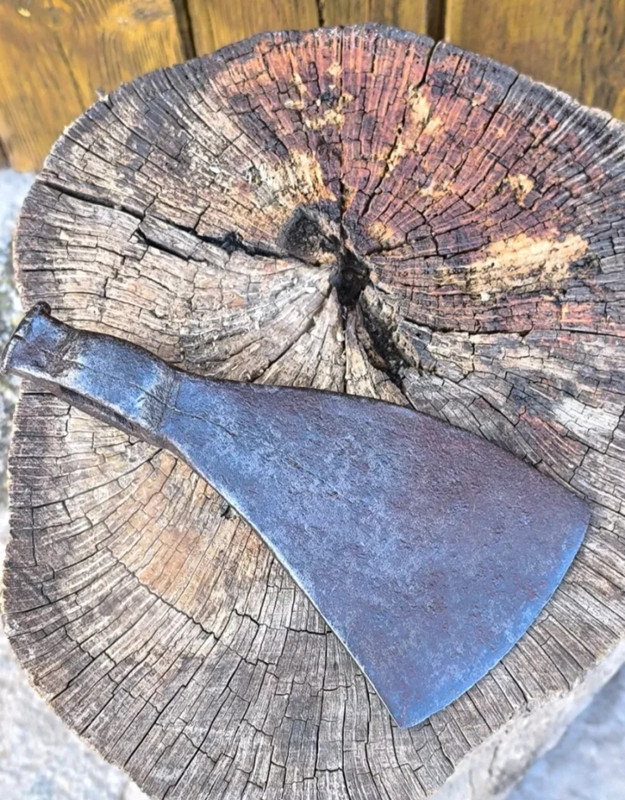
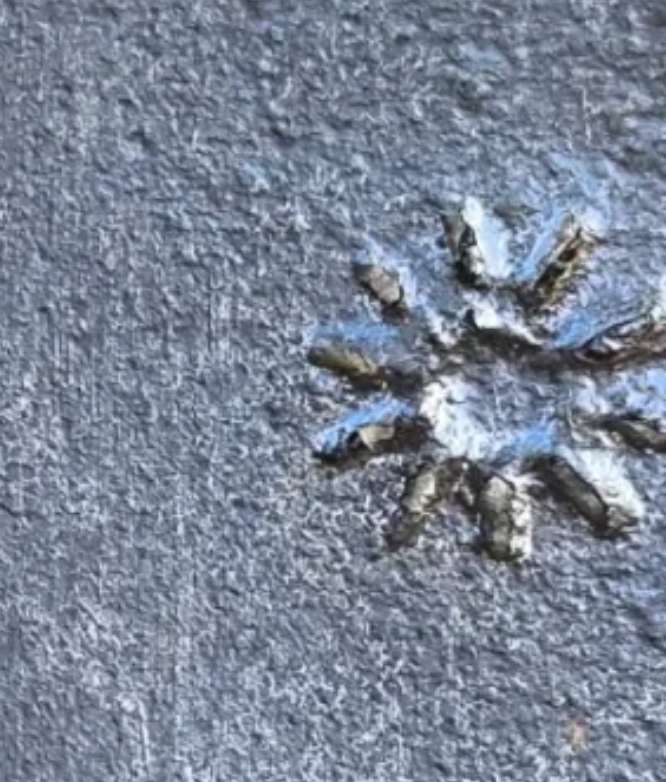
 ? 540grs, carbon steel... The small workshop where it was manufactured no longer exists, and there is no information available about it. It was located in an area of Girona of volcanic origin (a very touristy and forested region, not far from Barcelona and close to the French border). The seller tells me it could date back to the 19th century...

.jpg)

