
-
The BladeForums.com 2024 Traditional Knife is available! Price is $250 ea (shipped within CONUS).
Order here: https://www.bladeforums.com/help/2024-traditional/
You are using an out of date browser. It may not display this or other websites correctly.
You should upgrade or use an alternative browser.
You should upgrade or use an alternative browser.
K'roo knife
- Thread starter trey999
- Start date
- Joined
- Jan 18, 2011
- Messages
- 704
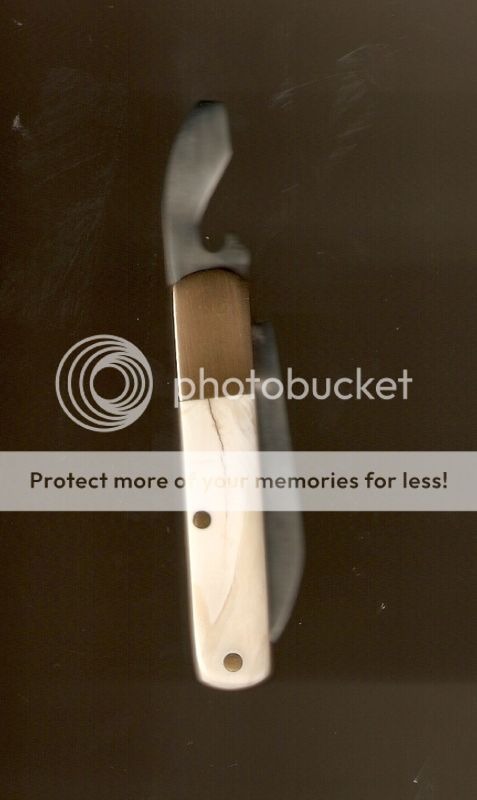
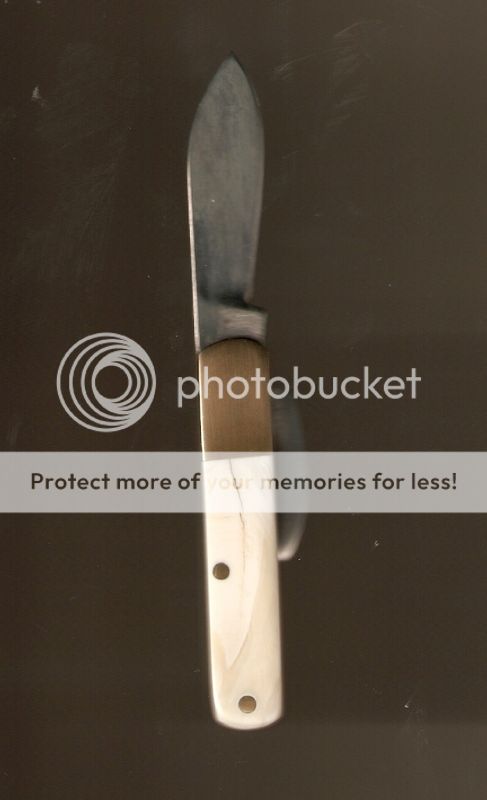
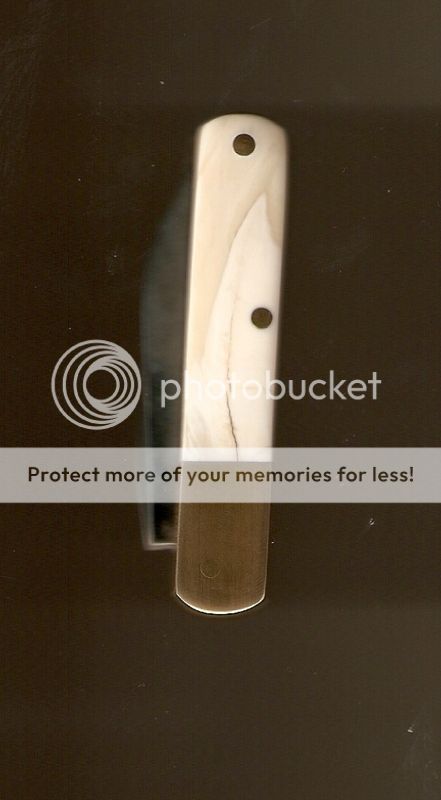
That a great looking knife Trey. I really like the brass bolsters and tusk together. That combo will look even better with age.
Kevin, I could be wrong but I think a wart hog tusk is basically the same as ivory.
Ben
Kevin, I could be wrong but I think a wart hog tusk is basically the same as ivory.
Ben

- Joined
- Nov 15, 2007
- Messages
- 3,372
Willem is fine knife maker and very nice guy. You've got yourself a great knife.
Mike
Mike


- Joined
- Feb 22, 2007
- Messages
- 9,008
I remember a while back Boggs (Jim) gave a lot of info on ivories.
at the very bottom he mentions warthog.
at the very bottom he mentions warthog.
What Is Ivory?
Ivory is the teeth of animals. "True" ivory comes from elephants and mammoth; however, the term is generally applied to the tusks of other mammals, and some synthetics. Chemically, ivory is similar to bone and antler, and comprises a collagen matrix with a mineral component. Unlike bone, ivory has no blood vessel system, and is therefore more dense.
The most commonly found ivories in North America come from elephant, walrus, sperm whale, and hornbill. It is possible to tell these ivories apart, as they are structurally different.
1. Elephant Ivory
This category includes ivory from both Indian and African elephants, as well as ivory from mammoths and mastodon. The tusks, or upper incisors, of these animals are used. They can have a cross section of up to 20cm (8"), and be up to 2.5m (almost 3 yards) long. They are oval in cross section, and are made up of a hard, dense tissue called dentin, which is made up of 70% inorganic material, and 30% collagen. Unlike human teeth, elephant tusks do not have an enamel coating. They do have a cementum layer, however; ivory dealers refer to this as the "bark" or the "rind". Occasionally this layer is retained on a piece of worked ivory. One-third to one-half of an elephant tusk is hollow.
Growth occurs as layer upon layer of calcified tissue is deposited on the interior of the tusk; you can see these concentric oval growth lines (called the Lines of Owen) in cross section. If you cut ivory lengthwise, these lines appear triangular. Fine and even near the hollow of the tusk (the pulp cavity), these lines become wavy and have milky areas between them as you get closer to the outside of the tusk.
Unique to elephant ivory are the Lines of Retzius. These fine intersecting lines are visible in cross section, and give an engine-turned effect (intersecting lines with a diamond shape between them).
Generally, elephant ivory has a fine, even grain and is easily carved in all directions. It can be thinly cut (i.e. for piano keys), and can be more deltcately carved than bone. This ivory is often painted or stained, dyed, and gilded. When cut, the pores of the ivory fill with an oily substance, which helps the ivory polish up nicely.
2. Hippopotamus Ivory
This is the second most commonly used ivory, after elephant ivory. Often used for flat items, such as buttons and inlays, it comes from the lower canines and incisors of hippos. The size varies, depending on the size of the animal.
The lower canine is curved, and has a triangular cross section; the incisor is straighter, and has a circular cross section. Both have two layers of dentin: an outer, primary dentin, and an inner, secondary dentin. The innermost layer has a marbled appearance which differs by species, and can even appear to have a greenish cast. The pulp cavities of these teeth are fairly small. Unlike elephant ivory, hippo ivory does have a thick enamel coating.
Hippo ivory is denser than elephant ivory, harder to carve, and has a finer grain. There is none of the "engine turned" effect in cross section, rather, hippo ivory has concentric rings in cross section. Finally, hippo ivory is less prone to decay than elephant ivory.
3. Walrus Ivory
This ivory comes from the upper canines of walrus. It is oval in cross section, and can be over 2 feet in length. It has an inner dentin layer (which has a high mineral content; it forms as the tusk grows, and leaves a marbled look on finished objects), an outer dentin layer, and a smooth, dense cementum layer. Walrus ivory is used primarily for small objects.
4. Sperm Whale Ivory
Thirty teeth of the sperm whale can be used for ivory. Each of these teeth, up to 8" long and 3" across, are hollow for the first half of their length. Sperm whale ivory is easily confused with walrus ivory, as both have two distinct layers. The inner layer of sperm whale ivory, however, is much larger. As well, in a longitudinal section, sperm whale dentin has yellow "globules" included in the marbilization.
5. Hornbill Ivory
This comes from the casque or epithema of the Helmeted Hornbill, a bird native to the East Indies. It is distinguished from the rest of its family (the Bucerotidae) by having the front of its almost vertical and slightly convex epithema made of a solid mass of horn. This "horn" or "ivory" is quite hard and closely-textured. This substance is used to make small objects such as buckles and brooches, and is highly valued by the Chinese. In cross section, you can see a bright yellow interior with a scarlet rim.
6. Vegetable Ivory
The source of vegetable ivory is the inner seed of the South American ivory palm, and is thus completely made of cellulose (rather than collagen). These seeds are the size and shape of a small hen's egg, are very hard, and are solid all the way through. Vegetable ivory is smooth, takes a good polish, easily absorbs dyes, and is relatively inexpensive. It is used for small items only, such as dice and buttons. Since about WWII, vegetable ivory has been largely replaced by plastics.
7. Synthetic Ivories
Since 1865, when it was first invented by Alexander Parkes, celluloid has been used as an excellent ivory substitute. Casein has also been used. Names for these "faux ivories" include French Ivory, Ivoride, Genuine French Ivory, Ivorine, etc. Both grain patterns and the engine turned effect are added -- in general, the patterns of these are very regular in the fakes, and more irregular in the real thing. In instances of very good imitations (i.e. using celluloid), chemical tests are required to tell real ivory and the fakes apart.
8.PIG FAMILY-
This group consists of three members, boar, warthog, and babirusa, however the babirusa is so rare as to almost never be seen.
Boar tusks are very similar to hippo tusks only smaller in size. They have upper and lower canines that are triangular in shape, and heavily curved
