

Henry Beige
Gold Member
- Joined
- Jun 1, 2015
- Messages
- 3,770
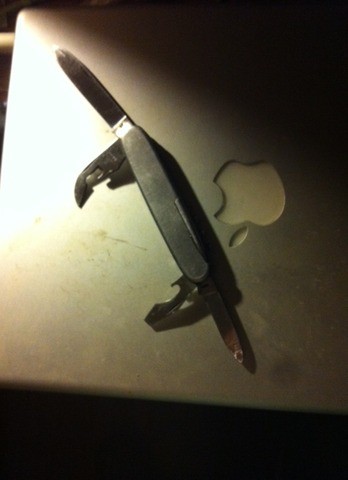
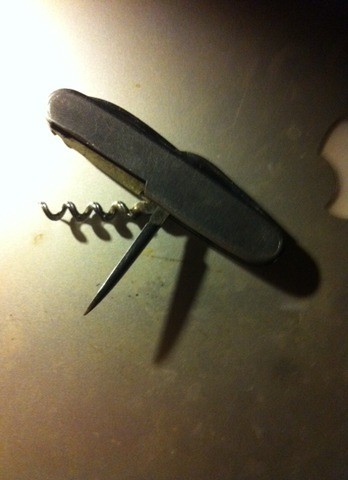
This is the most interesting of a handful of small knives I picked up at a garage sale recently. I apologize for the crappy cell phone pics; at the oment, it's the best I can do. So far, I have been unable to find a picture, description, date of manufacture or any other reference to this knife on the net. Anyone?
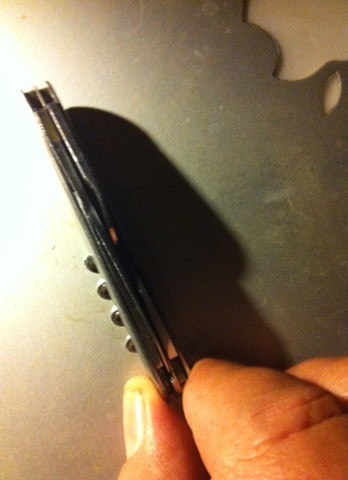
The knife is made by Henckels, and has the same tools you would find on a standard 91mm 2-row Swiss Army Officer's knife. However, because the knife lacks plastic scales, it is about 1/8" thinner than an SAK.
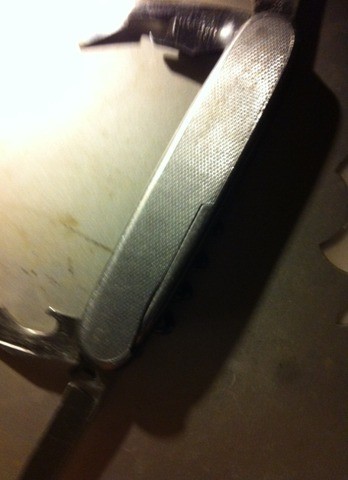
The frame is steel, probably not stainless as it draws a magnet quite strongly. It is milled in a very fine pattern.
The ricasso of the main blade has the Henckels twins logo and the legend "J A Henckels Solingen". On the flip side, it says "Friodur", which I gather refers to Henckels' cold hardening process.
The pen blade says "Friodur" and "Germany" on the other.
The can opener has the twins logo, followed by "Nicht Rostend" (not rusting) and "D.B.C.M.", which always comes up on Google as De Beers Consolidated Mines. What's the deal there? Anyone?
The knife is made by Henckels, and has the same tools you would find on a standard 91mm 2-row Swiss Army Officer's knife. However, because the knife lacks plastic scales, it is about 1/8" thinner than an SAK.
The frame is steel, probably not stainless as it draws a magnet quite strongly. It is milled in a very fine pattern.
The ricasso of the main blade has the Henckels twins logo and the legend "J A Henckels Solingen". On the flip side, it says "Friodur", which I gather refers to Henckels' cold hardening process.
The pen blade says "Friodur" and "Germany" on the other.
The can opener has the twins logo, followed by "Nicht Rostend" (not rusting) and "D.B.C.M.", which always comes up on Google as De Beers Consolidated Mines. What's the deal there? Anyone?

