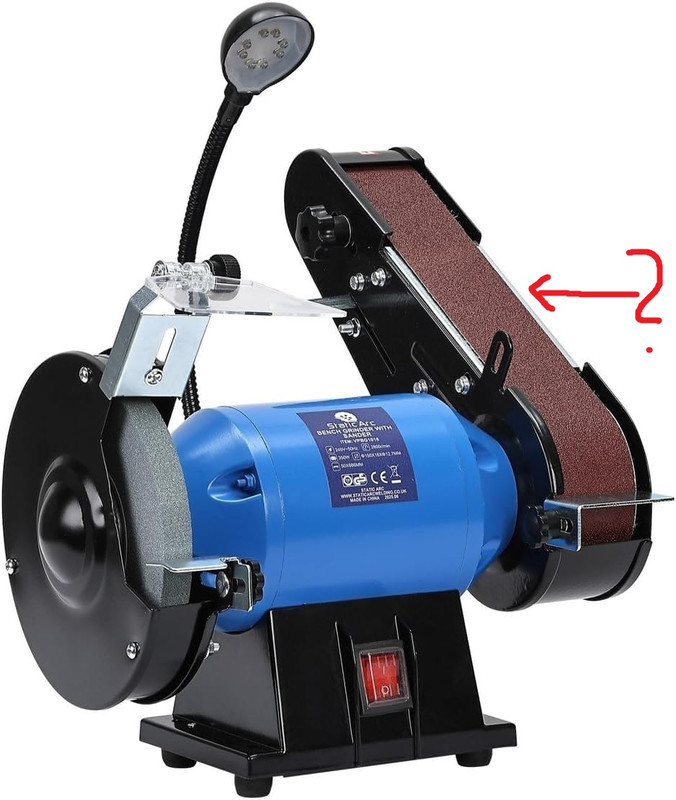
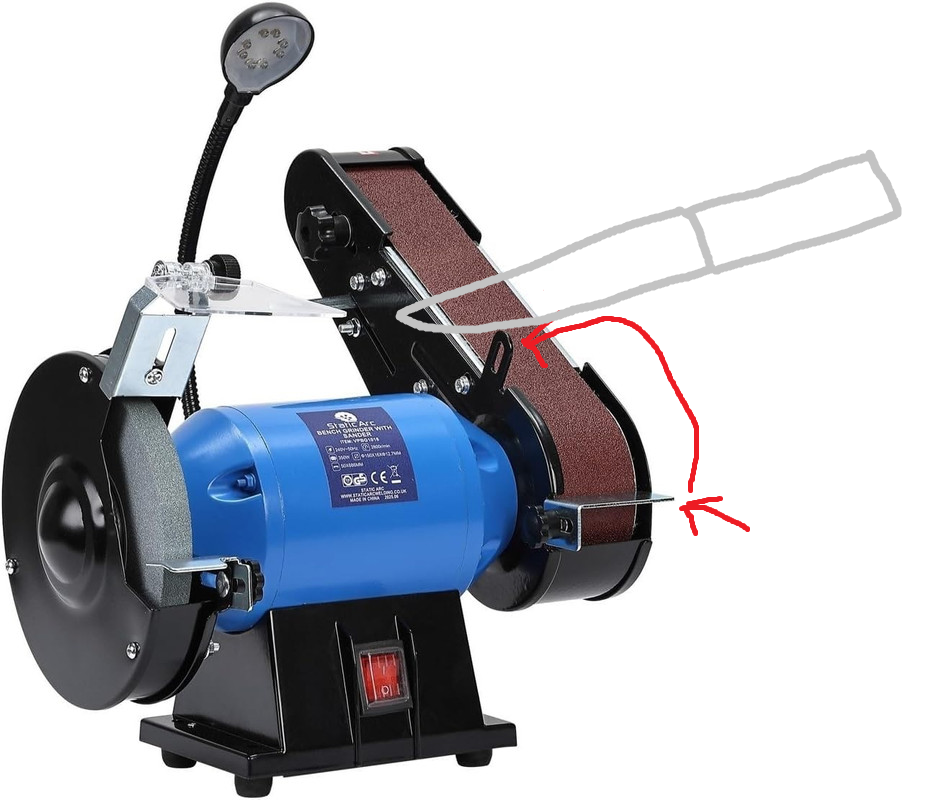
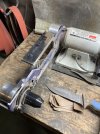
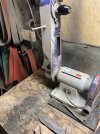
I should add that I grind entirely post heat treatment, initially for logistical reasons, but now that, and because it is what I am used to, after maybe a thousand knives (not really that many in the grand scope of a lifetime, but enough to be confident in my process).
If you do decide to try a single speed grinder, any grinding you do post heat treatment needs you to be hyper aware of heat management. I was fumbling around learning all this stuff on my own, and I ruined a couple blades early on when I was still using repurposed sawmill blades instead of actual knife steel (which I didn't even know where to buy at the time

), and this is due to letting the blade get too hot.
I've seen comments online that it's impossible to avoid ruining the heat treatment if you grind post heat treatment with a single speed grinder and no mist system. My experience since those early blades disagrees with that assessment. In fact, it is not even difficult to avoid. However, you have to understand how frictional heat builds and spreads, and learn to manage this and keep it below tempering temperatures (the temperatures which can alter the steel matrix).
I use tactile awareness, and the grind and dip method.
When I start grinding, the blank is full stock thickness, and with more mass takes longer to heat up. The thinner I go, the faster the blank will heat up from friction, thus requiring more frequent dips. Never let the blade get hot enough to hurt your hand. If it never gets that hot, then you are well below temperatures that can alter the steel matrix.
Finer grits build heat faster than coarser grits. This is the number one reason that my highest grit grinding belt is 240 compact grain AO, before switching to scotchbrite for my belt satin finish.
This is a "poor man's knife grinding" process, and doesn't yield mirror polished blades, but is more than sufficient for working satin finishes on blades with exceptional geometry for actual use. So if your goal is ultimately to create high end art pieces that are going to pull in thousands of dollars each, then this method is not for you, and you will definitely want the variable speed grinders, and hours of hand sanding time on each blade.
If your goal is like mine, to efficiently create items with appealing designs, and excellent ergonomics, geometry, and performance, then this will do it.