Matching scales - how much do you care?

Joined
May 7, 2011
Messages
3,426
Hello traditionalists,
here's another "quiet shift at work unleashing thoughts on different perspectives on the knife world" thread :D or rather, just another topic for conversation among friends.
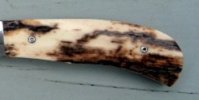
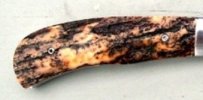
So yesterday I was cleaning one of my favourite knives. I've posted pics of this knife before, it's probably my favourite among the ones I own, I don't really carry it much outside home (formally, this knife belongs to my dad, even though I insisted that he gave it to me, and I doubt he'll ever see it again :rolleyes:) and it brought back something that I wanted to ask you.

image-90B9_4F926794.jpg


image-F485_4F926794.jpg


How much do you care of scales matching?
From what I've read, it seems that most of you do care about it. I'm not sure if I really do.
On this knife, for example, as on other knives with horn or stag handles, I don't really mind that much, but it might be because I love everything else in this knife (shape, size, blade, feel, and the perfect friction to open it). It's evidently non matching, still I'm sure both scales come from the same horn (being imported, I assume the knifemaker didn't have much option...or maybe he didn't care as well?), but somehow I take it as a part of the "natural material issue". Would it look better if both sides of the scales matched? maybe so. But, honestly, I don't think I would like the knife more than I do now.
I understand that it is part of the knifemaker's work (be it production or custom) to match both sides of the handle. But, with natural materials, I assume it's not always possible nor easy. Especially with materials of animal origin (stag, horn, pearl). Curiously, it does bother me a little more on wooden handles, for some reason that I can't really explain. Anyway, I look forward to hearing your opinions (as always, pics are welcome).

Fausto
:cool:
 
Fausto.....i personally like them to match as well as possible......i also understand the problem in getting scales to match,,particularly on larger knives.....i rehandled this in Samba,and the slabs are off directly opposite sides of the same piece.....matched?..i would say technically yes....matching?,i would say no...it is very hard to get a straight enough piece with the same grain....just my 0.2.....................FES

Fieldknife002.jpg


Fieldknife001.jpg
 
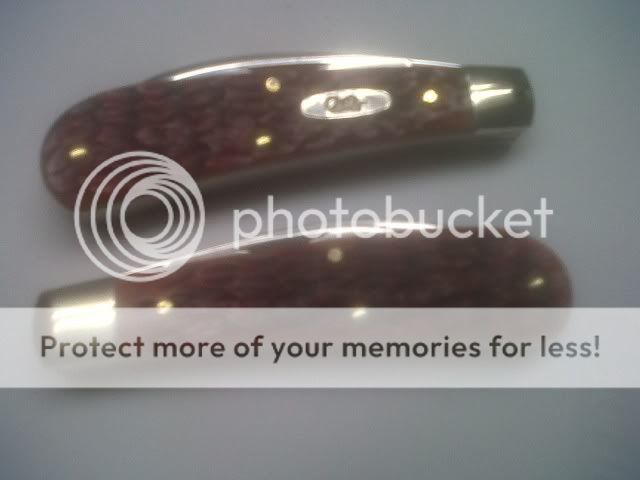
I have a few that don't match. It bugs me a little, but it isn't something I'd send a knife back for. Oddly enough, I bought two Case swayback jacks at the same time. Each has one dark, and one light scale. If you swapped one scale from each knife, they would match perfectly.
ETA

case1.jpg

case2.jpg

Adam
 
Last edited:
Honestly it doesn't bother me in a lot of cases. That knife of yours Fausto is one of the ones that I think looks really good like that. Kind of a ying/yang thing going on. Black with white strips and then white with black stripes. It looks very good to me.

Will
 
I care a lot about it. One reason I don't buy stag sight unseen anymore is the fact that so many are not even close to matching.
 
I have much more tolerance for variations due to a "natural material issue," as Fausto puts it (and as illustrated in his and in festerfromnzed's pictures), than from evident human error or indifference. Also, regarding the former, I find the distinction Fester draws between "matching" and "matched" very helpful, especially when the material comes from a single source.

While bone is a "natural" material, once it's dyed, pressed and jigged the way it is on Case's knives (as just one example), I expect it to be matched upon assembly. The SBJ's shown above would bother me, if only because having them side-by-side proves that each could have been matched better.

All that said, there are still some natural scales/sides on some knives that vary too much from each other for my tastes, or that have one side I greatly prefer to the other so that the less-pleasing side seems all the more so in contrast. Still, some of the most varied can not only work well in the context of the overall knife design, but push it over the top. I'd put Fausto's knife in that category.

~ P.
 
Thank you for your answers.
About my knife, I have to say that I love it mainly because of the design (it's what we call an "antique shape" Sardinian traditional blade) and the action (being a friction folder, it has the perfect - to me - amount of friction), more than for the looks of it. Still, I always found it goodlooking, and I always saw the contrast as a natural fact. Just like (it might sound silly) some dogs have one ear of a different color than the other. :D
As Pertinux said, dyed bone is basically an artificial material of natural origin, so matching should come naturally. But if those SBJ's above were mine, I don't think I would mind that at all.
I understand that some people really care, especially on stag. It's very interesting to hear opinions on this topic :)

Fausto
:cool:
 
I can tolerate some mismatch, but I have a few that that do bother me.

I think that wood and bone should match closer then stag or mammoth ivory. Some makers use "book matched" wood scales. That is the pinnacle of detail to me.

Here's an example of one that bothers me. It's mammoth ivory and not matched at all to my eye. It may not be as clear as it could be in the pictures but the color and texture are both different.
bb1a-1c.jpgbb2-1c.jpg
 
I think matching scales are a plus, but some mismatch would not keep me from buying a knife I like otherwise. I figure if I want matching handles, then I should buy micarta or delrin or G10 or CF.

Ed J
 
Fausto.....i personally like them to match as well as possible......i also understand the problem in getting scales to match,,particularly on larger knives.....i rehandled this in Samba,and the slabs are off directly opposite sides of the same piece.....matched?..i would say technically yes....matching?,i would say no...it is very hard to get a straight enough piece with the same grain....just my 0.2.....................FES

Fieldknife002.jpg


Fieldknife001.jpg

That is a beautiful classic knife. Great job with the rehandle! I'd call it a match!
 
The Case pair would bother me so much I'd have to swap the scales over.
The knife in the OP is lovely, on the other hand. I guess it's the "yin-yang" thing with the colours.
As stated, it's not always possible, to have them matching, but there's a certain flow that somehow, just works.
When it doesn't, it's obvious.
 
With natural materials, I'm a bit forgiving. Jigged bone should be a match as I see it because it's a worked material. Wood, I can see some difference in gran side to side. That's okay. With stag, if it's close, okay, but what really is a turn off to me is mismatched in thickness of scale. One side is normal thickness for a scale, then the other will be either thin or very fat with half the bark polished away. That drives me nuts. Can't stand that.

With natural horn, a little variation is nice. I love that folder in the photos. The light on one side with more dark on the other is indeed sort of a yin/yang thing, and I like it. Gives the knife a subtle different look depending on what side you look at. I guess I'm more forgiving with horn of all materials. The difference would not bother me at all.

Carl.
 
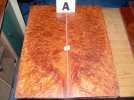
Fausto, I have plenty that aren't "book matched" :). Here's an example of "book matched". This technique is often used on guitar and violin backs.
Book_matched_Burl_Plates.jpg
 
It doesn't bother me at all as long as the two scales have some resemblance. Like Carl said, what can freak me out is a difference in thickness of the scales. This is a deal breaker for me.

Nice knife Fausto :rolleyes:

Mike
 
It's impossible for natural handle materials to be perfectly matching, the variation is inherent in the material. That said, they should be matched like Fester pointed out. I find it irksome when the cutler doesn't seem to give any thought to pairing the scales, as often happens with stag. It's incredibly ugly when one side is popcorn-esque and the other almost ivory-like in its plainness.

It's funny, relatively plain or highly figured, I don't mind all that much as long as the scales match well. I like both these knives, despite the fact that only the GEC has premium stag.

dsc0819h.jpg


dsc0822q.jpg


northfieldlockbackhunte.jpg


northfieldlockbackhunte.jpg


- Christian
 
Fausto, I have plenty that aren't "book matched" :). Here's an example of "book matched". This technique is often used on guitar and violin backs.
View attachment 272771

Thanks Gary. I knew about this technique (from guitar backs), just didn't match the term you used with it :D
Since many of you here seem to like it (no matter the non-match), I'm beginning to think that the knifemaker who made my knife could have done it on purpose. I will try to contact him and then let you know :)
And yes, difference in thickness is quite another thing, and even though I never handled a knife with such flaw, I have no doubt that it must look and feel pretty bad.
Thanks for your feedback!

Fausto
:cool:
 
IMG_8015.JPG


IMG_8014.JPG


Not scales but single piece of rowan

I ussualy don't care for matching scales with natural materials,sometimes this can give interesting efect,but in my small folder collection i don't have mismacthed scales.

And that Canadian belt knife is beautifull :thumbup:
 
Last edited:
I can tolerate some mismatch, but I have a few that that do bother me.

I think that wood and bone should match closer then stag or mammoth ivory. Some makers use "book matched" wood scales. That is the pinnacle of detail to me.

With natural materials, I'm a bit forgiving. Jigged bone should be a match as I see it because it's a worked material. Wood, I can see some difference in gran side to side. That's okay. With stag, if it's close, okay, but what really is a turn off to me is mismatched in thickness of scale. One side is normal thickness for a scale, then the other will be either thin or very fat with half the bark polished away. That drives me nuts. Can't stand that.

With natural horn, a little variation is nice. I love that folder in the photos. The light on one side with more dark on the other is indeed sort of a yin/yang thing, and I like it. Gives the knife a subtle different look depending on what side you look at. I guess I'm more forgiving with horn of all materials. The difference would not bother me at all.

Carl.

I agree with both Gary and Carl on all points raised :)
 
Back
Top