Melting brass

Joined
Mar 18, 2008
Messages
176
If I were to melt some old brass fittings down to make bar stock, should I worry about cleaning them real good or will all the the impurities rise to the top when I melt it.

 
Two things:
All brass is not the same.
Some brass fumes are toxic.

As far as the dross goes, you will skim it off the melt, but you want the brass at least clean of dirt and crud.

Stacy
 
f you get a white fume STOP
brass is copper, zinc and other stuff, sometimes includng lead. you get white fumes, it is likely zinc oxide, possiby some lead, zinc oxide will kill you quick, within a week or two, lead will eat your brain slowly. Don't breathe any of it.
-Page
 
As cheap as brass is I think I would just buy some barstock as opposed to the risk of poisoning myself with zinc fumes. Plus it would not be time effective to make your own brass barstock, at least in my opinion.
 
John, do you reckon the same goes for other materials like nickel silver, copper and aluminum? I have a small coffee can collecting scraps and a garage full of aluminum cans lol... I figure a bag would be enough to cast a pommel... :foot:
 
Thanks for the input. I had no idea melting brass was so life threatening. Maybe I'll just have the neighbors annoying kid do it for me. thanks!
 
Zinc oxide is not quite as dangerous as some would have you think. Zinc oxide will make you sick (it's called metal fume fever) but it is not life threatening to healthy individuals under normal circumstances. The single example that knifemakers use to prove that it is toxic is one maker who filled his whole shop with smoke from galvanized pipe fittings and stayed in it. Oh, by the way, he had emphysema and died of an onset of pneumonia.

CDC said:
Workers exposed to zinc concentrations between 320 to 580 mg/m3 for 1*3 hours have experienced nausea on the job, and chills, shortness of breath, and severe chest pains 2 to 12 hours later [Hammond 1944]. Two men exposed to about 600 mg/m3 for 10.5 to 12 minutes experienced headaches, chills, and fever with cough and a decrease in vital capacity which persisted for 15 hours after exposure [Sturgis and Thompson 1927]. When air concentrations approach 600 mg/m3, it has been reported that visibility is occluded [Turner and Thompson 1926]. The lethal oral dose has been reported to be 500 mg/kg [Gekkan Yakuji 1980]. [Note: An oral dose of 500 mg/kg is equivalent to a 70*kg worker being exposed to about 23,300 mg/m3 for 30 minutes, assuming a breathing rate of 50 liters per minute and 100% absorption.]

The lethal dose is 30 minutes of breathing a concentration of 23,300 mg/m3, 600 mg/m3 is enough to make a cloud so thick that you can't see. The lethal dose also assumes 100% absorption.

Remember, you can drink so much water that you die too.
 
Melting brass (and most other stuff) is an outdoors exercise for the reasons above. Keep away from any fumes. My one brother did guite a bit of lost wax castings. Also make sure there is no moisture around. Molten metal and water means an instant steam explosion. With some care it is fairly safe. You also need some kind of ceramic crucible to melt and pour from. Nickel silver has to get pretty hot. I think there is a thread about melting nickels (now illegal to do). I got some nickel silver bars from Texas Knife supply for a price that would make doing it myself kind of ridiculous
 
Hi Danny,

Here are a few ideas.

Sell the old brass fittings as scrap. Buy the bar stock.

-or-

If you're going to melt it down do something more creative than just making bar stock. Fabricate your handle hardware out of machinist's or jeweler's wax, invest it (make a mold with it), burn out the wax from the invested mold, melt down some of your brass, pour it into your hot mold...and presto change-o...you now have in brass what you made in wax. You can get way more intricate designs this way than you ever would working directly in the brass. And, you only need to melt a relatively small amount of brass at a time (can use your oa torch). Make sure you invest some wax rod too. That way you can pour rod from the same brass for a good match.

-or-

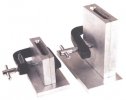
Get a small ingot mold, something like this:

attachment.php

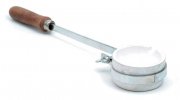
And get a small hand held casting crucible, something like this:

attachment.php


Melt your brass down with an OA torch (use borax for a flux) and pour yourself a little bar. Preheat your mold a bit with your torch before you pour.

-or-

Smelt larger amounts of brass in a graphite smelting crucible with a foundry (maybe could use a propane forge with a small crucible), pour into larger ingot molds, roll through a mill, surface grind, etc. Buy far, this would be the most costly and expose you to the most risk.

Keep us posted on your progress.

All the best, Phil
 

Attachments

  • IngotMold.jpg
    IngotMold.jpg
    11.4 KB · Views: 658
  • Crucible.jpg
    Crucible.jpg
    9.4 KB · Views: 659
I have torches, ingot moulds, mould rubber, a rolling mill, etc.
I buy barstock, unless I'm working with precious metals.
 
Back
Top