Modern day higonokami

Joined
Jan 12, 2011
Messages
168
Hi Everyone,

I really love the look of the traditional Japanese higonokami, and have almost bought one several times now. The only thing that keeps me from pulling the trigger is that I like to use all of my knives, which means they eventually go dull. I've heard that you need to use special Japanese water stones to sharpen it, which I don't have, and can not justify buying when I can sharpen my 50+ other knives with the sharpener I already own.
So is there a modern day equivalent, looks-wise? The friction folder aspect of it is fine with me, its just the steel that im worried about. The closest thing Ive seen is the CRKT Heiho, which isn't really very close in looks other than the Japanese character on the handle.
 
Lee Valley has a traditional higonokami available- I have one, it's called their Japanese Carpenter's knife. Cuts very nicely, easy enough to sharpen on ceramics.
 
Lee Valley has a traditional higonokami available- I have one, it's called their Japanese Carpenter's knife. Cuts very nicely, easy enough to sharpen on ceramics.

Very nice... not a bad price either. Do you think it would sharpen up on a diamond sharpener? (DMT Diafold Fine/Extra fine)? That is what I have.
 
You can sharpen them on a dmt just fine, as you should be able to with any higonokami regarding what steel you get it in.
The steel doesnt know any better and it comes down to your skill reading the knife and knowing what it takes to bring out a good edge, be it a steeper or shallower angle or a wider angled micro bevel to reduce chippout and how well the knife responds to a strop vs a more toothy edge.

With the cost of many higonokamis being relatively low, you might be able to grab one without much of a dent on the wallet and since they are quite uncommon on the exchange, sell it for most of your cost if you dont feel that you are getting the most from it.

Plus, if you do keep it while not being able to get a Great edge on super blue or white steel, you can take it as a learning experience.
 
You don't need special stones for them. I wouldn't worry about it.
 
I see you already have your answer. :)

The Lee Valley Higo is next on my buy list. What a cool piece of brass and steel. Hope I enjoy it as much in person as I do in the pics. At some point mine will end up being honed on a rock and stropped on a boot heel anyway....
 
There is no steel that needs a special sharpening tool, except for steels that are so highly wear-resistant that using anything but diamond represents a huge effort.

Higo-no-kami knives are usually carbon steel, sometimes japanese blue or white paper steel (and they will absolutely let you know if it is such a steel, as it's a selling point) - all of which can be sharpened just fine using normal methods.
 
Awesome! Thanks for the replies- not sure where I read about the water stones thing, but im very happy to hear your reassurances! Going to have to get one now!
 
I was gifted one by a generous forum member (over in traditionals). It's a fun knife to bring out to show folks, and they take an excellent edge. Just be forwarned, though, as they sometimes come in a little rough around the edges (not the actual edge, though :))

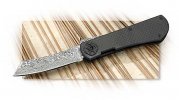
There are a few modern-ish ones available on A. G. Russell's site, but they price out near $150. They have a locking liner, but have premium stainless steels.

Here's one in Damascus and Carbon Fiber.

NER-LV203D.jpg
 
Along the same design but not a Higo is the Shun folding steak knife:

KS5900.jpg
 
I've got an old Higonokami... Have occasionally wondered if there was also a slightly modernized alternative.
 
I just got a higo from Knifecenter. If one has any doubts, please go get one.
I just love this classic folder.
rolf
 
Awesome! Thanks for the replies- not sure where I read about the water stones thing, but im very happy to hear your reassurances! Going to have to get one now!

The marketing department is where you read it. They want you to buy a stone or 3. ;)
 
A true Higo needs to be sharpened like a scandi ground blade and is best done with waterstones, even the cheap King stones will do fine. It's made in traditional Japanese style with a hard iron core and soft iron cladding, this makes grinding the large flat bevels much easier than a single homogenous blade. The stones needed are not special but the method of sharpening is indeed a bit different from most knives.

The knives pictured in this thread do not apply to this sharpening method.
 
Actually they come from the factory with a secondary bevel. It's just so small as to nearly (but not quite) be considered a microbevel. But maintaining the primary bevel as well as the edge will keep the geometry from thickening over time, so it's a good practice. I know a lot of people experience chipping when not keeping a secondary on them.
 
Back
Top