Last Visible Canary
actively parsing hurf durf
- Joined
- Nov 28, 2006
- Messages
- 4,577
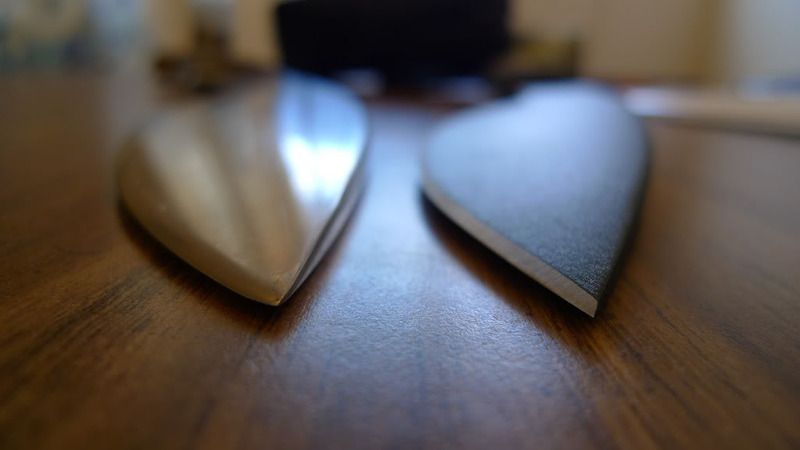
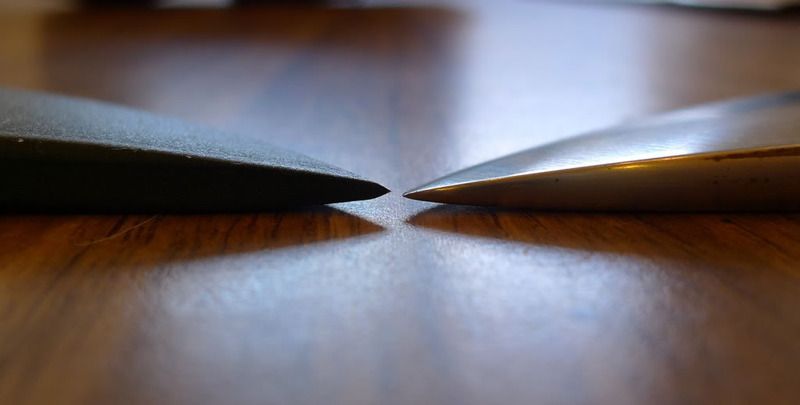
It's been said that the kz2's are considerably thinner than the kztt's. Just how much?:
(taken from the cutting edge towards the spine at the center of the sweet spot, where you are mostly likely to hit wood while chopping)
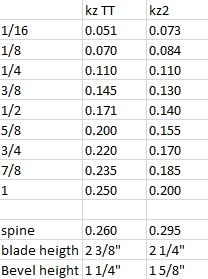
The kz2, being a production blade, has a more "robust" edge, but the main grind is taller than the kzTT and is a more shallow convex. The test team version goes from edge to full thickness in just over an inch, where the kz2 is just over an inch and a half. Even though the kz2 is thicker stock then the test team version, it's blade is thinner at the center of it's height.
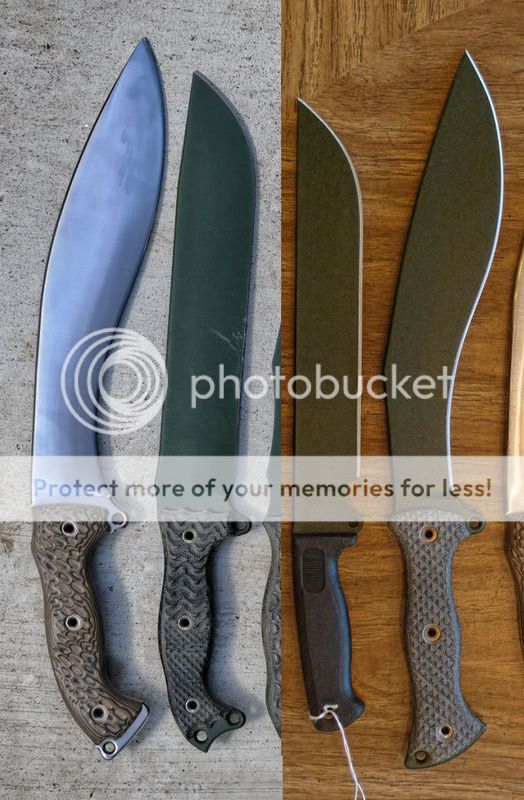
The shape of the kzTT is closer to a ganga ram where the kz2 is closer to a dui chirra (if you were to even out the fullers).
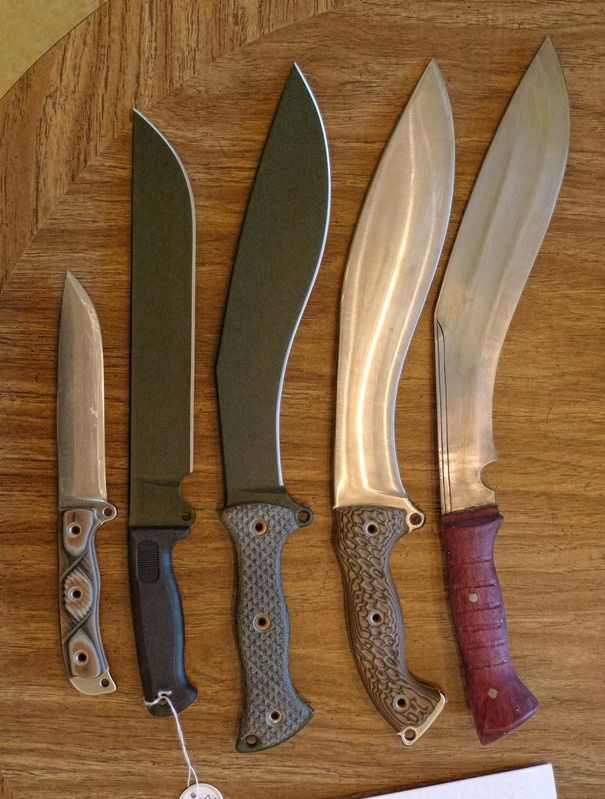
as big as it might seem to people who aren't used to khukuries, these are actually middle of the road in the 18" khukuri range. they are heavy for their thickness because of the exposed (and full thickness) handles, but they aren't very blade heavy by comparison to your average nepali khukuri. It's not uncommon for ang khola's like the one shown here to be 3/8"-1/2" thick. With a hidden tang they are WAY more blade heavy than the kz's.

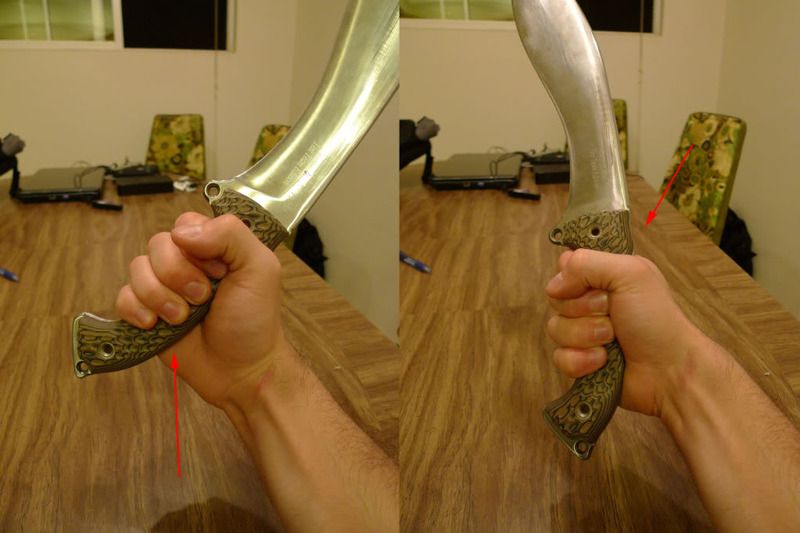
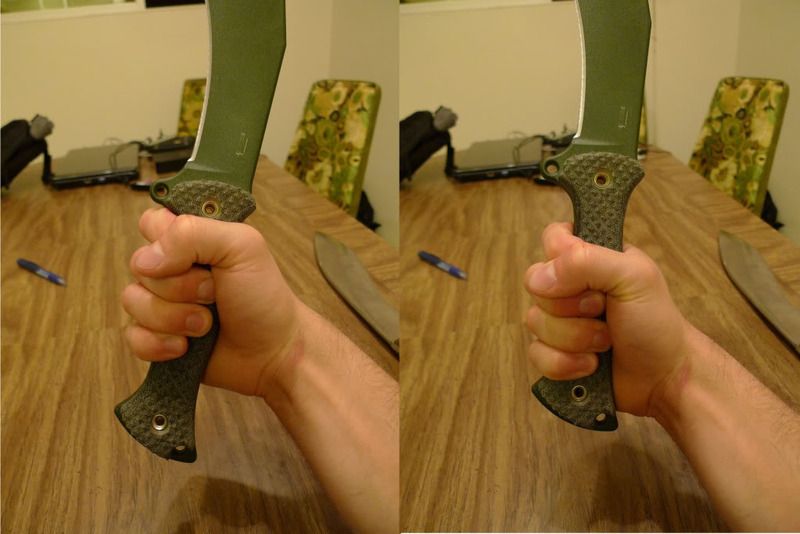
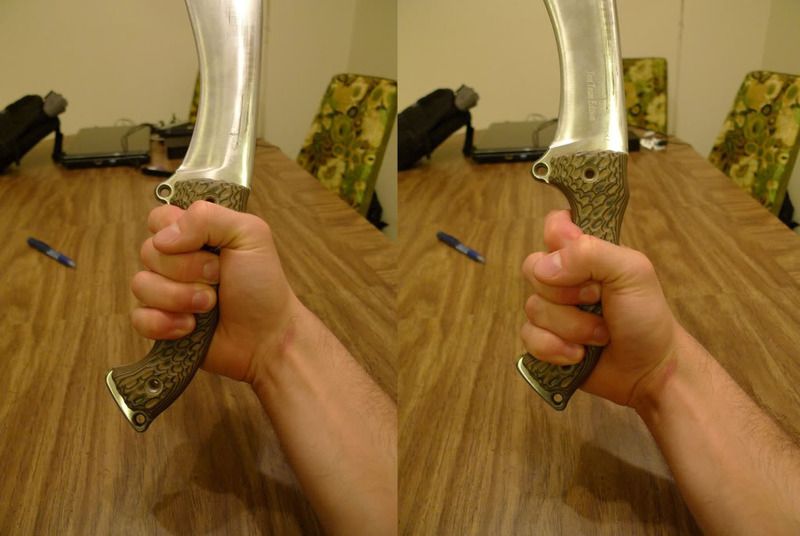
The handle change is very interesting. The primary difference is that the kz2 is designed to be griped in a forward or backward grip, and it's meant to roll in the hand as you chop. The kzTT is designed for one rock solid grip that doesn't roll very much, despite the big curve towards the pommel.
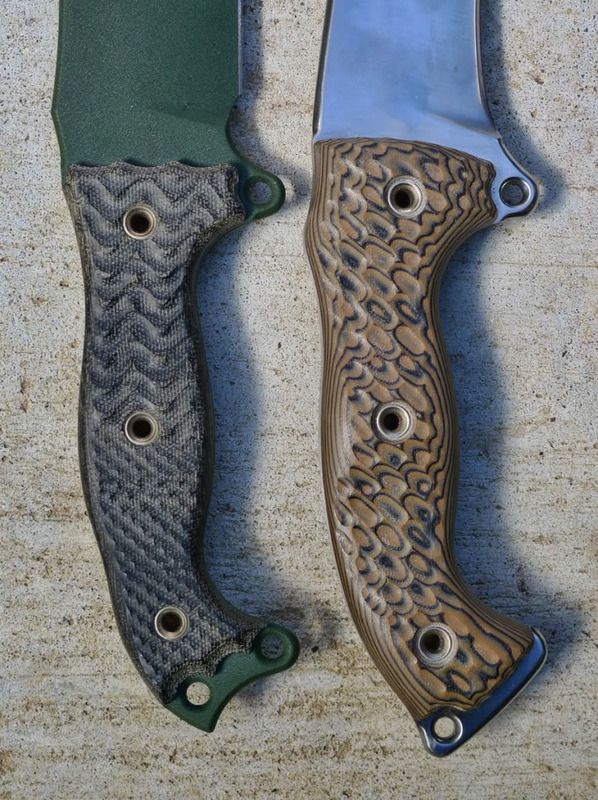
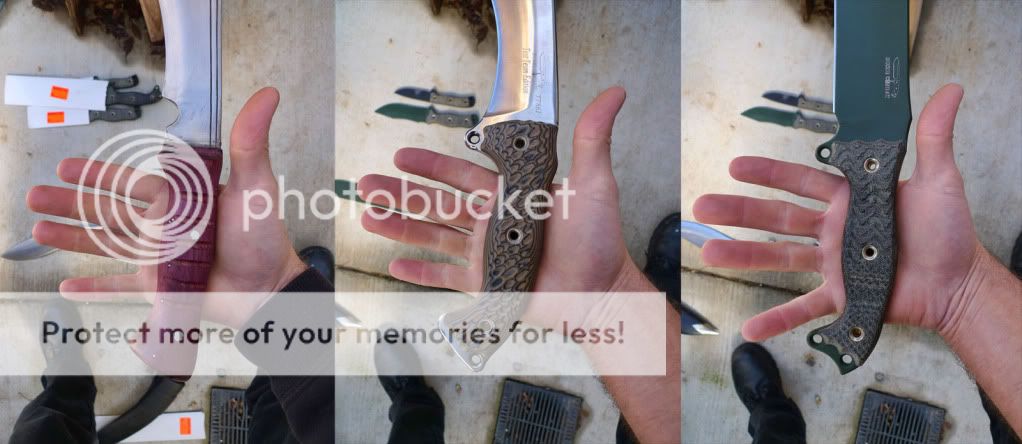
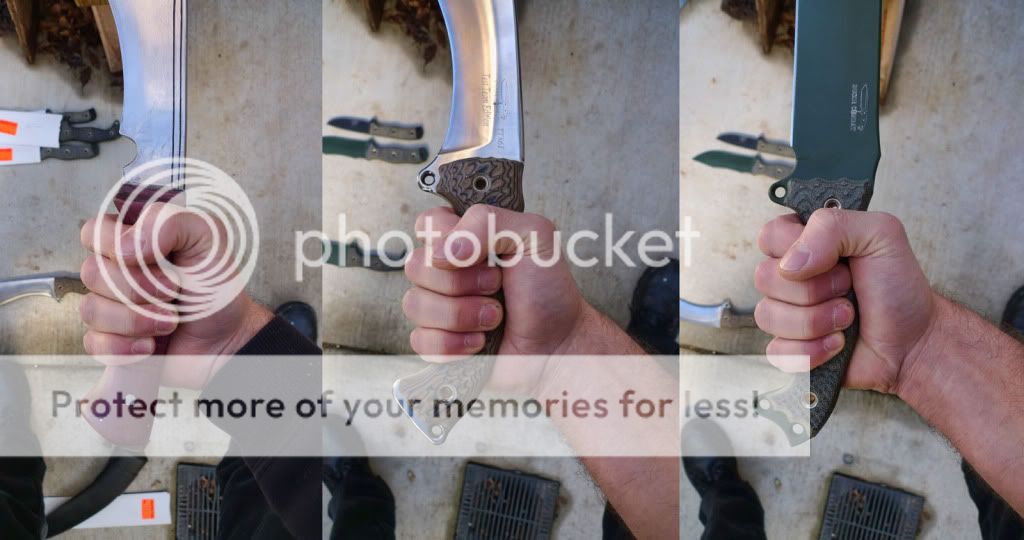
If you look at the group shot you'll see that the palm and finger swell on the kz2 are about even, an both are more severe than those of the kzTT. The kzTT has an almost flat back, and it's finger swell is very broad. The distance between index and pinky is shorter and the curves at each end are more severe, this means that for someone who has medium or large hands like me, you get one grip and one grip only. It's meant to move a little in your hand during chopping, but not much. It's a really solid grip.
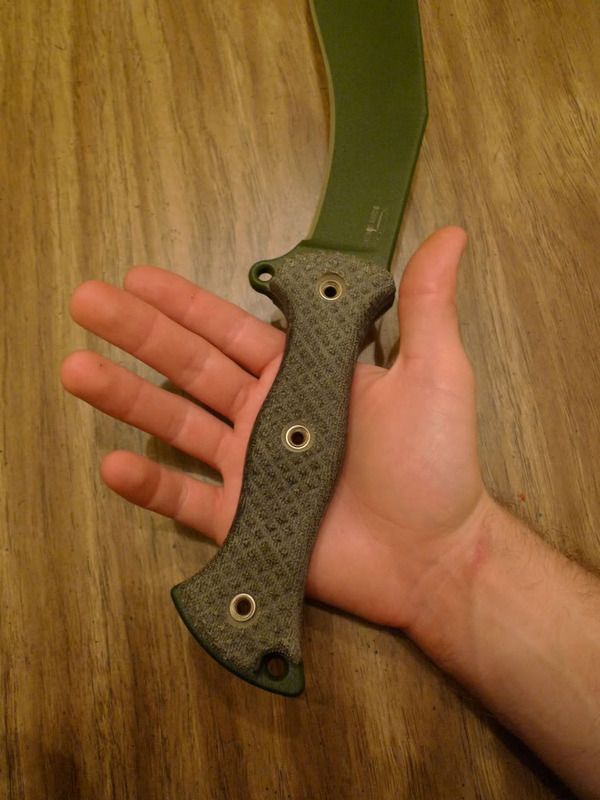
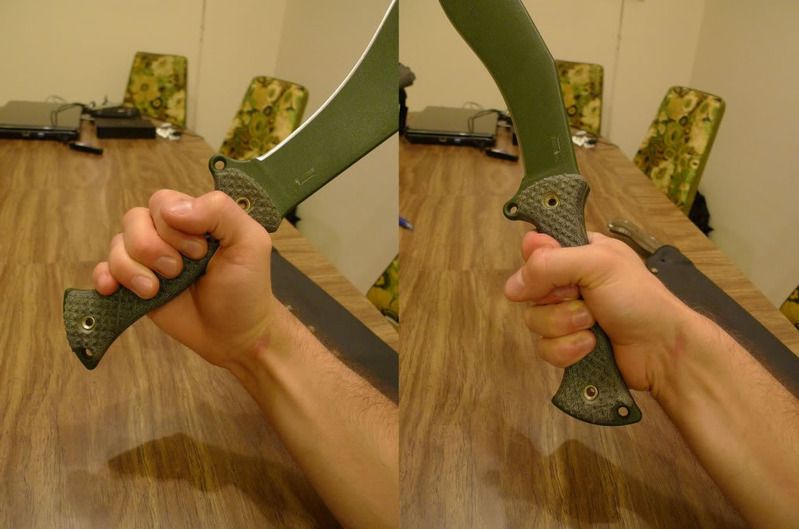
The kz2 on the other hand is leaner and straighter looking, the distance between index and pinky is longer and the curves at each end less severe. This means you can shift your hand up or down almost a full inch. that might not seem like much, but bringing your hand closer to the blade by an inch makes a HUGE difference in the balance of the blade, it feels much more neutral in a forward grip. The palm and finger swells make a ball in the center on which the handle rotates, as the knife comes up and goes down, the hand naturally extends the pinky on the upstroke and brings it in on the downstroke, creating a hand-based arch on top of the arm-based arch.
I'm not sure if this is the standard but on my kzTT the index and pinky finger positions on the spine are shaved down a lot. the thinnest part of the handle is on the spine side at the index finger position. I don't know why . The finger side is pretty consistent in it's thickness. The kz2 doesn't have that thinning at the spine side, it's much more square at all edges, it's like holding onto a square with it's edges rounded off, instead of a smoothed oval shape. Another big difference is that on the kz2 the handles are much thicker at the ricasso and pommel. I don't think it effects the weight to much, but it does allow you to grip farther forward or backward, and it gives more of a "guard" at both ends.
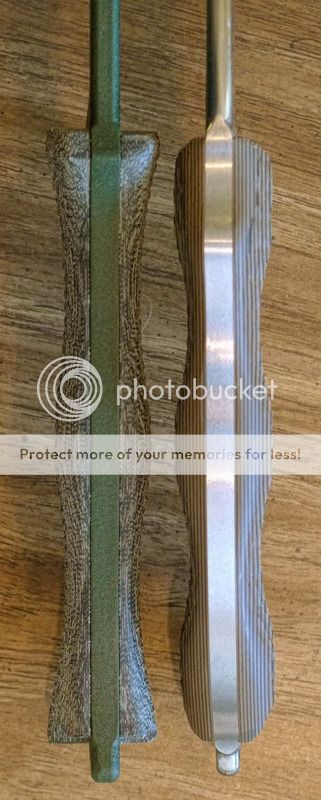
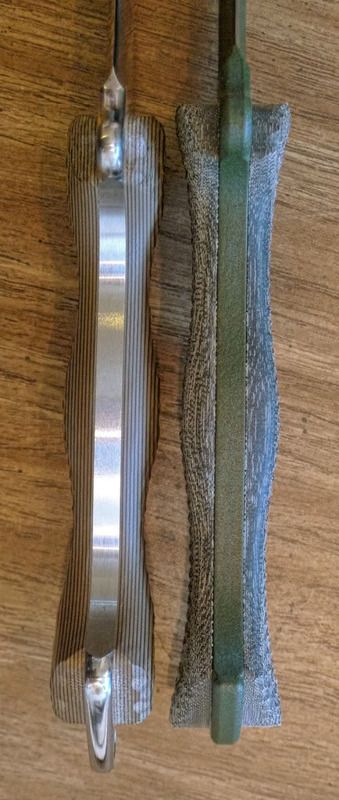
One big downfall of the kz2 handle slabs: sharp edges. If you choke back be prepared to have this part of the handle bite the crap out of your palm.
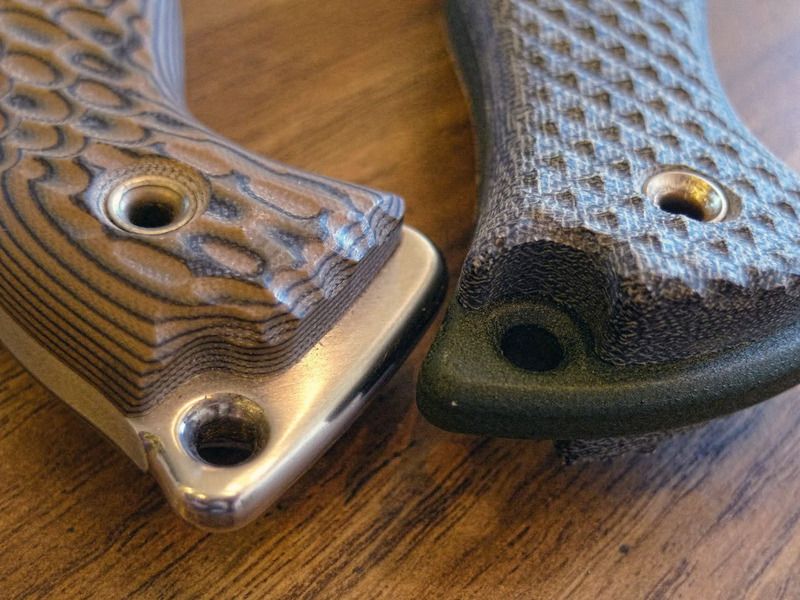
The kzTT is nice and tapered at all corners, with the handle pattern rolling over the edge. It makes for a very pretty and very smooth feeling handle, but it gives less of a gaurd effect compared to the kz2.
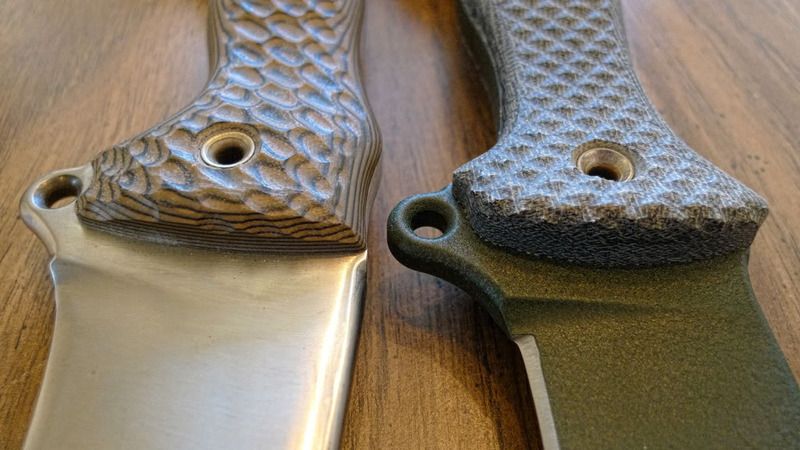
The machining patter on the kzTT is very smooth, nice oval cut outs. The kz2 is kinda sharp quilted diamond pattern. Once I take some sandpaper to the flats of the kz2 it won't nbe nearly as bad. The pattern is a matter of preference, I like both of them. The kzTT is definitely less likely to give you blisters though.
(taken from the cutting edge towards the spine at the center of the sweet spot, where you are mostly likely to hit wood while chopping)
The kz2, being a production blade, has a more "robust" edge, but the main grind is taller than the kzTT and is a more shallow convex. The test team version goes from edge to full thickness in just over an inch, where the kz2 is just over an inch and a half. Even though the kz2 is thicker stock then the test team version, it's blade is thinner at the center of it's height.
The shape of the kzTT is closer to a ganga ram where the kz2 is closer to a dui chirra (if you were to even out the fullers).
as big as it might seem to people who aren't used to khukuries, these are actually middle of the road in the 18" khukuri range. they are heavy for their thickness because of the exposed (and full thickness) handles, but they aren't very blade heavy by comparison to your average nepali khukuri. It's not uncommon for ang khola's like the one shown here to be 3/8"-1/2" thick. With a hidden tang they are WAY more blade heavy than the kz's.
The handle change is very interesting. The primary difference is that the kz2 is designed to be griped in a forward or backward grip, and it's meant to roll in the hand as you chop. The kzTT is designed for one rock solid grip that doesn't roll very much, despite the big curve towards the pommel.
If you look at the group shot you'll see that the palm and finger swell on the kz2 are about even, an both are more severe than those of the kzTT. The kzTT has an almost flat back, and it's finger swell is very broad. The distance between index and pinky is shorter and the curves at each end are more severe, this means that for someone who has medium or large hands like me, you get one grip and one grip only. It's meant to move a little in your hand during chopping, but not much. It's a really solid grip.
The kz2 on the other hand is leaner and straighter looking, the distance between index and pinky is longer and the curves at each end less severe. This means you can shift your hand up or down almost a full inch. that might not seem like much, but bringing your hand closer to the blade by an inch makes a HUGE difference in the balance of the blade, it feels much more neutral in a forward grip. The palm and finger swells make a ball in the center on which the handle rotates, as the knife comes up and goes down, the hand naturally extends the pinky on the upstroke and brings it in on the downstroke, creating a hand-based arch on top of the arm-based arch.
I'm not sure if this is the standard but on my kzTT the index and pinky finger positions on the spine are shaved down a lot. the thinnest part of the handle is on the spine side at the index finger position. I don't know why
. The finger side is pretty consistent in it's thickness. The kz2 doesn't have that thinning at the spine side, it's much more square at all edges, it's like holding onto a square with it's edges rounded off, instead of a smoothed oval shape. Another big difference is that on the kz2 the handles are much thicker at the ricasso and pommel. I don't think it effects the weight to much, but it does allow you to grip farther forward or backward, and it gives more of a "guard" at both ends.
One big downfall of the kz2 handle slabs: sharp edges. If you choke back be prepared to have this part of the handle bite the crap out of your palm.
The kzTT is nice and tapered at all corners, with the handle pattern rolling over the edge. It makes for a very pretty and very smooth feeling handle, but it gives less of a gaurd effect compared to the kz2.
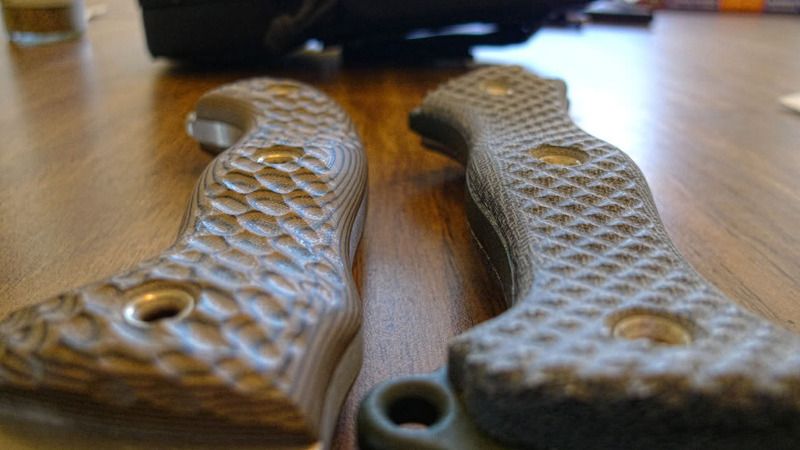
The machining patter on the kzTT is very smooth, nice oval cut outs. The kz2 is kinda sharp quilted diamond pattern. Once I take some sandpaper to the flats of the kz2 it won't nbe nearly as bad. The pattern is a matter of preference, I like both of them. The kzTT is definitely less likely to give you blisters though.
Last edited: