
My new anvil pictures and question

Joined
May 16, 2006
Messages
132
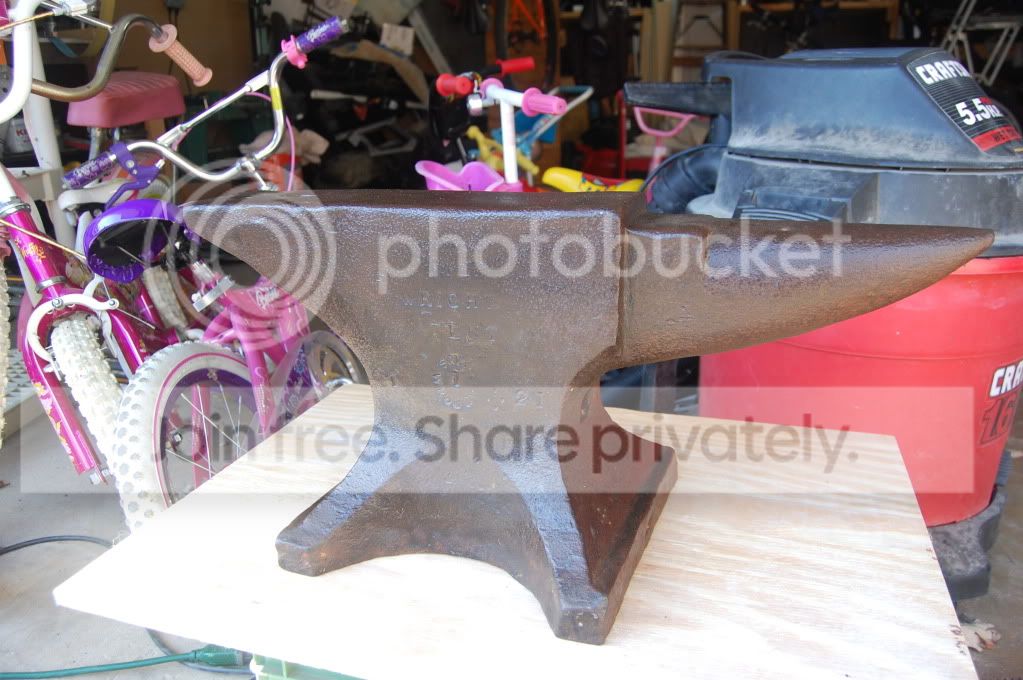
I'm trying to set myself up for forging in the future. Last night I picked up this Peter Wright 161# anvil. It rings and rebounds really nice from what little I know about testing it.

My 2 questions are: Does like look like I found a keeper? ...and what is the best way to dress up the top for flatness without ruining anything?
DSC_0325.jpg

DSC_0326.jpg

DSC_0328.jpg

DSC_0327.jpg


Measuring the top with a straight edge, there is a slight bow that is about 3/32" deep. You can also see the 1" round dent on the back flat near the hardy hole. I'm thinking I should hit the top with a belt sander to flatten it just a small amount and let the dent in the back go.

Comments?


Thanks!
-darren
 
I'd keep it cool if you're going to sand it with a belt sander though, so you don't ruin the temper.. but if you sat it in a bucket of cold water while doing it I'm sure it would sink most of the heat away simply by mass and current temperature. Still, it looks a LOT better than mine, to begin with, I'd love to have that :)
 
You might find that dent useful for straightening. I wouldn't sand it out unless
it's actually causing you problems.
 
Use and learn to use the sway..If you grind to much on an anvils face your liable to get the faceplate too thin..The faceplates arnt that thick to start with..Great anvil, go with it.
 
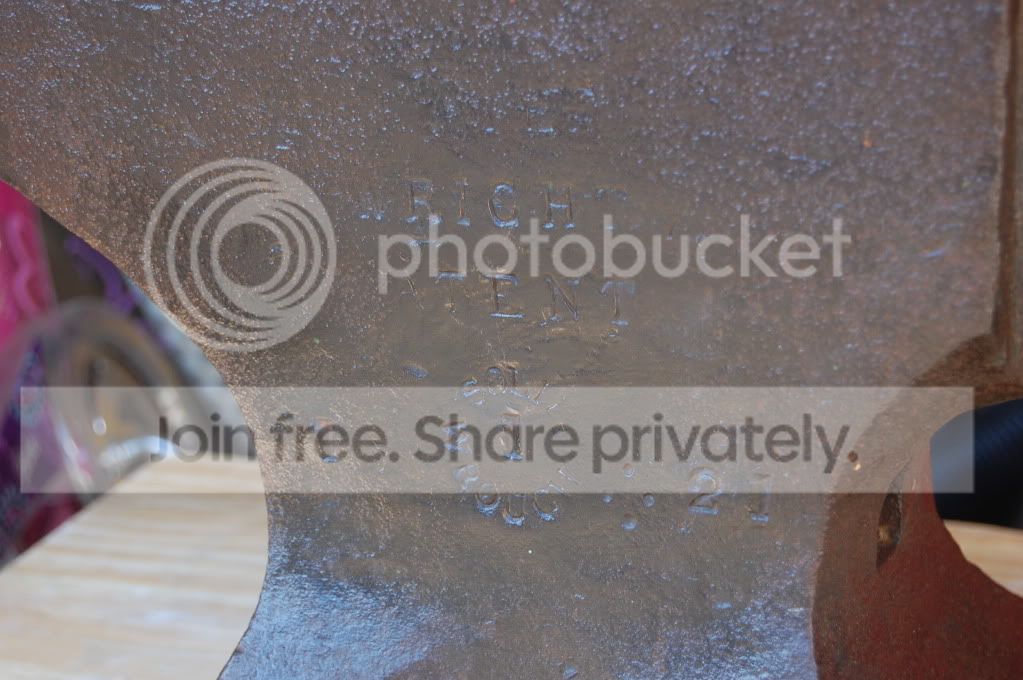
I have a 127lb Peter Wright. Yours looks to be 161lbs(originally).

1 1 21, that means 112 + 28 + 21, for a total of 161 lbs.
I had a machinist mill the face plate flat on mine. It took him 20 min and cost me $20.00. Well worth it.
 
Looks good use as is, but would not hurt much to flatten it out more if thats what you have in mind as long as you go slow and be careful.
CW
 
Use and learn to use the sway..If you grind to much on an anvils face your liable to get the faceplate too thin..The faceplates arnt that thick to start with..Great anvil, go with it.[/QUOTE
++++++,you could get it resurfaced but i would use it..
 
Not usually very easy to get the anvil face reground, unless you've got a surface grinder with enough clearance, which many don't, depending on your anvil's height, and as mentioned, you run the risk of ruining the top plate. Although heat build up and de-temper isn't much of a concern IMHO, grinding too deep can be, the deeper the saddle, the more it's a concern. Also, cost is likely to be prohibitive if you don't have the means to do it yourself properly.

I always hear the argument about using the saddle to straighten with, but in my experience, it's makes it more difficult, plus, it has a tendency to promote bends in the first place, especially if you try to do heavy bevel forging through that area. I love working on an anvil with a true face, it's why I keep my little 90lber around, even though I've got a nice 200lber to do rough forging with. I always move to the smaller one once I straight doing bevels and straightening, and it saves a lot of time.

If you mostly do outline shaping and do your bevels with the grinder, it won't matter much. My suggestion, is use it like it is, if you find you *need* a perfectly flat face, you'll likely have a better time buying a real "new" anvil for that purpose and you can keep or sell the PW.

Congrats, as mentioned, PWs are some of the best.
 
Thanks for all the advice! I decided that I"m not going to touch the face except for a light sanding by hand to clean up where some rust was.

I like the idea of having a 2nd perfectly flat small anvil if I ever decide I need one. I'm going to work on this one as is and still keep an eye out for a perfect top small one that I could use mobile if I ever want.

Thanks to everyone here for the replies. This place is a great source of info and inspiration!

-darren
(thinking about cutting up the propane cylinder that I previously converted to an air tank :rolleyes:)
 
Back
Top