Natural fibre cordage

Joined
Jun 25, 2008
Messages
1,484
There is no doubt that a length of rope is very handy when out in the bush and from what I've read, most carry some in one form or another when they are venturing out.

Whilst I acknowledge that carrying rope is a very good return on investment (ie little bulk/weight with lots of utility :D), I would like to start this post to focus on using natural fibres to make your own cordage when in the bush.

In particular my contribution will focus on natural fibres that can be used "as is" with little or no preparation needed. On those occasions when I've needed extra rope, I look to be able to make it quickly from what's on hand. So for me, those plant fibres that take time to prepare (eg drying, scraping, boiling etc) aren't the ones I'll be looking to use (unless my stay is an extended one :D ).

I guess I'm lucky having access to a particularily useful plant called the long leaf mat rush (Lomandra longifolia).

Banksidevegetation.jpg


As well as having an edible growing end near the stem, the leaf itself makes a strong rope with little preprep required.

Depending on how thin you want your rope, the leaf can be slpit along its length, giving strong strips.

Threestrands.jpg


A simple knot to hold the three strands,
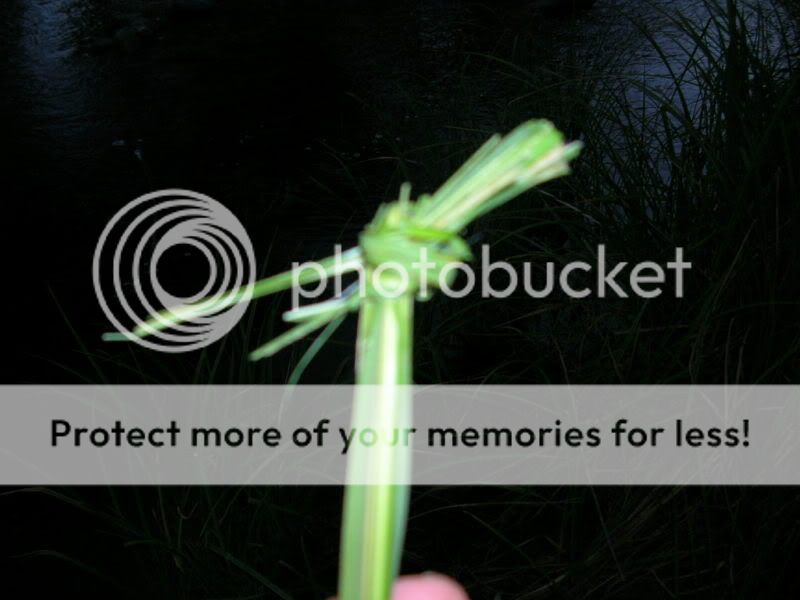
Knottostart.jpg


and then a simple three strand platt that produces a thin rope ...
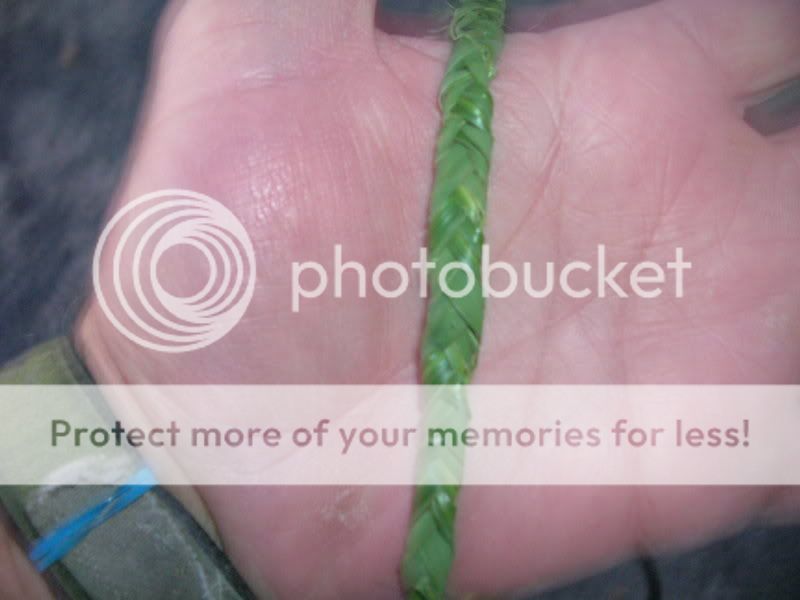
Threestrandplattedrope.jpg


...that's flexible enough to be tied in a knot...

Suppleenoughtoknot.jpg


....and srong enough to support a 15 lb weight.
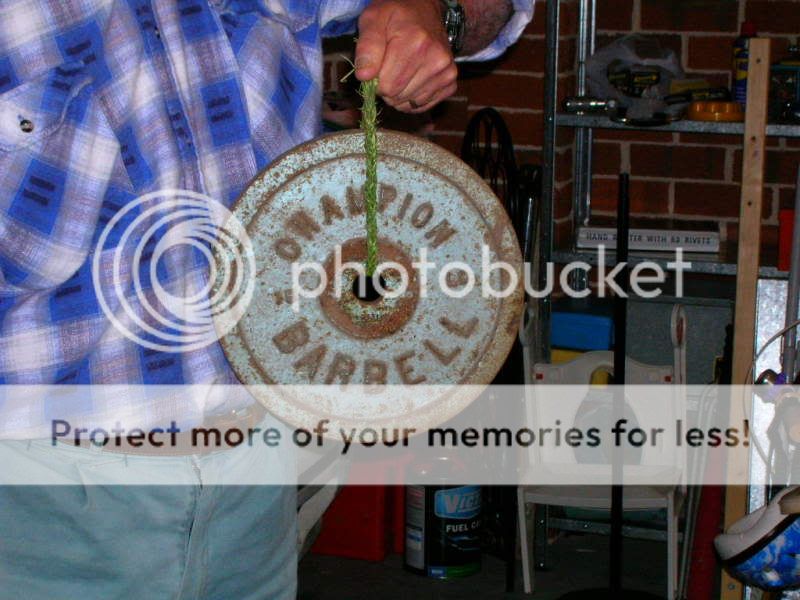
Ropefromvegetation040.jpg


All up, it took less than 5 minutes to prepare :thumbup:.


I'd be interested in hearing of any natural fibre sources you have locally available, so feel free to share yours :thumbup:


Kind regards
Mick

P.S. Sorry about some of the out of focus closeups.
 
Last edited:
Hey Mick,

Happy New Year.

We have many natural fibre source plants around here (Southern Ontario, Canada). To name some of the more important ones - Stinging Nettle (Urtica dioica), Wood Nettle (Laportea canadensis) - my favourite, American Basswood (Tilia americana - inner bark), Common Milkweed (Asclepias syriaca), Swamp Milkweed (T. incarnata), Evening Primrose (Oenothera biennis - not as strong as some of the others), Indian Hemp (Apocynum cannibinum) - very strong, although a PITA to process, Spreading Dogbane (A. androsaemifolium), Velvet Leaf (Abutilon theophrasti) - (a very good cordage fibre and seemingly, a favourite of John McPherson), and some others.

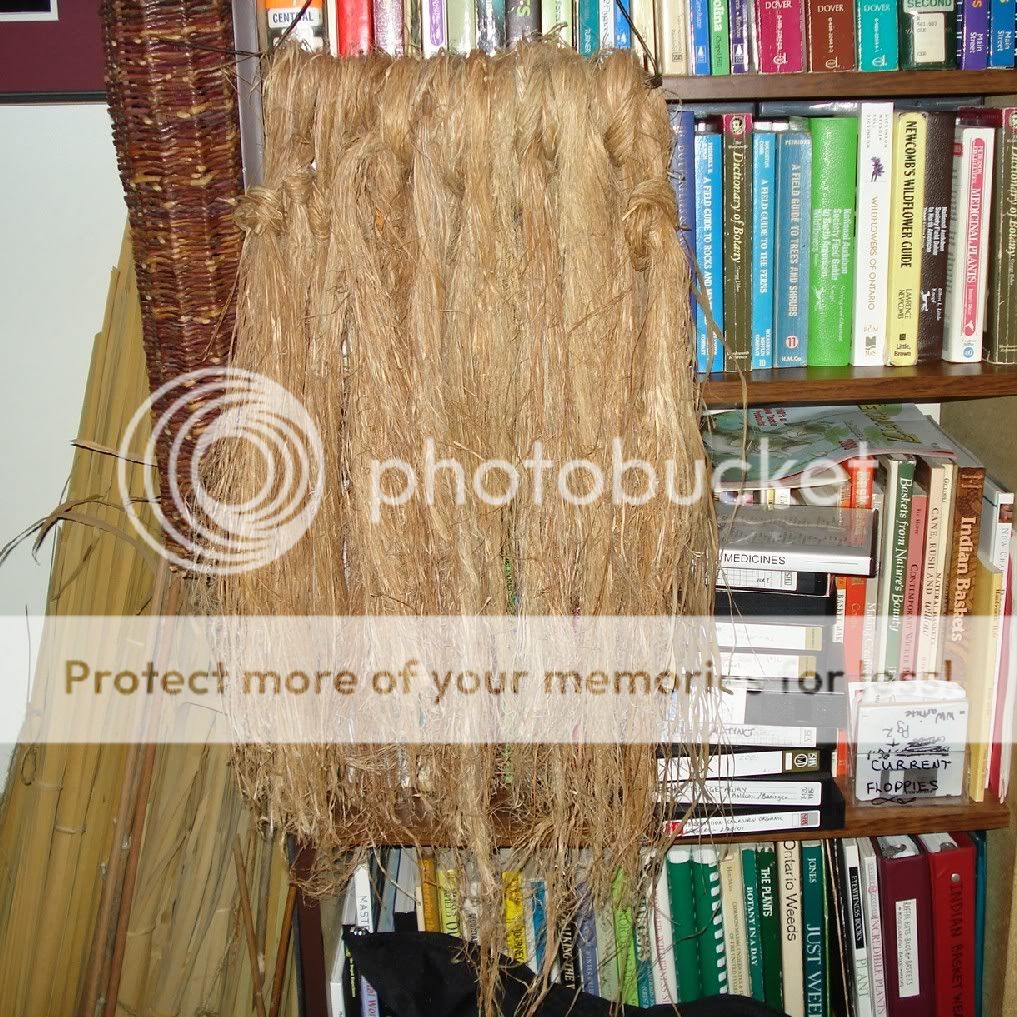
Here is a picture of an old cordage display board, I used to use. The printing was done by somebody else and it obviously wasn't waterproof :rolleyes:. BTW, the long, dark red stalks on the left hand side are Indian Hemp.
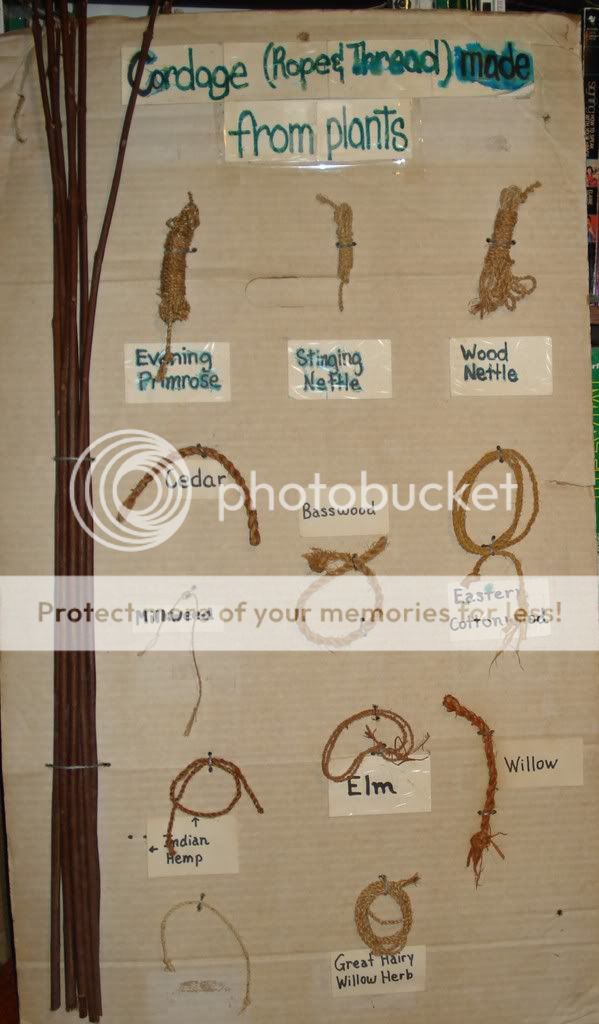
cordageboard.jpg


This is a picture of some Wood Nettle cordage - still has to have the little hairs clipped/burned off.

MakingWMcordage8-finishedcordage2IM.jpg


This is a picture of Velvet Leaf fibres and cordage.

VelvetLeafcordageandfibres-IMGP0118.jpg


In your pictures of the 3-braid green material, we can use the green skin off of Common Milkweed, the same way. We once 3-braided some of it and used it successfully for a bow drill coal. Took its toll on the cordage, though. Wouldn't have gotten a second coal.


Doc
 
great stuff guys...:thumbup: i definately need to get better at making cordage...:o
 
dogbane is my favorite natural, with cabbage palm (Sabal palmetto) being my second. However, where I live now, the inner bark of yellow poplar (Liriodendron tulipifera) is so prevalent, it is what I end up using most of the time. Here is a video I made primarily to show the splicing method...

 
Two other things, Mick.

First, cudos to you for posting about a subject that is consistent with our forum title. Not enough of that around here.

Secondly, what is the Latin name for the plant that you 3-braided? I only ask in case there is a member of that family, or the plant itself, around here.

Doc
 
Doc

You look like you have access to some pretty useful natural resources :D

I must admit, it's also good to see others take an interested in making use of the generosity of Mother Nature :thumbup:

A questions if I may. How do you seperate the fibres from the stalk of the nettle?


Kind regards
Mick
 
Awesome thread guys.:thumbup:

Around here the main best is from the ground in the summer, just a simple root from most any tree would work fine. Though with enough time put in most any bark/living greens can be spun into cordage. Simple twisting a sapling of sometype will produce a very strong cordage, kinda of twisting it like an ice drill, I will try and find a video that shows the technique, Ray did a good portion of it in one of his videos.
 
I have an older plant ID that says that Indian Hemp makes a very strong cordage but the process they described seemed work intensive compared to some material. I was wondering if someone has worked with the Indian Hemp and also the Yucca.
 
Doc

You look like you have access to some pretty useful natural resources :D

I must admit, it's also good to see others take an interested in making use of the generosity of Mother Nature :thumbup:

A questions if I may. How do you seperate the fibres from the stalk of the nettle?


Kind regards
Mick

Hey Mick,

This is for Wood Nettle (Laporte canadensis):
I usually gather it in the fall when the leaves are dying off (coincidentally, this coincides when the salmon run is on). If you leave it too long, the stalks fall to the ground and start to rot. (Retting is a popular way of processing Stinging Nettle (Urtica dioica) fibres, apparently, but I've never tried it.)

I cut the stalk off closely to the ground rather than pull up the whole plant and damage the root system. The stalk is run through my gloved hand to remove the stingers. I then bend the stalk close to the bottom and this tends to split it open, lengthwise. The outer skin (bark?) can then be removed from the inner stalk (from the bottom, upwards - this seems to give longer fibres than from the top, down). The material is then hung up to dry.

These are some Wood Nettle fibres I have hanging in the back room.

WoodNettlefibres.jpg


When I use the fibres for cordage, I usually have to 'buff' them up between my hands to remove any extraneous material. This helps to soften the fibres.

If you need more information, just ask, Mick. It's funny, but I haven't made any natural cordage for a couple of years and I really have to think about it. :o


Awesome thread guys.:thumbup:

Around here the main best is from the ground in the summer, just a simple root from most any tree would work fine. Though with enough time put in most any bark/living greens can be spun into cordage. Simple twisting a sapling of sometype will produce a very strong cordage, kinda of twisting it like an ice drill, I will try and find a video that shows the technique, Ray did a good portion of it in one of his videos.

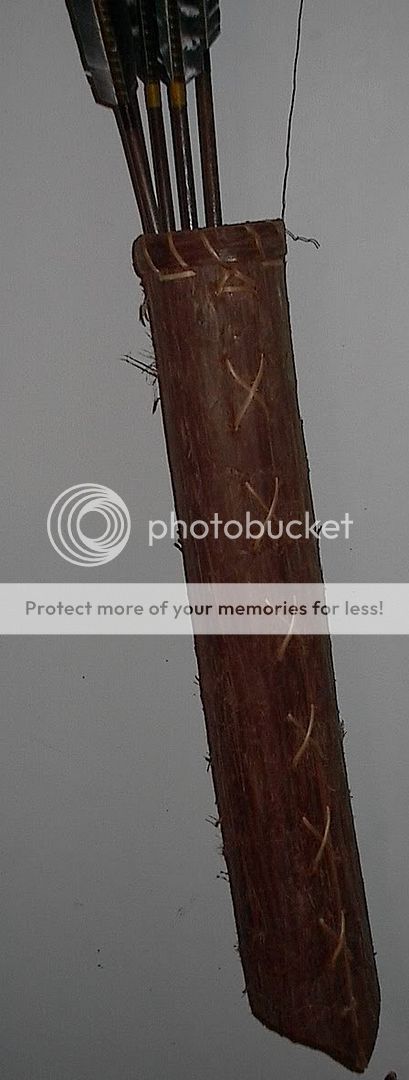
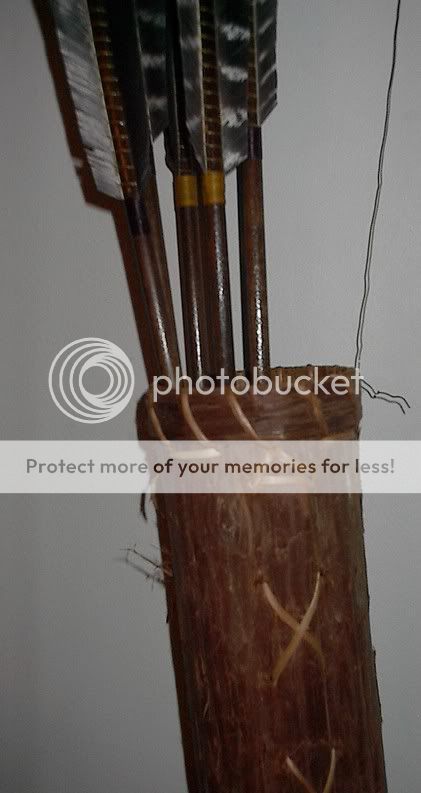
Fonly reminded me of a very important cordage material - Spruce (Picea spp.) root. I use it for lacing up bark projects like this Cedar (Thuja occidentalis) quiver. Other conifer roots apparently work, as well, but I've only used Spruce.

The twisted sapling, Fonly refers to, are called withes. I haven't made any as yet.

86b18a56.jpg
1086d02a.jpg


I have an older plant ID that says that Indian Hemp makes a very strong cordage but the process they described seemed work intensive compared to some material. I was wondering if someone has worked with the Indian Hemp and also the Yucca.

I've worked with Indian Hemp (Apocynum cannibinum) and I agree with it being more labour intensive than a lot of other materials. Makes you really appreciate the work that went into the 500 foot long rabbit nets that were made by some native peoples.

There's an article in the Bulletin of Primitive Technology that talks about a method to process a large bunch of Hemp at the same time. I tried it a couple of times, but had poor results. Probably my ineptitude.

Doc
 
BTW, Mick, this is something you might be interested in. I have it and it's a really neat little book. In the appendix, it lists the different plants that the Australian Aboriginals used for cordage.

Doc
 
Back
Top