Need a bit of help finishing a Scandi grind?

Joined
Jul 20, 2008
Messages
2,297
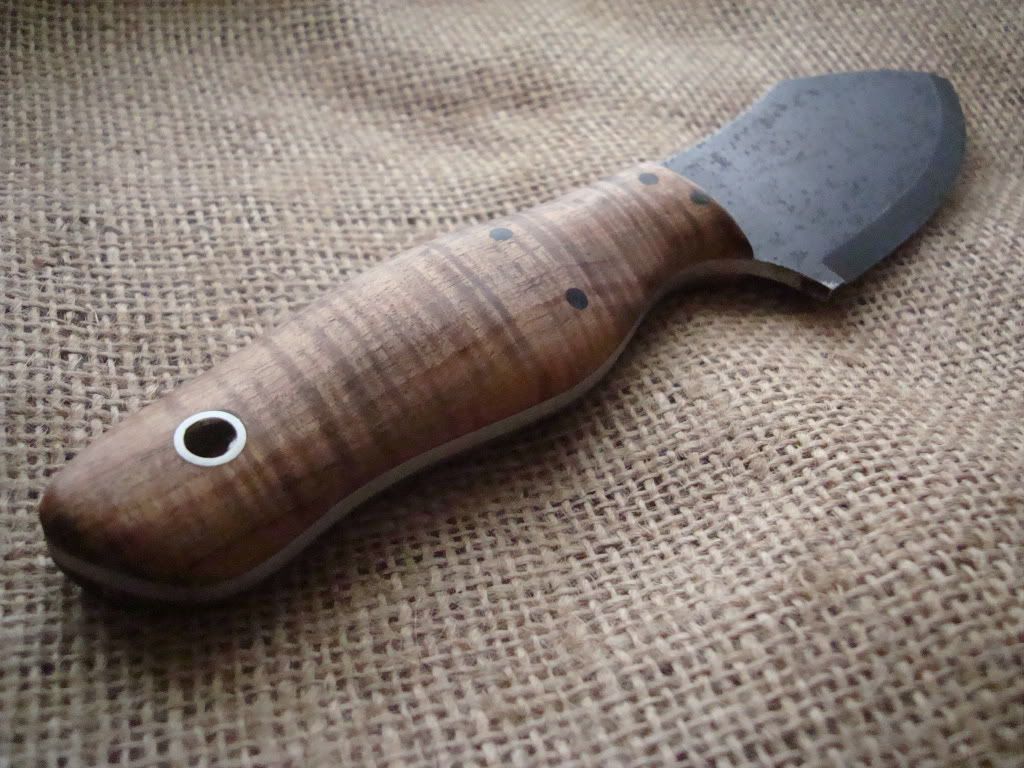
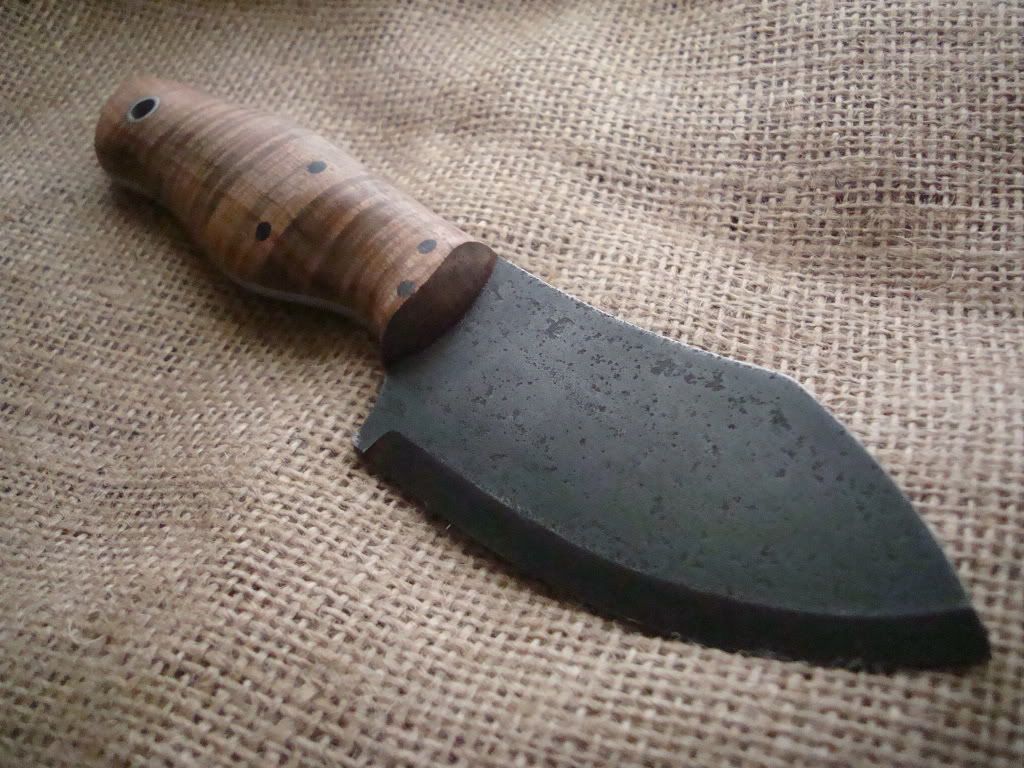
After being tormented at night by all the Fiddleback Forge knives that I couldn't afford to buy, I finally decided to try my own hand. Suffice it to say, I would be hard-pressed to ever reach the point of having saved money making my own knives, but it sure is fun to see something in my hand that has previously only existed in my head!

However, I've reached the point of needing a pointer or two, and I hate to keep bothering Andy with all my questions! :o These are my first two knives, and I'm not sure how to finish them. Searched, but only found pointers on how to resharpen, not how to get them sharp the first time!

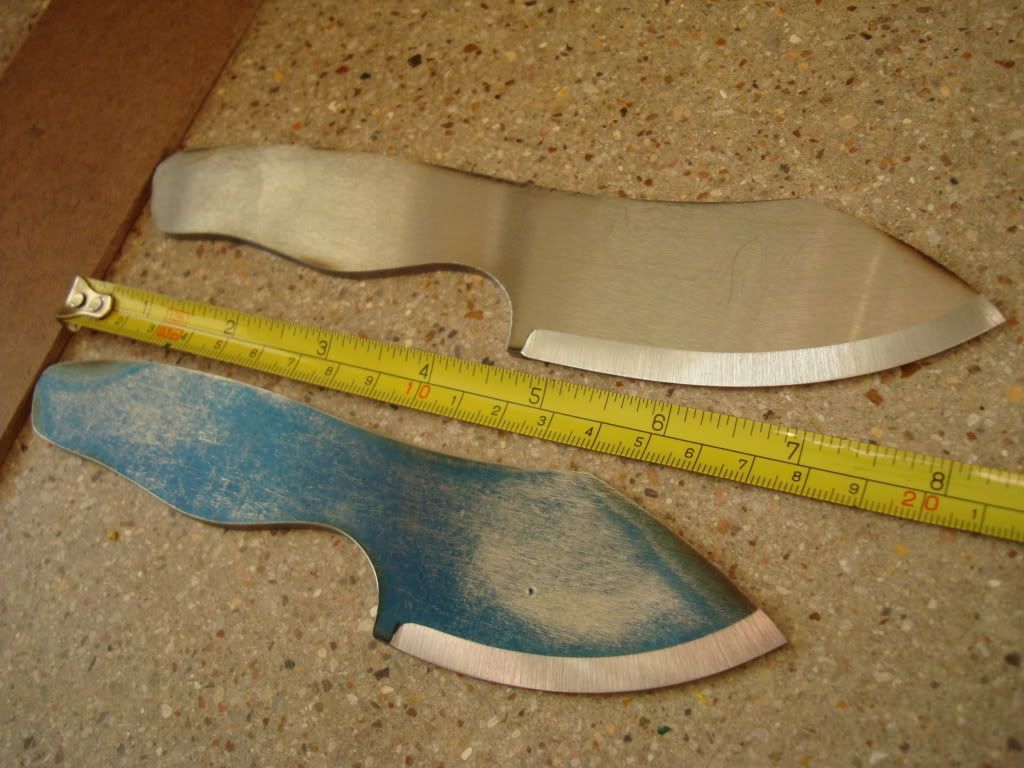
A few pictures of the knives in question, here's the start:

DSC08303.jpg


DSC08309.jpg


DSC08315.jpg


DSC08316.jpg


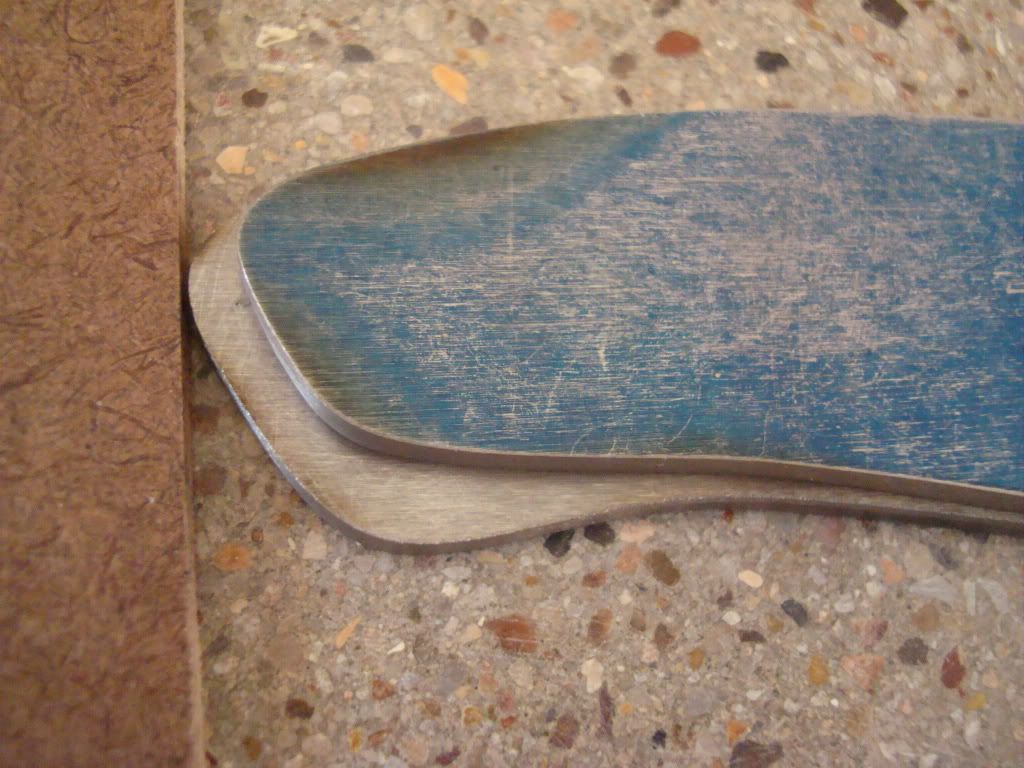
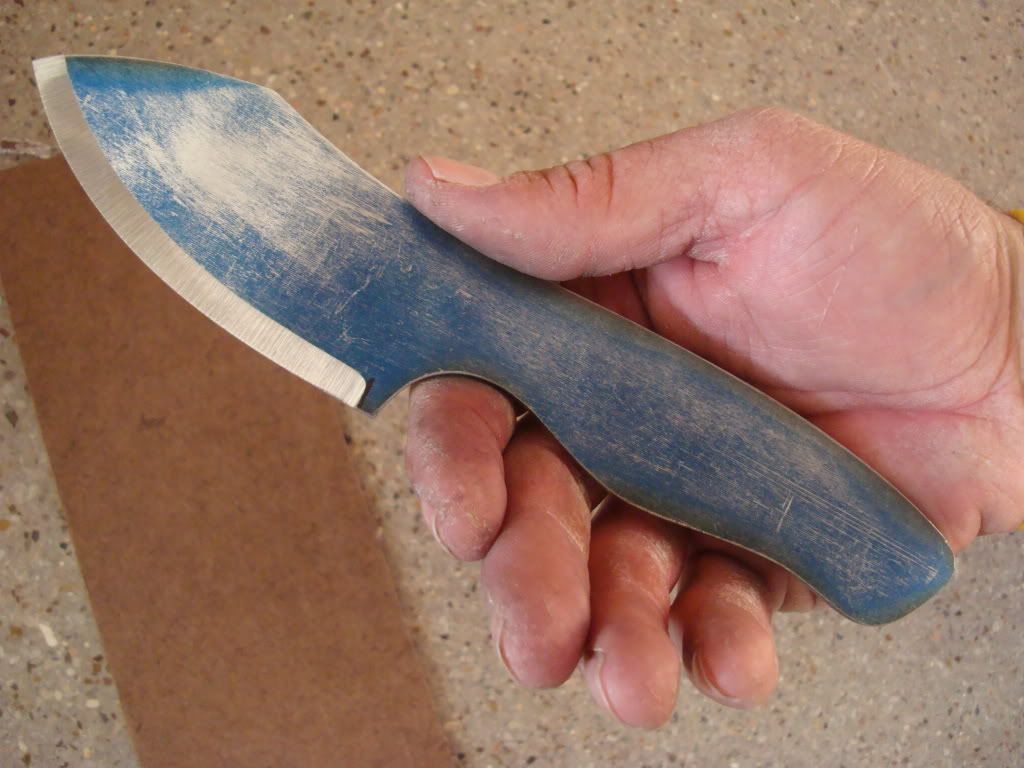
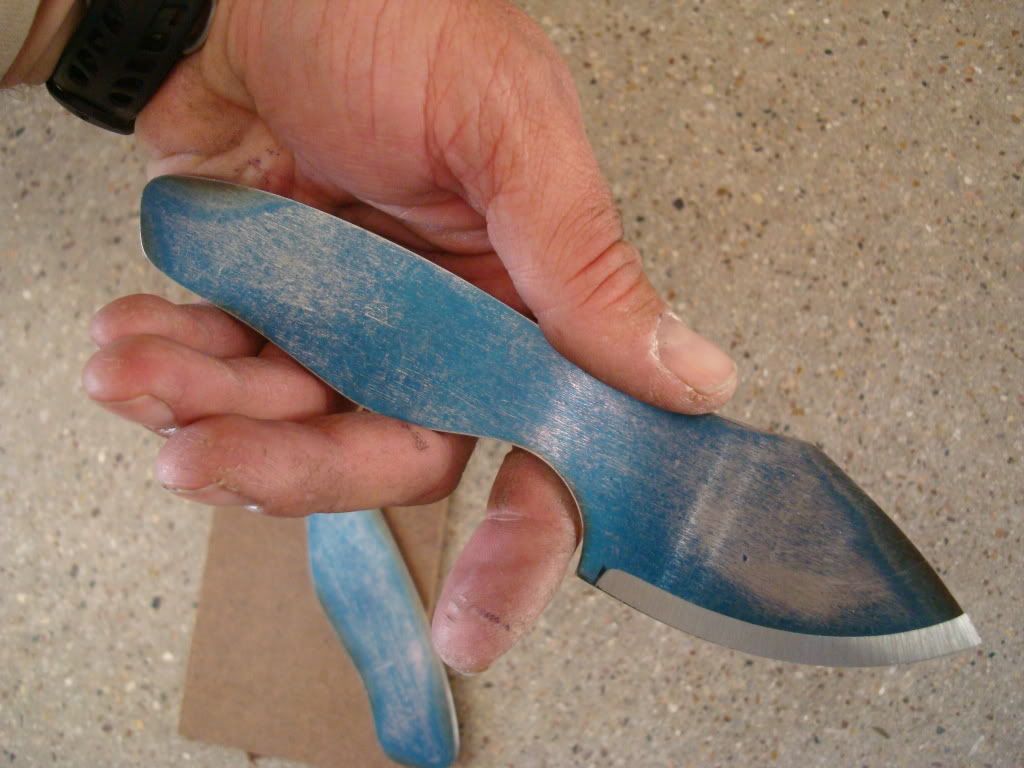
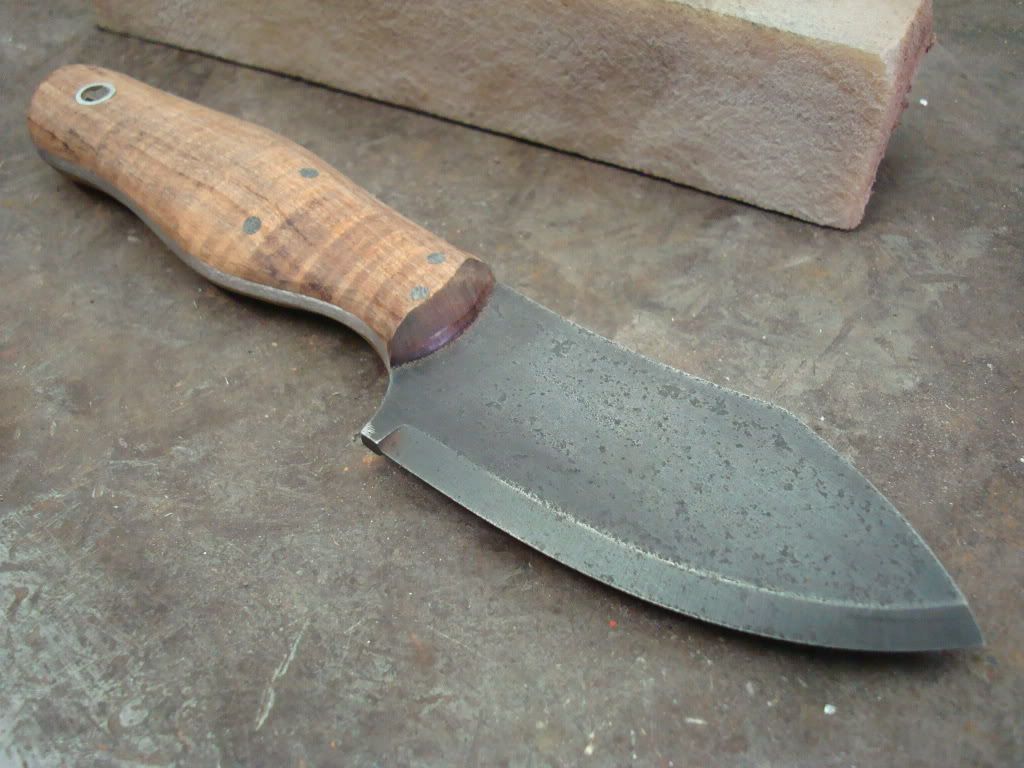
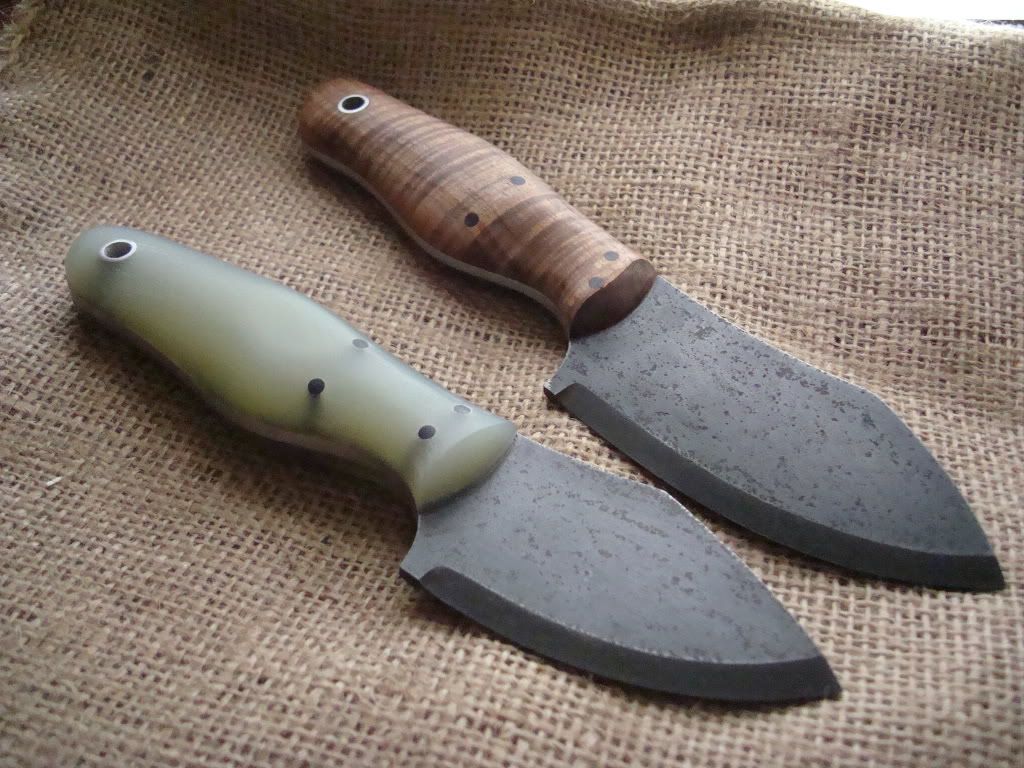
The steel is 01 tool steel from Metrics Unlimited, grinding done on a KMG, heat treat by Peter's Heat Treat, inspiration for design rather obviously Fiddleback Forge for the handles, Dan Koster/Ray Laconico for the blades, Rick Marchand for the etched finish. My Dad played with the masonite model I made for the larger one, and suggested a shorter blade - so I did both.


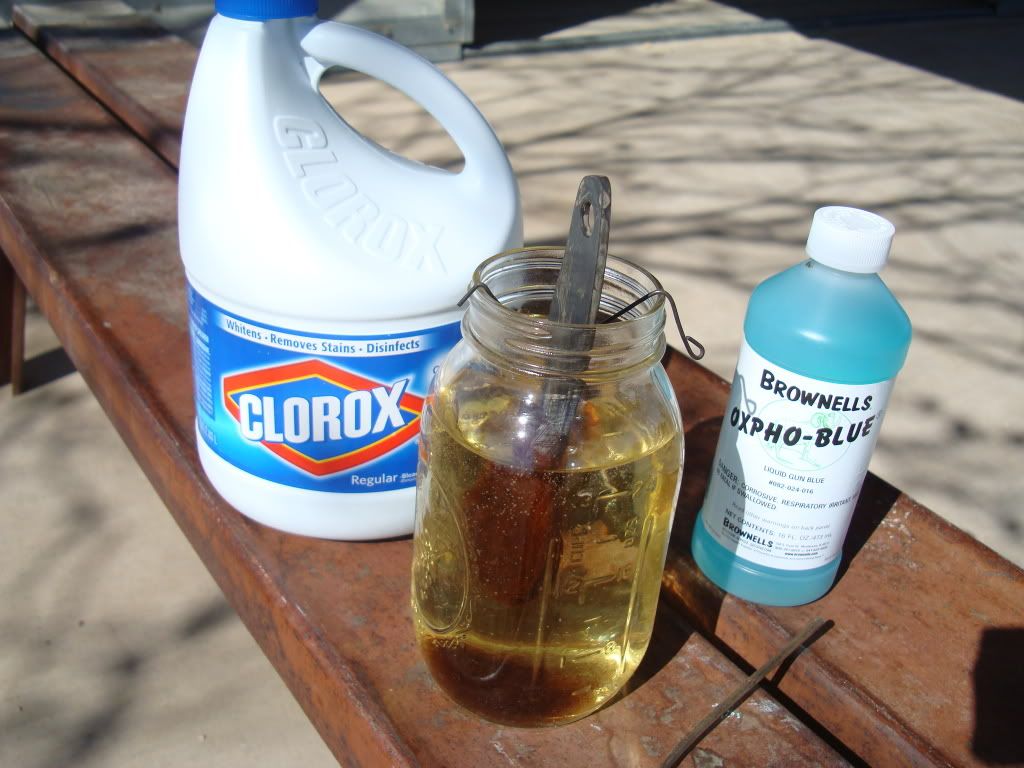
Etching..
DSC08854.jpg


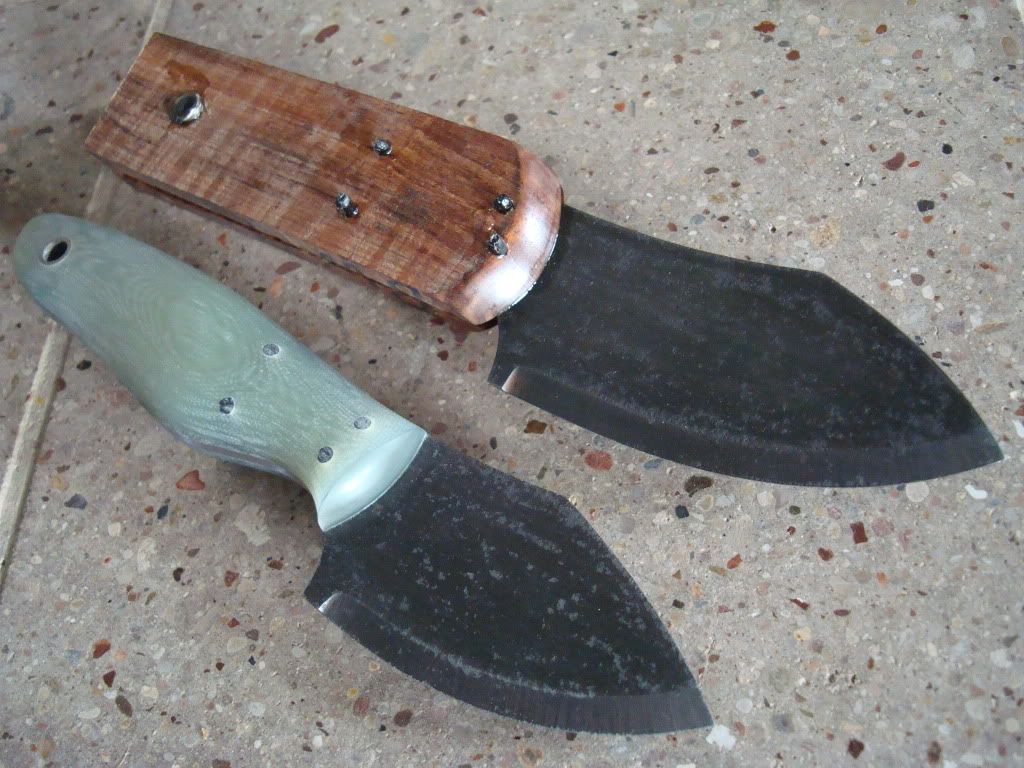
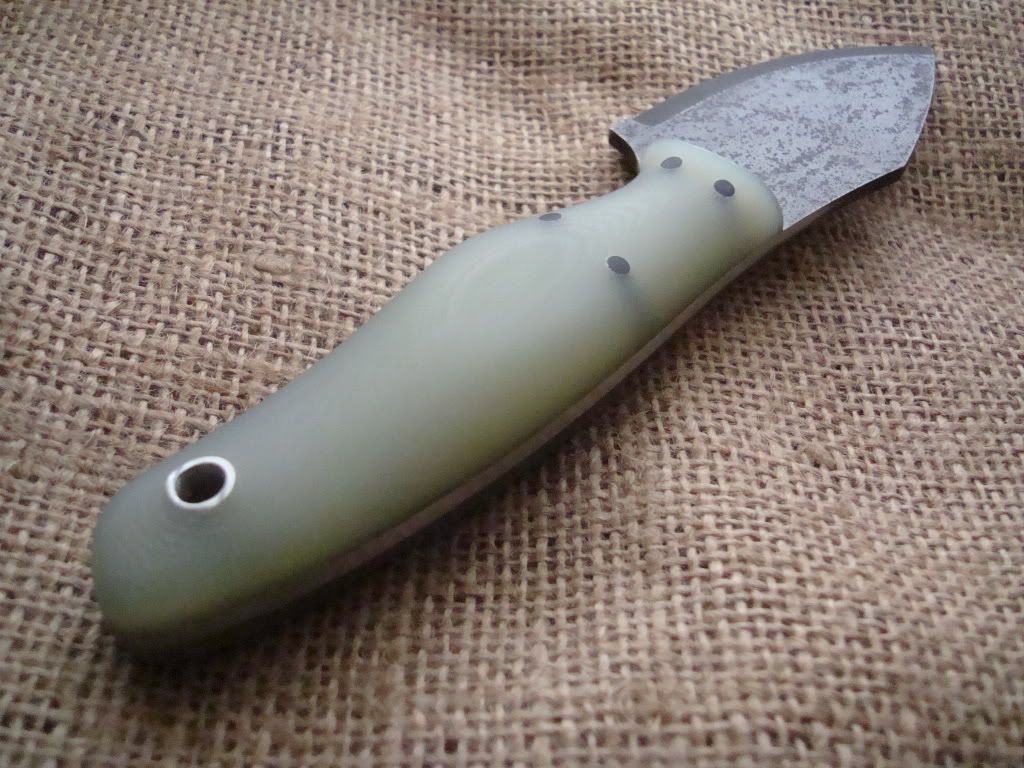
After HT, time for handles! Jade G10 and _____?_____ wood, both with black micarta pins and SS tubing. I bought the wood from Burl Source (I think) so long ago I can't remember what it is, so if anybody recognizes it please chime in. I'm tired of referring to it as "the wooden one!" Sounds so boring... :confused:

DSC08863.jpg


DSC08932.jpg


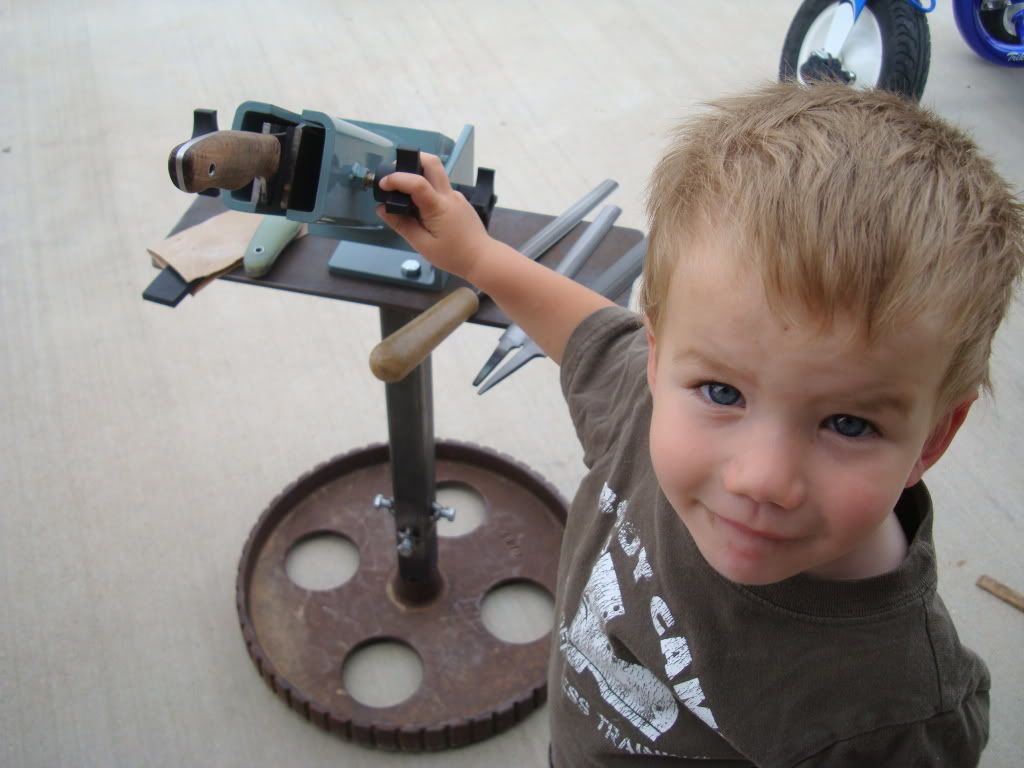
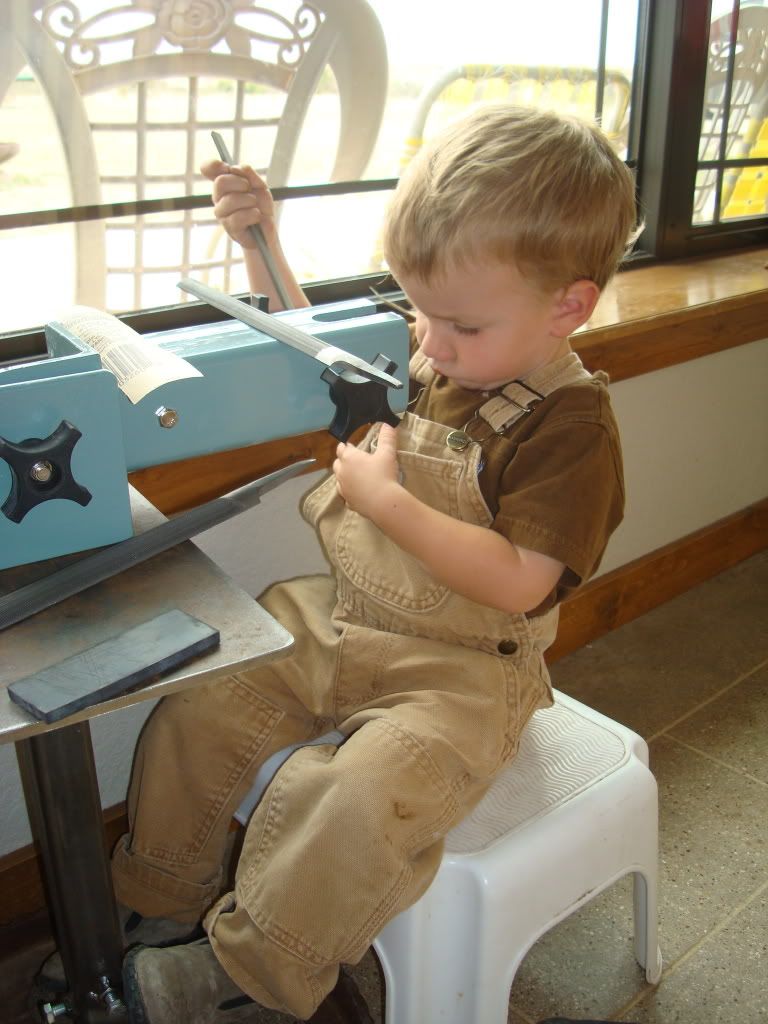
I roughed them both in on the KMG, then went to a handle-shaping vise that I bought over a year ago through J. Neilson - built a little stand for it that is just high enough to fit me in my back porch chair! Of course, Big Bad John thought it was just right for him, too, especially when he pulled a stool up to it! My little knife maker.
DSC08936.jpg


DSC08967.jpg


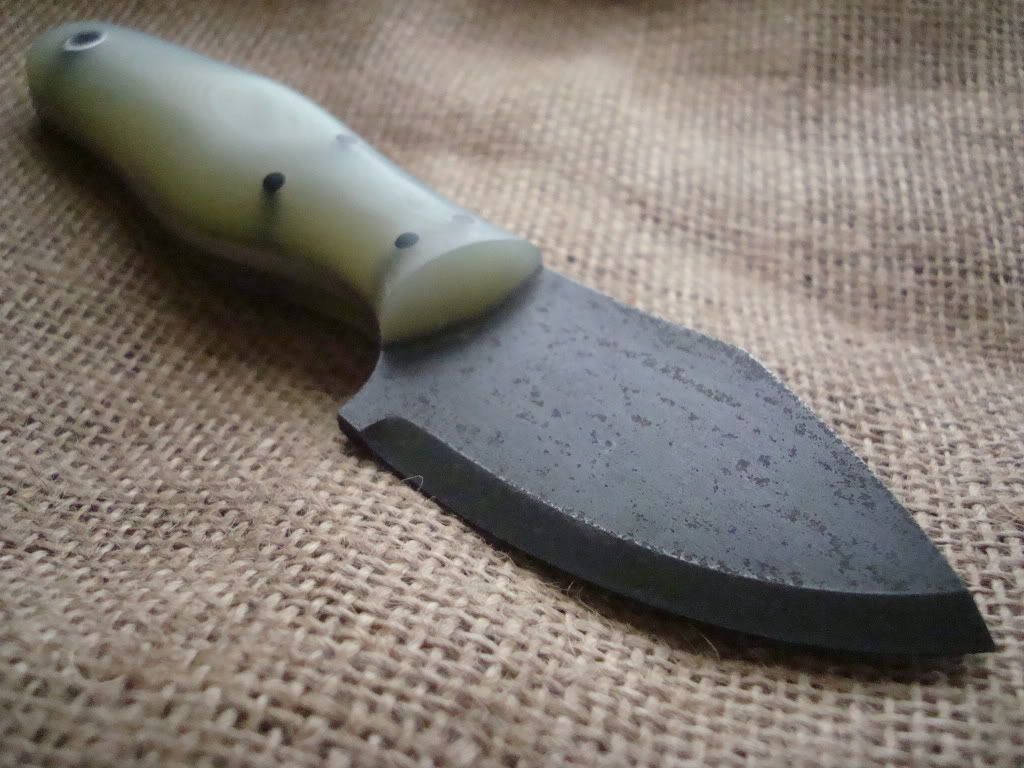
Both sanded generally to final shape. Still need epoxy removed from lanyard holes, final sanding, re-blueing in the sanded areas, and final sharpening.
DSC08990.jpg


DSC08988.jpg


DSC08987.jpg


DSC08986.jpg


DSC08985.jpg


All of which brings me to my (stupid) question: I made a very nervous attemp to sharpen them tonight on the KMG, and it's not going so well! How do y'all apply the final edge? When I ordered supplies the finest belt I got was 220, but it is leaving a roll on one side or the other. My Kosters and Fiddlebacks appear to have been finished on the belt grinder, and are SHARP. Do I need a finer grit, lighter touch, what? Should I finish on a big diamond stone, and remove the roll that way? I'm running the grinder fairly fast, maybe slow it down? Didn't seem to help, and I don't want to keep screwing around on these two!

You guys gotta bear with me, I'm learning as I go here. Thanks for your patience, and constructive criticism is welcome.

For starters, Andy tells me now that I didn't need to do most of my Scandi before HT! :o In addition, I wanted an angled front on the wood scales to match the angled pin hole placement...but that didn't look right - so the result was that the pins are too close to the front of the scale. Got a crack at the closest one. Also need to control the scales better while drilling, to avoid the bit catching in the material and wallowing the holes a bit. Also need to be more careful about hole placement, as the Jade scales are slightly misaligned. Also learned that if you warm your epoxy too much, it sets up with all the pins halfway in and only one scale buttered. I mean, it sets up RIGHT NOW! Thought I was going to have to abandon that one..

Anyway, I find my whole project ground to a halt over the one thing I didn't research or even think about - how to get them sharp!

Help!

Thanks for your time and pointers!
 
I sharpen all my knives on a 1x42 grinder and go from 220 to 400 to a loaded leather belt; this is what I do for all my knives, regardless of the grind, and have been very happy with the mirror finished bevel and hair popping edge... When I sharpen I do one side till I get a wire edge on the other side, then do the opposite side till I get a wire edge on the first side. Go to next level and repeat... One no-no that I do is when I go to leather I will lay the blade edge on a piece of wood and with only the weight of the blade over the corner of the wood just to take off most of that wire edge before hitting the leather.

Many good ways to get to the same spot, this is what I've found works for me!
 
Maybe I'm doing it the hard way, but after HT, I never go back to my grinder; I'm too concerned that a little over-zealousness will result in overheating the edge.

I try to get to as fine an edge as I can, then I HT. After, I might draw file if I need to remove a fair amount of material. Then, I go to the stones, starting with 200 grit to refine the bevel, then up to 1,000 through 8,000 grit for a mirror finish on the bevel.

Like I say, that might be the hard way, but I haven't ruined a blade this way.
 
Did you say first two? Wow! I don't care if they are your 101st and 102nd knives they look outstanding.

I'm still trying to perfect the scandi grind myself, it is way tougher than it looks. Maybe a jig could help?
 
Wood looks like Koa.Nice job.I sharpen on a belt and then polish on a felt or leather belt loaded also.Or paper wheels.
 
Thanks! I made a jig up front, so my angle is a relatively consistent 12.5 degrees. I can't imagine trying to free hand it! I don't have that kind of hand-eye coordination!
 
I think your Knives look great! I especially like the "Wood One" they both make me want to go skin something :eek:

On the few scandi's I have done (I used a Jig) I found that if the 12.5 angle is off anywhere along the edge, the final sharpening is extremely hard to get right. I ended up removing quite a bit of material, which sucks to say the least Post HT if you are doing the sharpening by hand/stones. I just fought through it, and gained a better appreciation for those scandi grinding guys.

You better keep making knives if those were your first 2! :thumbup:
 
I'm amazed that those are the first two knives you have ever made; they look amazing.

I usually sharpen on a 220, the buff or strop the edge.

Do you mind sharing a picture of the jig you made?
 
Chainring,
I do all of my final edges on the KMG to start. After heat treat and final finishing and handle work, my edges are usually between .015" and .025" depending on the knife. Then I start with a 120 ceramic belt (I used the cheap ones from supergrit for sharpening and save the expensive ones for bevels). Anyway, I hold the blade edge down at roughly 15 -20 degrees and drag it across from ricasso to tip. take your time, but move smoothly and don't slow down or stall. I do five passes per side alternating and making sure I do the same number of total passes on each side. A burr will form when you get down to the sharp zone, just like you noted.

Then I move to a 220 ceramic belt and begin by grinding off the burr I made with the 120. Repeat the process. If you like, you can do it one more time with a 400 grit belt but It's not necessary. Either way, you will have the burr still there when you finish on the grinder doing it this way. Then I take the knife to a paper wheel loaded with compound and polish off the burr side first then the other and you are good to go with nice shaving polished edge.

I hope this helps.
 
Do you mind sharing a picture of the jig you made?

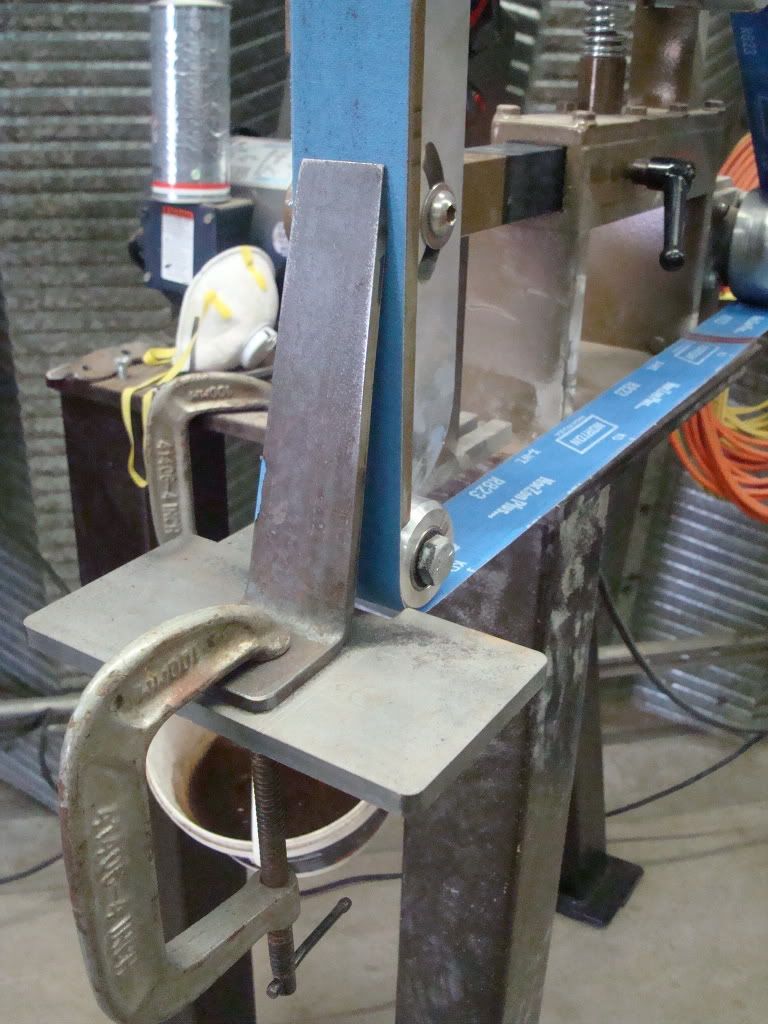
I'm a bit embarrassed by it's crudeness, but I'll post a pic when I get back from work this evening. It's made of steel, and I want to add a layer of formica to make the blade move easier across the face of it. Consistent, smooth turn of the blade against the belt has been a little harder than it needed to be, I think.


Wood looks like Koa.


Koa wood? That does sound familiar....


I'm amazed that those are the first two knives you have ever made; they look amazing.


Thanks! I've only been thinking/dreaming/drawing knives since I was a toddler! It's my Dad's fault. :) Between having imagined making knives for so long, reading up on it here from guys like y'all, timely and priceless pointers from Andy Roy and Dylan Fletcher (wish I was closer to Georgia!) and having a few lovely customs to provide inspiration it just turned out to be a lot of fun. No substitute for trying it yourself, though. I had to laugh while I was breaking off pins and feverishly scrubbing the wood scale with laquer thinner trying to remove the overheated epoxy before it completely hardened! Noobie mistake!! :) Now if I could just get them sharp...
 
Last edited:
Thanks for sharing the pics!

That looks like a great design for the jig; simple and effective. I may have to come up with something similar.

I'm looking forward to seeing what your next knives look like. Keep it up.
 
Look like nice cutters.

There is no secondary edge on a Scandinavian ground blade. If the bevels were ground at 12.5 degrees that is the edge angle. If the blade is held perfectly steady at the 12.5 angle throughout the grinding process, it will be scary sharp as it comes off the grinder. Scandi grinds are not easy to execute because of this requirement. Even though the norm for a scandi is 12 or 12.5 grinding at 10 or even 8 degrees is acceptable. The difference in sharpness between 12 and 10 degrees is very considerable.

Fred
 
Last edited:
Instead of calling the one with the wood scales "The Wooden One", how about "The Striped Wooden One"?

Just teasing you. Great looking knives. Both of them.

If the wood handle looks a bit more amber colored in real life, it's most likely Curly Koa.
 
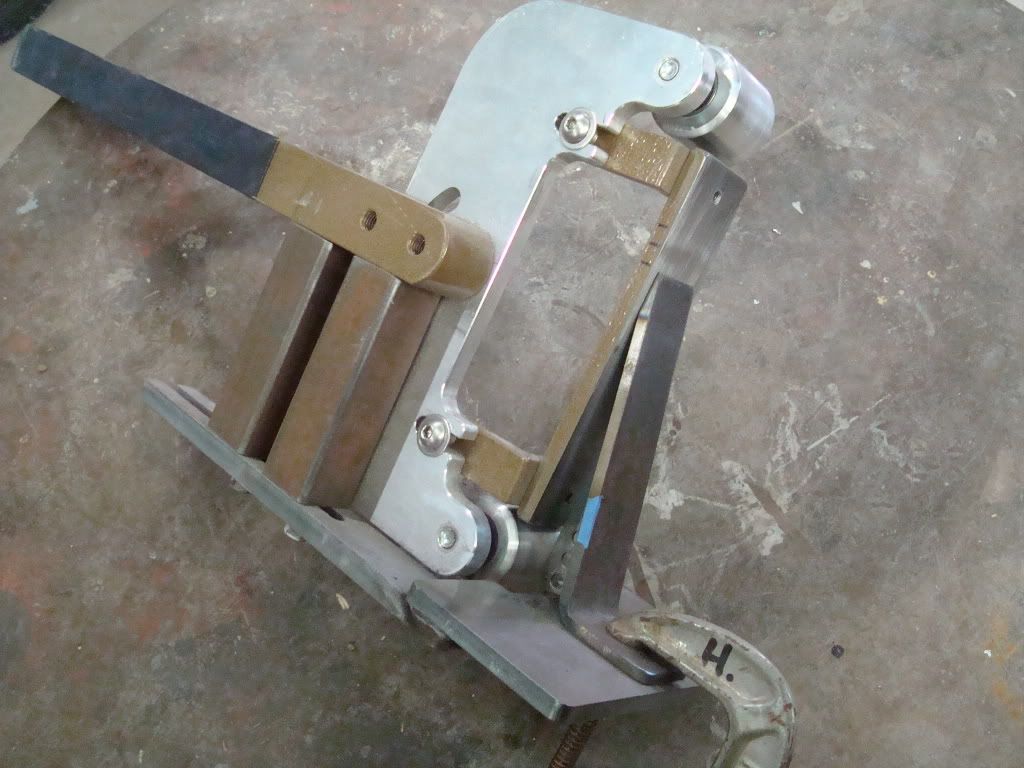
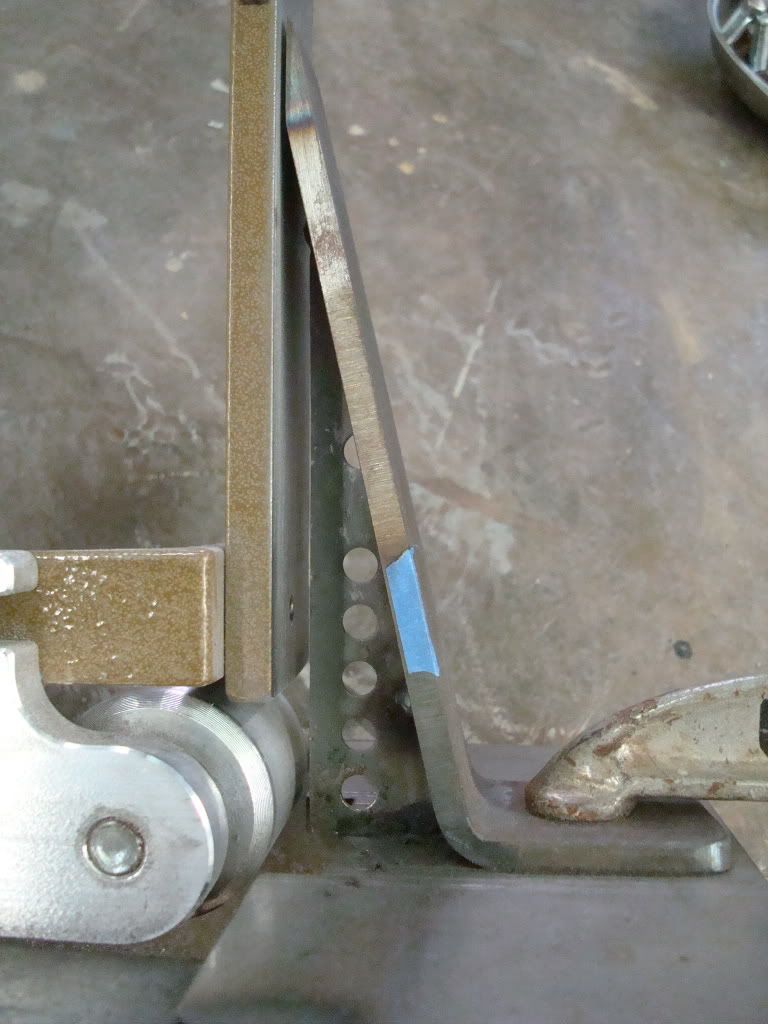
Pics of jig:

DSC08994.jpg


DSC08995.jpg


DSC08996.jpg

Exceptional work on your first couple of knives, chainring! I am in the process of my first attempt at a scandi grind myself, so I have also been wondering about the best way to sharpen one when finished.

I built a jig also, but mine is a bit kludgey and I'm not 100% happy with it. Yours looks fantastic, however...would you mind sharing some information about how you built it?
 
Ha! Thanks. The other jigs that I've read about or seen pics of were elegant, layered micarta and wood setups that looked great and probably resulted in a "slick" surface on which the blade rests. Mine is taller to create room for larger blades...but then I had to space the work rest down to get the jig back on the platen! I just used what I had, which was a chunk of 2 inch wide strap. Ground in a taper to 1.5 inches so it would be a bit narrower than the belt/platen, then heated the bend area with a torch rosebud. Bent it to match a pre-set angle finder and clamped it on! After observing a bit of flex, I added the gusset on the back to stabilize the whole thing...then realized the flex is in the work rest bracket, not the jig. Apparently, a jig that tall gives you just enough leverage to induce a bit of flex in the whole assembly. I'm just trying to be consistent in how much pressure I apply, but I need to stiffen the work rest bracket somehow. AND I still need to add a layer of formica to the bearing surface of the jig to make it easier (I hope) for the blade to move across the jig smoothly.
 
However, I've reached the point of needing a pointer or two, and I hate to keep bothering Andy with all my questions!

Never worry about that bro. The knives look great btw.

Searched, but only found pointers on how to resharpen, not how to get them sharp the first time!

You've got to do the final sharpening on that jig Matt. Its a ballsey thing to do, and I still loose knives this way sometimes, but its the only way to bring the knife to sale looking new and unsharpened IMO. Unless you want to sit with stones and take it to mirror. You'd better be ready for a labor of love though.

All of which brings me to my (stupid) question: I made a very nervous attemp to sharpen them tonight on the KMG, and it's not going so well! How do y'all apply the final edge? When I ordered supplies the finest belt I got was 220, but it is leaving a roll on one side or the other. My Kosters and Fiddlebacks appear to have been finished on the belt grinder, and are SHARP. Do I need a finer grit, lighter touch, what? Should I finish on a big diamond stone, and remove the roll that way? I'm running the grinder fairly fast, maybe slow it down? Didn't seem to help, and I don't want to keep screwing around on these two!

I use a 220 grit belt to finish my scandi grinds. IMO, its about where this grind needs to be. To re-sharpen you have to remove metal all along the plane of the grind, and its a pita, so there is no reason to mirror. Just my preference, but your belt is fine. You accomplish a sharp edge at final grind by using your jig. Slow your grinder down. Go over each side until you see a burr at the edge, then flip and repeat. Light strop, and done.

Andy tells me now that I didn't need to do most of my Scandi before HT!

I heat treat knives slated for scandi grinds as blanks with no pre heat treat grind. Use bare hands to hold the knife as you grind it and dip often. I use a new 80 grit blaze belt to cut the grind after HT. Grinder all the way fast at first, then slowed down at the higher grit belts. Higher grit belts heat the steel up quicker. Be careful especially at the tip.

Also learned that if you warm your epoxy too much, it sets up with all the pins halfway in and only one scale buttered. I mean, it sets up RIGHT NOW! Thought I was going to have to abandon that one..

Some guys heat their epoxy while mixing it then say a spell over it and spin around in place three times. I only heat it mildly if its really cold outside. Then in that case, I bring the glued up knives into the heated home to cure. You hear a lot of stuff about mixing epoxy over lamp bulbs for 15 straight minutes here at BF. BS IMO. I mix for ~one minute, briskly until the epoxy looks like sperm. Thats it, even thought I'm a Cajun, I don't call a treteur for help. I usually glue up 5 knives at a time, so you sir are not preparing all your parts correctly before starting. For glueup, organization and prep is the key. If you are having to force your pins, go to Enco and get a metric bit thats a few thousandths bigger. They should slip in with finger pressure during glueup.

I'm still trying to perfect the scandi grind myself, it is way tougher than it looks. Maybe a jig could help?

IMO, a jig is a necessity for a Scandi grind. Its the easiest thing to do, but if you don't have a jig, then the first time it hits a stone it shows all its flaws. Matts is a beauty. I made mine out of scrap pine 4x4.

Thanks! I made a jig up front, so my angle is a relatively consistent 12.5 degrees. I can't imagine trying to free hand it! I don't have that kind of hand-eye coordination!

Your jig is super nice Matt! Wow.


Chainring,
I do all of my final edges on the KMG to start. After heat treat and final finishing and handle work, my edges are usually between .015" and .025" depending on the knife. Then I start with a 120 ceramic belt (I used the cheap ones from supergrit for sharpening and save the expensive ones for bevels). Anyway, I hold the blade edge down at roughly 15 -20 degrees and drag it across from ricasso to tip. take your time, but move smoothly and don't slow down or stall. I do five passes per side alternating and making sure I do the same number of total passes on each side. A burr will form when you get down to the sharp zone, just like you noted.

Then I move to a 220 ceramic belt and begin by grinding off the burr I made with the 120. Repeat the process. If you like, you can do it one more time with a 400 grit belt but It's not necessary. Either way, you will have the burr still there when you finish on the grinder doing it this way. Then I take the knife to a paper wheel loaded with compound and polish off the burr side first then the other and you are good to go with nice shaving polished edge.

I hope this helps.

A good process for regular bevels, but won't work at all for a Scandi. IMO at least.
 
Thanks Andy!

Light strop on what, specifically? I got a "Bark River Sharpening Kit - KSF Double Sided Hone w/ Compound" awhile back that I haven't used yet, but it was geared more toward convex edges?

Didn't I see a picture of some sort of little press on your bench? Is that something you use to drift pins into place? I played with something similar at Harbor Freight but it was so sloppy and big I didn't buy it.
 
Cardboard is the best for removing the burr and not rounding the grind. I also use leather backed by wood (glued to the wood) with compound. But the cardboard is good stuff.

I only use that press if I have to. And then hesitantly. Especially in wood.
 
Back
Top