Need help with a hunting knife

Joined
Apr 10, 2010
Messages
141
Ok I hope there are some big game hunters around here. I have a Kershaw Echo in AUS8 that I use for cleaning deer. It does fine for gutting and skinning, but when I use it to cut meat away from the bone, it screws the edge up. This problem is worst when cutting out the backstraps. The blade scrapes and rubs against the bones, especially along the knobby vertebrae on the backbone. Before processing an animal, I can look at the knife edge-on under the light and see no light reflecting. Afterward, their will be multiple nicks I can see easily. They aren't very deep, but I have to do serious sharpening after every deer to keep a good edge. I'm not sure if the edge is chipping or rolling. Do I just have to live with sharpening my knife every time, or is there something I can do about it? Maybe a different steel, or an unusually obtuse edge angle? Maybe use two different knives, one for skinning/gutting and one for cutting the meat out?

I know everybody hates AUS8, but its decent for most applications in my experience. So if you're going to bash on it, please recommend another steel and say why you think it would work better in my situation :). Also, I may lose this knife in the woods some day, so I'm not looking to burn the kind of cash it takes to get something pricey like M390.

So what are your thoughts guys?
 
I've tried a steel; it doesn't take the nicks out. It does help the edge, but it still looks boogered-up when I look at it under the light. What should I look for in a boning knife? I am not familiar with the concept.
 
Ok I hope there are some big game hunters around here. I have a Kershaw Echo in AUS8 that I use for cleaning deer. It does fine for gutting and skinning, but when I use it to cut meat away from the bone, it screws the edge up. This problem is worst when cutting out the backstraps. The blade scrapes and rubs against the bones, especially along the knobby vertebrae on the backbone. Before processing an animal, I can look at the knife edge-on under the light and see no light reflecting. Afterward, their will be multiple nicks I can see easily. They aren't very deep, but I have to do serious sharpening after every deer to keep a good edge. I'm not sure if the edge is chipping or rolling. Do I just have to live with sharpening my knife every time, or is there something I can do about it? Maybe a different steel, or an unusually obtuse edge angle? Maybe use two different knives, one for skinning/gutting and one for cutting the meat out?

I know everybody hates AUS8, but its decent for most applications in my experience. So if you're going to bash on it, please recommend another steel and say why you think it would work better in my situation :). Also, I may lose this knife in the woods some day, so I'm not looking to burn the kind of cash it takes to get something pricey like M390.

So what are your thoughts guys?

what type of money are you willing to spend?

keeping in a low price range, the A G Russell Deer Hunter in D2 ($50) is one of the best values i can think of.
 
Last edited:
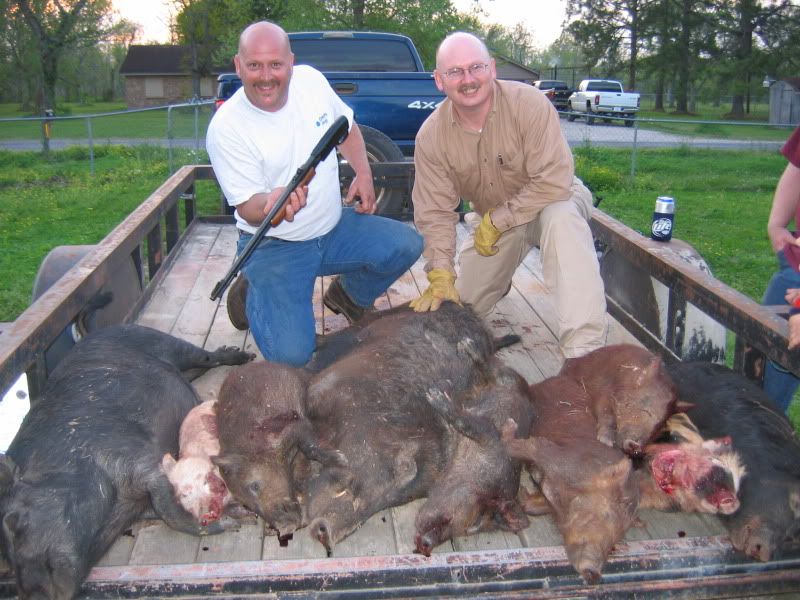
Queen D2 fixed blades. Best bang for your buck on hunting knives. The D2 that Queen puts out is superb. I've used mine on multiple feral hogs in one skinning/quartering session. And, feral hog skin, bones, cartilage, tendons....etc, are much tougher on a knife edge than any white tail deer.
 
So D2 won't chip/roll as easily? Because it's usually heat treated harder I guess? So my problem is not enough strength in the edge when encountering hard bone? Since I am going to be cutting primarily wet stuff and washing the blade after each use, will corrosion be a problem in edge degredation if I switch to D2? I appreciate your suggestions (that A.G. Russel looks pretty nice, and goes for a decent price). I'm just trying to understand my problem so I can make better informed decisions. I know a lot about steel "in theory" from reading, but I have very little experience actually using high-end steels :o
 
Learn to steel your knife, and get a flexible boning knife.

+1 With my group of hunting buddy's we use a Fishing filet knife on the loins and when boning out the meat. Nothing fancy or expensive. We have an old Gerber we have used on over 40 deers.
 
I use to have the same problem, cheap knives going dull on just one deer.

Since upgrading to D2 and A2 I have no such worries.


Big Mike
 
So D2 won't chip/roll as easily? Because it's usually heat treated harder I guess? So my problem is not enough strength in the edge when encountering hard bone? Since I am going to be cutting primarily wet stuff and washing the blade after each use, will corrosion be a problem in edge degredation if I switch to D2? I appreciate your suggestions (that A.G. Russel looks pretty nice, and goes for a decent price). I'm just trying to understand my problem so I can make better informed decisions. I know a lot about steel "in theory" from reading, but I have very little experience actually using high-end steels :o

I skinned and quartered each of the pigs in this picture all in one session with my Queen D2 fixed blade. My partner, on the left, held the animals to keep them from spinning as I did the skinning. His knife was dull at the start, and he couldn't cut butter. So, it fell to me. It took us a couple of hours. But, the Queen D2 did very well. No chips, no rolls. Just kept right on cutting. I touched her up on my Sharpmaker afterward, and she was popping hairs again in just a few minutes. I love Queens D2.

I would also add that I have not had any trouble with corrosion on my D2. A little discolor here and there, but no corrosion. I do wash my knives after a skinning session, and dry them.

April52010039.jpg
 
Last edited:
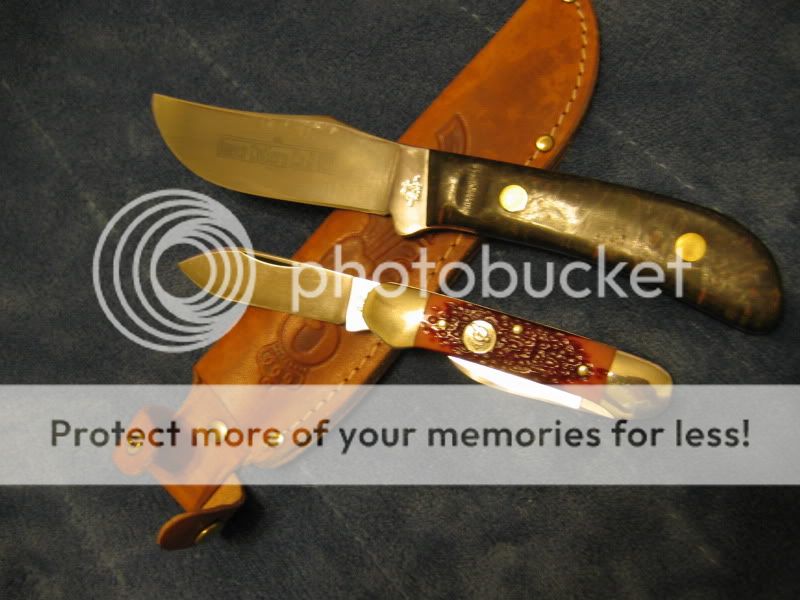
Here is a pic of my Queen D2 skinning knife, along with it's Queen D2 Canoe partner. They both are great knives, with great steel.

IMG_5415.jpg
 
You could just go get a boning knife and a butcher knife down at your local kitchen supply store. They are normally some kind of stainless, but they are made specifically for processing meat. And the steel is your friend. I like to use a smaller knife for most of the initial processing in the field. Normally a Schrade 152 Sharpfinger, or a Mora 502. If it is larger game I will go with a Green River skinner or sheath knife. Once in a while, if I am out hiking, and I don't have a fixed blade knife with me, I will use a plain old Buck 110. Any of those are good enough to dress and quarter the carcass, along with a bone saw. I normally process it the rest of the way when I get home. With the aforementioned butcher and boning knives. I worry less about what they are made of, and more about how well they fit my hand. Technique does a lot more for you than having the latest knife does. That is not to say that the blade doesn't matter. But you can get by with a decent enough knife if you know what you are doing. I have butchered a hog with a flaked flint hand axe before. Compared to a good metal knife, it sucked. But aside from taking a bit longer, and some of the cuts being a bit more ragged (my fault, not the blades), it all turned out the same. Go slow, take your time, and don't be afraid of using a smaller knife to cut in smaller areas.

-Mb

(edit) For the record, that Queen skinner looks like a dandy knife for working on game. I may have to track one of those down.
 
Like some others have said, just get boning knives and butcher knives, and steel frequently to keep up the edge and keep going. Nothing fancy, no supersteel. Short, stiff blades will just want to go right into the bone, or go right through a good section of meat. Filet knives and boning knives will take the path of least resistance (meat) and use the bone as a guide so you get all the meat right up to the bone. That's why they're flexible. All the deer processing camps and guides use this type of knife, and a steel. Some carry Mora's in the field to field dress because they're cheap and light, and they work VERY well, and then when the carcass is back at a processing location, it's boning knives and filet knives and steeling. It's what I use too. Pretty universal.
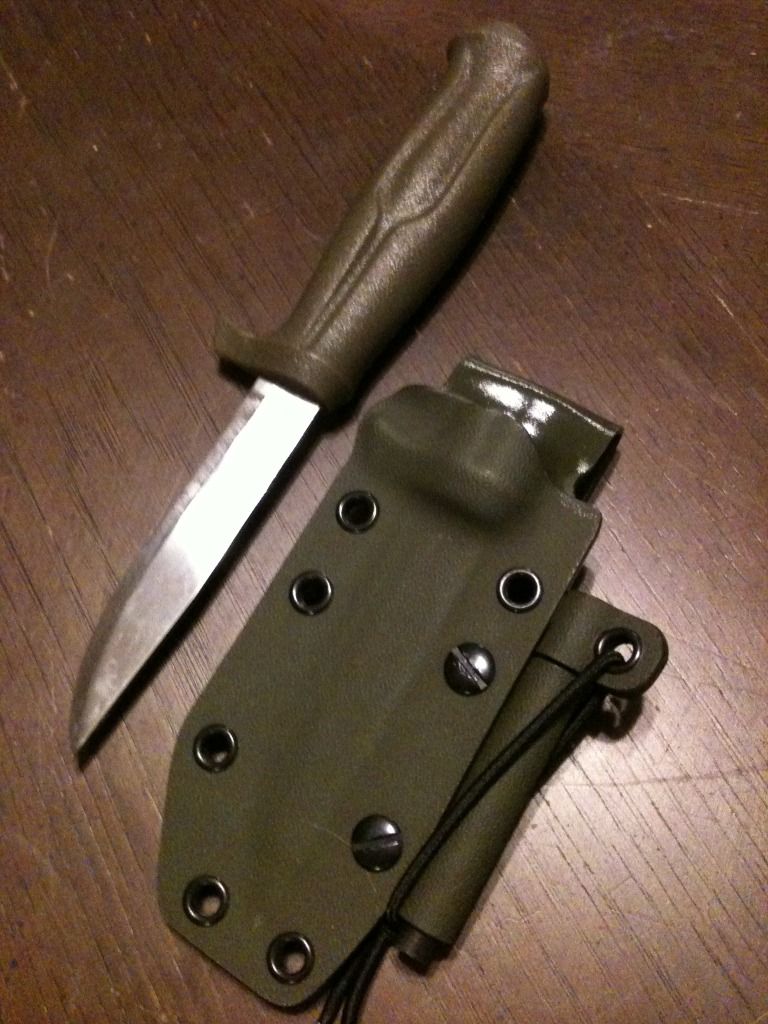
Obligatory pic of my field dressing knife, it's been great. Field dressed 3 deer last season without sharpening, and still sharp, I touched it up on a stone and it's hair popping again, ready for action in about 6 weeks, not bad for $12, bought the sheath after last season:
photo1.jpg

And here with the original sheath:
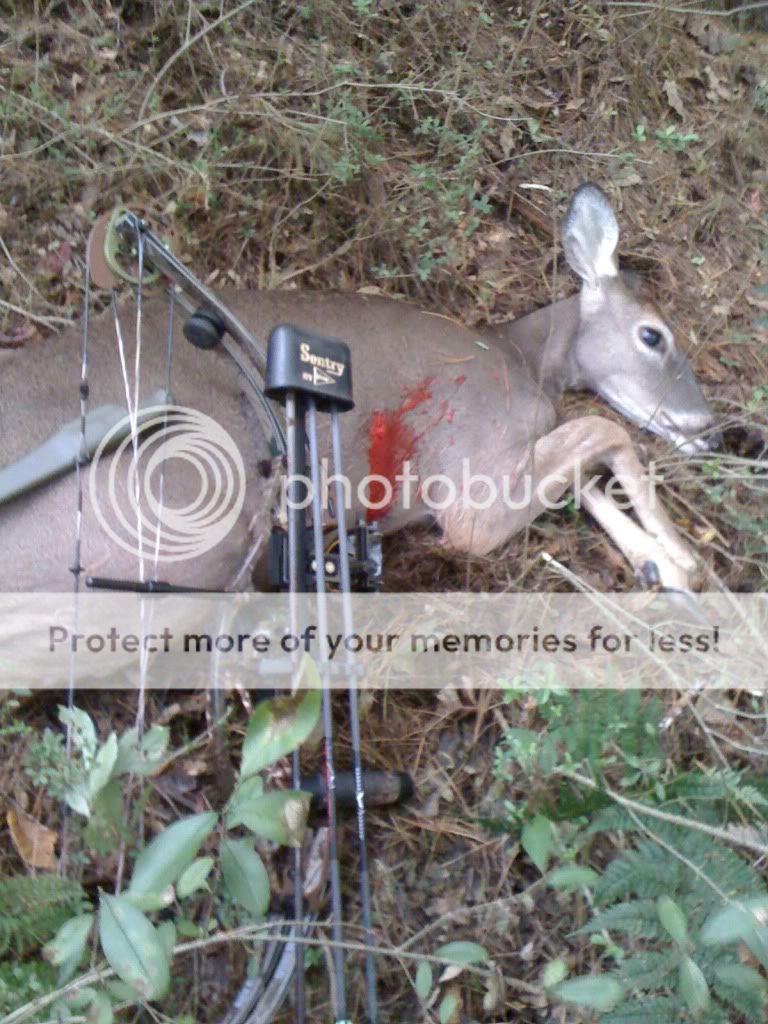
Doe2.jpg
 
Last edited:
I love the bow! Nice pic manowar669. Once I get the quarters, backstraps, and tenderloins on ice my choice of knives changes just a bit. I process my wild game myself. And for taking the meat off the bones I do use a more flexible kitchen boning knife. But that doesnt happen until I get the meat home and it has been on ice a few days. I make steaks, burger, sausage, and jerky out of my venison.

But, for the skinning and quartering, especially of the feral hogs, you cant beat the Queen D2. Trying to go through the course hair filled with mud, and hard gristle plate on the shoulders of a decent boar hog will dull a knife very quickly. And, for me, trying to sharpen my skinning knife while my hands, and knife are bloody just isnt for me.
 
So D2 won't chip/roll as easily? Because it's usually heat treated harder I guess? So my problem is not enough strength in the edge when encountering hard bone? Since I am going to be cutting primarily wet stuff and washing the blade after each use, will corrosion be a problem in edge degredation if I switch to D2? I appreciate your suggestions (that A.G. Russel looks pretty nice, and goes for a decent price). I'm just trying to understand my problem so I can make better informed decisions. I know a lot about steel "in theory" from reading, but I have very little experience actually using high-end steels :o

in your price range, D2 steel will be your best choice.
 
Ok I hope there are some big game hunters around here. I have a Kershaw Echo in AUS8 that I use for cleaning deer. It does fine for gutting and skinning, but when I use it to cut meat away from the bone, it screws the edge up. This problem is worst when cutting out the backstraps. The blade scrapes and rubs against the bones, especially along the knobby vertebrae on the backbone. Before processing an animal, I can look at the knife edge-on under the light and see no light reflecting. Afterward, their will be multiple nicks I can see easily. They aren't very deep, but I have to do serious sharpening after every deer to keep a good edge. I'm not sure if the edge is chipping or rolling. Do I just have to live with sharpening my knife every time, or is there something I can do about it? Maybe a different steel, or an unusually obtuse edge angle? Maybe use two different knives, one for skinning/gutting and one for cutting the meat out?

I know everybody hates AUS8, but its decent for most applications in my experience. So if you're going to bash on it, please recommend another steel and say why you think it would work better in my situation :). Also, I may lose this knife in the woods some day, so I'm not looking to burn the kind of cash it takes to get something pricey like M390.

So what are your thoughts guys?


One thing you will have to decide on is how much you really want performance wise, how much you really want to sharpen and how well you really want the knife to cut.....

Then once you have made those decisions you will have to make the choice on how much you want to spend and settle for performance wise and you will be settling and compromising the lower you go cost wise.

If you look at money 1st and then try and fit a knife into that you will lose every time no matter what other people's opinions tend to be and yes I have heard plenty of stories of knives performing way above of what would be reasonably believable based on what they are and the alloy content of the steels used.... In short they are just stories....

Knives don't perform because we just want them to, they perform because of edge and blade geometry, alloy content, heat treating and tempering.

Steels like said above, D2 and others like S30V would fit right into what you are looking for, I would recommend S30V personally unless a Dozier is in your future.

Here is an article to read on the subject that will shed some reality on the topic.

http://www.seamountknifeworks.com/articles/how_long_will_an_edge_last.pdf
 
Last edited:
Ok so my current steel isn't up to the task (I figured), and I need to look into a dedicated flexible boning knife. Thanks guys, all the info is a big help :)
 
Back
Top