- Joined
- Sep 7, 2024
- Messages
- 5
Instead of a hammer it's pointy. No maker marks. Someone said for slate work but I am not sure. Anyone familiar with it?
Thanks!
Thanks!

The BladeForums.com 2024 Traditional Knife is available! Price is $250 ea (shipped within CONUS).
Order here: https://www.bladeforums.com/help/2024-traditional/

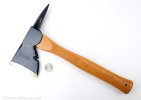

I have no guess either, and sadly this may mean no catalog presence of any kind .They're uncommon so may have been made as a custom request for a given industry. What industry, though, I don't know.
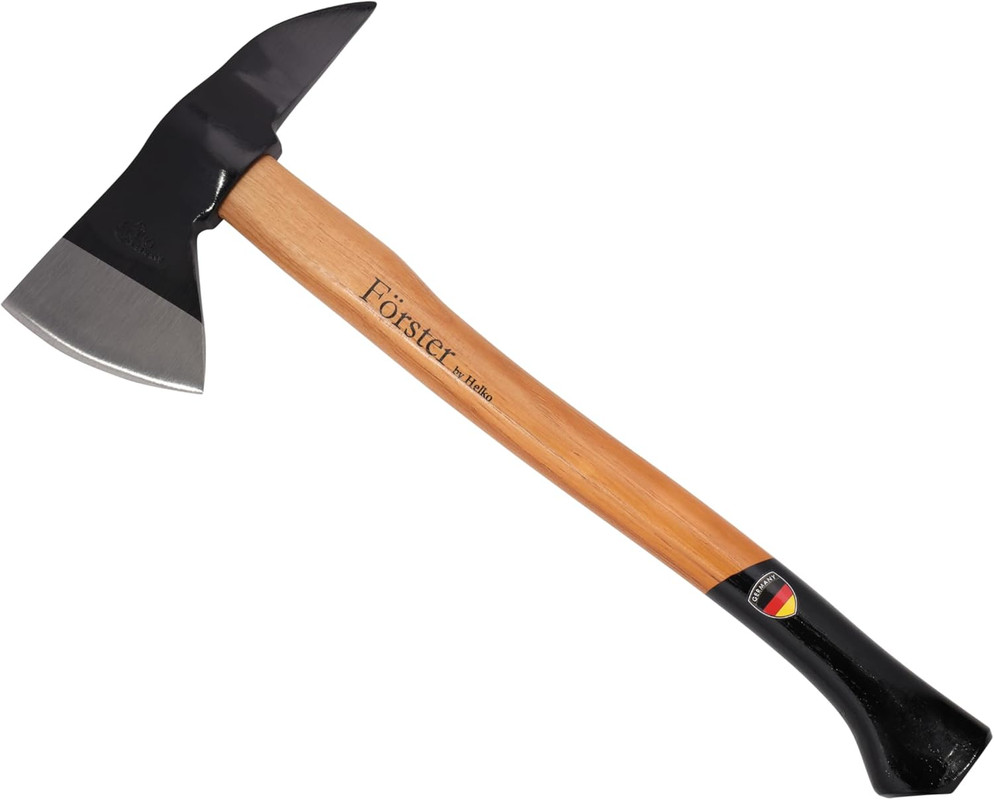
It looks more like a fireman's axe to me.
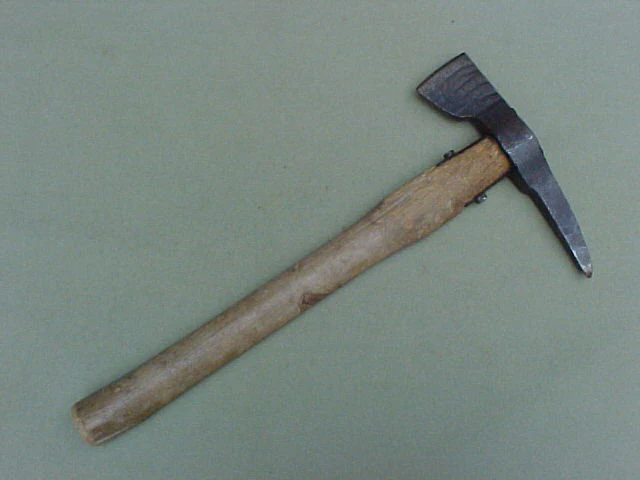
My first thought was that it just had to be some kind of hatchet with a spike, and that the hammer poll on these made them an easy modification for the factory.Fire hatchets exist here. They do not look like these. Half hatchets are typically used in various trades as rough carpentry tools, and this being based on one seems to indicate the intended use still being for such despite the substitution of the hammer poll typically present.
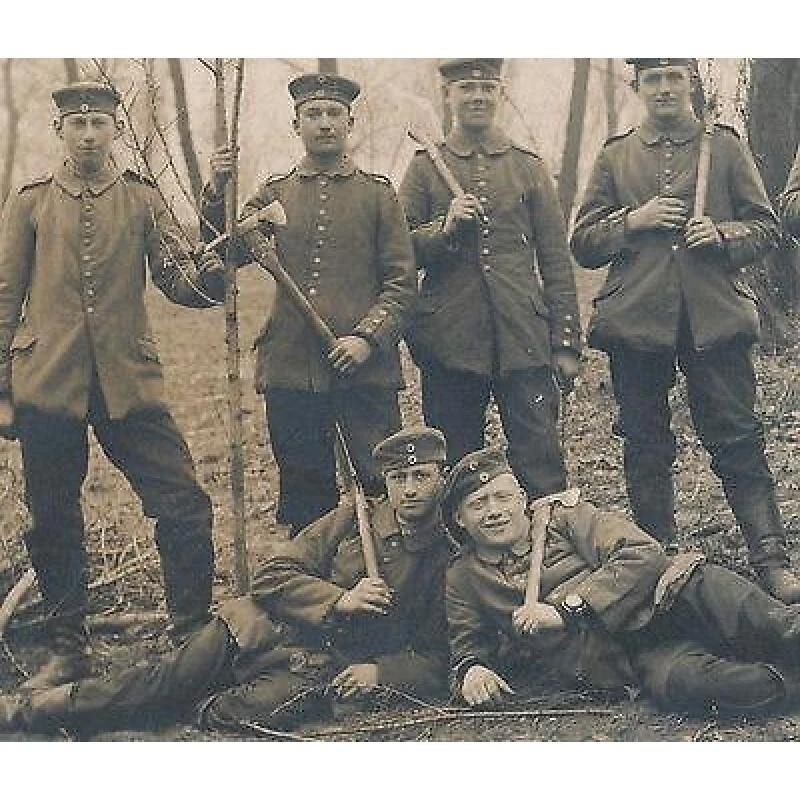
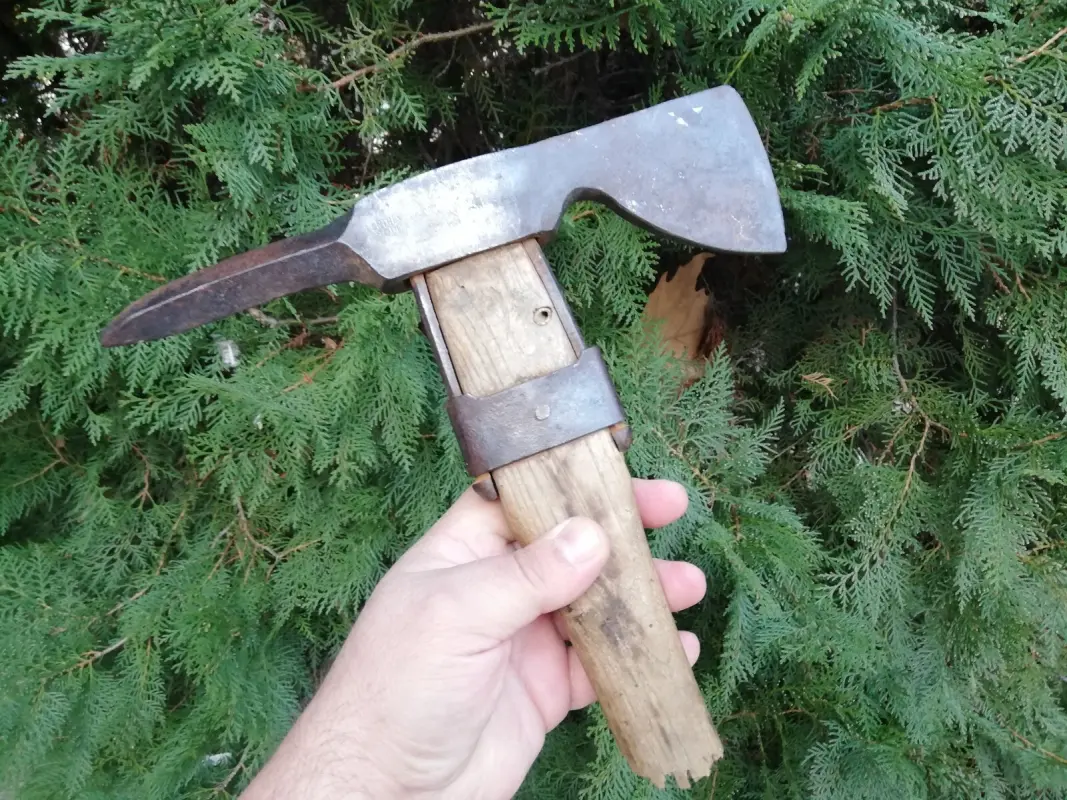
basically the only similarities are the fact that it has a spike.It also resembles a ship's axe.
This isn't a weapon and it's not that old.During WWI, the trench axe was widely used. With some variation, but it reminded me of this style.
basically the only similarities are the fact that it has a spike.
This is a standard half hatchet.
View attachment 2950861
that's my thinking as well, but the extent of my knowledge is a few factory tour " how their made " videos from Council tool and Vaughan.By the period of that Collins mark I'm pretty sure that they would have been making the heads via drop forging, but it's possible that they may have had an additional die made to then draw out the hammer poll into the spike. The faceting and shape is very consistent from example to example so I don't think it was an open-die process.
Basically if it were open die work I'd expect more piece-to-piece variation like on, for instance, you see on things like scythe blades even when the era of drop forging was in full swing. Open die forging is the "hand forged" power hammer process and relies on skilled operation, and even the most precise forgings have slight variations from piece to piece, and I'd expect to see some with the curve and shape of the spikes if that were the case. Because there doesn't appear to be any variation, it's likely it was a closed-die process. The hammer poll would be holding heat well after popping out of the usual final die, I reckon, so making it a secondary process to reshape the hammer into a spike seems reasonable as opposed to it necessarily being a series of dies from scratch that made that shape, as the cost of tooling would be massive for that and you'd expect to see more of them if that were the case. Closed-die forging dies are EXPENSIVE to make and typically require mass production to justify using them.that's my thinking as well, but the extent of my knowledge is a few factory tour " how their made " videos from Council tool and Vaughan.
It's definitely an uneducated guess on my part.