
Newbie having issues with Tru-Oil

Joined
Apr 12, 2015
Messages
29
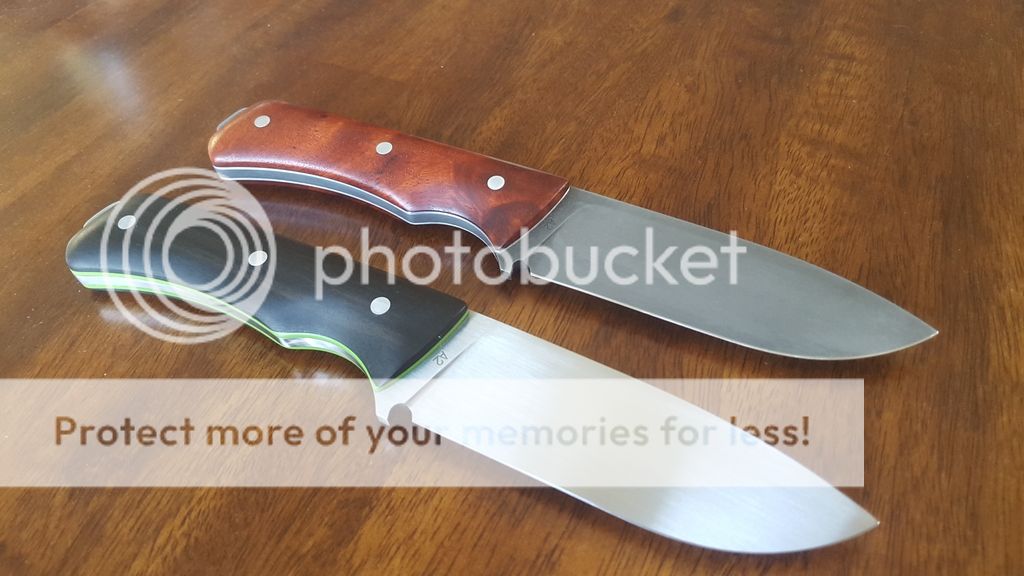
Well I'm almost done my knives but I decided to go on the recommendation of using tru oil to finish my unfinished exotics. I used this tutorial:

http://www.shotgunworld.com/bbs/viewtopic.php?f=12&t=246076

I think I screwed it up however as I did not wait till it was 100% dry per coat. I did probably 10 coats with this procedure and for the most part it looks pretty good. I let it dry over night and it was still a little tacky, and this evening it is still slightly tacky ( but not horribly by any means ). From what I have read in regards to tung oil is that it will never cure. Is this the same for tru oil as well? Once again it is not very tacky at all but definitely noticeable. I am also running a bit out of time, I fly out on Saturday and plan on giving the knives to my friends on the following Friday, so If I left them be they would have a little over a week to finish curing. I could wait till thursday before doing something, but if everyone says that there is no way it is going to cure I might as well fix them sooner rather then later. If I do need to remove the coating what is the best way to do it? laquare thinner, or acetone? I am happy with the way they look I just am curious as to whether they will cure or not. Thanks again for all the help! You guys are awesome!
 
Let them dry, they should harden up. I usually wait 24 hour between light coats and then a week or more before I buff them.
 
You'll be alright. Just let them dry. You don't have the time for the long technique of working in the oil as you sand, letting the coat dry, repeat a dozen times. The important thing is just that you got a protective coat of oil on the wood. You can do the full technique on your next knives.
 
Linseed oil will both oxidize and polymerize .The trick to it is patience .Let each layer do it's thing .When stock making the practice was to put on a generous coat , wait an hour or two , then rub hard with burlap
taking off excess. Rubbing also creates heat which helps .Let dry at least 24 hours ,then repeat .Six coats at least . This gives you six THIN coats and time to harden. Over time it gets harder .
 
The old way of doing Puukko and stacked leather handles was to soak the whole handle in a jar/pan of linseed oil for a week to a month. Then it was wiped dry and hung up to cure for as long as six months.
All finishing oils will cure with time and exposure to air.

The new faster oils, like Tru-oil, have driers added and are much easier to use. The trick is to wipe off all excess after about 15 minutes, and then let cure for at least 24 hours before a new coat. If not, you can trap uncured oil under cured oil...which will always feel a bit gummy. If necessary, sand it down, clean it off, and start over. Nothing is worse than a sticky/gummy handle.


For using Tru-oil, most folks read the instructions wrong. They paint it on like it was house paint.....yuk!

Put on a very small amount at a time.....a few drops, normally. Rub it in with your fingers ( rubber gloves are good, but not necessary). Used some pressure when rubbing and try and build up a bit of friction. Wait 10-15 minutes and wipe off any and all excess. "Wait at least 2.5 hours", as the label says, before steel wool or sanding - Overnight is far better. Re-sand or use 4/0 steel wool, and repeat. At least 4 coats should be built up. The trick is to work it "INTO" the wood - not build it up "ON" the wood.
 
Last edited:
Many good and great responses. I usually airbrush my last coat of tru oil when doing gunstocks, wood handles and the like. No bubles or gungies.
 
Thanks for all the great information! Thank you for sharing the video Alexander, I like the Vaseline trick and will definitely use it the next time I finish a knife. The handles are still very slightly tacky but I think they are improving, and I will get some lemon oil if it remains tacky by tomorrow morning. I wish I had more time, or I would sand them lightly down and continue doing coats with the information I received here. I do however have 4 more knives to do when I get back and I look forward to being able to utilize these new techniques then. Thanks again everyone!
 
Yep...the trick with TruOil is THIN coats. Like Stacy mentioned....on a freshly sanded blade ready for oil....just a couple small drops per side. Thin with mineral spirits if you like. Rub it in (should not need to wipe off excess...cause there shouldn't be any excess...but if there is wipe it off). After a few coats (depending on wood type and condition) the oil will no longer disappear into the wood, but will start to build up ON the wood. If you like the gloss look, keep adding thin coats, lightly hitting it with 0000 steel wool between coats. I don't care for that look at all tho. Once the oil starts to build up ON the wood, I wipe it down with 0000 steel wool, then apply furniture wax, for a clean flat/satin look. The oil should be IN the wood, not ON it (unless you like that poly built up look).
 
Gun stock maker here. I much prefer Tru-Oil over Tung oil or linseed oil. The old linseed oil was applied as follows: Once a day for a week; once a week for a month, and once a month FOREVER. It did not totally cure. Most linseed oils now have drying agents (they call that BOILED linseed oil). Don't try to boil it because the auto-ignition temperature is very near the boiling point. Danish Tung Oil must be applied a drop at a time and rubbed in or will APPEAR to dry only to turn sticky when it gets hot. Hateful stuff when applied thickly. Tru-Oil is great stuff and dries in about 4 hours here in the desert. I mix the first coat with solvent (paint thinner) about 50-50 for more penetration. No need for the drop at a time scenario but don't try to make a deep coat. When dry 0000 steel wool it all off. It will get dull as the surface of the finish is rubbed, then get brighter as the surface film is removed and the finish left is IN the wood. Apply again with non-solvented Tru-Oil. Let dry and steel wool again. If you art using open grained wood, you can continue to do this until the grain has filled. If not, no need for more than a few coats. You can now lightly buff (after steel wooling) to give a brighter polish. Some guns were stained. I feel this masks the beauty of the wood, but the best way to do it is to mix the stain with the finish. This is what Winchester did and their concoction was similar to Tru-Oil (but they heated it).
 
The trick to tru oil as others have said is patience. 24 hrs between coats is best, if very arid climate / day a few hours will work.

Hit it with a fine sand paper (around 600), let it dry, buff, and add another couple coats. You can use a gun stock wax on top to improve the feel if you like.

The instructions say to apply with fingers although a tshirt type cloth or paper towel works too. The guitar makers use coffee filters (brown) and swear by it, but I have yet to try that method of application.
 
what kind of finish is on the upper blade?

Hey Daniel, all that is is a patina from putting the blade in apple vinegar. I just cleaned the blade well then put it in apple vinegar I heated up for about 10 minuets, I found the patina was not very even but with just automotive polish could be evened out quite well. I did it about 5 times like that, and its about as dark as I could get it to go. I would not recommend doing it for more then 10 minuets at a time so that you have a chance to even the coverage, though I have watched videos of other people who did not have the problems I was having. I also did this before putting on the handle as I did not want the aluminum liner to oxidize. I do not know how the apple vinegar would effect wood, but I would guess if the wood is properly sealed wouldn't do anything to it. This is the video that I loosely followed.

https://www.youtube.com/watch?v=N2VZW5Nt_A8

I just had the opportunity to look at your webpage, I really like your knives. I don't know how you do the two tone on your knives but it looks amazing!
 
Last edited:
beautiful knives!
and this is a great thread....as always is when describing techs to finish beautiful wood :thumbup:
The 2 tones on Daniel's blades are from differentially heat treated blade... hardened edge responds differently to the etch than the softer spine.
 
beautiful knives!
and this is a great thread....as always is when describing techs to finish beautiful wood :thumbup:
The 2 tones on Daniel's blades are from differentially heat treated blade... hardened edge responds differently to the etch than the softer spine.

Thanks Stezann, I have seem some knives around with the nice two tone look and always wondered how they managed to do it.
 
Back
Top