Normalizing, Tempering, and Hardening: What's the process? Also my first knife

Joined
Aug 16, 2012
Messages
104
Hi guys, this is my first post and I'm also new at this knife making bit. Thank for all of the info everyone gives. I've been lurking for some time and have gotten some good advice from reading.

So my question is the steel one gets from Jantz, TexasKnife.com,ect. does it have to be normalized before working with it? My problem is is that Im reading too much and having info overload. I've bought some steel from Starret that says annealed so why would I have to normalize?

For basic knife making, not to win any contest but to make a decent looking knife out of 1095, 1080, or O1 steel is the hardening process just a matter of heating it to the correct temperature as per the steel type and quenching according to the steel?

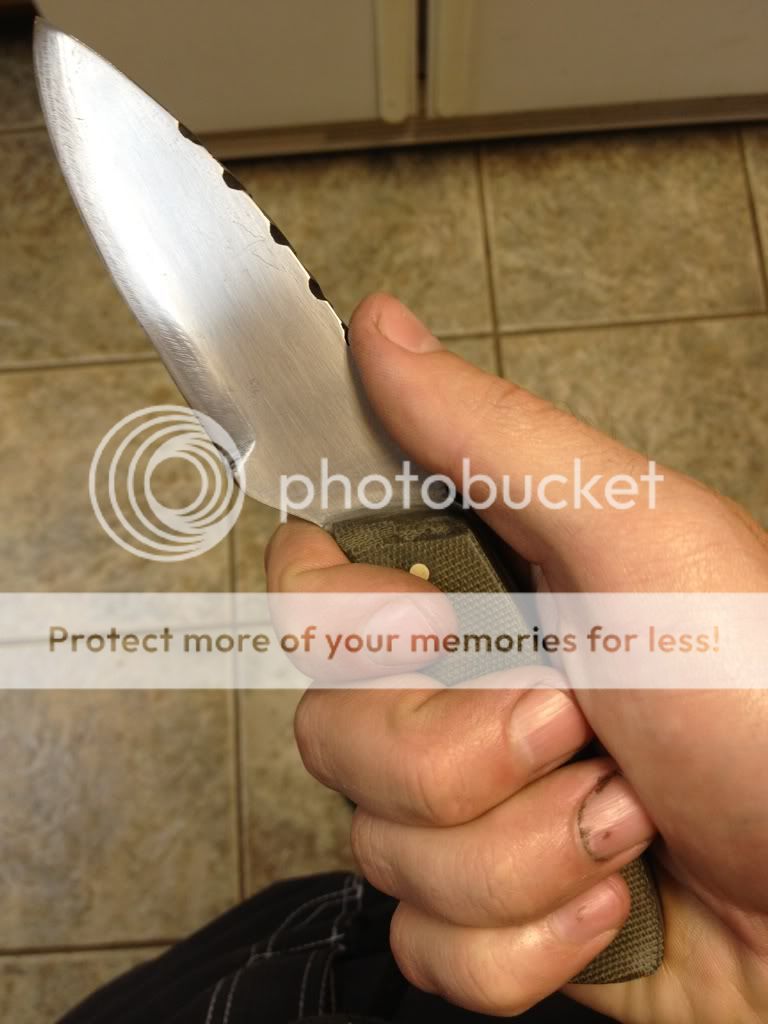
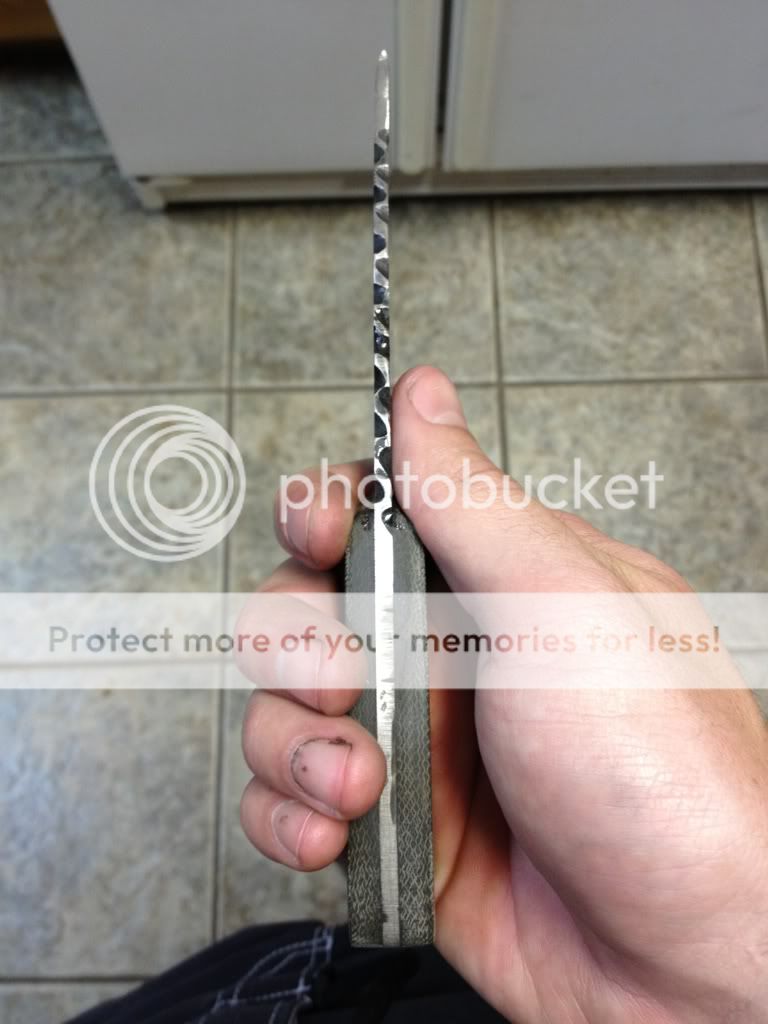
I keep reading about these guys that are normalizing 3 times and such and getting completely lost. Hope this is clear and sorry for the rambling. Just finished my first knife. It's 1/8" O1 with olive drab canvas based Micarta. I HT and tempered myself (most probably wrong)

Ray Rogers over at Knifenetwork gave me some great advice already and advised me not to use O1 until i become more experienced. It's not the greatest work of art but I guess it could kill a tree branch.
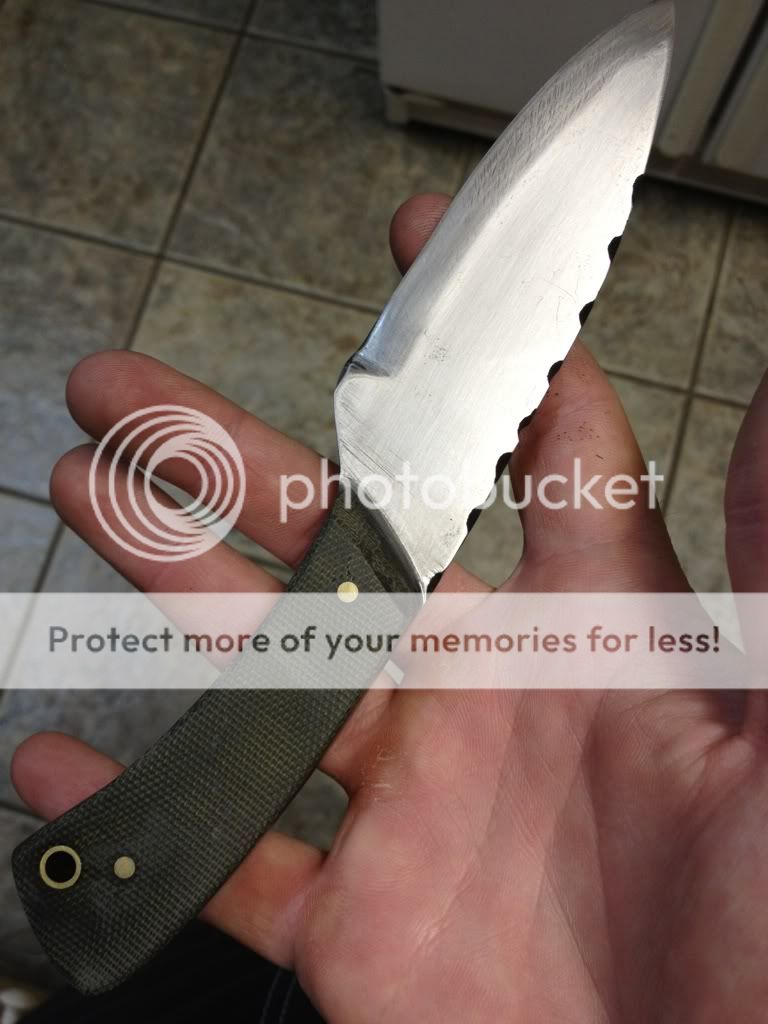
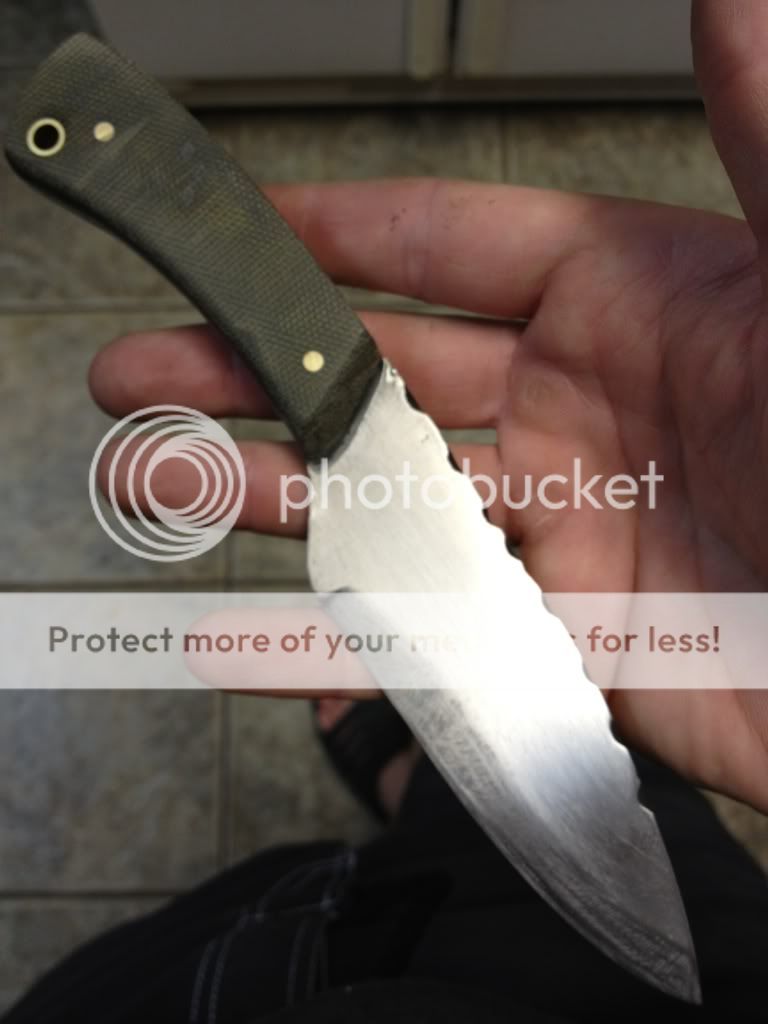
544aeecb.jpg


74d59c0a.jpg


2b149e4b.jpg


9c042bb0.jpg


the only reason I did file work was to give my thumb some grip.
 
There are a lot of good heat treat articles on this forum as will this one http://knifedogs.com/forumdisplay.php?124-Heat-Treating-Forum-on-KnifeDogs

There is a lot to take in when it comes to heat treating steel, but it just takes some reading and probable re reading.

The Bubble Jig is a great flat grinding teacher; take the time to learn as you go and you will amaze yourself at what you will be able to grind in a short amount of time.

Happy grinding, Fred
 
Good posts by Fred.

First, almost all steel sold as knifemaking steel will come annealed.
Second, use the 1080/1084 as you already came to that conclusion. It is the easiest to home HT and is very forgiving.
Third, nice first attempt. Be sure to clean up the epoxy at the front of the scales with an acetone soaked q-tip while setting and be sure to get all of those scratches out before you go to the next grit and def before you HT. They are very hard to get out after the blade is hardened.

If I may inquire, how did you heat treat the current blade? Torch? Kiln? Forge? What temp and guidelines did you use? What temp and how long did you temper at?

Don't worry, it all gets easier to do and understand as you go along.
 
Normalizing is done to get everything uniform within the steel after forging. If your steel is annealed and you're shaping it with a file or grinder, normalizing wouldn't really be necessary. Some people recommend triple quenching, some lean toward one quench after soaking at temperature for a few minutes. Which you do depends on whether you have the ability to hold a reasonably constant temperature for any amount of time. I have never been able to get more than one quench to show any benefits for me, but I rarely heat treat my own blades. Tempering more than once is recommended for some steels to improve the microstructure. It is less necessary for simpler steels.
 
Read up on sub critical stress relief; its done after grinding is completed.

Normalizing after grinding is an important part of the heat treating process; its used to convert the large grain structure that comes with annealing, with a finer and more uniform structure.

Triple quenching is just another way to refine grain structure and is not necessary to produce a quality heat treated blade.

The proper heat treating of steel is about time at temperature. Some steels take basically zero soak time while other steels require a given time soaking to bring all the carbides into solution.

If you pick up a basic heat treat manual they will contain most all of the pertinent information.

Fred

Fred
 
Good posts by Fred.

First, almost all steel sold as knifemaking steel will come annealed.
Second, use the 1080/1084 as you already came to that conclusion. It is the easiest to home HT and is very forgiving.
Third, nice first attempt. Be sure to clean up the epoxy at the front of the scales with an acetone soaked q-tip while setting and be sure to get all of those scratches out before you go to the next grit and def before you HT. They are very hard to get out after the blade is hardened.

If I may inquire, how did you heat treat the current blade? Torch? Kiln? Forge? What temp and guidelines did you use? What temp and how long did you temper at?

Don't worry, it all gets easier to do and understand as you go along.


Thanks Wloch. I appreciate the info. Yea the only grit paper I had on hand was up to 600 so I could only go so far as I had put a whole lot of scratches stupidly trying to draw file. And I see what you mean about the epoxy. It dried before I saw it.

As for HT. I have a very crudely built kiln/forge. Bricks and pipe with a burner from a crawfish pot essentially(I'm from Louisiana). I heated the steel until it became non magnetic and let it sit a few seconds longer. I then quenched in oil. After cleaning it up I tempered twice at 400 degrees for an hour each.

Thanks everyone for all of your advice. It's greatly appreciated.
 
Back
Top