- Joined
- Jan 10, 2010
- Messages
- 1,818
Thought some of you may be interested in something I've been playing with. I have an interest in Iron Age pattern welding techniques that took advantage of the natural patterns inherent in 'wrought' iron due to the presence or absence of phosphorus and other alloys. Phosphorus is a carbon migration inhibitor and is resistant to etching.. so when it is present and mixed with low P iron, you can sometimes get a 'damascus' effect.
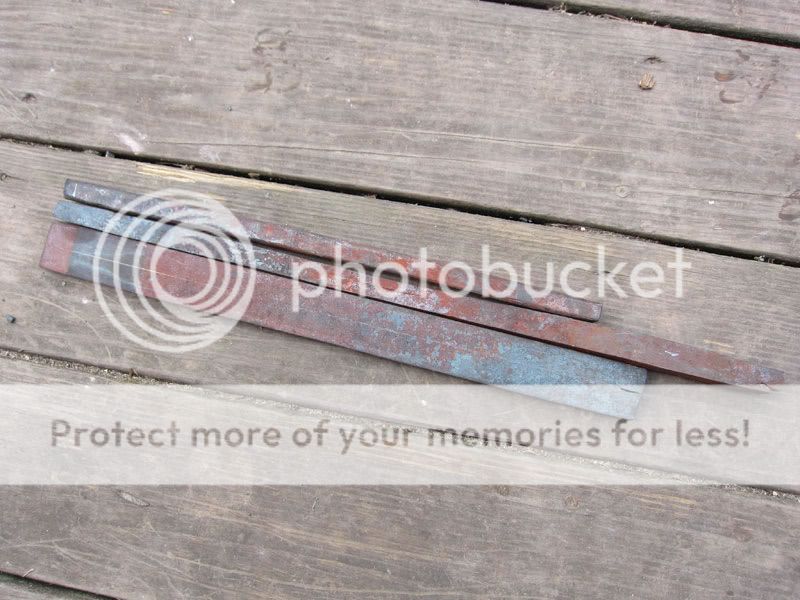
So I have several wrought iron bars of different P content. For this blade I didn't weld them together and do multiple foldings for refinement and distribution of P the way it would have been done. I just wanted to start getting down the technique of twisting the rods and welding them together for core material. So for this one I twisted 4 different rods of 2 different P concentrations, forge welded them together and then did some more twisting. I ended up being very gentle with the twists since I was working with unrefined wrought which often shears when twisting.. so the twist effect is not strong in this case. When I get into this for real, I will combine some wrought with mild steel or simply do much more refining so that I can do more intense twist patterns.
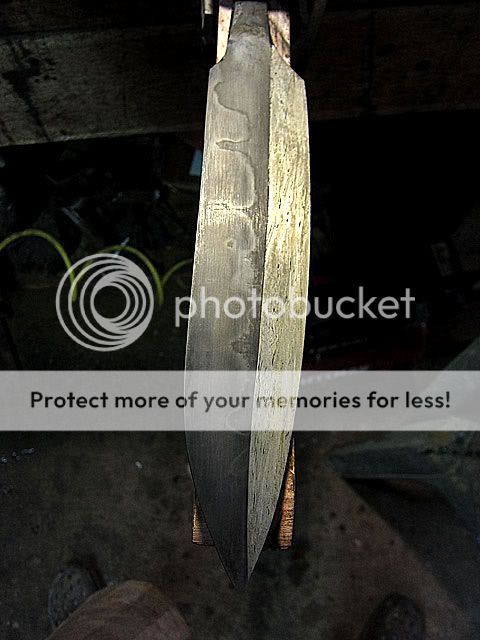
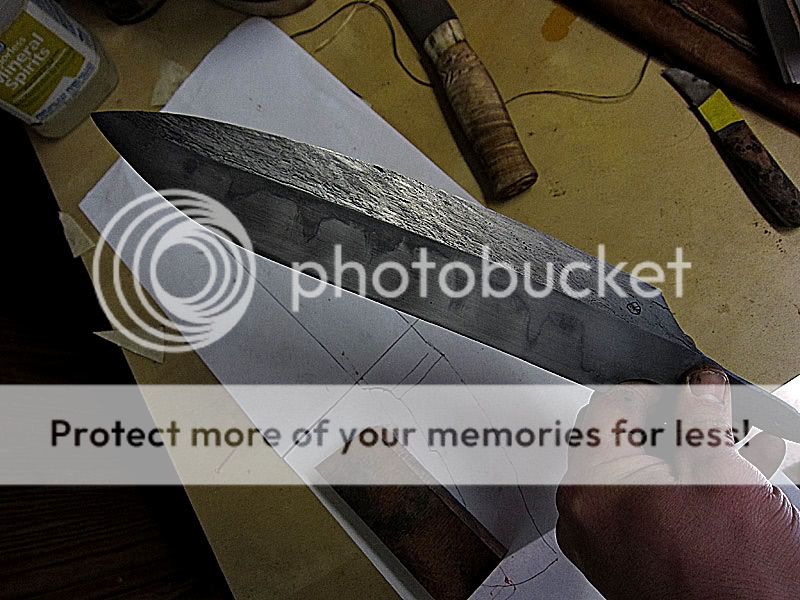
So once the wrought billet was welded, squared off and drawn out I welded that to a bar of W2. I still have a lot to learn about starting stock size and attaining final dimensions.. so I ended up with something wider and thicker than I wanted... Over 1/4" thick and 3" wide. When combining wrought and something like W2 things like drawing out and forging to shape can get kind of crazy because the wrought moves much faster. So I decided to just stock remove the rest.
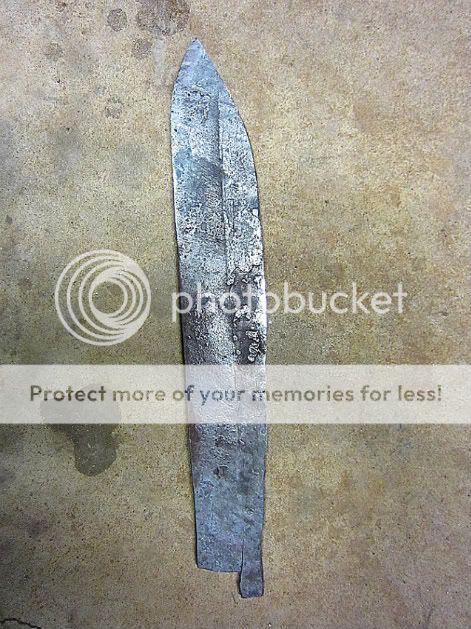
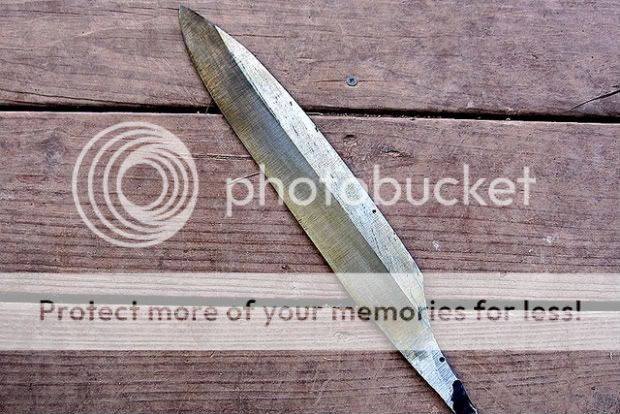
The last picture shows the blade where it is right now... 11 inches long from the tang, 3/16" thick with no distal taper (sax's did not have distal taper) and with a profile that represents more of a spear point Norse sax rather than the 'broken back' of Saxon origin that most people think of. It is flat ground all the way to the spine but still has 1/8" on the edge.. so more grinding! The picture makes it seem like there are weld failures between the wrought and the W2.. but those are either places where I haven't gotten deep into the grind.. or they are dark spots from a quick ferric etch I did before photographing.
Anyway... I will post the finals pics in a couple of days.
So I have several wrought iron bars of different P content. For this blade I didn't weld them together and do multiple foldings for refinement and distribution of P the way it would have been done. I just wanted to start getting down the technique of twisting the rods and welding them together for core material. So for this one I twisted 4 different rods of 2 different P concentrations, forge welded them together and then did some more twisting. I ended up being very gentle with the twists since I was working with unrefined wrought which often shears when twisting.. so the twist effect is not strong in this case. When I get into this for real, I will combine some wrought with mild steel or simply do much more refining so that I can do more intense twist patterns.
So once the wrought billet was welded, squared off and drawn out I welded that to a bar of W2. I still have a lot to learn about starting stock size and attaining final dimensions.. so I ended up with something wider and thicker than I wanted... Over 1/4" thick and 3" wide. When combining wrought and something like W2 things like drawing out and forging to shape can get kind of crazy because the wrought moves much faster. So I decided to just stock remove the rest.
The last picture shows the blade where it is right now... 11 inches long from the tang, 3/16" thick with no distal taper (sax's did not have distal taper) and with a profile that represents more of a spear point Norse sax rather than the 'broken back' of Saxon origin that most people think of. It is flat ground all the way to the spine but still has 1/8" on the edge.. so more grinding! The picture makes it seem like there are weld failures between the wrought and the W2.. but those are either places where I haven't gotten deep into the grind.. or they are dark spots from a quick ferric etch I did before photographing.
Anyway... I will post the finals pics in a couple of days.