There are some myths I have seen over and over again about the US Army quartermaster knives.
The first myth is that the blades are a full .25 inch thick. Well, having several of the Cattaraugus 225Q variant I decided to measure their blade thickness. Guess what? None of the spines of mine are thicker than .19 inch at their thickest point (in the ricasso area).
A second myth is that the Ontario P3 is supposedly a currently manufactured stainless steel clone of the original Quartermaster knife. I purchased a P3 to see and the comparison photos are below. The brass and polished handle initially provides a pleasing appearance. Its spine is also about the same thickness as the originals. However once out of their sheaths, In a side by side comparison with original Army quartermaster knives, many functional differences just jump out and disappoint.
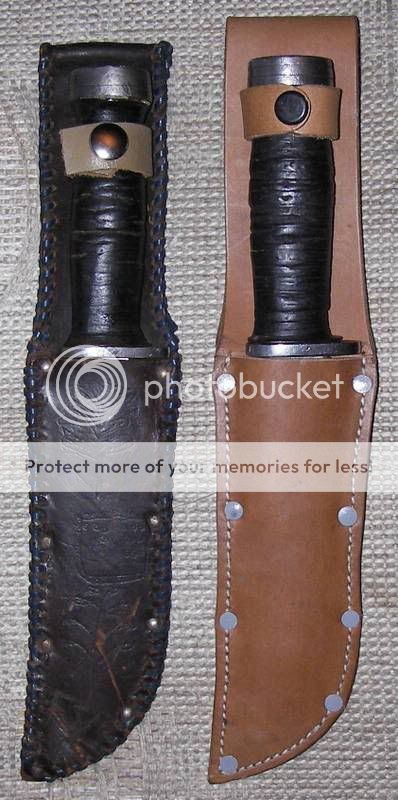
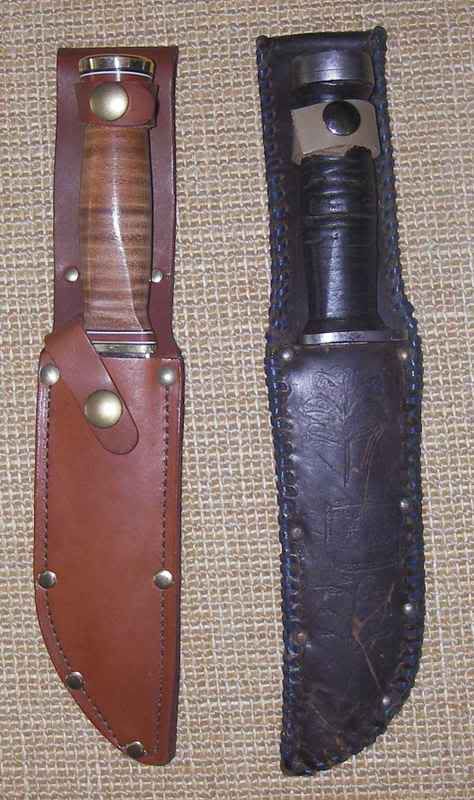
The P3 easily fits into an original quartermaster sheath. The reverse is not true. An authentic 225Q almost fits the P3 sheath, but the 225Q blade is just a hair longer so it protrudes about an eighth of an inch thereby preventing any of the snaps from closing (see below on handle thickness).
length
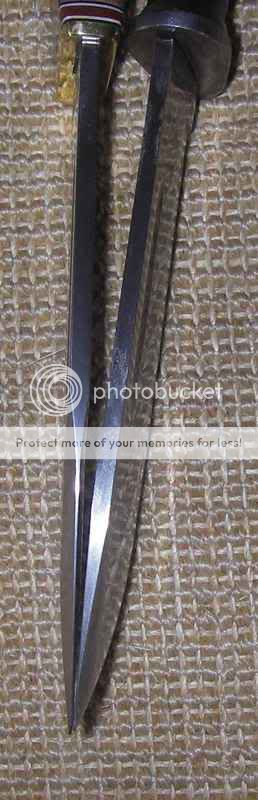
The P3 has a false edge on the back. Somehow knifemakers have all fallen in love with the useless false edge as a sales gimmick. In the case of the P3 it becomes a liability as the thinner blade makes the knife weaker for the prying or wedging tasks a quartermaster knife may be called upon to perform. In my opinion Ontario should drop this feature on this knife.
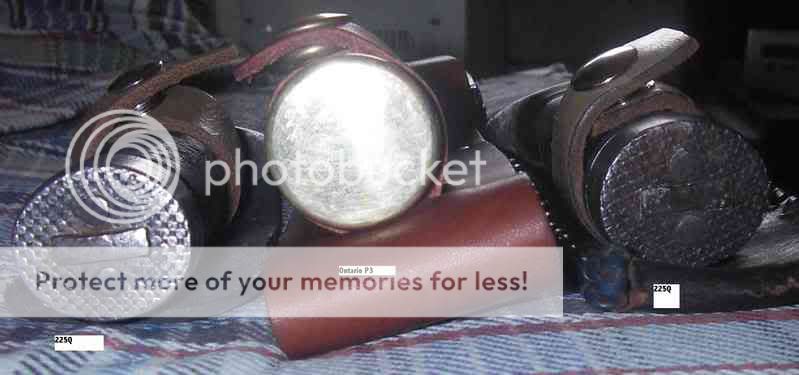
The ads I have seen for the P3 all mention using the butt to hammer. You can actually do that with a 225Q, but I strongly advise against trying this with a P3. The 225Qs have a steel cap that averages out to .49 inch in thickness, note also the way they are made causes hammering to just seat them tighter. Conversely the thin brass disk making up the butt cap of the P3 appears to merely be held in place by an epoxy of some kind underneath it. Because the P3 cap conceals the tang I do not yet know if the P3 has a narrow tang or the wide tang of the originals. No doubt attempting to seat a brad or thumb tack with it will soon reveal this to me.
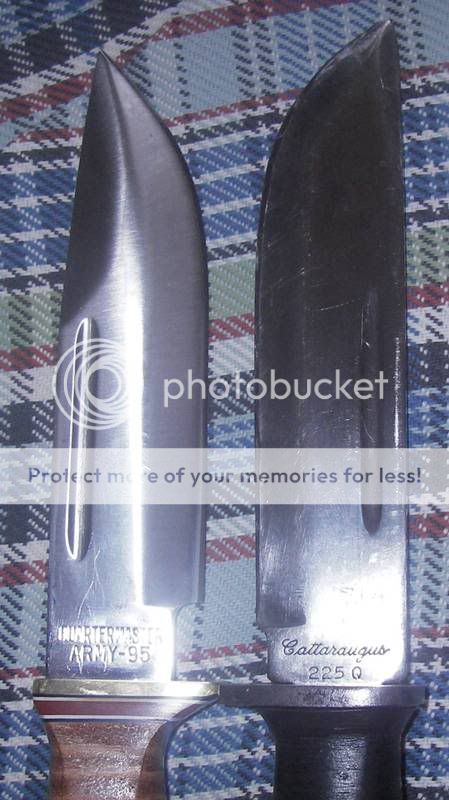
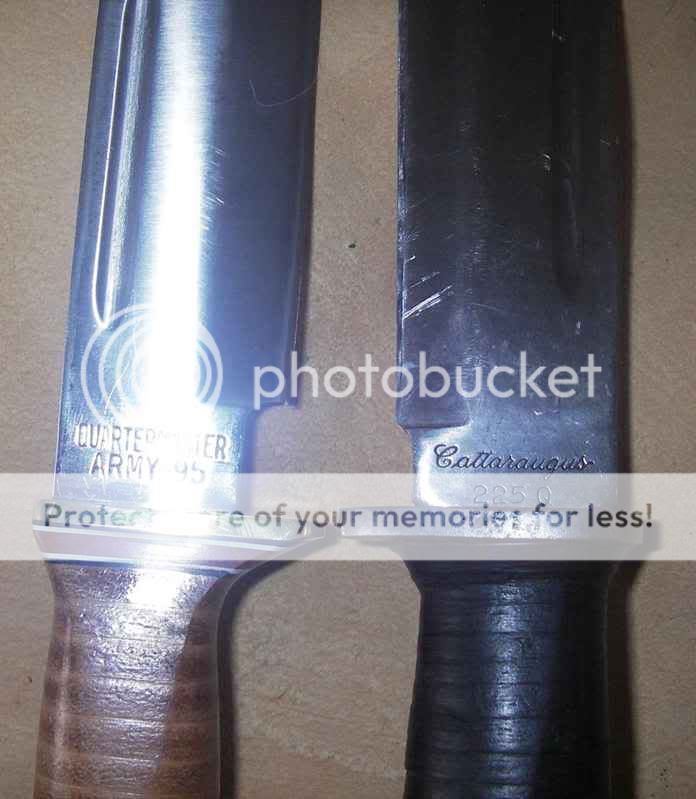
The blade of my P3 is 1.11 inch in depth just below the cross guard at the ricasso. That of the 225Q originals mikes out to 1.165 inch. The difference is very apparent in the photos and when holding the two knives leading to a speculation about blade strength.
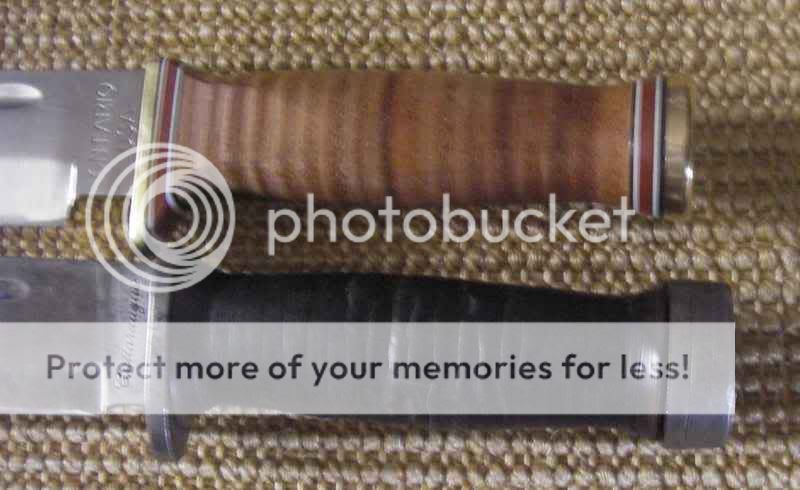
The handle of the P3, while admittedly prettier than that of the 225Q, is 1.125 inch at the thickest part on the specimen I purchased. I measured the handles of three different 225Qs. None were less than 1.26 in thickness at their widest points. This is as much a matter of taste than usefulness. If I had small hands, then no doubt the P3 would provide enough of a grip. However I have big hands and the grip of the originals fills my hand better. I would have been much happier if Ontario had chosen to not economize with smaller grips, but had instead left me the option of thinning them down if they were too thick.
My overall impression score of the P3 on a scale of 1 through 5, with 5 being held by a like new Cattaraugus 225Q is only 3.
The knife literally feels flimsier than the original. It is certainly lighter, but I can attribute a lot of that to the caps. I know that Ontario recently changed their Quartermaster knife yet again by adding a synthetic grip with a (useless) birds head cap. I believe they disservice themselves and the Quartermaster name. The P3 quartermaster I examined does not seem nearly as robust a knife as the original 60+ year old army quartermasters.
I believe they (or someone, Cold Steel or Kabar, are you listening?) should reintroduce an authentic styled Quartermaster knife. No false edge, no skimping on steel at the ricasso and with a full leather grip containing a wide tang and a butt cap that can take a blow or two.
The first myth is that the blades are a full .25 inch thick. Well, having several of the Cattaraugus 225Q variant I decided to measure their blade thickness. Guess what? None of the spines of mine are thicker than .19 inch at their thickest point (in the ricasso area).
A second myth is that the Ontario P3 is supposedly a currently manufactured stainless steel clone of the original Quartermaster knife. I purchased a P3 to see and the comparison photos are below. The brass and polished handle initially provides a pleasing appearance. Its spine is also about the same thickness as the originals. However once out of their sheaths, In a side by side comparison with original Army quartermaster knives, many functional differences just jump out and disappoint.
The P3 easily fits into an original quartermaster sheath. The reverse is not true. An authentic 225Q almost fits the P3 sheath, but the 225Q blade is just a hair longer so it protrudes about an eighth of an inch thereby preventing any of the snaps from closing (see below on handle thickness).
length
The P3 has a false edge on the back. Somehow knifemakers have all fallen in love with the useless false edge as a sales gimmick. In the case of the P3 it becomes a liability as the thinner blade makes the knife weaker for the prying or wedging tasks a quartermaster knife may be called upon to perform. In my opinion Ontario should drop this feature on this knife.
The ads I have seen for the P3 all mention using the butt to hammer. You can actually do that with a 225Q, but I strongly advise against trying this with a P3. The 225Qs have a steel cap that averages out to .49 inch in thickness, note also the way they are made causes hammering to just seat them tighter. Conversely the thin brass disk making up the butt cap of the P3 appears to merely be held in place by an epoxy of some kind underneath it. Because the P3 cap conceals the tang I do not yet know if the P3 has a narrow tang or the wide tang of the originals. No doubt attempting to seat a brad or thumb tack with it will soon reveal this to me.
The blade of my P3 is 1.11 inch in depth just below the cross guard at the ricasso. That of the 225Q originals mikes out to 1.165 inch. The difference is very apparent in the photos and when holding the two knives leading to a speculation about blade strength.
The handle of the P3, while admittedly prettier than that of the 225Q, is 1.125 inch at the thickest part on the specimen I purchased. I measured the handles of three different 225Qs. None were less than 1.26 in thickness at their widest points. This is as much a matter of taste than usefulness. If I had small hands, then no doubt the P3 would provide enough of a grip. However I have big hands and the grip of the originals fills my hand better. I would have been much happier if Ontario had chosen to not economize with smaller grips, but had instead left me the option of thinning them down if they were too thick.
My overall impression score of the P3 on a scale of 1 through 5, with 5 being held by a like new Cattaraugus 225Q is only 3.
The knife literally feels flimsier than the original. It is certainly lighter, but I can attribute a lot of that to the caps. I know that Ontario recently changed their Quartermaster knife yet again by adding a synthetic grip with a (useless) birds head cap. I believe they disservice themselves and the Quartermaster name. The P3 quartermaster I examined does not seem nearly as robust a knife as the original 60+ year old army quartermasters.
I believe they (or someone, Cold Steel or Kabar, are you listening?) should reintroduce an authentic styled Quartermaster knife. No false edge, no skimping on steel at the ricasso and with a full leather grip containing a wide tang and a butt cap that can take a blow or two.