

- Joined
- Jan 10, 2010
- Messages
- 1,818
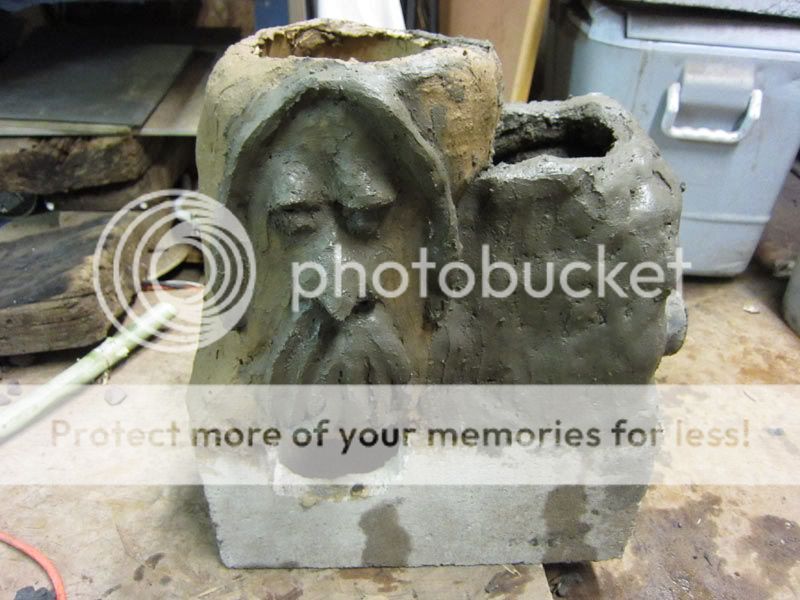
I've been experimenting. Like a gnarled Alchemist in his lab melting things and seeing what they do. In this case it's nails. Wrought iron nails melted down in a little clay furnace with the name of 'Aristotle' (thank to Skip Williams from Rockbridge Bloomery for sharing his work in this stuff). So the furnace is just a small clay stack with a 5.5" wide mouth and about 12 inches tall with an air chamber designed as a reservoir for the air from a small blower. I used a hair dryer. There is a hole in the stack within that chamber that angles down to the bottom. You basically heat it up by burning wood, then fill it with charcoal until you get the 'dragon's breath' shooting from the top. You then start feeding your iron or mild steel or whatever shop scrap you can scrounge into it a little at a time. You put something in, let the charcoal burn down a bit, add some iron, etc... In my case I ran it for about 45 minutes and used 12 or so wrought iron nails. The idea is that you are melting the iron in a reducing environment with lots of opportunity to take up carbon from the charcoal which will give you steel if you have all your ducks lined up.
Meet Aristotle:
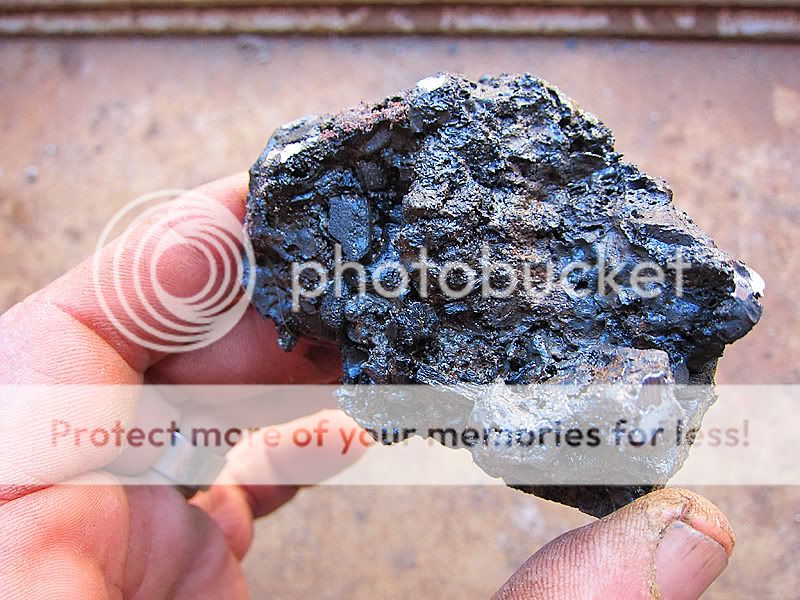
After burning down the charcoal I fished out this... about a 3/4# bloom of metal:
I took it to the grinder to spark test it.... hot damn! High carbon from wrought iron! Unbelievable. Things never work for me the first time.
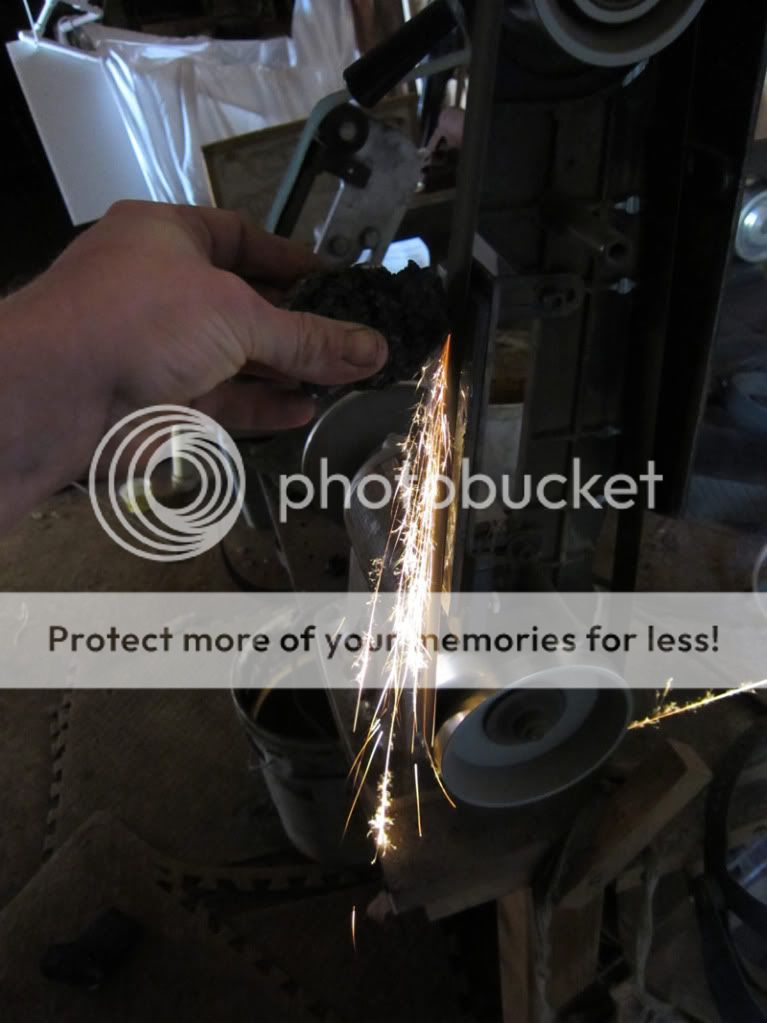
I don't have a picture, but pure wrought iron sparks in straight flashes without feathery fireworks. According to others who know more than me, this sparks like 1080ish.
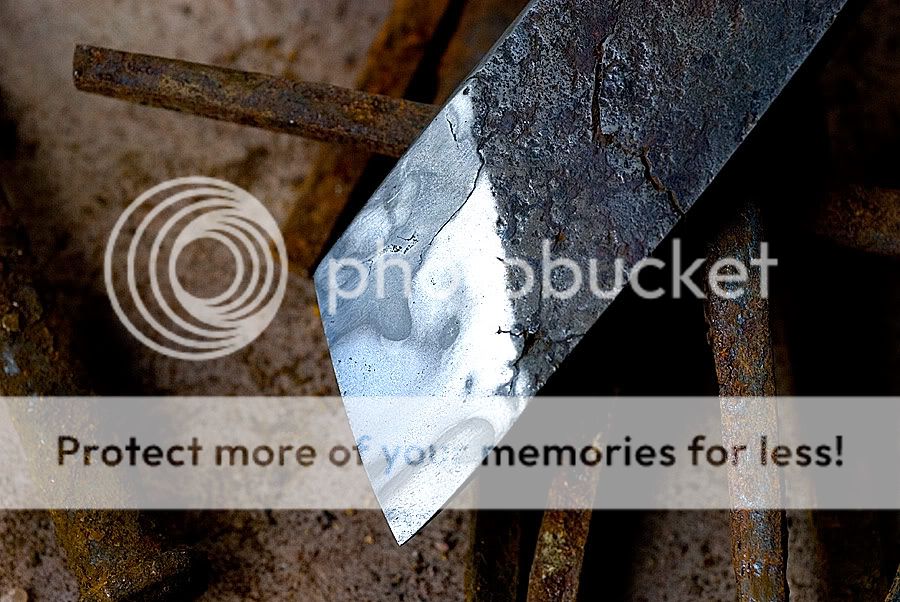
So I was curious what kind of blade you could make by just forging down that bloom without all the stacking and welding one would normally do with bloomery steel... which refines and distributes things more evenly. I just forged a 4 inch long and 1/4" thick billet from it and ground a single beveled edge into a kiridashi. I quenched in water expecting the whole thing to shatter. But instead it got very, very, very hard. I did a brass rod test after my first tempering cycle at 350F and the edge chipped so I took it to 400F and it performs great along the entire edge. And that is despite the chaotic etching pattern. A little bit of everything in there! Beyond my comprehension at this point.
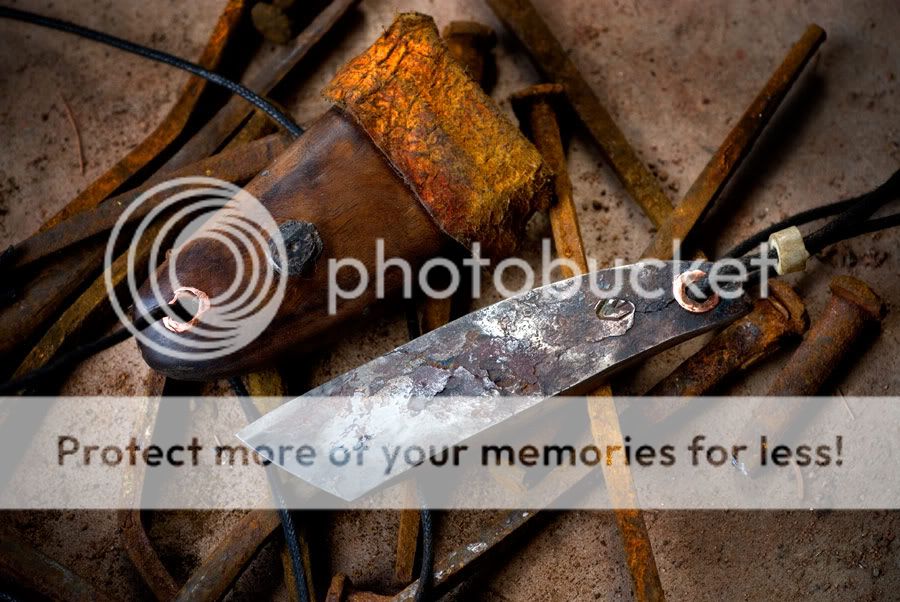
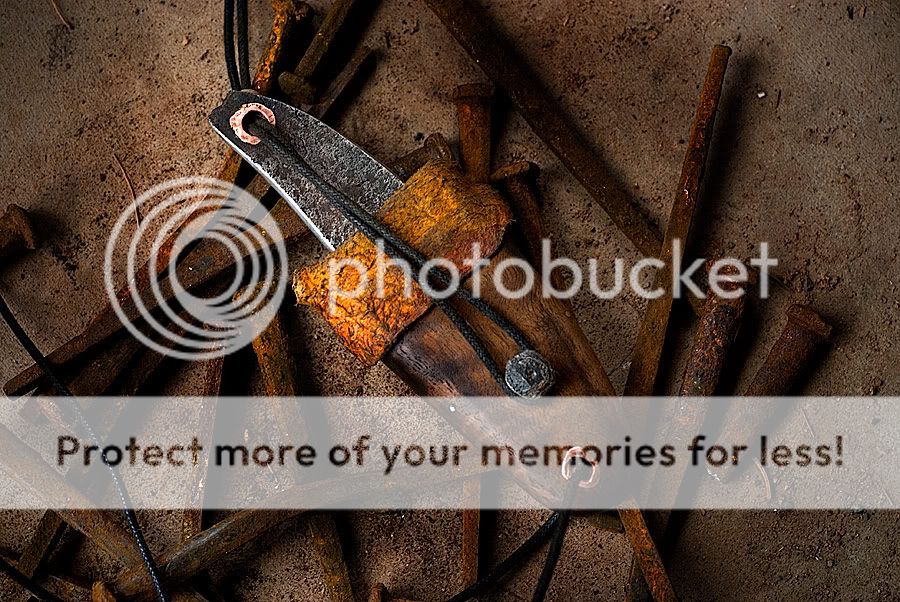
But here it is .... The sheath is claro walnut backed by leather. Braintan doeskin liner. A wrought iron nail head keeper and a peened copper tubing.
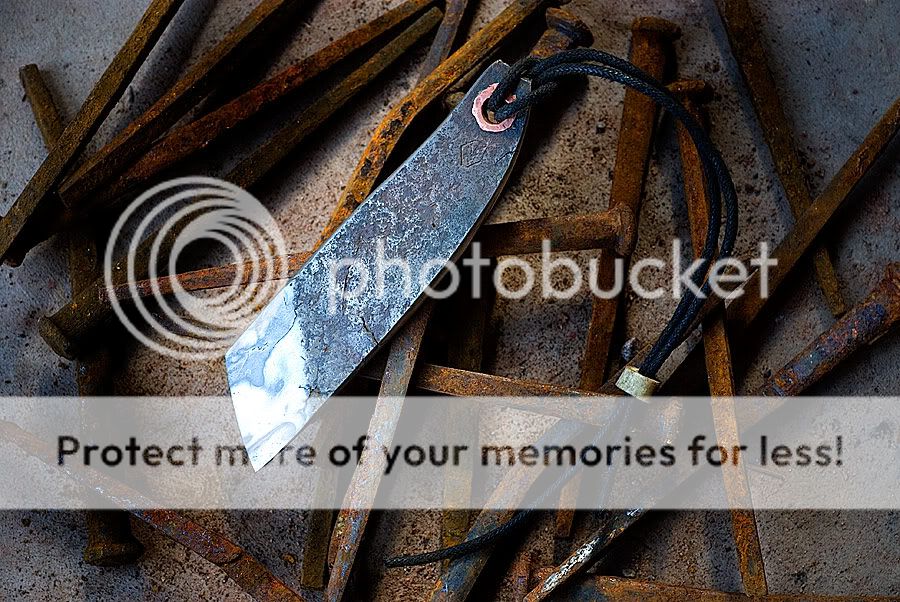
Aristotle survived and now serves as a model for my new line of Nailed Neck Knife Kiridashi.
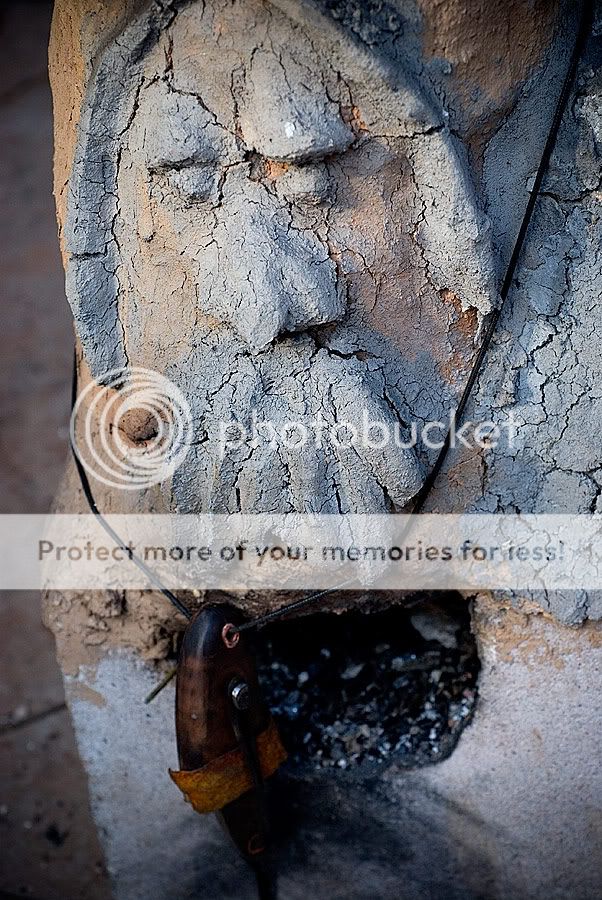
Meet Aristotle:
After burning down the charcoal I fished out this... about a 3/4# bloom of metal:
I took it to the grinder to spark test it.... hot damn! High carbon from wrought iron! Unbelievable. Things never work for me the first time.
I don't have a picture, but pure wrought iron sparks in straight flashes without feathery fireworks. According to others who know more than me, this sparks like 1080ish.
So I was curious what kind of blade you could make by just forging down that bloom without all the stacking and welding one would normally do with bloomery steel... which refines and distributes things more evenly. I just forged a 4 inch long and 1/4" thick billet from it and ground a single beveled edge into a kiridashi. I quenched in water expecting the whole thing to shatter. But instead it got very, very, very hard. I did a brass rod test after my first tempering cycle at 350F and the edge chipped so I took it to 400F and it performs great along the entire edge. And that is despite the chaotic etching pattern. A little bit of everything in there! Beyond my comprehension at this point.
But here it is .... The sheath is claro walnut backed by leather. Braintan doeskin liner. A wrought iron nail head keeper and a peened copper tubing.
Aristotle survived and now serves as a model for my new line of Nailed Neck Knife Kiridashi.
Last edited:


