
Paramilitary 2 Observation

Joined
Jul 7, 2012
Messages
1,006
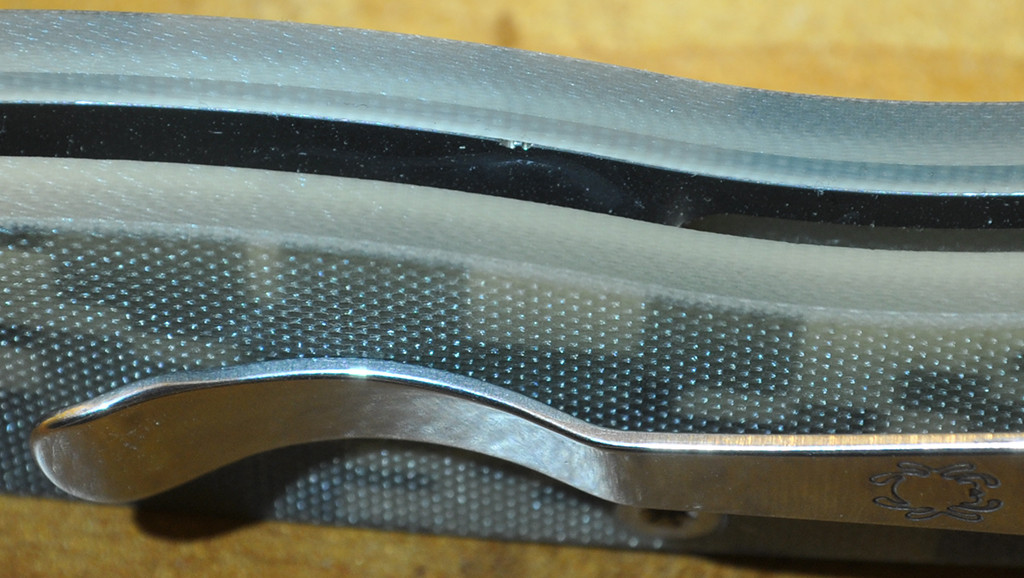
I just recently got a Paramilitary 2, everything about it is great, but I did notice something strange. Has anyone else seen these notches in the handle liners? It looks like it was cut with a water jet or whatever they use to mill out the handles, but I don't know what its function is, if any. They are on both sides, but they aren't straight across from each other. Has anyone else noticed these little notches?
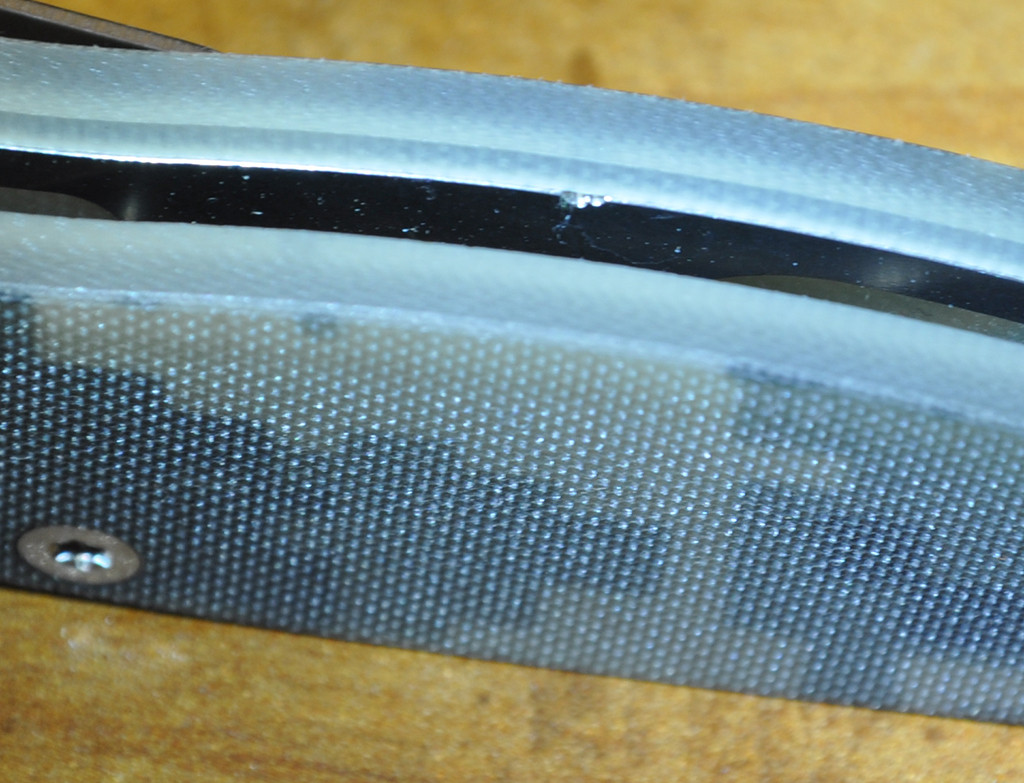
mrXNvwZ.jpg


IyC7gWX.jpg


Sorry if the photos aren't too great. Was dealing with some bad lighting.
 
Yep. Well documented. Most likely where the water jet cutting started and stopped. Totally normal. :thumbup:
 
They use the laser to get the profile of the blade and liners, then clean them up on a mill. Reaming holes and machining the ramp for the compression lock to engage.
 
That part is called a tactical notch, it's function is being a notch in tactical form. ;)
All 20+ of mine have it too.
 
Laser is way cheaper (faster) than waterjet and usually yields better results. I'm a design engineer and only use a waterjet when it's really thick steel (over 1/2") or aluminum because it requires special optics to cut on a laser.

We have a Mazak laser at our shop and I've thought about these marks a bit. The "notches" are where the steel has essentially been cut twice: once when the beam entered the profile and once when it leaves. The outer .01"-.02" of steel is heated well above it's upper critical tempature and impurities are able to enter the steel matrix. Lasers require quite pure steel and very pure gasses to make a clean cut. Since the steel is allowed to absorb impurities at the cut, a second pass will be cutting impure stel. The only way to prevent these marks is to add a tab to your geometry and put your start point on the tab. The tab must then be ground off after. This obviously adds a significant amount of time to the process than just picking pieces out of the sheet of steel.
 
Laser is way cheaper (faster) than waterjet and usually yields better results. I'm a design engineer and only use a waterjet when it's really thick steel (over 1/2") or aluminum because it requires special optics to cut on a laser.

We have a Mazak laser at our shop and I've thought about these marks a bit. The "notches" are where the steel has essentially been cut twice: once when the beam entered the profile and once when it leaves. The outer .01"-.02" of steel is heated well above it's upper critical tempature and impurities are able to enter the steel matrix. Lasers require quite pure steel and very pure gasses to make a clean cut. Since the steel is allowed to absorb impurities at the cut, a second pass will be cutting impure stel. The only way to prevent these marks is to add a tab to your geometry and put your start point on the tab. The tab must then be ground off after. This obviously adds a significant amount of time to the process than just picking pieces out of the sheet of steel.

Got a question for you regarding laser cutting because so far I've seen many differences in laser cutting. Right now I am not even sure.
The two prototype facilities I've visited have CNC, waterjet, and laser cutting. They used to do electrical discharge (Wire EDM) cutting but they don't use it because it's not working and the don't want to pay what they called a hefty sum to repair it or replace it after they had a small chemical fire incident with titanium.

I handled a few prototype blanks used for rifle holsters in jeeps, some were water jet some were laser. Fresh out of the manufacturing.
The edge finishing on the water jet seemed more rough, and not as well defined as their laser cutter. They were cutting .18" thick steel blanks. They're laser cutter had SHARP edges but were smooth. The waterjet were considerably rougher.

The liners on the PM2 have a definite "bumpy" surface, any idea as to if this is normal on laser cutters?
I've seen all types of finishes straight from laser cutting, just wondering if the difference is in the machines?
 
The bumpy surface is what made me believe that it was water jet. I thought a laser would more or less melt the steel, rather than blasting it like a water jet does. The notches I photographed seem rough in texture, not smooth. Does a laser create a rough surface?
 
The bumpy surface is what made me believe that it was water jet. I thought a laser would more or less melt the steel, rather than blasting it like a water jet does. The notches I photographed seem rough in texture, not smooth. Does a laser create a rough surface?

Feed speeds have a big impact on edge quality when waterjetting.
We cut super alloy and Ti ever day of the week for a company that has 3 lasers running full time.
HAZ does make a difference in many applications, laser or waterjet?? right tool for the job for our applications....
 
Back
Top