Point taken!

There was a thread in the Maint forum a while back, featuring a non-traditional D2-bladed knife (Benchmade) with a vinegar/mustard forced & patterned patina. Not as a result of use, however. I'll link it here if you're interested in seeing it, but I don't know if that's what you're looking for (let me know, Sarah; I'll add the link to this post if you'd like to see it).
Thanks for the thought, may it perish

p ). It's traditional knives I'm after, and the evidence of use on D2 blades in the same. Still, I appreciate your locating the link just in case.
(Just so you know, I'm laughing at myself as I write this, contemplating "Benchmade"-- and
dismissing it even though I know the steel is the same and the evidence might be helpful! Idiosyncratic, I.

)
Besides, the post you've found and linked next is more to the point (below).
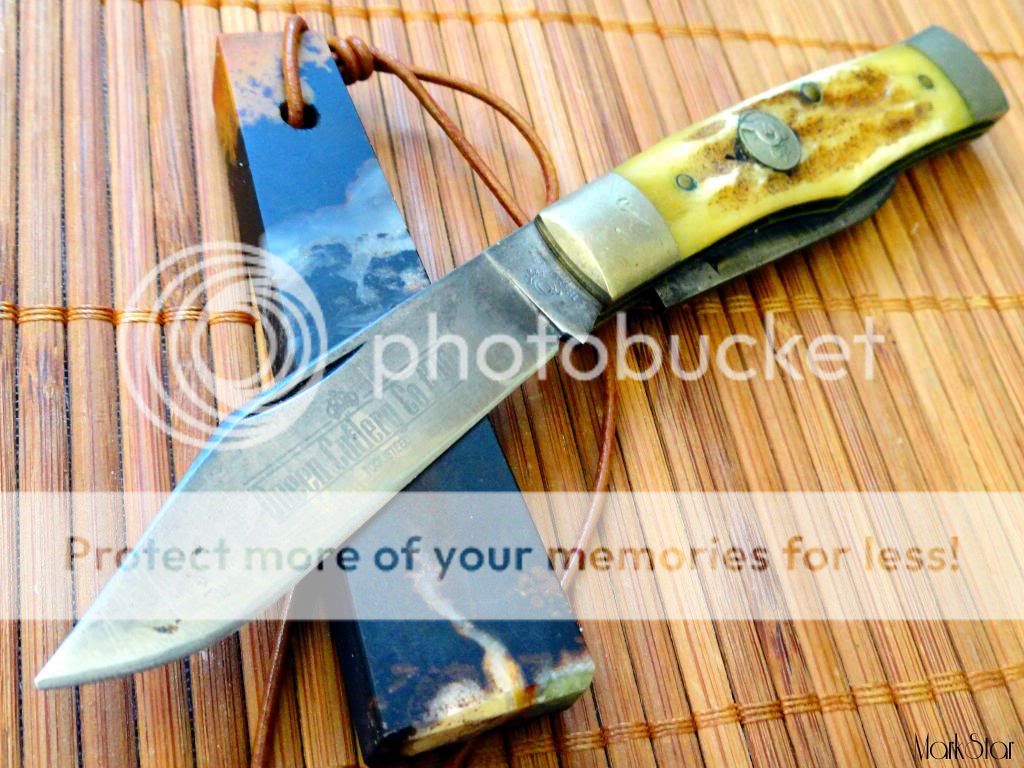
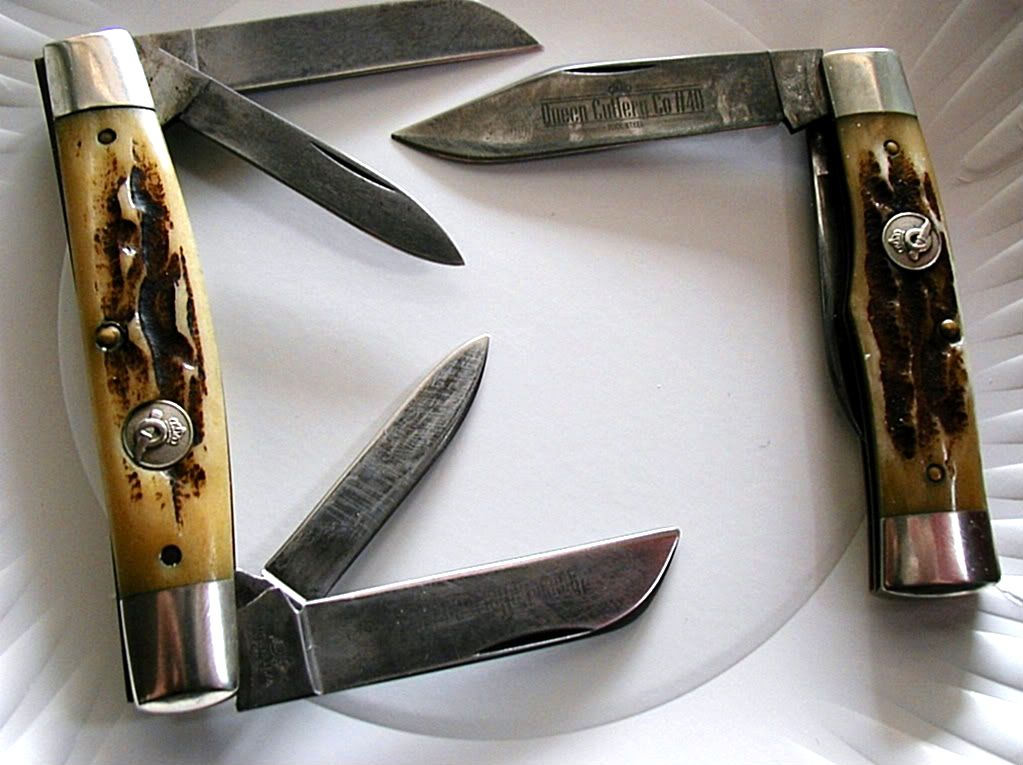
In the meantime, this image is the most helpful so far:
Thanks, Mark!
Obsessed With Edges said:
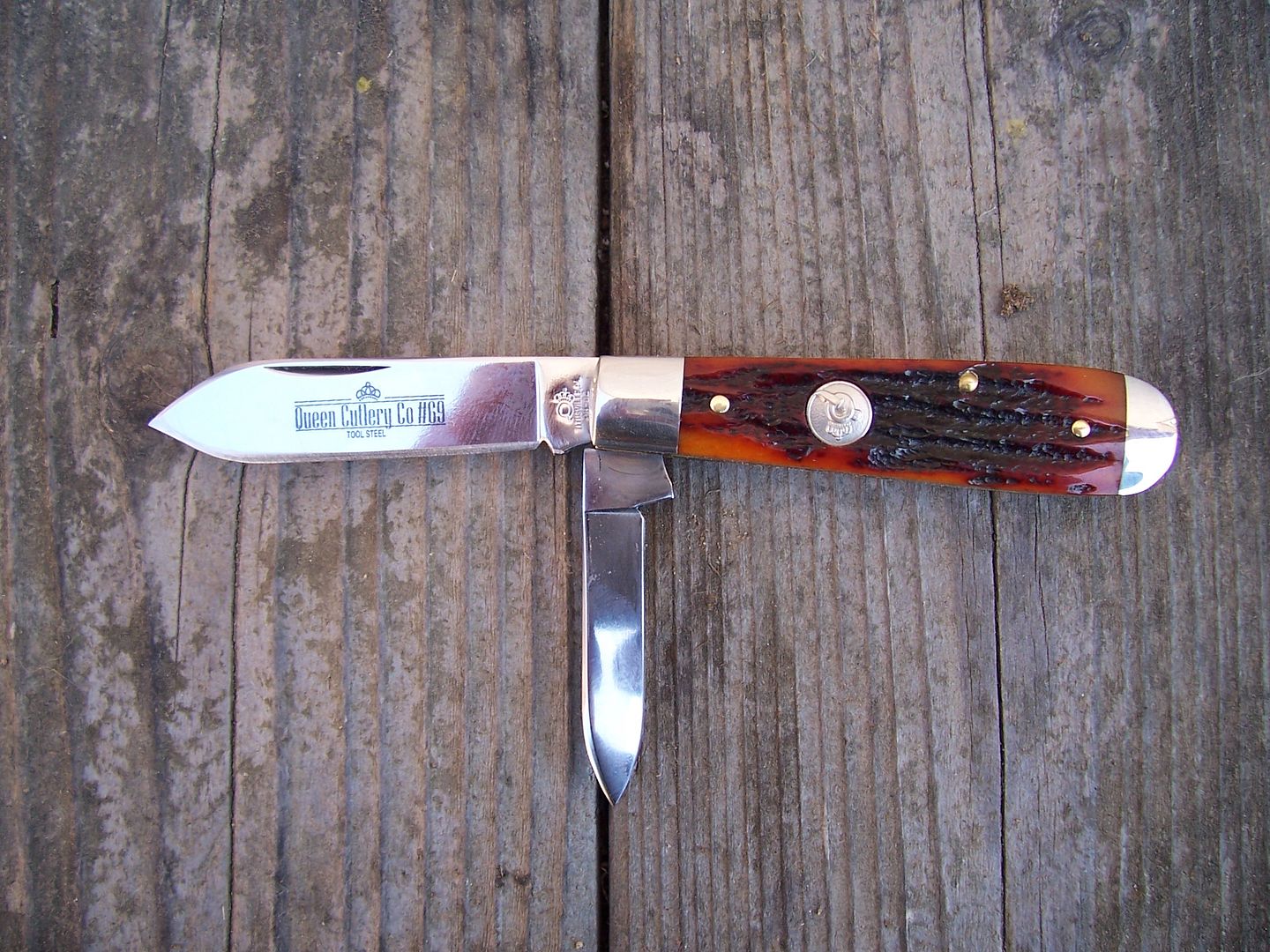
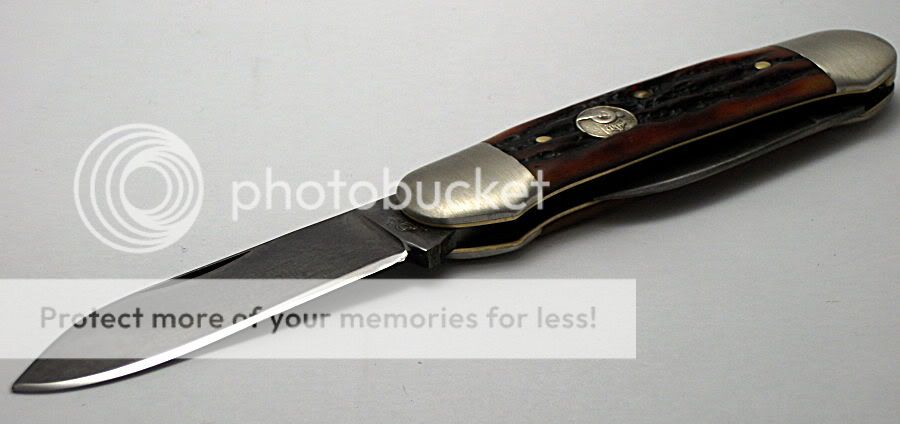
One thing that will affect how easily it may happen is the finish on the blade. Queen's D2 blades are polished to a pretty high degree, and that'll slow the formation of noticeable patina on any steel.
Hmmm.... So, satin-finished D2 blades would more readily incur/evince change? This makes sense.
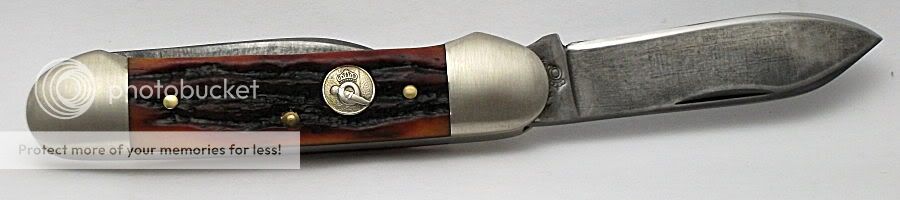
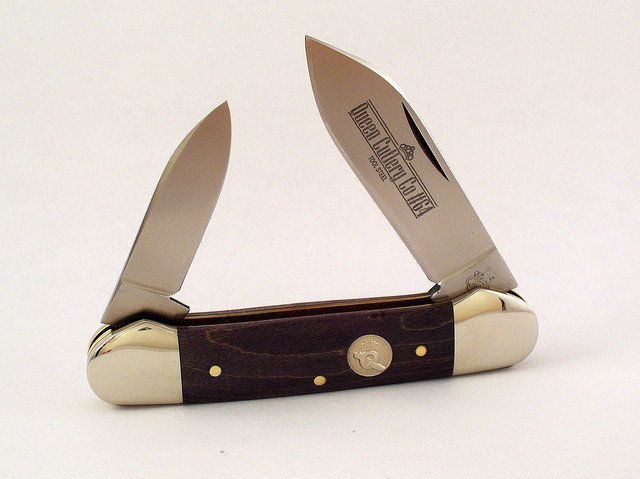
There's a couple pics of a Queen canoe with a forced patina in this thread (pertinent post is quoted in the box below):
http://www.bladeforums.com/forums/s...Have-you-ever-had-a-problem-with-D2-staining?
D2 will patina, but the process is slower due to the higher chromium content. This Queen Canoe has a forced patina. I sanded the blade before doing it, and when I did there was a very slight patina from previous use that was being removed. I imagine it would take quite a bit of normal use before being really noticeable.
I never considered it to be a problem, though. No issues with rust in my experience either.
That looks great! Thanks.
I've been reading about the virtues of D2 in edge retention (a plus once there's an acceptable edge to retain!) and durability. However, I'm also aware that I am far more attached to my 1095 and O1 knives than the stainless ones; I'm of those who welcome patina and evidence of use.
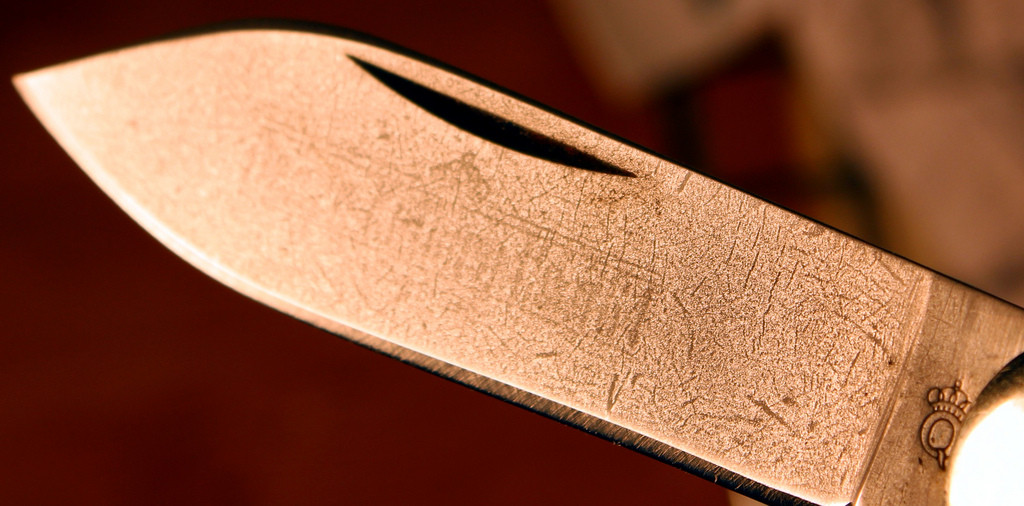
D2 is often mentioned as "not stainless, able to form patina," etc., but I want to better understand what that means.
Hence, my wondering about how D2 does and does not visibly "age" over time, especially as a result of regular use and non-heroic measures (forced patinas and the like, although the canoe above looks "organic").
Thanks, guys.
~ P.


 ):
):