Presentation side of custom knife??

Joined
Aug 29, 2012
Messages
1,355
I have a question about the "presentation" side of a knife. I don't know if this is a hotly contested issue or if there is only one correct answer and I'm the only one who doesn't know it. Which side of a custom knife is traditionally the presentation side? Is it the side you see when the knife is held in the right hand or the side facing out when in a right hand sheath? Or, is there no right or wrong answer and it depends on the character of the material?

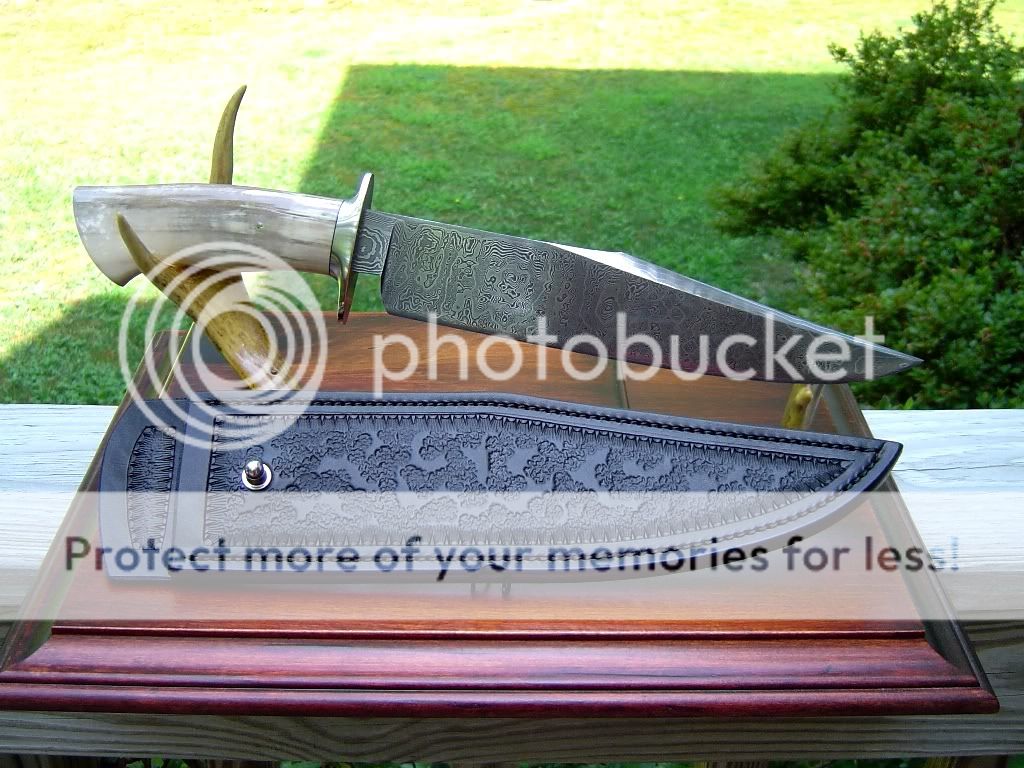
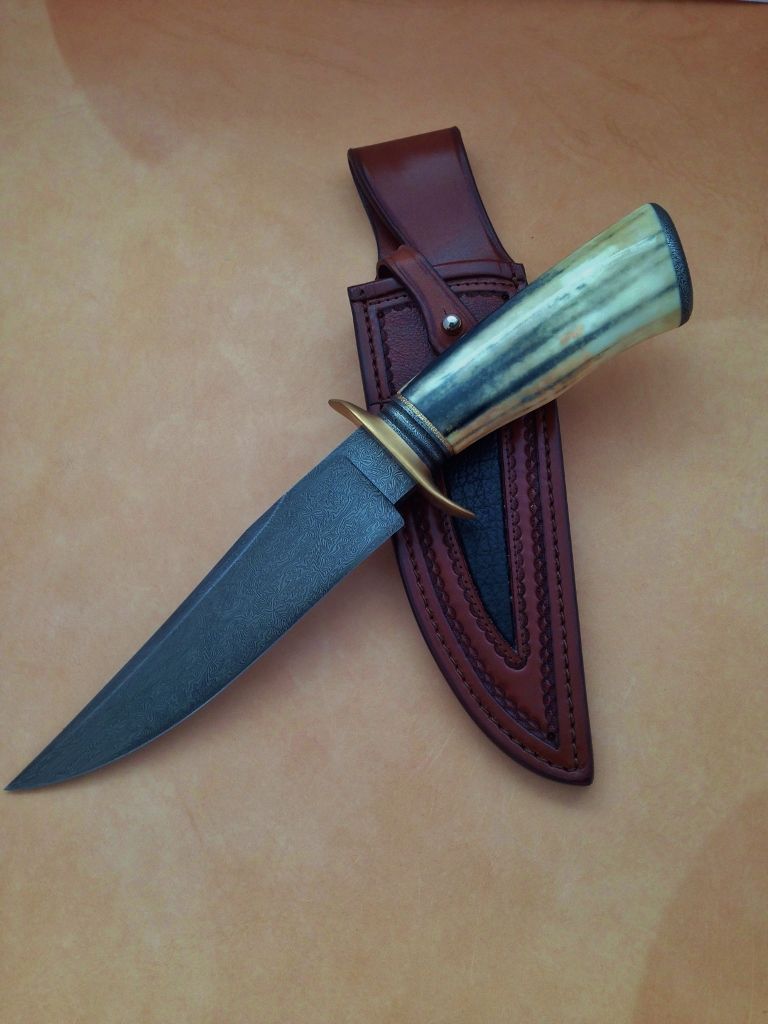
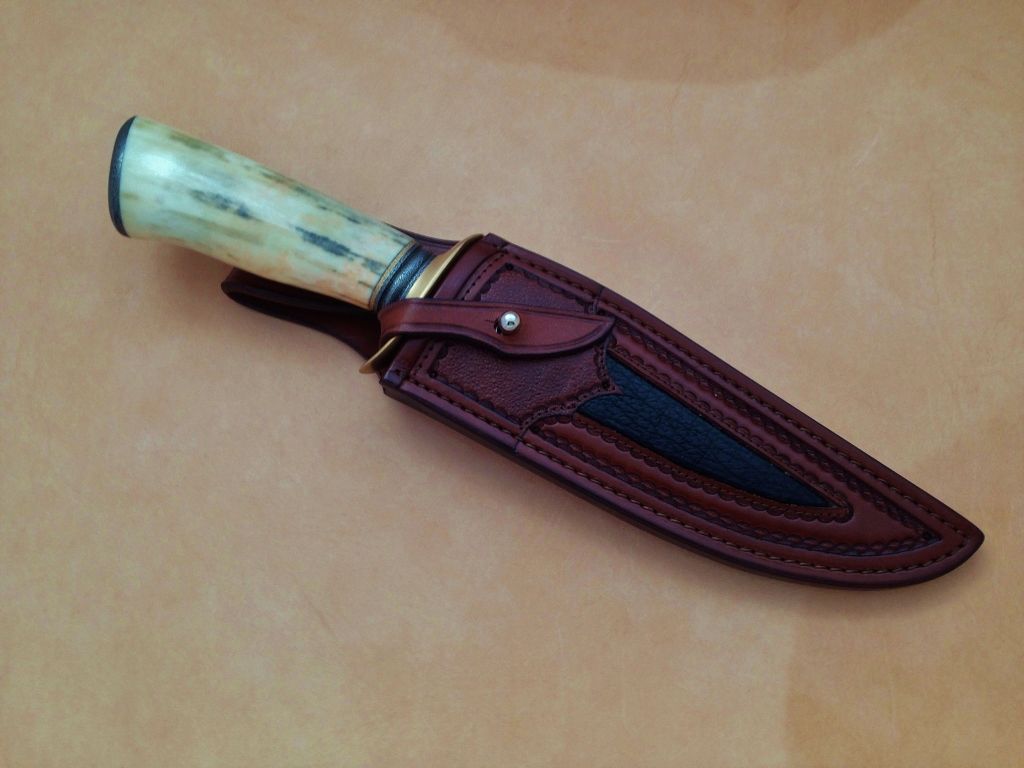
This question arose when I found a nice piece of Walrus ivory for the David Lish vest bowie. The ivory could only be used one way so it was not a choice of the maker. If I wanted something different I would have to have selected different ivory. This was a beautiful piece of Walrus but it did have one side with more character than the other, which in this case was the "left" side (side facing me when holding the knife). Dave did a masterful job on the knife and I love everything about it. So, this is not in any way a complaint about this knife. I'm just using it as an example.

I first recognized the issue when I was working with Paul Long on the sheath. It was clear that what I felt was the presentation side would face inward when in a right hand sheath. Nothing he could do either unless I wanted a left hand sheath.

Do all makers marks always go on one side or the other or do makers vary? I don't display this knife in the sheath so it really doesn't matter but I'd still like to know if there is a correct answer.


For a right handed person the makers mark should be on the 'private' side of the knife...the side that faces you as you hold it in your right hand. This makes it so the mark can be easily read by the user. If the knife is for a left-handed person the mark should be reversed accordingly...I know 'cause Jerry Fisk told me so.
 
I'm know I'm not answering your question, but on the knife you are showing above - BOTH sides look absolutely stunning!

Gorgeous.
 
It's a worthy topic, yet I hope it wouldn't be hotly contested.

The traditional presentation side appears to be the left side of the knife. If you look at 90% or more of Custom knives, that's the side which is displayed.

Larger right handed population suggests this?

However, my rule is to follow the maker's presentation side, which is where they display their mark.

Here's one I did recently by Anders Hogstrom:

medium800.jpg


Older Joe Kious pieces are shown on the right side:

medium800.jpg


Some maker's have a symmetrical mark. You can show then anyway. In the case below, Tai Goo made me this knife and scabbard, and we purposely discussed showing it in the scabbard with the 'normal' presentation side showing. It would be a left handed draw for me, if I was to use it, and I'm right handed. :eek:

medium800.jpg


I'd like to hear other's opinions.

Coop
 
For a right handed person the makers mark should be on the 'private' side of the knife...the side that faces you as you hold it in your right hand. This makes it so the mark can be easily read by the user. If the knife is for a left-handed person the mark should be reversed accordingly...I know 'cause Jerry Fisk told me so.

I Agree

Cliff


;)

Either side works for me, but most photos I see of are of the left side being the "presentation" side. Must be a right handed world "thing". Personally I find (even in folders) that either side fascinates me.
 
It's a worthy topic, yet I hope it wouldn't be hotly contested.
Coop

I hope so, as well.
I say put things where you want, or as dictated by materials.
I made myself a hunting knife not long ago and switched my stamps around just 'cause.
And going against the grain, I always place my name facing outwards, whereas the vast majority place theirs facing back toward the handle.
 
I typically consider the 'presentation' side the side with the maker's mark, which usually means it's on the left for a right handed person. So far all of my blades are stamped on the left side, which seems 'correct' to me. But I'd hate to see any maker ever be hassled over where he/she placed their mark. That should really be up to the artist.

If a blade was stamped on the spine, I guess I'd still consider the left side the presentation side. Just following the vast majority, like others have said......a right handed thing.

I've heard it said by some that someone holding a knife should be able to read the makers mark and see the best side of the materials. Most of the time this is a right handed person.
 
Although you rarely hear the terms used today, technically a knife has an obverse side and a reverse side. Obverse is the left side where the maker's name, logo, and escutcheon goes (Fisk's "private side"). Reverse is the right side which may be unmarked or sometimes marked with other info such as steel type, serial number, or in the case of ABS smiths, JS or MS.

Now, if the maker's name is on the ricasso, which way does it read? From the side, front from the tip, or from the hand? Ha ha. Mine is read by the person holding the knife with the tip pointing away from them (which, according to Fisk, is where the pointy end should always go...away from you. :-) In the end, there are no hard and fast rules.
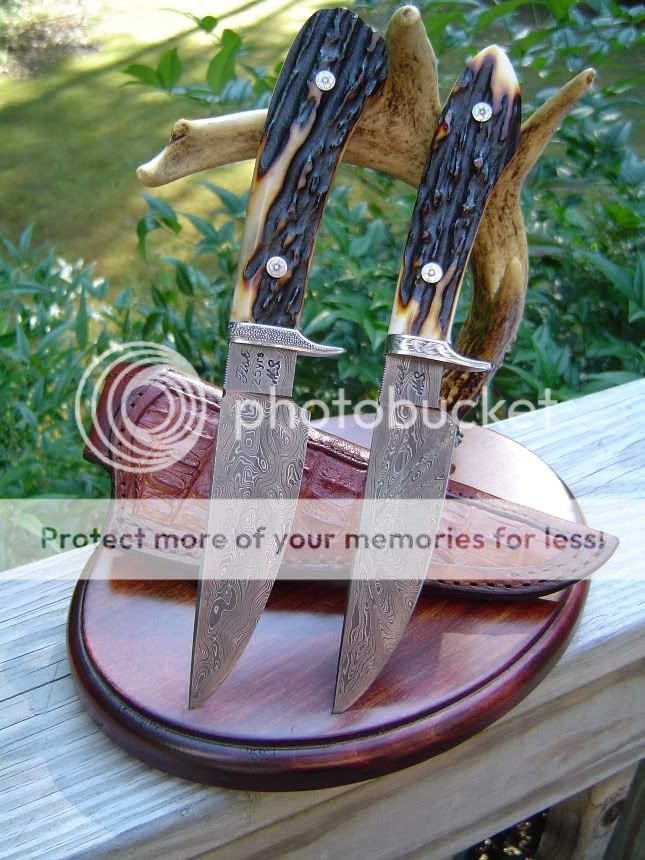
Terry Vandeventer
ABS MS
 
I've always felt the "A" side (left side of a knife being held in the right hand) which is usually the side maker's mark their knives and photographer's photograph knives to be the "Presentation Side".

I display all my knives and the "A" side or "Presentation Side" doesn't necessarily dictate the side it's displayed on. It can depend on whether I have a right or left hand display for it, or which side of a display cabinet I feel it looks best of just which side of the knife I like best.

027.jpg


014.jpg


010.jpg


Thanks to all for the information and opinions. Seems like there is a traditional thought on the subject, confirmed by Fisk himself, left side is the presentation side on most knives. However, there is really no right or wrong answer as to which side is displayed. I see many of Kevin's knives are presented "backwards" but perhaps that says something about him more than his knives (or that he drinks Tequila while setting them up) :)

Is it true from a maker's perspective that, given a choice, the better looking material goes on the left (traditional presentation) side of the knife? Seems logical.
 
The left is only the presentation side if you cede to a right handed world. Going against convention is...inovation?
 
I agree there's nothing written in stone about what side should or should not hold the makers marks. BUT this is what I was told by a well known maker about 15 yrs. ago when I asked him this same question. He told me you want to leave a lasting impression as much and as often as you can when people see you work, especially when your doing knife shows where customers pick up and handle knife after knife from many different makers. If the knife is right or left handed, makers mark should be on the side facing the holder and be easily read or recognized to the holder. Kind of like a bill board, this way customers immediately puts knife and maker together without confusion and thats a good thing. Made sense to me and I've done it that way since. :)

Bill
 
...Kind of like a bill board, this way customers immediately puts knife and maker together without confusion and thats a good thing. Made sense to me and I've done it that way since. :)

Bill
Absolutely correct, if your knife is a commodity, but if it is art, do you want to distract from the design, the color, the beauty.?Some artisan knifemakers hide their name, or put it on the spine so you see the work, not the advertisement. Many collector have said one of the biggest turn offs are obtrusive maker's marks.
 
Absolutely correct, if your knife is a commodity, but if it is art, do you want to distract from the design, the color, the beauty.?Some artisan knifemakers hide their name, or put it on the spine so you see the work, not the advertisement. Many collector have said one of the biggest turn offs are obtrusive maker's marks.

Interesting, so your saying that anyone that marks a blade anywhere but on the spine or in a hidden area is doing it wrong, cool. This is what I think, I wouldn't buy a custom anything without a visible makers mark. A mark doesn't have to be gawdy, overwhelming or obtrusive to show who the maker is, nor does it have to be on the spine or in a hidden area or else it distracts from the beauty. But then again thats just my opinion. If you prefer all your customs to only be marked on the spine or in a hidden area thats OK with me, we all have our own likes and dislikes and I totally respect that.

Bill
 
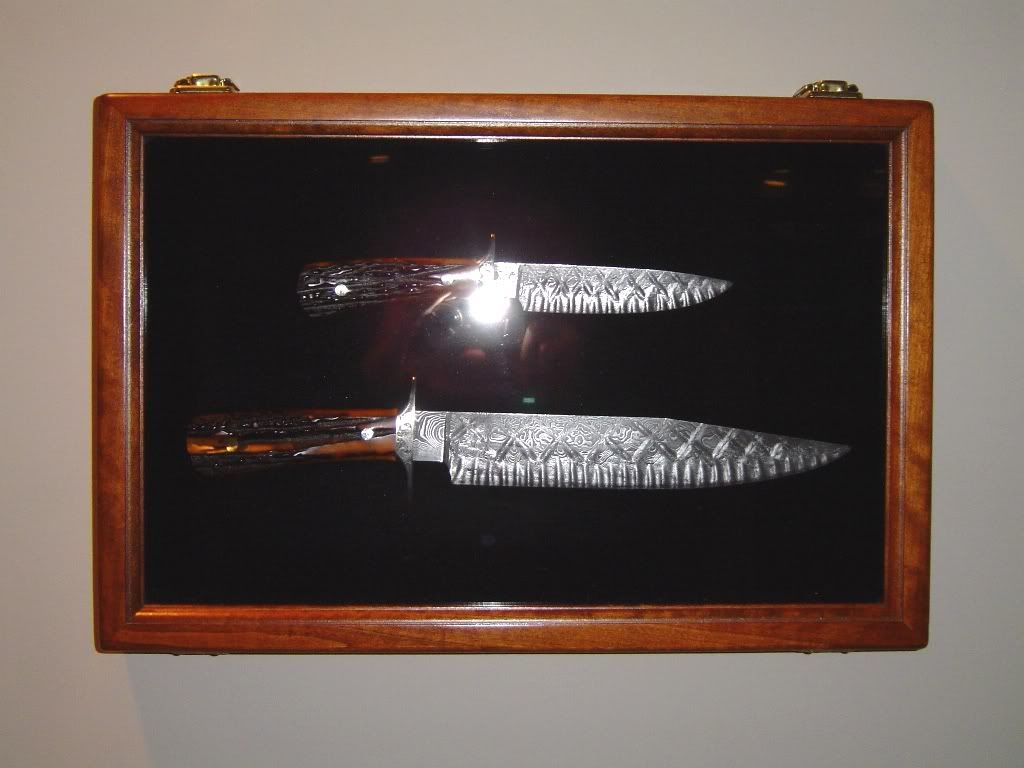
Todd did some old knives on top, hard to see, but all five are stamped that way.
g_1.jpg


His standard mark side.

10557464_10203382685661494_6973688945004662426_n.jpg


But has done some for left handers, hey - it was custom made......:rolleyes::D

1480704_10202226042546139_744167794_n.jpg
 
Last edited:
To me it depends on the maker's style. Personally, I do not like big marks. I don't care what side it is on, just so it looks "good" to me and that usually means unobtrusive. I have a Boye and Muller where the knife is signed, to me this is OK for me. Signing is in the tradition of 20th century art just like Al Mar's chop is traditional. Boye signed on the "right side", Muller on the "wrong side." Both are fine. Terzuola puts a big mark in the center of the blade, but I've been to Mayan country and find his mark cool. His other mark is always on the clip, even on some of his factory designs. I think a maker should find what works best for their style, and that may not be "convention."

Chris Reeve just puts a mark and "idaho made" on his knives, which for a production company you'd think they would want to "brand" it with their name. Different strokes...
 
I have enjoyed following this thread. Here is a twist on which side is marked. An old twist, maybe? Presentation side (obverse) markings may have been more standard 20+ years ago?

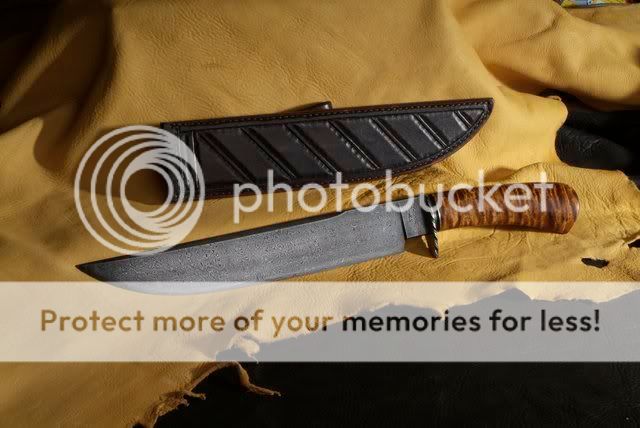
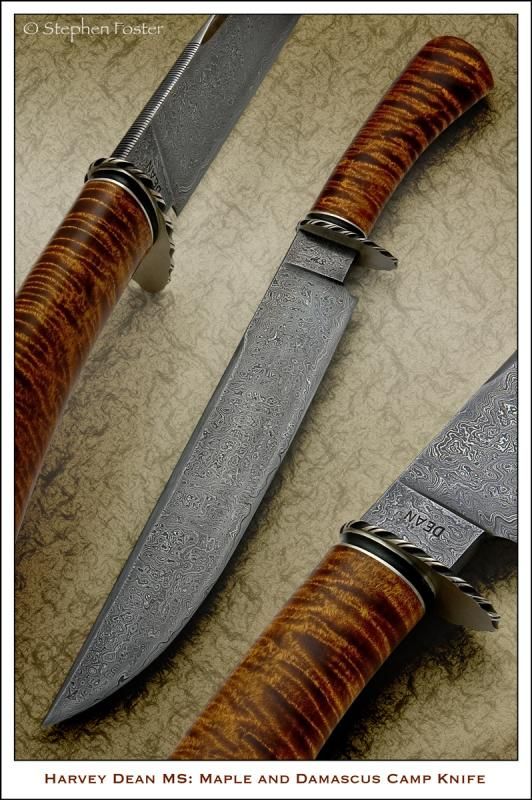
This pair of Dean camp knives was found in Weyer's 'Points of Interest Book IV', published in December of 1993. I was able to acquire the carbon steel piece some time ago (6 or 7 years?), and also knew who had the Damascus piece. I was able to purchase it from Stephen (his professional image) a few years later, getting the pair back together. It was my understanding when 'twins' like this were paired together, the maker would mark on the reverse side, to indicate another 'twin' knife if they were separated. Harvey does mark his fixed blades on the obverse side, normally, so maybe this was the case? And, these have his JS and MS stamp on the presentation side. (Carbon steel is JS, Damascus is MS).

I have had these together for some time, now. May be time to get a good professional photo of them together again.

Almostmine-is.jpg


Almostmine.jpg


HarveyDeanCamp1_zpsfddefa29.jpg


Hope somebody has information to share on this aspect of maker's mark placement.

- Joe
 
Last edited:
Back
Top