
-
The BladeForums.com 2024 Traditional Knife is available! Price is $250 ea (shipped within CONUS).
Order here: https://www.bladeforums.com/help/2024-traditional/
You are using an out of date browser. It may not display this or other websites correctly.
You should upgrade or use an alternative browser.
You should upgrade or use an alternative browser.
Preventing Water Damage To Scandi Knife
- Thread starter ikuyadas
- Start date

- Joined
- Apr 12, 2009
- Messages
- 13,537
I've seen a tip here on BF, for 'water-proofing' the pivot on Opinel folders (all-wood handles). It involves, at a minimum, using some petroleum jelly (Vaseline) to pack into, and seal the pivot. Other measures might involve using some wood sealer/varnish, like urethane or something similar, to seal the end-grain (do this before using the Vaseline). Doing something like either or both of these methods might work for your Puukko's handle. Whichever method you use, make sure it's completely dry before you start.
I've seen a tip here on BF, for 'water-proofing' the pivot on Opinel folders (all-wood handles). It involves, at a minimum, using some petroleum jelly (Vaseline) to pack into, and seal the pivot. Other measures might involve using some wood sealer/varnish, like urethane or something similar, to seal the end-grain (do this before using the Vaseline). Doing something like either or both of these methods might work for your Puukko's handle. Whichever method you use, make sure it's completely dry before you start.
Vaseline is in my house and Aron Alpha (Krazy Glue) is easy to get around here. I'll try former. Thank you very much!!

- Joined
- Jun 4, 2010
- Messages
- 6,642
I use a chunk of normal canning wax or paraffin, just press it hard into the joint and it seals it pretty good. I also rub some on my carbon steel blades from time to time and buff it in with a rag or the leg of my jeans.
HH
HH
Maintenance HELP please!!
How do you prevent water soaking into a bolster with your puukkos?
When you say "soaking into a bolster", do you mean where the blade enters the bolster? Vaseline isn't going to help you with that.
- Joined
- Apr 12, 2009
- Messages
- 13,537
When you say "soaking into a bolster", do you mean where the blade enters the bolster? Vaseline isn't going to help you with that.
This has been an effective method with Opinel users for a while. If the (wood) handle is dry, it'll soak up moisture. The Vaseline is a simple way to seal the surface, enough to minimize the absorption of water into the wood, at the point where the blade enters the handle.
Saying that it won't help is meaningless, especially considering you've offered nothing useful as to what you think will help. Come up with a better idea, feel free to share it.

DavidZ
Gold Member
- Joined
- Oct 30, 2004
- Messages
- 4,278
Maintenance HELP please!!
How do you prevent water soaking into a bolster with your puukkos?
Do you mean into the handle, or around the bolster? The bolster is metal, and water should not soak in there. Anyway, I have had luck with boiled linseed oil. Apply, let dry and buff. Can be easily re-applied if required later. Make sure all id dry before you start. Also, make sure it is BOILED linseed oil. Otherwise it will not dry!
For my Moras, as someone else suggested, I took them apart, filled with epoxy, then re-assembled. If you can't do that, you might think about squirting epoxy down into the knife as far as you can. Some of my Moras were pretty rusty under the handle, I had to clean them up on a belt sander.
Sorry everyone for my poor English.
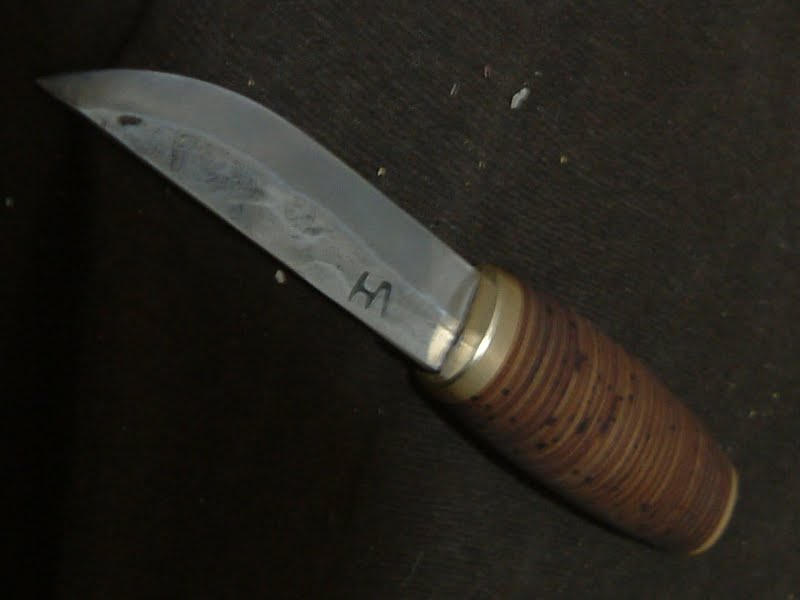
My problem is that rust was happened around the bolster of the blade, probably because of water whetstone sharpening.
I was afraid that water might invade inside of the handle from the gap between blade and bolster.
Its tang looks difficult to be disassembled.
Now these are what I did;
1. joint sealing: Vaseline with hair drier, then paraffin by nail pressing
2. remove rusts: #2000 sandpaper
3. handle: tea seed oil

Thanks for kind suggestions. I'll apply linseed oil to the handle.
My problem is that rust was happened around the bolster of the blade, probably because of water whetstone sharpening.
I was afraid that water might invade inside of the handle from the gap between blade and bolster.
Its tang looks difficult to be disassembled.
Now these are what I did;
1. joint sealing: Vaseline with hair drier, then paraffin by nail pressing
2. remove rusts: #2000 sandpaper
3. handle: tea seed oil
Thanks for kind suggestions. I'll apply linseed oil to the handle.

- Joined
- Sep 15, 2002
- Messages
- 10,317
Vaikko Hakkarainen, the man who made your knife just recommends to rub the handle with some mineral oil occasionally and to not leave it out wet after use.
Personally, I do not recommend linseed oil for birchbark because it dries to a hard shell, which is good for wood but ruins the feel of that nice pliable birchbark.
Personally, I do not recommend linseed oil for birchbark because it dries to a hard shell, which is good for wood but ruins the feel of that nice pliable birchbark.
Vaikko Hakkarainen, the man who made your knife just recommends to rub the handle with some mineral oil occasionally and to not leave it out wet after use.
Personally, I do not recommend linseed oil for birchbark because it dries to a hard shell, which is good for wood but ruins the feel of that nice pliable birchbark.
Appreciated!!!