Question: screws in handle (folder)

Jos

Joined
Oct 23, 2006
Messages
4,098
This is a knife made by Ondrej "Papi" Berkus:
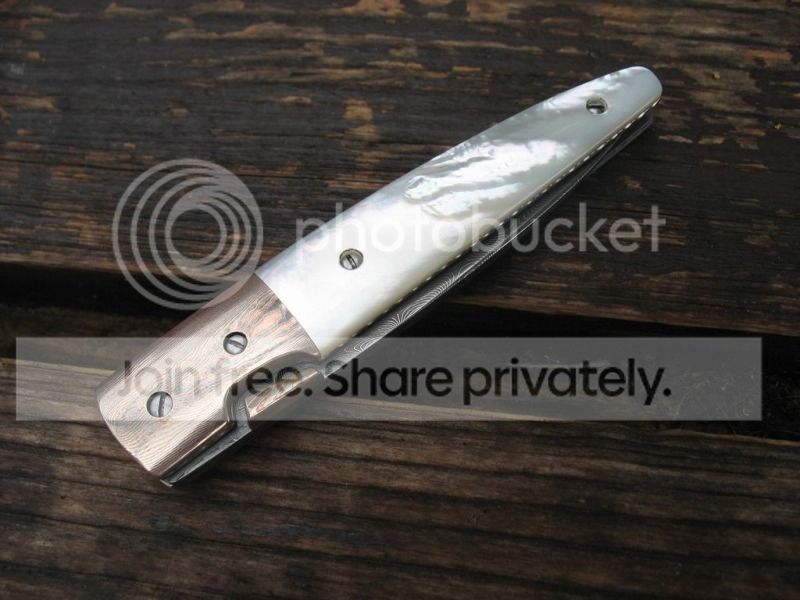
MOPPApiIMG_6571.jpg


Another example is this Rick Dunkerley folder:
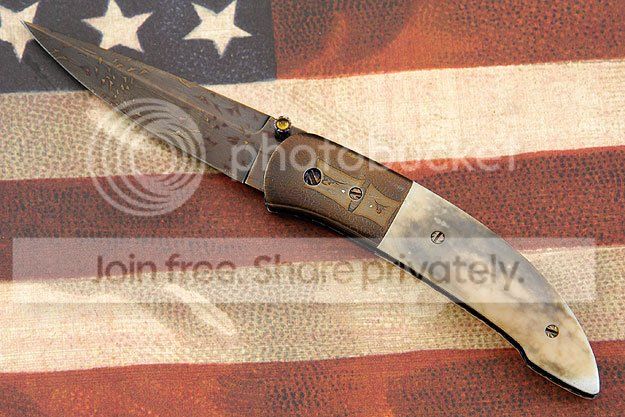
Dunkerleystandard.jpg


I'm using these as an example to illustrate my question. If you look at the screws in the bolster and handle, you see that the screws all point in a different direction.

Now the question: is there a way to have them pointing all in the same direction? And still having them all tightened the correct amount?

How would one achieve that?

Looking forward to your answers!

Kind regards,

Jos
 
Last edited:
you could add a washer under one of the screws heads - but that would also raise the screw head - but then you could file down the screw head to be even with the scale material - but then depending on how much you raise one of the screws you might have to cut the slot a little deeper to match the slot in the other screw head - & then if the screw head has been engraved you would have to have the screw head engraved again - then apply the same finish on the screw that you worked on as is on the screw you left virgin - sometimes the really easy jobs are the hardest & you might have to make the washers or have them custom made - but it could be done - Tom
 
It's nearly impossible to make various screws in a folder wind up with the slots oriented the same. Just about any solution to get them all oriented the same, will create some other problem.
That's one of the reasons I use torx screws.
 
Simply drill the countersink a little deeper, until the screw heads line up.
 
As Bill points out, you can do it by drilling th holes a tad at a time until all the screws seat the same. However, with repeated removal and tightening causing wear of the seat, the position may slowly turn clockwise.Once a screw is past the point you want, it has to be made to turn 1/2 turn to come back into position. If the screw is ,for example, a 2-56 pitch, this type of adjustment will result in the screw lowering in its hole by .010". That is not much in some cases, but can be a big problem with flush sanded screws.

Thus, screws like Torx, and decorative multi-hole spanner types are the way to have all holes align easier.
 
I used to exclusively use slotted screws. A big advantage is that you can't strip them out and in the field you could make a makeshift screwdriver if you needed to take the knife apart.

There is another way that has not been mentioned. Leave the screw full length, say 1/4. Tighten the screw with the head exposed a little and grind the slot off. Mark the position for the new slot with a sharpie. Then use some pliers to loosen the screw by gently grabbing the exposed threads. File your new slot and your good to go. The only problem is if you mix up the screws.
 
I used to exclusively use slotted screws. A big advantage is that you can't strip them out and in the field you could make a makeshift screwdriver if you needed to take the knife apart.

There is another way that has not been mentioned. Leave the screw full length, say 1/4. Tighten the screw with the head exposed a little and grind the slot off. Mark the position for the new slot with a sharpie. Then use some pliers to loosen the screw by gently grabbing the exposed threads. File your new slot and your good to go. The only problem is if you mix up the screws.
I always liked slotted screws also - problem he has Chuck - one of the knives has engraved screw heads - I have done heads like you - I didn't engrave any of the heads I fired blued them - tom
 
Back
Top