- Joined
- Jul 15, 1999
- Messages
- 541
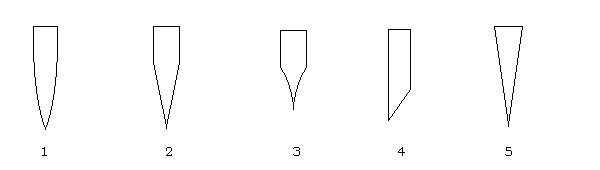
I would like to get some clarification on the terminology about how a blade is ground. In the past, my assumption was that a chisel grind was (usually) a tanto styled blade, that was flat on one side, and the creation of any bevels/sharpened edges was don from the other side only (or is this called a "flat" grind?)
What is it called when a blade's edge is sharpened equally from either side?
As a long time lurker, I would like to express my interest and appreciation for this forum, and my embarrassment about this question (but I'm REALLY confused, and the answers will reflect on a second posting that I will be making about an unsatisfactory knife that I recently purchased.)
Thanks to all!
What is it called when a blade's edge is sharpened equally from either side?
As a long time lurker, I would like to express my interest and appreciation for this forum, and my embarrassment about this question (but I'm REALLY confused, and the answers will reflect on a second posting that I will be making about an unsatisfactory knife that I recently purchased.)
Thanks to all!