Welcome to Shop talk
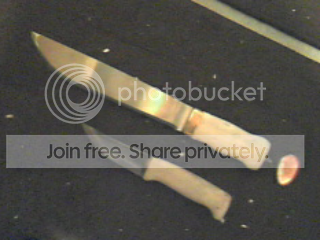
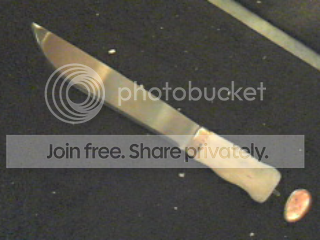
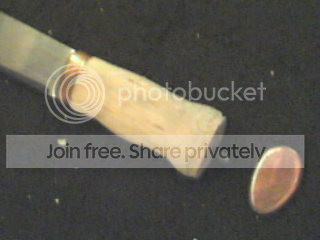
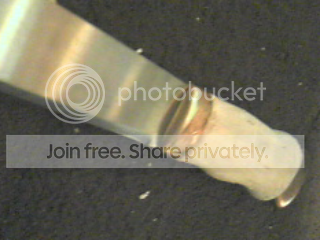
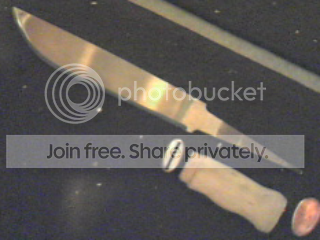
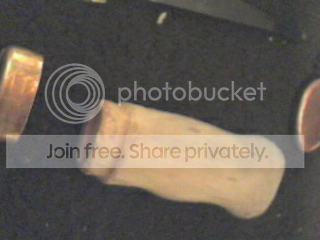
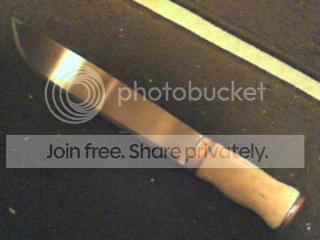
Stabilized wood is more water resistant & some will still give it a final finish with CA glue or Tru-oil
I say you should wear a respirator for ANY sanding work, not just stabilized.
I've put together a list of links and info, the safety info at the end is especially useful to you.
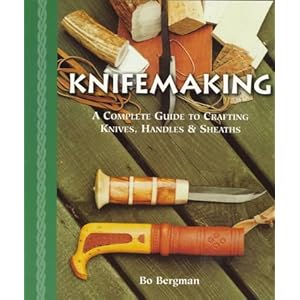
One book that is not in this list is
http://www.amazon.com/Knifemaking-Complete-Crafting-Handles-Sheaths/dp/188737437X
I've put this together to answer most of a new makers questions. I'm sure it will help you too.
The Standard Reply to New Knifemakers V18
The answer to a 13 year old student is different than to a 40 year old engineer.
We may recommend a local supplier, you may have a helpful neighbour, or local Hammerin; but that depends on where you are. We have members worldwide.
Please fill out your profile with your location (Country, State, City), age, education, employment, hobbies.
Look at the threads stickied at the top; many are expired, but not all.
The basic process in the simplest terms
Absolute Cheapskate Way to Start Making Knives-Printable PDF-Right Click and Save
Absolute Cheapskate Way to Start Making Knives-Website
Web Tutorials
Detailed instructions by Stacy E. Apelt
The Things I Advise New Knife Makers Against-Printable PDF
Handle Tutorial - Nick Wheeler-PDF
http://www.engnath.com/manframe.htm
Books
A list of books and videos
BladeForums - E-books or Google books
I like:
David Boye-Step by Step Knifemaking
Tim McCreight-Custom Knifemaking: 10 Projects from a Master Craftsman
These are clear, well organized, widely available and inexpensive too.
Knife Design:
Think thin. A paring knife slices, an axe splits.
Forget swords, Saw-tooth spines, guthooks, crazy grinds and folders for your first knife.
Start with a drawing.
Show it to us, we love to see and comment on photos.
Then make a cardboard cutout template & draw in handles, pins and such
Then make it in wood, paint sticks are free & close to the right size.
Play with that and see if it feels right. If it feels right it usually looks right
See the Google books thread for Lloyd Harding drawings, the Loveless book & Bob Engnath Patterns.
Google books thread
Bob Engnath Patterns compiled into a PDF
Forging Books:
Lorelei Sims-The Backyard Blacksmith
An excellent modern book with colour photos for forging in general - no knifemaking.
Jim Hrisoulas- has 3 books on forging knives. Check for the cheaper paperback editions.
The Complete Bladesmith: Forging Your Way to Perfection
The Pattern-Welded Blade: Artistry in Iron
The Master Bladesmith: Advanced Studies in Steel
Machine Shop Basics -Books:
Elementary Machine Shop Practice-Printable PDF
The Complete Practical Machinist-Printable -1885-PDF
Right Click and save link as.
Its being reprinted now; you can get it for $20 ish
The $50 knife Shop
It confused me for a long time.
Forging is NOT necessary; you can just file and grind to create a knife (stock removal)
Forget the Goop Quench.
Use commercial quench oil & match oil speed to the steel type; even grocery store canola oil works much better.
Junkyard steels require skill and experience to identify the steel and heat treat it properly.
You can buy proper steel like 1084FG from Aldo very cheaply.
I like cable damascus, but that advanced project has no place in a beginners book.
The grinders are the best thing about this book, but there is a huge amount of info for 2x72 belt grinders on the web, including free plans.
Forget about Lawnmower blades and start with a new known steel type.
Good heat treating needs accurate temperature control and full quench.
Videos
Heat Treating Basics Video-downloadable
Right click and save this. Watch it once a day for 10 days.
Safety-video
Right click and save this. Watch it once a day for 10 days.
Many specific how to knifemaking videos are available, some are better than others.
The best overall Knifemaking video I have seen is
Steve Johnson-Making a Sub-Hilt Fighter
Basic Bladesmithing
"Ed Caffrey - Basic Bladesmithing-Full DVD-ISO"
The best video on leather sheath making for beginners that I have seen is
Custom Knife Sheaths -Chuck Burrows - Wild Rose
-(Paul Long has 2 videos, his sheath work & videos are fantastic, but more advanced-with machine stitchers..)
Green Pete's Free Video
Making a Mora bushcraft knife, stock removal, hand tools, neo tribal / unplugged heat treat.
"Green Pete" posted it free using torrent files.
Be sure to look at the other titles too-The account index has disappeared, but search for LOTS of info. Use the keywords LurkerLurker torrent knifemakerC torrent and others
Greenpete Knifemaking Basics-on TPB
How to download that video
http://www.utorrent.com/help/guides/beginners-guide
You can see a list of videos and reviews at this rental company; some are worth buying, some renting
http://smartflix.com/store/category/9/Knifemaking
Draw Filing Demonstration
YouTube video -Draw Filing-for a flat finish
Steel
The welding steel at Home Depot / Lowes
is useless for knives.
If you send out for heat treating, you can use
Oil quenched O1, A2,
Or air quenched CM154, ATS34, CPM154, 440C, plus many others.
If you want to heat treat yourself with minimal equipment, find some Eutectoid steel.
1084FG sold by Aldo Bruno is formulated for Knifemaking, Cheapest & made for DIY heat-treat.
http://njsteelbaron.com/
Phone # 862-203-8160
1095 is a good carbon steel, but a bad choice for a beginner with limited equipment.
1095 needs very precise temperature control and proper fast quench oil Like Parks 50 or Houghton K
Kevin Cashen - 1095 - hypereutectoid steel
You can find a list of suppliers here
Heat Treating
http://www.bladeforums.com/forums/showpost.php?p=9143684&postcount=7
You can send blades out for heat treating at $10 or $15 per blade for perfect results, and avoid buying the equipment.
Air Hardening Stainless Steel Only
Buck Pau Bos -Be sure to check the Shipping and Price tabs.
http://www.buckknives.com/index.cfm?event=bio.paulBos#
http://www.texasknife.com/vcom/privacy.php#services
Oil Hardening Carbon Steels and Air Hardening Stainless Steel
http://www.petersheattreat.com/cutlery.html
http://www.knifemaker.ca/ (Canadian)
Grinder / Tools
In my opinion, variable speed and a small wheel attachment are essential .
You can almost always improve tracking with more belt tension. It needs to be way tighter than youfirst think.
Hand Tools
You can do it all by hand with files and abrasive cloth like the Green Pete video.
Photo of a nice bevel filing jig
Entry Level Grinders
Many makers start with the
Sears Craftsman 2x42 belt grinder
Low Speed Modification Craftsman 2x42 belt grinder
Commercial Production 2 x 72 Belt Grinder Reviews
http://www.prometheanknives.com/shop-techniques-3/grinders
http://www.cnccookbook.com/CCKnifeMakingGrinders.htm
Mapp arm Grinder Toolrest
DIY 2 x 72 Belt Grinders
KMG Clone Free Plans
http://www.dfoggknives.com/PDF/GrinderPlans.pdf
NWG No Weld Grinder
http://www.usaknifemaker.com/plans-for-the-no-weld-grinder-sander-nearly-50-pages-p-723.html
EERF Grinder (EERF =Free backwards)
http://wilmontgrinders.com/EERFGrinder.aspx
http://blindhogg.com/blueprints.html
Buy the kit
http://polarbearforge.com/grinder_kit.html
What Belts to buy?
http://www.usaknifemaker.com/abrasive-belt-basics-what-kind-should-i-buy-p-1393.html
Safety Equipment
Protect your -Eyes, Ears, Fingers, and Lungs remove jewellery and put on safety gear.
Respirators
Chronic lung disease and cancer really suck the joy out of life.
The minimum I would consider are the
3M 7500 and
North 7700 silicone half masks with a P100 Filter.
Use a VOC & P100 combo cartridge for protection against acetone and solvents.
http://www.bladeforums.com/forums/showthread.php?t=788837
http://www.bladeforums.com/forums/showthread.php?t=726309
Searching
Search works for ALL users, even unpaid users.
Try it, Ill bet youre not the first to ask the question here
This is a special Google page that searches BF only.
http://www.google.com/cse/home?cx=011197018607028182644%3Aqfobr3dlcra
V18 Edited links August 25, 2011.