A:
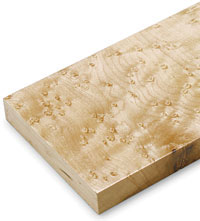
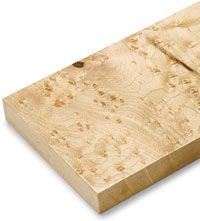
The lightest finish for bird’s-eye maple — one that will contrast nicely with darker woods — is colorless, avoids the darkening effect you get with most finishes on light woods, will not yellow over time, and will keep the maple itself from yellowing, which occurs when the wood is exposed to air and oxygen.
There are three options to choose from. I recommend an acrylic finish, and you can go two routes:
This has both the advantage of being colorless when dry and, due to the coalescing nature of the way it forms a film, of keeping the finish resin on the surface of the wood.
This route leads to the slightest deepening effect from the wetting-out of the cellulose. Applied by spraying, brushing or wiping, this finish looks like plain sanded maple. To pop the grain a bit, first wipe the maple with an ultrapale shellac sealer.
The CAB stands for cellulose acetate butyrate. This will give you more wetting-out of the cellulose and hence more figure. The finish will be just a touch darker than the aforementioned choice. Also, you must apply this type of finish by spraying.
You also could try an amino-alkyd or vinyl conversion varnish. This finish requires careful preparation and application because it’s sprayed. But it’s tough as nails once it cures. Avoid conversion lacquer, which is the amino-alkyd resin with nitrocellulose added. Nitrocellulose will yellow significantly over time.
A final option is a dewaxed colorless shellac. Ultrapale and super blonde will have just a hint of color, while bleached shellac has virtually no color. All will deepen the color of the wood but won’t provide any UV protection. Of all of these, I prefer to use an acrylic finish on maple. An acrylic is not only colorless, but it also has a natural screening effect for blocking UV light, which yellows maple.
A water-based acrylic is easy to apply and remains clear over time, but it brings little depth to the grain A solvent-based acrylic pops the figure but needs to be sprayed. While a shellac will give a good finish now, it offers no UV protection, so the wood and finish may yellow.