

- Joined
- Nov 27, 2004
- Messages
- 3,124
Hello all,
At the beginning of August, I had the pleasure of spending almost two weeks on a canoe trip on Murtle Lake, in British Columbias beautiful Wells Gray Provincial Park. It was a once-in-a-lifetime experience, and I can only hope that it always remains as vivid in my memory as it is today. My father and I worked to ensure that our schedules would permit us to take this trip together this summer, which was no small feat but since this was to be our first wilderness outing together (after many on our own), it was worth the extra work. I could write for hours on end about the trip, the mountains, the fishing, the bears(!), and the northern lights, but Ill try to focus on some subjects of relevance to this particular forum.
Ill start by sketching a brief outline of the trip to contextualize things.
Murtle Lake is Wells Grays largest, at about 57 square kilometres. Wells Gray Park itself is in east-central BC, 137 km north of Kamloops, 410 km northeast of Vancouver. Its a huge park (BCs fourth largest), encompassing over 1.3 million acres. Murtle Lake is located to the east of the park, and it is accessible only after a long drive along logging roads and a 40 min. portage. It is a canoe / kayak only lake, apparently North Americas largest. No motorized vehicles are allowed, save for the small craft used by park rangers. This means that the lake is, at all times, blissfully silent and natural. It also means that you have to think carefully about your itinerary and about safety concerns, as paddling out under adverse circumstances could be quite challenging. Since the lake is ringed by mountains and dense forest (rainforest by classification, I believe), walking out would only be an option for the most experienced outdoorsmen, and I dont count myself in that category.
Murtle looks like an inverted L, with a short western arm (more popular with tourists due to its warmer waters, better fishing, and nicer beaches), and a long northern arm cutting up through some rugged mountains. We decided to spend our time in the northern arm, due to the more challenging paddling, the spectacular scenery, and the fact than everyone else was in the western arm. Both my father and I have outdoors experience, and we are strong canoeists.
We packed enough food to get us by during our time out, but planned to supplement meals with fresh fish (Murtle has some fantastic trout fishing). All of our gear had to fit in a single canoe without weighing things down too much, so we packed carefully. As a provincial park, Wells Gray has limitations on wood cutting and burning and we like to practice low impact camping anyways. Accordingly, we brought a small camp stove and several cylinders of white gas for cooking. No firearms are allowed in the park, and we adhered to this rule. Murtle Lake really is bear country, with both black bears and grizzlies around. They are not accustomed to people, and have been known to act aggressively (or at least with a degree of persistent curiosity). A teenaged grizzly decided to announce itself while we were sleeping at 11:30 at night, for example. Everything ended well for all involved, thankfully.
In addition to some decent paddling (sometimes over 20km / day), we did a fair bit of hiking and climbing, on maintained but difficult trails.
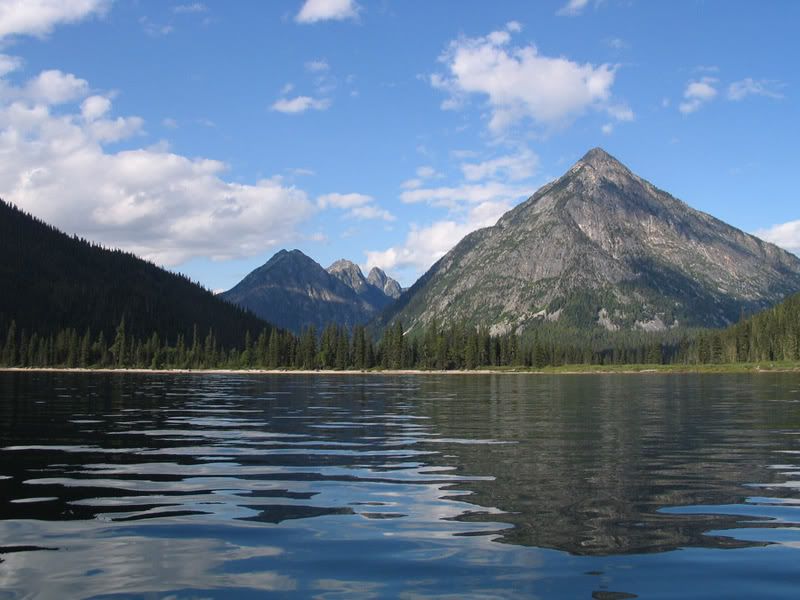
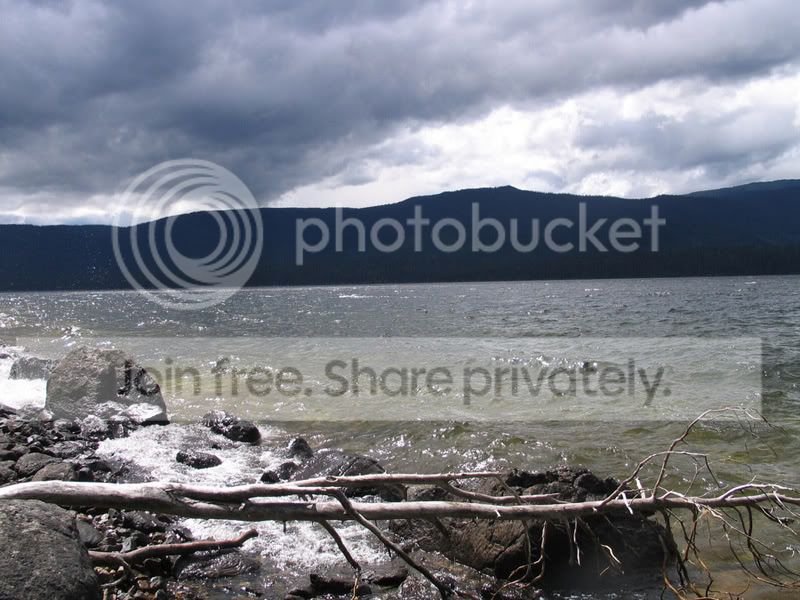
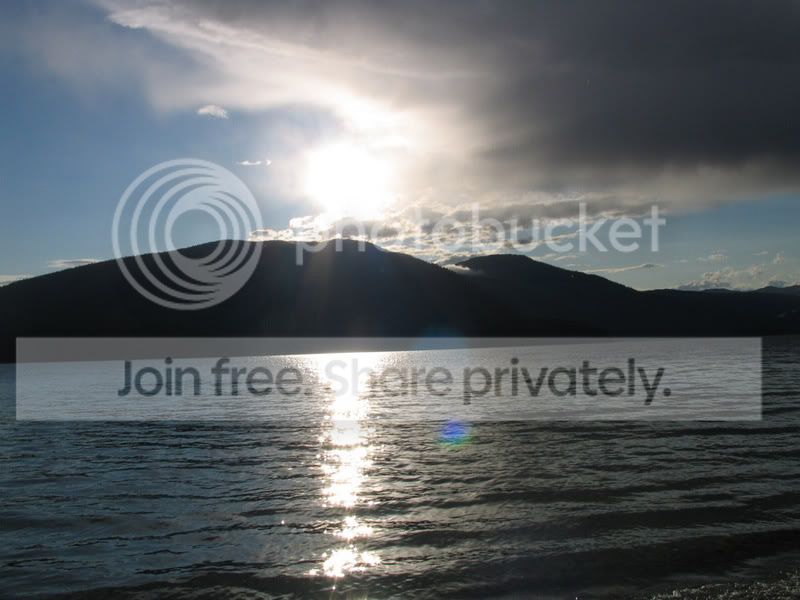
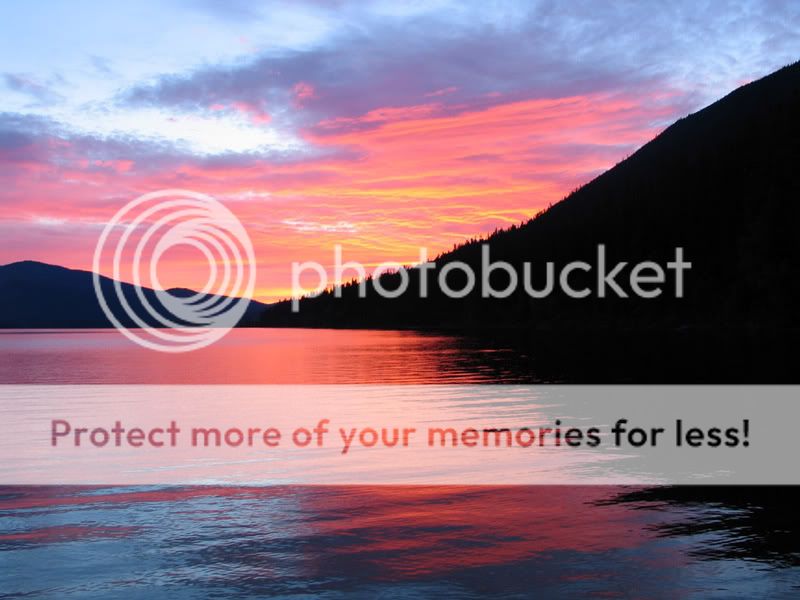
Below you can see a picture of the Northernmost tip of Murtle Lake. Breathtaking, eh?
Right, so thats a general outline. Bearing (pun intended) that in mind, I thought I would talk a bit about the gear I brought along, how it worked, and what I would modify for next time.
Before leaving, I talked a bit about my kit setup in this thread.
To recap, I based my kit around a Becker BK-9, with the sheath modified to include a large secondary pouch and a leg retention strap. In addition to this, I had my Becker Necker around my neck at all times. I chose the BK-9 for its size, durability, and chopping power. For smaller tasks, I had the necker, and a Leatherman Wave in my sheath kit. All things considered, this was close to a perfect setup, and I would use it again in a heartbeat. The sheath kit also contained a cylinder of wind and waterproof matches, an altoids mini-survival kit, a pencil, loads of paracord, two small rolls of tape (duct and survey, both wrapped around cardboard-backed sandpaper for emergency sharpening) and an allen key to remove the BK-9 handle scales (another mini-kit, with fishing supplies and some fire starting material was inside the scales). I wore my BK-9 at all times, save when I was sleeping.
In terms of performance:
The BK-9 did everything I asked it to extremely well. I did not find the weight obnoxious (reassuring actually), and the added leg strap meant that it didnt sit uncomfortably while I was paddling. I used the knife mostly for chopping and cutting wood, as we did make camp fires on a few nights (average temperature in the mountains at that time was about 4-5 C at night). The blade made short work of small dead branches and sticks, but where it really shone was in batoning through larger logs. The park rangers who maintain the camp sites around the lake leave a few large log sections around for firewood or sitting stools, and these logs are quite beefy. Note that the sites are little more than cleared areas near the shore, with bear caches. They are there as much to protect the park as to provide comfort for visitors, as the lake has in the past (in the 30s, I believe) suffered from irresponsible camping. Anyways, the BK-9 did a wonderful job of splitting logs; its blade is long enough to allow you to split off a reasonable chunk of wood without losing your batoning surface. It withstood a few hours worth of solid spine-whacking, with no concerns aside from some serious wear on the coating. The knife did not suffer any edge damage, and it sharpened up nicely after a bit of work with my pocket ceramic stone. The handle, which I was a bit ambivalent about, was actually quite comfortable. During lengthy baton-work, I wore my paddling glove to grip it, in order to better absorb the shock from the blows. The knife was also put to use fishing, as it was necessary to clean our catches out on the lake, so as to avoid any unnecessary fish scent near our camp. This required us to kill the fish, and the thick spine of the Becker made things quick and painless. Of course, we could have used a piece of wood or a rock, but its always nice to know that your EDC outdoors knife is a multi-tasker!
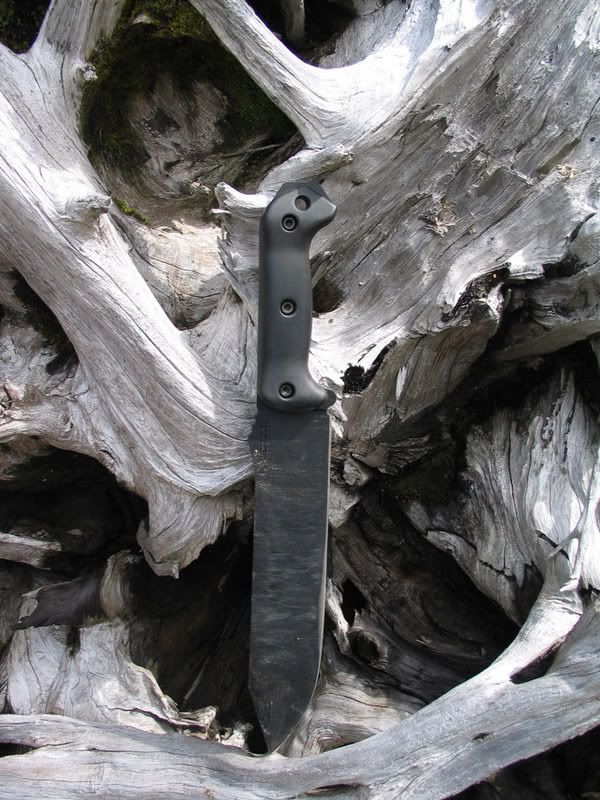
Below, you can see a shot of my BK-9 on some terrific driftwood.
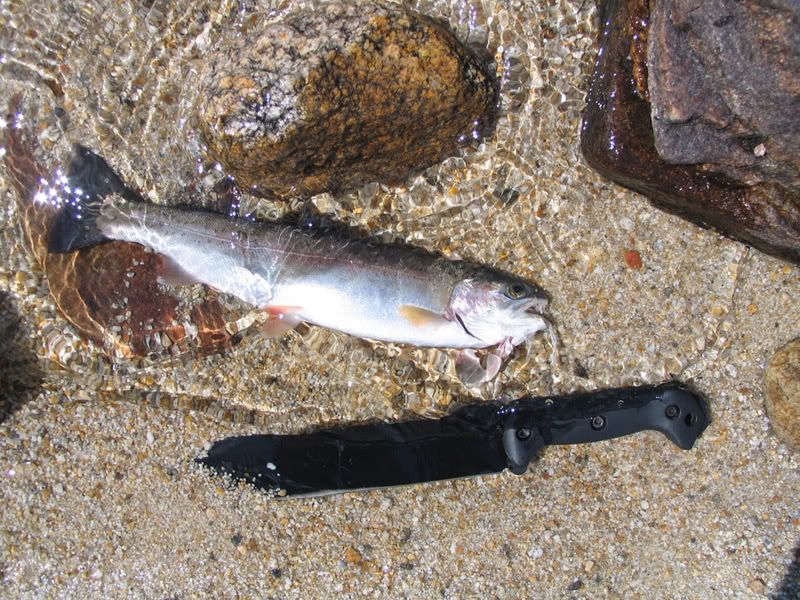
And here's a shot of my BK-9 beside lunch.
The Becker necker saw a fair bit of use in food preparation and odd jobs, where it didnt let me down (although I didnt exactly push it to the limit). One of the reasons I brought it along was to see if it would take the place of a comparably-sized folder, which I usually bring on my wilderness outings. In terms of cutting ability, there was no difference, and none expected. However, the necker seemed more accessible. This was particularly apparent while we were on the water, as I wear padded paddling gloves (think of a cross between a wetsuit and a biking glove), which are difficult to remove quickly and would have made accessing a clipped folder awkward. On those rare occasions where something had to be cut while we were paddling, I appreciated the ease with which I could draw, use, and replace the necker. I would definitely bring this knife along again, although I think I might experiment with a thinner blade in the future.
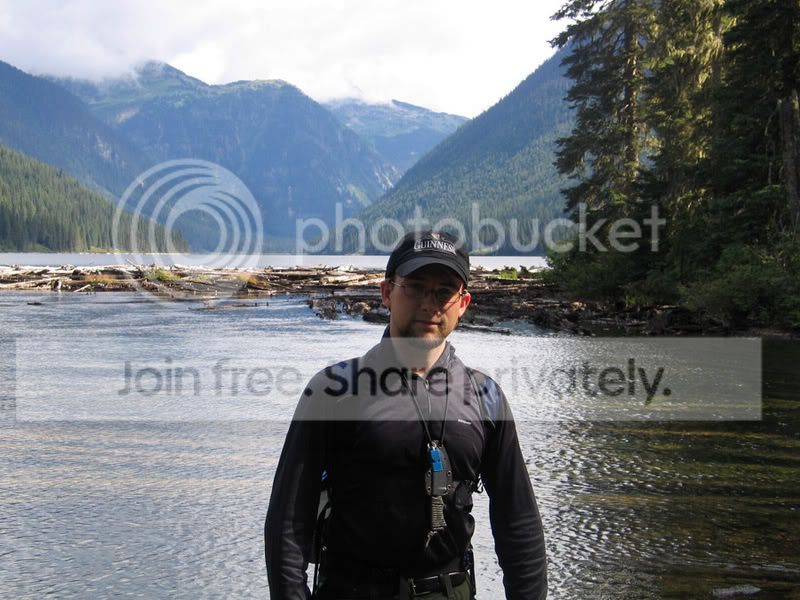
Below is a shot of me with my Becker Necker at Strait Lake, a 1/2 day hike from Murtle Lake.
The Wave did everything that the other two didnt, and between the three there were no insurmountable cutting challenges. The thin, sharp blade on the Wave was perfect for making fuzz sticks, whittling, and sharpening pencils (I write for a living and I couldnt by without a notebook and pencil, even in the woods!). The saw came in handy a few times, and the scissors allowed me to make the odd beard grooming. The pliers came in quite handy while we were fishing. I usually fish for bass, and I find that its rare when I catch one and need pliers to remove the hook before releasing it, given their large mouths; kokanee and the trout we were catching in Murtle, on the other hand, have smaller mouths and seem to really inhale their food. Pliers were a must, and the Leatherman did not disappoint. My only beef with this multitool is its tendency to accumulate rust spots, particularly in the inner workings. On several occasions, I used the tool while fishing, put it back in the sheath, and removed it while on shore later only to find rust spots. They were easy to wipe away, though, and I suppose Ill just have to be more methodical in my drying from now on. A SAK would have done all of the same tasks as well or better, except for those requiring pliers, so I feel the extra weight of the multitool was worth it.
As for other items of kit, Im pleased to say that nothing felt superfluous or wasted. I didnt use the survey tape, but I did require duct tape on a few occasions (once for an absolutely vital water bottle patch). The real MVP of my non-knife kit gear was the length of paracord I attached to my sheath with a small carabiner-style clip. I always throw a sizeable roll of cord in my hiking pack, but this time I made sure to keep some on my person, and to replenish it with fresh material after it was used. The clip allowed me to remove the cord from my sheath without worrying about untying it, which was convenient. I owe that role of cord (about 60 ft) for a few impromptu rain shelter frames, clotheslines, and gear tie-downs. It really came in handy on the way out of the lake. After canoeing through rough weather for about 10 km, portaging for 40 minutes, and loading all of our gear into the truck, we realized that the side tie-down straps for the canoe were actually IN one of our packs. Since everything was already packed up, I said to hell with it, and simply tied the canoe to the rack with healthy amounts of paracord. Between this and a spirited Newfoundland roof rack, we managed to keep on-schedule.
What will I change next time? Well, Ill probably keep the BK-9 as the core of my system, but I can see the merits of a different neck knife, geared towards slicing. I have a few Gentlemans Companion kits from knifekits.com that might make good neck knives with a bit of modification, so I might look into that option. In terms of kit gear, and bearing in mind that its only possible to carry so much in a leg sheath, I will definitely make a few additions, first and foremost a lighter. While I always had a lighter in my left pocket, I kept wondering how I would get by with just the matches if I happened to get lost and lose it. I will also work on adding my pocket spyderstone to the kit somehow, perhaps in a small pouch outside the main sheath.
Thats about it for now. I welcome any questions, comments, or feedback on my setup. I hope that this was of interest!
All the best,
- Mike
At the beginning of August, I had the pleasure of spending almost two weeks on a canoe trip on Murtle Lake, in British Columbias beautiful Wells Gray Provincial Park. It was a once-in-a-lifetime experience, and I can only hope that it always remains as vivid in my memory as it is today. My father and I worked to ensure that our schedules would permit us to take this trip together this summer, which was no small feat but since this was to be our first wilderness outing together (after many on our own), it was worth the extra work. I could write for hours on end about the trip, the mountains, the fishing, the bears(!), and the northern lights, but Ill try to focus on some subjects of relevance to this particular forum.
Ill start by sketching a brief outline of the trip to contextualize things.
Murtle Lake is Wells Grays largest, at about 57 square kilometres. Wells Gray Park itself is in east-central BC, 137 km north of Kamloops, 410 km northeast of Vancouver. Its a huge park (BCs fourth largest), encompassing over 1.3 million acres. Murtle Lake is located to the east of the park, and it is accessible only after a long drive along logging roads and a 40 min. portage. It is a canoe / kayak only lake, apparently North Americas largest. No motorized vehicles are allowed, save for the small craft used by park rangers. This means that the lake is, at all times, blissfully silent and natural. It also means that you have to think carefully about your itinerary and about safety concerns, as paddling out under adverse circumstances could be quite challenging. Since the lake is ringed by mountains and dense forest (rainforest by classification, I believe), walking out would only be an option for the most experienced outdoorsmen, and I dont count myself in that category.
Murtle looks like an inverted L, with a short western arm (more popular with tourists due to its warmer waters, better fishing, and nicer beaches), and a long northern arm cutting up through some rugged mountains. We decided to spend our time in the northern arm, due to the more challenging paddling, the spectacular scenery, and the fact than everyone else was in the western arm. Both my father and I have outdoors experience, and we are strong canoeists.
We packed enough food to get us by during our time out, but planned to supplement meals with fresh fish (Murtle has some fantastic trout fishing). All of our gear had to fit in a single canoe without weighing things down too much, so we packed carefully. As a provincial park, Wells Gray has limitations on wood cutting and burning and we like to practice low impact camping anyways. Accordingly, we brought a small camp stove and several cylinders of white gas for cooking. No firearms are allowed in the park, and we adhered to this rule. Murtle Lake really is bear country, with both black bears and grizzlies around. They are not accustomed to people, and have been known to act aggressively (or at least with a degree of persistent curiosity). A teenaged grizzly decided to announce itself while we were sleeping at 11:30 at night, for example. Everything ended well for all involved, thankfully.
In addition to some decent paddling (sometimes over 20km / day), we did a fair bit of hiking and climbing, on maintained but difficult trails.
Below you can see a picture of the Northernmost tip of Murtle Lake. Breathtaking, eh?
Right, so thats a general outline. Bearing (pun intended) that in mind, I thought I would talk a bit about the gear I brought along, how it worked, and what I would modify for next time.
Before leaving, I talked a bit about my kit setup in this thread.
To recap, I based my kit around a Becker BK-9, with the sheath modified to include a large secondary pouch and a leg retention strap. In addition to this, I had my Becker Necker around my neck at all times. I chose the BK-9 for its size, durability, and chopping power. For smaller tasks, I had the necker, and a Leatherman Wave in my sheath kit. All things considered, this was close to a perfect setup, and I would use it again in a heartbeat. The sheath kit also contained a cylinder of wind and waterproof matches, an altoids mini-survival kit, a pencil, loads of paracord, two small rolls of tape (duct and survey, both wrapped around cardboard-backed sandpaper for emergency sharpening) and an allen key to remove the BK-9 handle scales (another mini-kit, with fishing supplies and some fire starting material was inside the scales). I wore my BK-9 at all times, save when I was sleeping.
In terms of performance:
The BK-9 did everything I asked it to extremely well. I did not find the weight obnoxious (reassuring actually), and the added leg strap meant that it didnt sit uncomfortably while I was paddling. I used the knife mostly for chopping and cutting wood, as we did make camp fires on a few nights (average temperature in the mountains at that time was about 4-5 C at night). The blade made short work of small dead branches and sticks, but where it really shone was in batoning through larger logs. The park rangers who maintain the camp sites around the lake leave a few large log sections around for firewood or sitting stools, and these logs are quite beefy. Note that the sites are little more than cleared areas near the shore, with bear caches. They are there as much to protect the park as to provide comfort for visitors, as the lake has in the past (in the 30s, I believe) suffered from irresponsible camping. Anyways, the BK-9 did a wonderful job of splitting logs; its blade is long enough to allow you to split off a reasonable chunk of wood without losing your batoning surface. It withstood a few hours worth of solid spine-whacking, with no concerns aside from some serious wear on the coating. The knife did not suffer any edge damage, and it sharpened up nicely after a bit of work with my pocket ceramic stone. The handle, which I was a bit ambivalent about, was actually quite comfortable. During lengthy baton-work, I wore my paddling glove to grip it, in order to better absorb the shock from the blows. The knife was also put to use fishing, as it was necessary to clean our catches out on the lake, so as to avoid any unnecessary fish scent near our camp. This required us to kill the fish, and the thick spine of the Becker made things quick and painless. Of course, we could have used a piece of wood or a rock, but its always nice to know that your EDC outdoors knife is a multi-tasker!
Below, you can see a shot of my BK-9 on some terrific driftwood.
And here's a shot of my BK-9 beside lunch.
The Becker necker saw a fair bit of use in food preparation and odd jobs, where it didnt let me down (although I didnt exactly push it to the limit). One of the reasons I brought it along was to see if it would take the place of a comparably-sized folder, which I usually bring on my wilderness outings. In terms of cutting ability, there was no difference, and none expected. However, the necker seemed more accessible. This was particularly apparent while we were on the water, as I wear padded paddling gloves (think of a cross between a wetsuit and a biking glove), which are difficult to remove quickly and would have made accessing a clipped folder awkward. On those rare occasions where something had to be cut while we were paddling, I appreciated the ease with which I could draw, use, and replace the necker. I would definitely bring this knife along again, although I think I might experiment with a thinner blade in the future.
Below is a shot of me with my Becker Necker at Strait Lake, a 1/2 day hike from Murtle Lake.
The Wave did everything that the other two didnt, and between the three there were no insurmountable cutting challenges. The thin, sharp blade on the Wave was perfect for making fuzz sticks, whittling, and sharpening pencils (I write for a living and I couldnt by without a notebook and pencil, even in the woods!). The saw came in handy a few times, and the scissors allowed me to make the odd beard grooming. The pliers came in quite handy while we were fishing. I usually fish for bass, and I find that its rare when I catch one and need pliers to remove the hook before releasing it, given their large mouths; kokanee and the trout we were catching in Murtle, on the other hand, have smaller mouths and seem to really inhale their food. Pliers were a must, and the Leatherman did not disappoint. My only beef with this multitool is its tendency to accumulate rust spots, particularly in the inner workings. On several occasions, I used the tool while fishing, put it back in the sheath, and removed it while on shore later only to find rust spots. They were easy to wipe away, though, and I suppose Ill just have to be more methodical in my drying from now on. A SAK would have done all of the same tasks as well or better, except for those requiring pliers, so I feel the extra weight of the multitool was worth it.
As for other items of kit, Im pleased to say that nothing felt superfluous or wasted. I didnt use the survey tape, but I did require duct tape on a few occasions (once for an absolutely vital water bottle patch). The real MVP of my non-knife kit gear was the length of paracord I attached to my sheath with a small carabiner-style clip. I always throw a sizeable roll of cord in my hiking pack, but this time I made sure to keep some on my person, and to replenish it with fresh material after it was used. The clip allowed me to remove the cord from my sheath without worrying about untying it, which was convenient. I owe that role of cord (about 60 ft) for a few impromptu rain shelter frames, clotheslines, and gear tie-downs. It really came in handy on the way out of the lake. After canoeing through rough weather for about 10 km, portaging for 40 minutes, and loading all of our gear into the truck, we realized that the side tie-down straps for the canoe were actually IN one of our packs. Since everything was already packed up, I said to hell with it, and simply tied the canoe to the rack with healthy amounts of paracord. Between this and a spirited Newfoundland roof rack, we managed to keep on-schedule.
What will I change next time? Well, Ill probably keep the BK-9 as the core of my system, but I can see the merits of a different neck knife, geared towards slicing. I have a few Gentlemans Companion kits from knifekits.com that might make good neck knives with a bit of modification, so I might look into that option. In terms of kit gear, and bearing in mind that its only possible to carry so much in a leg sheath, I will definitely make a few additions, first and foremost a lighter. While I always had a lighter in my left pocket, I kept wondering how I would get by with just the matches if I happened to get lost and lose it. I will also work on adding my pocket spyderstone to the kit somehow, perhaps in a small pouch outside the main sheath.
Thats about it for now. I welcome any questions, comments, or feedback on my setup. I hope that this was of interest!
All the best,
- Mike

 . Great review and good pictures. Good to see you had fun with your beckers in such a beautiful place.
 ) Generally, I wear a Mora on 3-braid 550, diagonally across my body (like a bandolier). It eliminates the 'completely around the neck' problem and is still readily available when sitting in the canoe. Yes, for all you purists, I said 'sitting'.

 Looks like you had an awesome trip. Thanks for sharing