

- Joined
- Dec 2, 2005
- Messages
- 72,322
The British have an intense relationship with our capricious weather, it dominates the national psyche and conversation, and sets the plans of mice and men awry. This is never more so than in the run-up to one of the national bank holidays (essentially 3 day weekends). In a country so frequently starved of sunshine, people want to wring every drop out of whatever sun is available. Shorts appear at the first sign of a dry day, and work-men strip to the waist, seemingly in the hope of making themselves appealing to female lobsters.
Three consecutive days of sunshine usually herald press reports about a looming drought and calls for a hosepipe-ban, along with boasting headlines favourably comparing whichever British town has the highest recorded momentary freak temperature to a hot-sounding place, which just happens to be in the southern hemisphere - and thus in the middle of winter! London Hotter Than Rio!! was this weeks example.
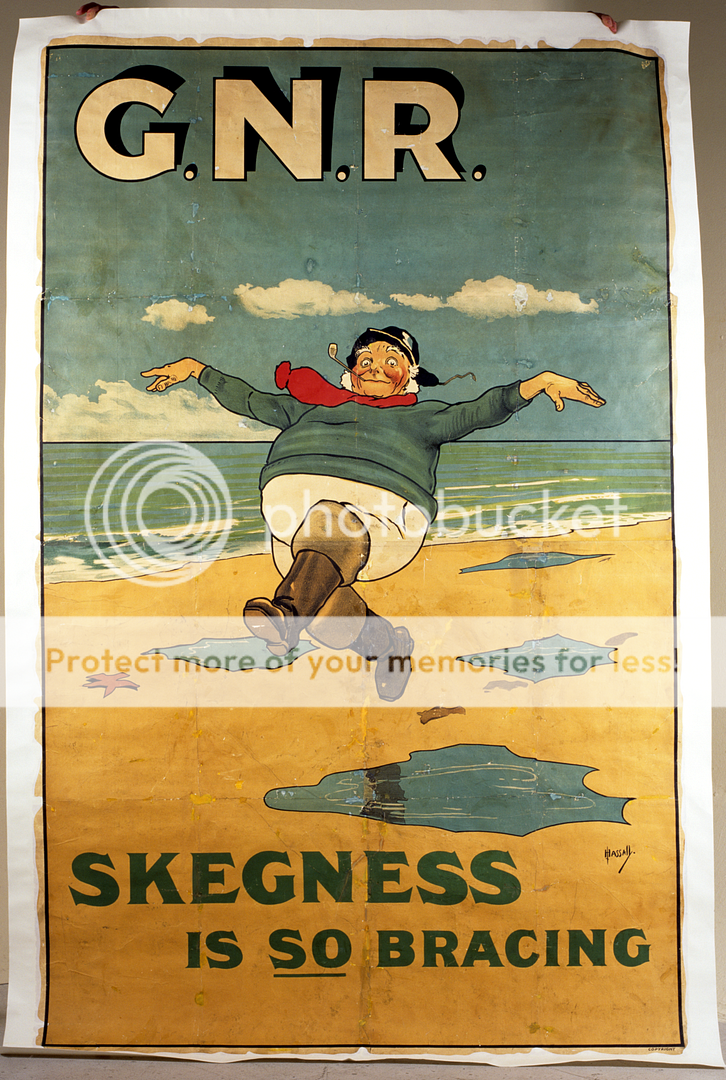
During any British bank holiday weekend, the more adventurous(or more deluded) members of the population rush to the nearest seaside resort like lemmings. Here, they then sit Canute-like, shivering behind wind-breaks, (known with misleading optimism as sun-traps), defying the weather with the famous British Dunkirk spirit, and with upper-lips frozen by a blitz of winds blowing across the Irish or North Sea. Using an adjective more commonly associated with the activities of pulp fiction strong-arm men than with the pursuit of pleasure, one English resort famously sold itself with the slogan, Skegness is SO bracing. Englishmen, along with mad dogs, may indeed go out in the mid-day sun, but even the most rabid of canines would not think a semi-polluted, pebble-dashed, litter-strewn, gale-swept, rain-blasted strip of land between freezing grey seas and a row of slot-machine arcades was a great place to spend an afternoon on a cold day in May.
After a great summery start to the week, when pub beer-gardens were packed with half-dressed adults and screaming unattended kids, and the most tasteless of warm-weather togs were donned with gay abandon, the weather (typically) turned sour as the weekend approached, and the ancient adage to never cast a clout til May is out was heard on many a wrinkled and ancient lip (very much in a I told you so kind of way).
While large numbers of people had certainly made plans to head to the coast, leading to media predictions of traffic-jam misery and chaos, (which only seems to encourage people here), Spring Bank Holiday, or what used to be known as Whitsuntide, is also a time of fairs and fetes and car-boot sales! Unfortunately, for the most part, these largely uncovered events are as much affected by the miserable weather as granny sat shivering in her deck-chair on Bridlington sea-front. Perhaps more so in fact, since they are more likely to throw in the towel and admit defeat.
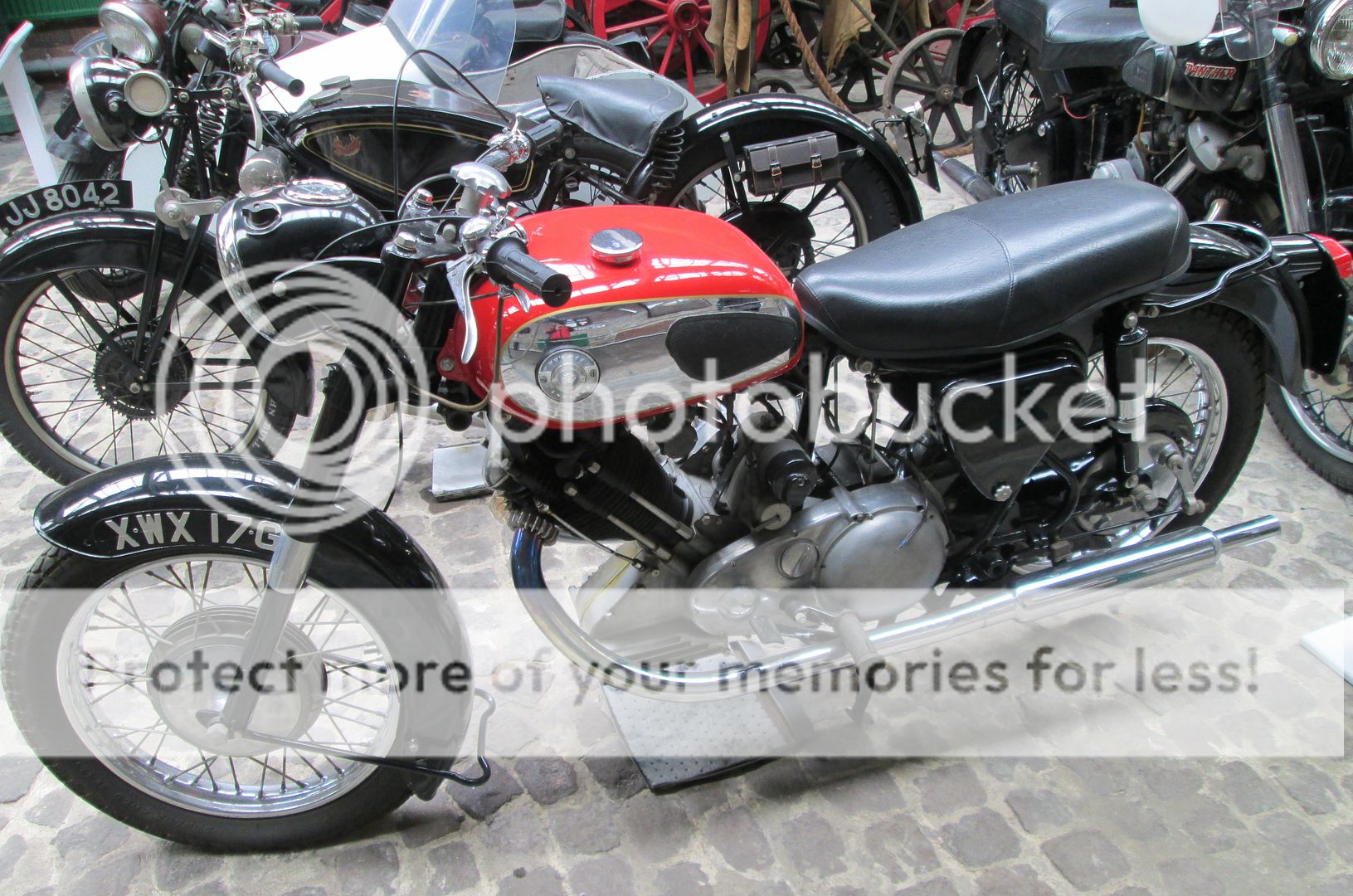
Saturdays driving rain led me to cancel my plans to go walking on the moors, and to visit Bradford Industrial Museum instead, which turned out to be very interesting. There were lots of old engines, and vintage locally-made vehicles, including the legendary Panther motorcycle, with the single pot which fired every third lamp-post. By Sunday however, despite the continuation of the inclement weather, and still suffering from symptoms of Quest withdrawal, I was itching to go a-hunting for pointy treasure. So, with Ned the Kiwi blacksmith, who was on the look-out for old tools, I set off for the previously-visited car-boot sale at Ripley.
Ned is a huge man, not tall, but so round, with his chest puffing out immediately below his chin, that he looks like a gigantic bespectacled human owl. As we drove through the spectacular countryside of the Harewood Estate, in the car for which Ned undoubtedly has a name, the gentle giant chattered incessantly about his latest experiments with Damascus steel, seemingly anxious to unburden himself to someone, who unlike most of his friends, is actually interested in the subject. Eventually we arrived at the pretty North Yorkshire village, and at the allotted field on its outskirts, where Ripley Cricket Club host their monthly charity fund-raiser. Ned paused for breath.
We pulled into the car-park and paid the nominal admission fee, but were disappointed to see that the number of sellers was less than normal, undoubtedly due to the poor weather. As I walked round and chatted to the sellers, and to the other punters, I heard reports of other car-boot sales being cancelled altogether.
I spotted this Hawkbill, a special edition of one of the Action Knife range Ibbersons launched in the 1970s, on a stall run by an elderly couple. As I picked it up, the gentleman commented, A good man likes a good knife. He repeated the statement, telling me, I never leave home without mine. Nor me, I told him, showing him the CharlowI was carrying, and purchasing the knife for a few pounds.

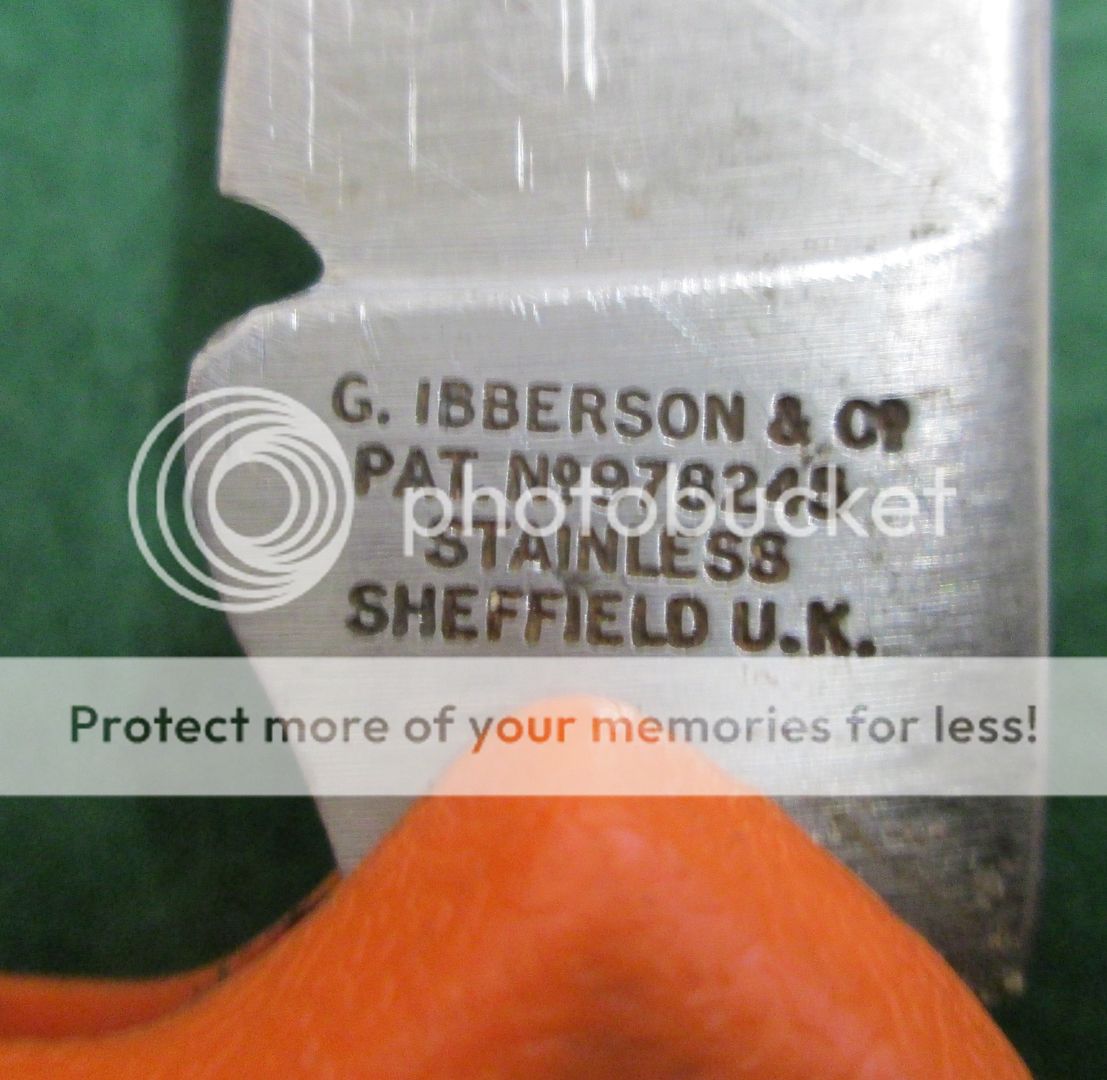
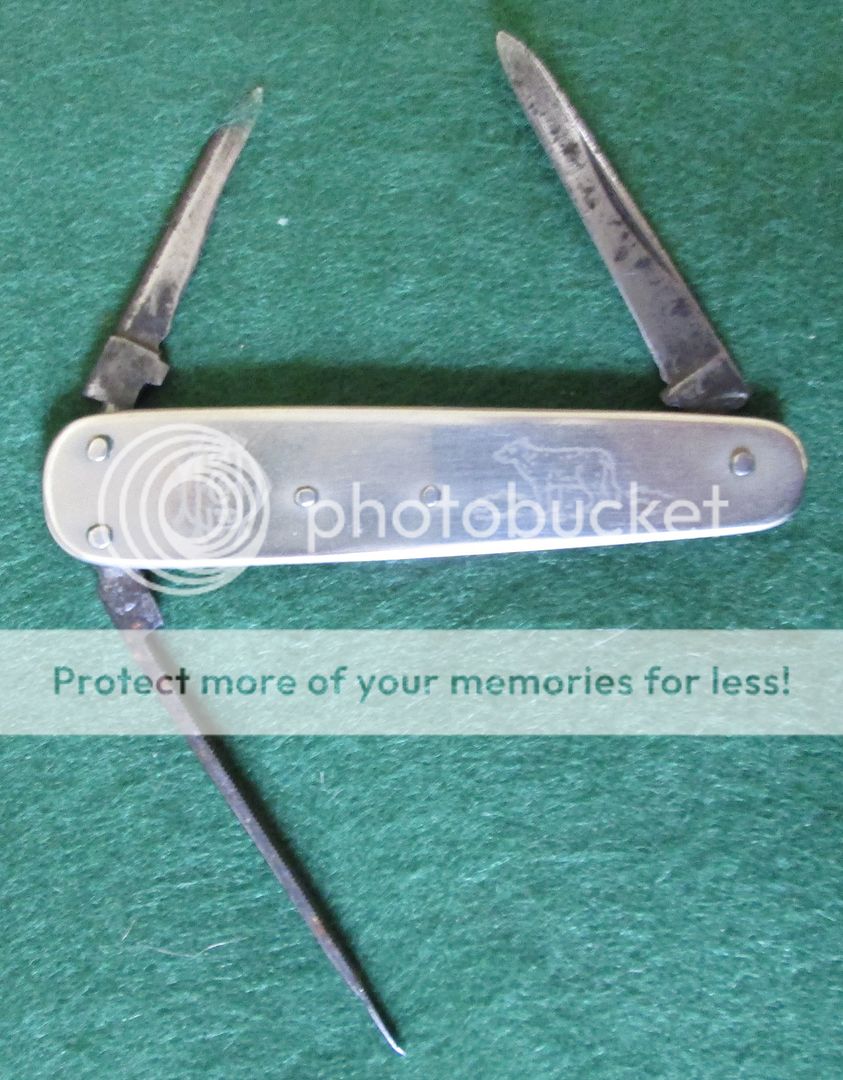
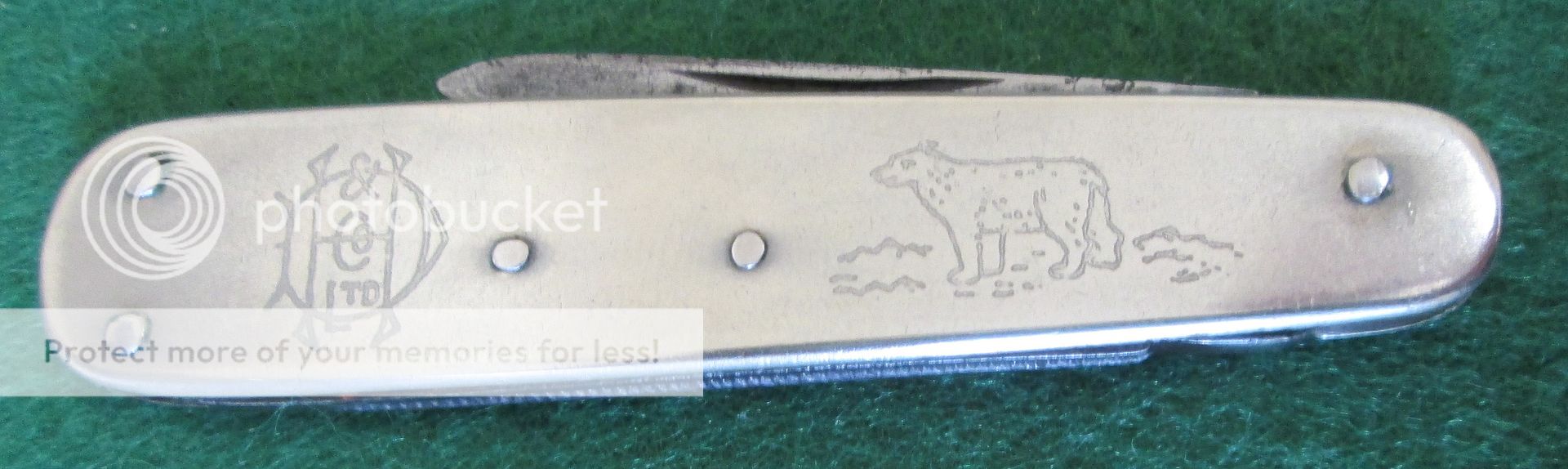
On another stall, I came across this small Sheffield Lobster. Unfortunately, its hard to make out the cutlers name on the tang stamp, though it could be Taylor. I dont know if the symbol and the picture of what looks like a bear are connected to the cutler or not.
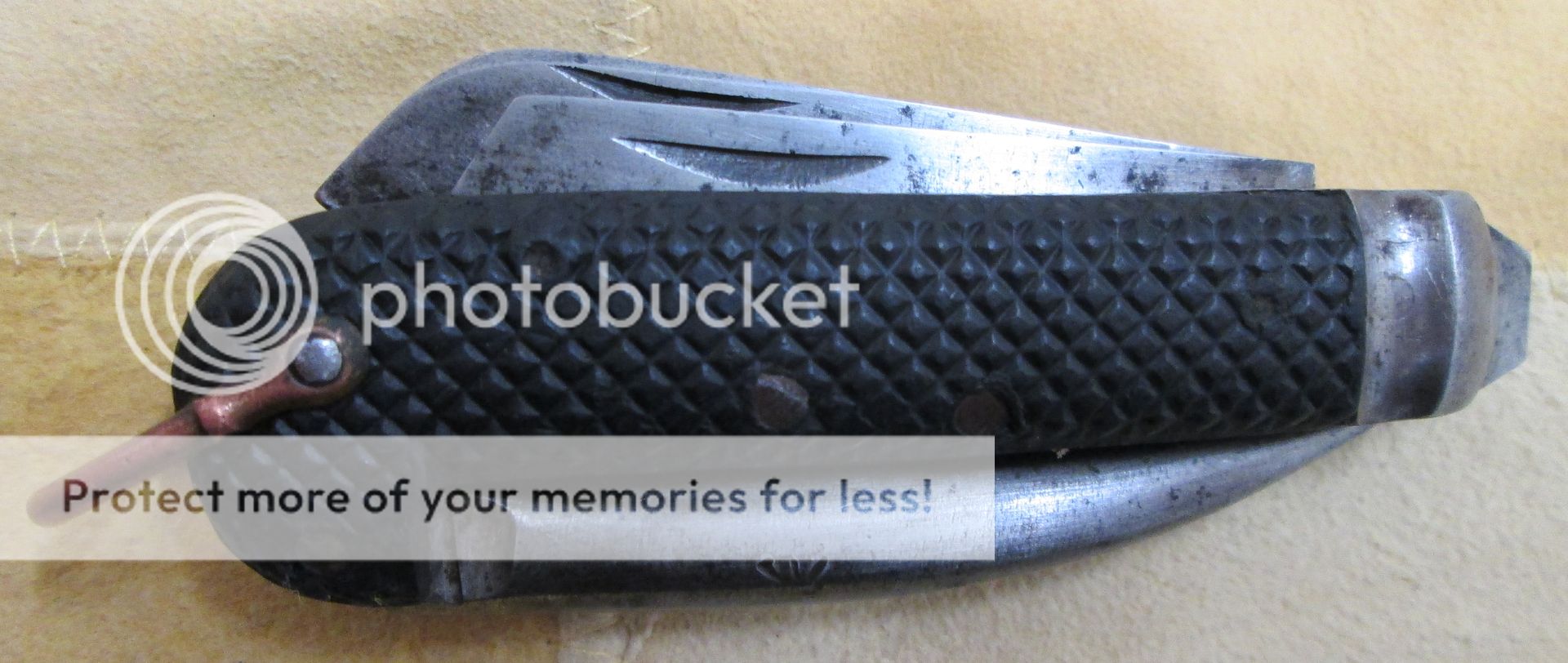
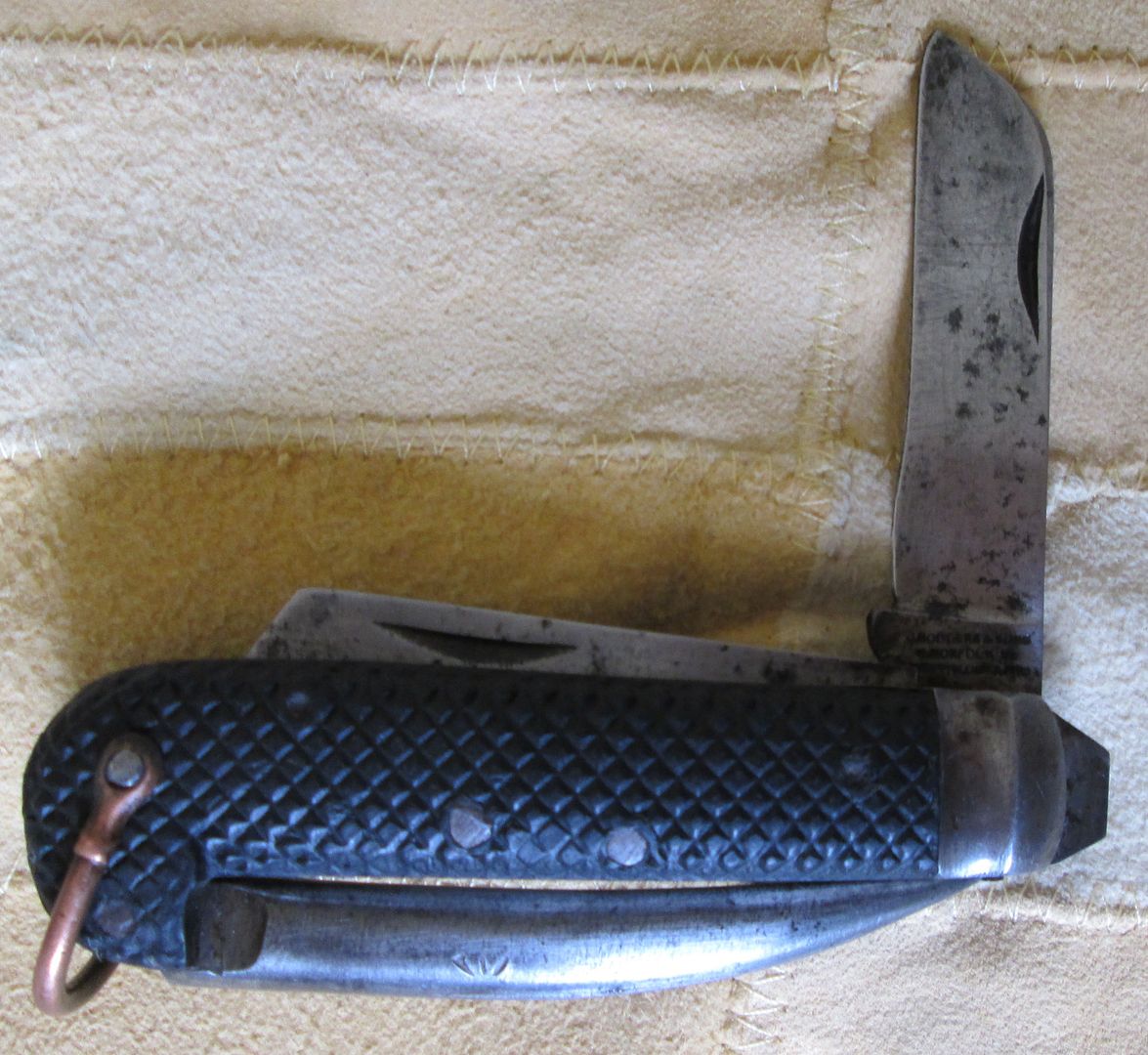
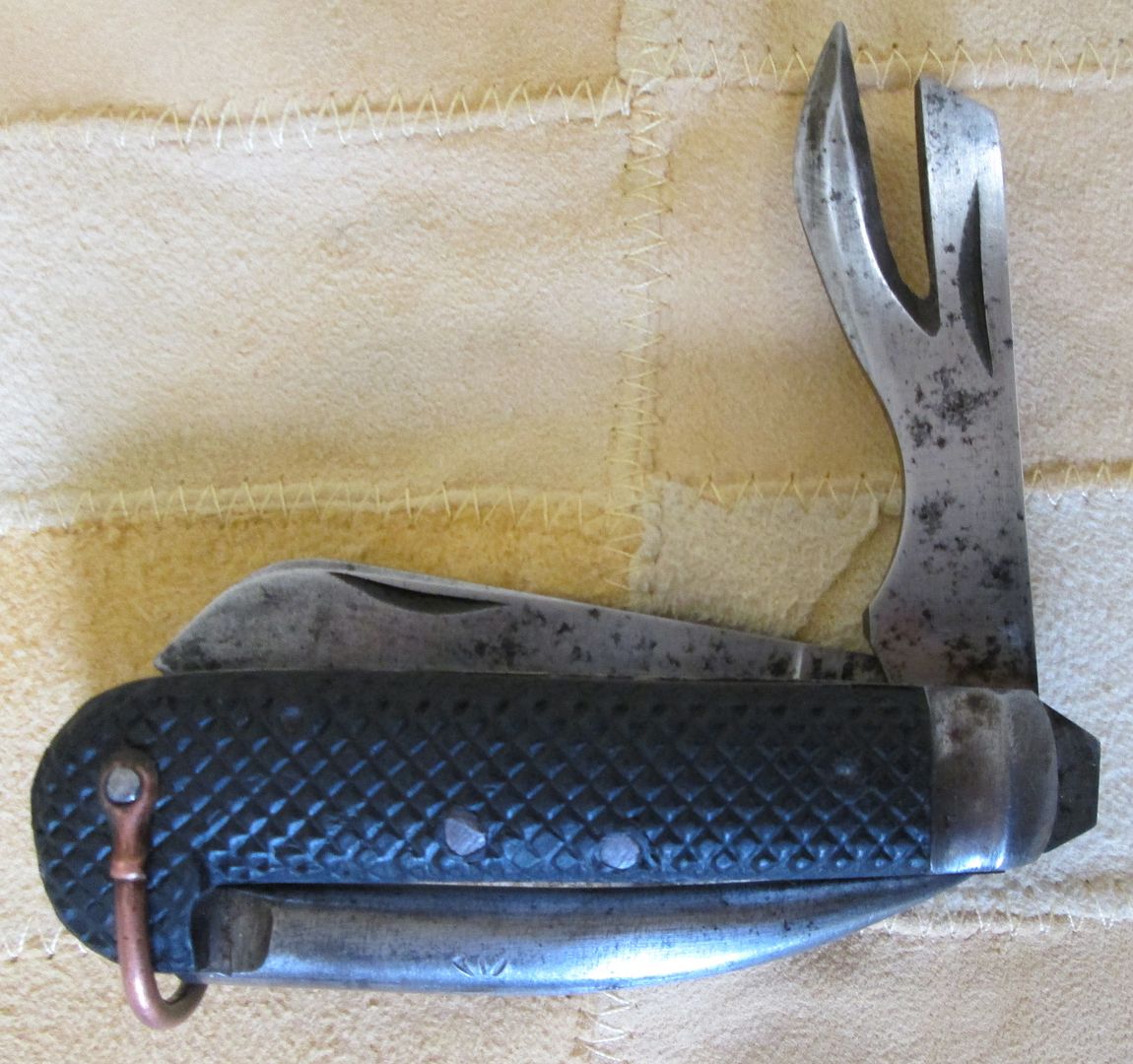
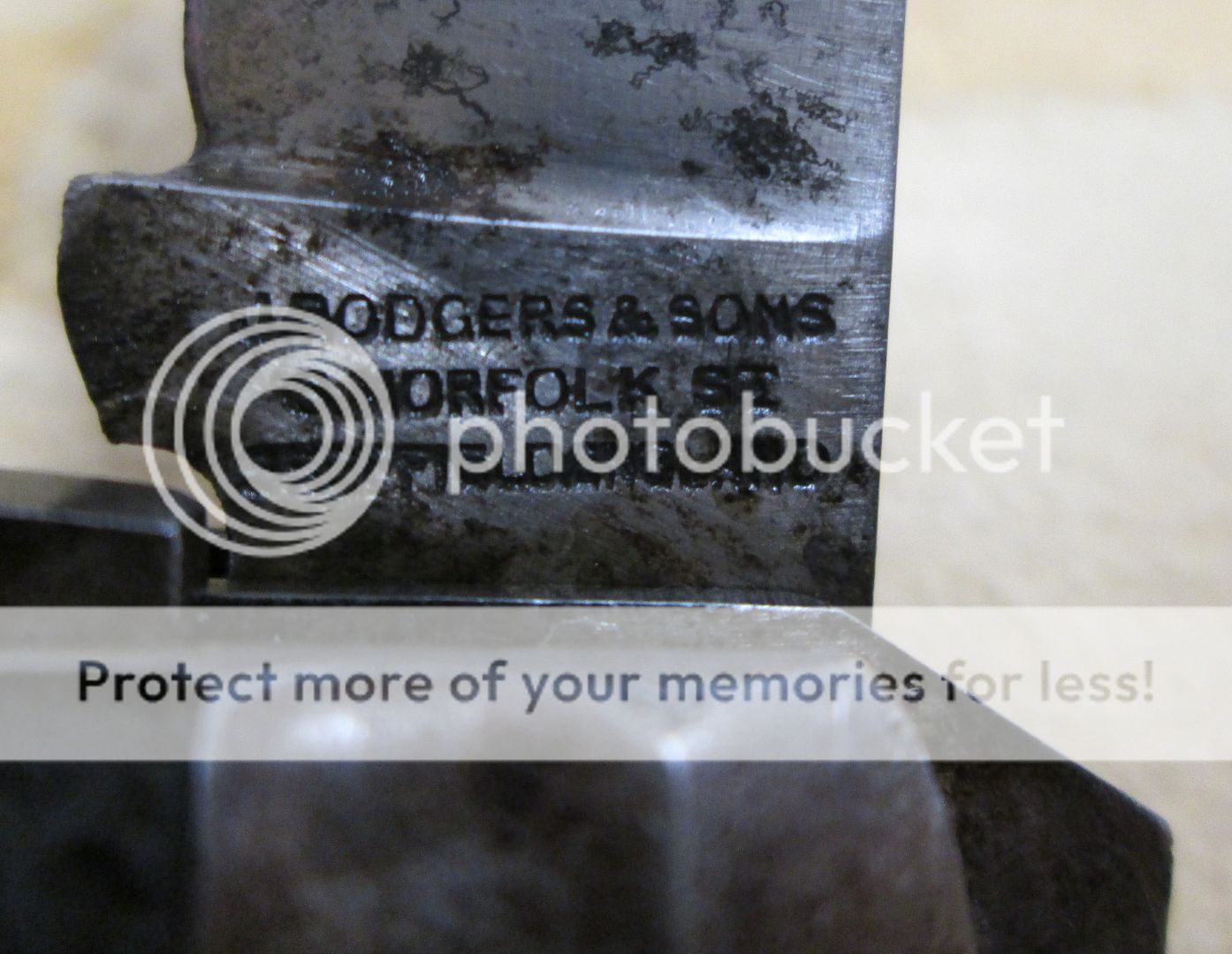
I spotted a chap I usually buy from, and excitedly went to look in his display case. I immediately noticed this British Army clasp knife, which it turned out was made by Joseph Rodgers in 1939, and quite a good find I think.


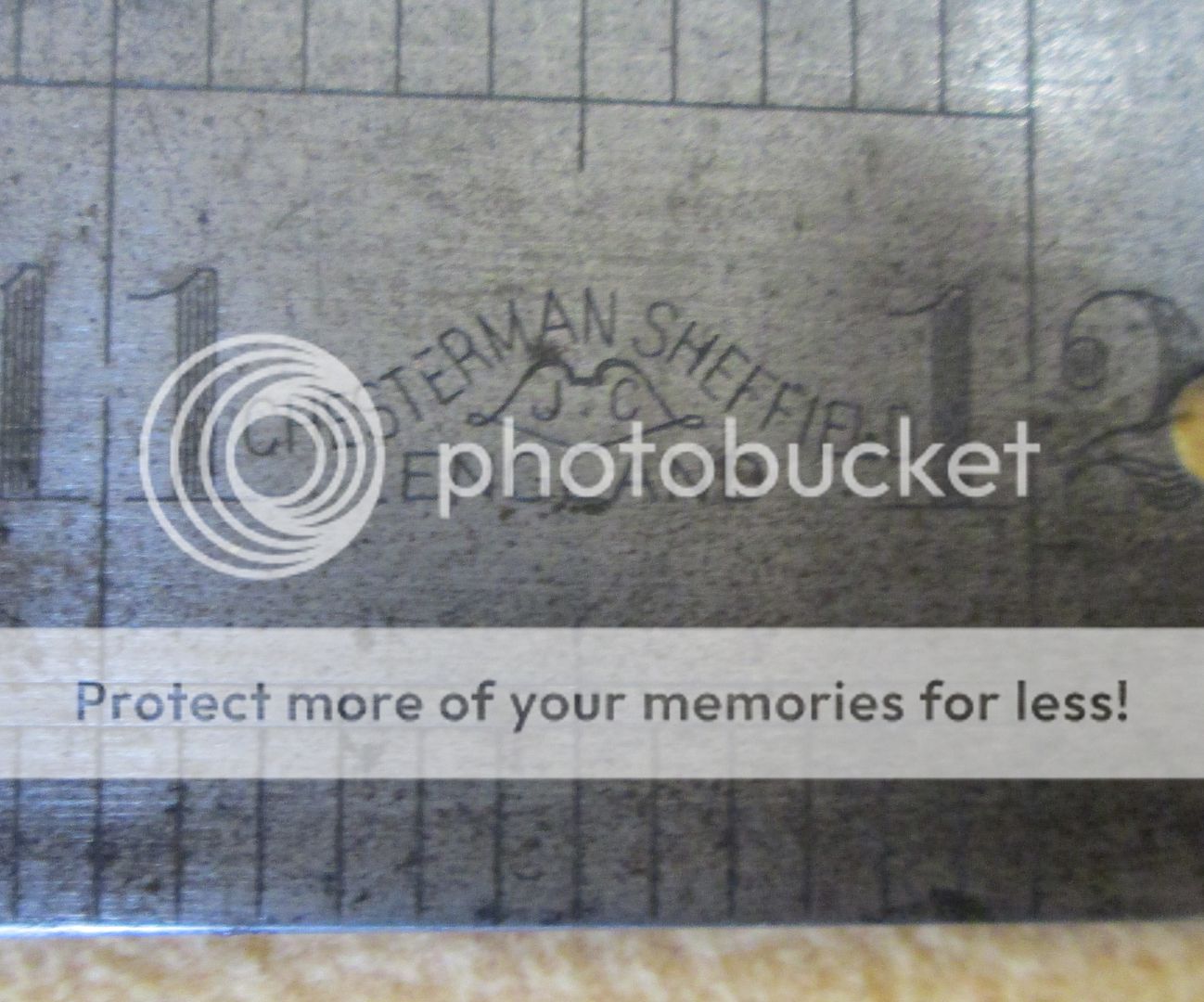
I also picked up a few other bits: An old Chestermanssteel ruler, a church-key, and an old bit of antler, which had previously handled one of those crumb pans that butlers used to sweep detritus from the tables of the rich to the impoverished masses below. Unfortunately, the piece of stag has the broken tang of the implement still embedded, and Im finding it rather difficult to remove.

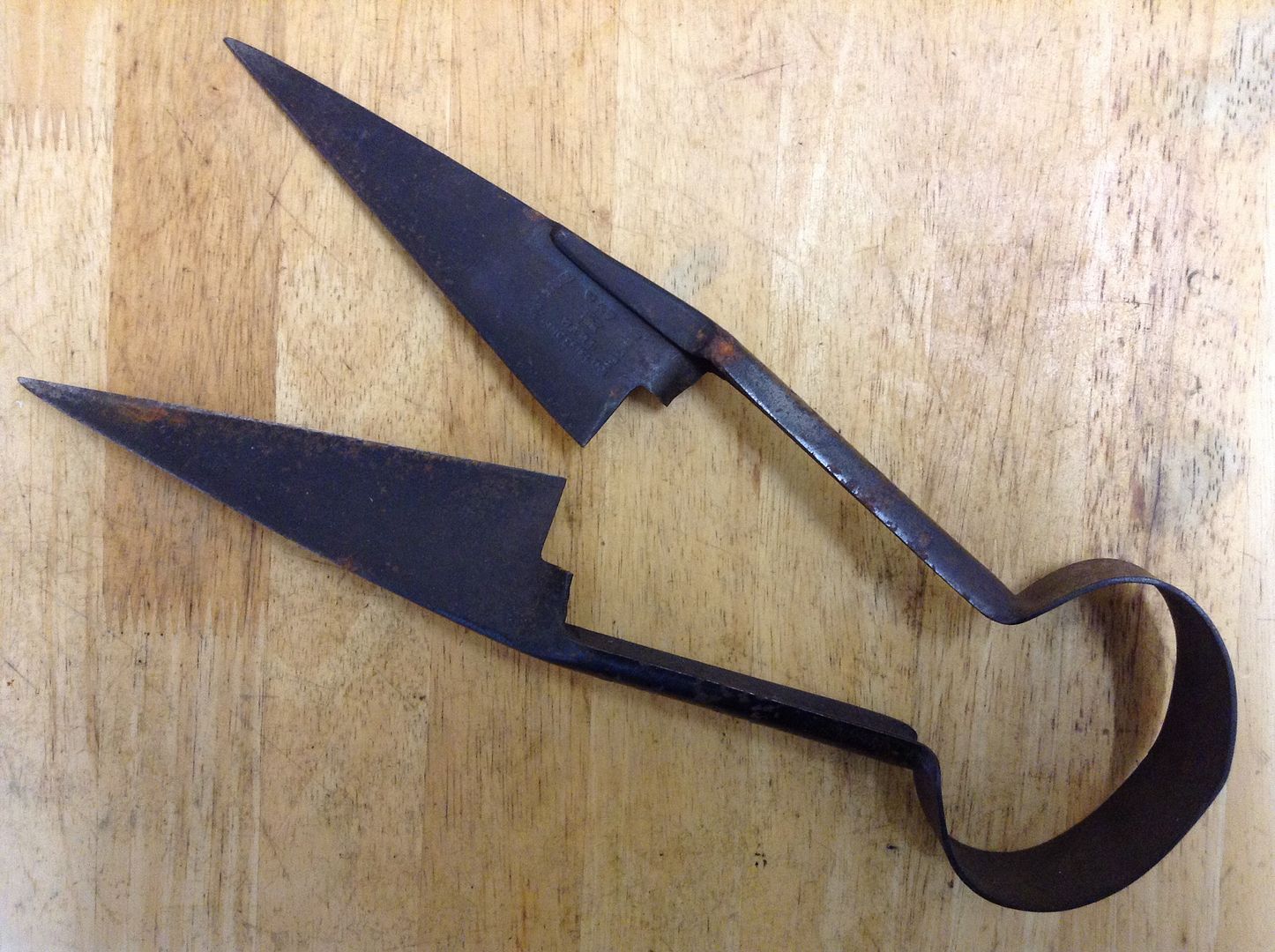
I also bought some old Sheffield-made sheep shears for Ned. The chap on the stall was surprised when I knew what they were, even more so when I was able to chat about them, so he let me have them at a low price, saying he wanted them to go to a good home. I candidly told him I was buying them for my Kiwi mate, but when I offered them to Ned later, he declined to take them, saying they reminded him of being sent to a farm for punishment as a teenager.


I did not get the chance to find anything further, as at this point the heavens opened, and amid a quite torrential downpour, stall-holders began to cover their wares or pack-up altogether, and punters scurried for their cars or to the cricket pavilion. Ned, who I had separated from soon after we entered the field, was easy enough to spot as he headed jovially back towards the car with his arms full of various tools.
Since it looked like the rain was staying put, and the boot-sale was now all but abandoned, Ned and I decided to go for an early bite to eat, and then venture further up the River Nidd to the small North Yorkshire town of Pateley Bridge. We had lunch in a quiet pub on the way, where on a previous visit, a gentleman at the bar had casually confided that he worked at a top-secret spy-base nearby, pointing out its location up on the hillside.
Three consecutive days of sunshine usually herald press reports about a looming drought and calls for a hosepipe-ban, along with boasting headlines favourably comparing whichever British town has the highest recorded momentary freak temperature to a hot-sounding place, which just happens to be in the southern hemisphere - and thus in the middle of winter! London Hotter Than Rio!! was this weeks example.

During any British bank holiday weekend, the more adventurous(or more deluded) members of the population rush to the nearest seaside resort like lemmings. Here, they then sit Canute-like, shivering behind wind-breaks, (known with misleading optimism as sun-traps), defying the weather with the famous British Dunkirk spirit, and with upper-lips frozen by a blitz of winds blowing across the Irish or North Sea. Using an adjective more commonly associated with the activities of pulp fiction strong-arm men than with the pursuit of pleasure, one English resort famously sold itself with the slogan, Skegness is SO bracing. Englishmen, along with mad dogs, may indeed go out in the mid-day sun, but even the most rabid of canines would not think a semi-polluted, pebble-dashed, litter-strewn, gale-swept, rain-blasted strip of land between freezing grey seas and a row of slot-machine arcades was a great place to spend an afternoon on a cold day in May.
After a great summery start to the week, when pub beer-gardens were packed with half-dressed adults and screaming unattended kids, and the most tasteless of warm-weather togs were donned with gay abandon, the weather (typically) turned sour as the weekend approached, and the ancient adage to never cast a clout til May is out was heard on many a wrinkled and ancient lip (very much in a I told you so kind of way).
While large numbers of people had certainly made plans to head to the coast, leading to media predictions of traffic-jam misery and chaos, (which only seems to encourage people here), Spring Bank Holiday, or what used to be known as Whitsuntide, is also a time of fairs and fetes and car-boot sales! Unfortunately, for the most part, these largely uncovered events are as much affected by the miserable weather as granny sat shivering in her deck-chair on Bridlington sea-front. Perhaps more so in fact, since they are more likely to throw in the towel and admit defeat.

Saturdays driving rain led me to cancel my plans to go walking on the moors, and to visit Bradford Industrial Museum instead, which turned out to be very interesting. There were lots of old engines, and vintage locally-made vehicles, including the legendary Panther motorcycle, with the single pot which fired every third lamp-post. By Sunday however, despite the continuation of the inclement weather, and still suffering from symptoms of Quest withdrawal, I was itching to go a-hunting for pointy treasure. So, with Ned the Kiwi blacksmith, who was on the look-out for old tools, I set off for the previously-visited car-boot sale at Ripley.
Ned is a huge man, not tall, but so round, with his chest puffing out immediately below his chin, that he looks like a gigantic bespectacled human owl. As we drove through the spectacular countryside of the Harewood Estate, in the car for which Ned undoubtedly has a name, the gentle giant chattered incessantly about his latest experiments with Damascus steel, seemingly anxious to unburden himself to someone, who unlike most of his friends, is actually interested in the subject. Eventually we arrived at the pretty North Yorkshire village, and at the allotted field on its outskirts, where Ripley Cricket Club host their monthly charity fund-raiser. Ned paused for breath.
We pulled into the car-park and paid the nominal admission fee, but were disappointed to see that the number of sellers was less than normal, undoubtedly due to the poor weather. As I walked round and chatted to the sellers, and to the other punters, I heard reports of other car-boot sales being cancelled altogether.
I spotted this Hawkbill, a special edition of one of the Action Knife range Ibbersons launched in the 1970s, on a stall run by an elderly couple. As I picked it up, the gentleman commented, A good man likes a good knife. He repeated the statement, telling me, I never leave home without mine. Nor me, I told him, showing him the CharlowI was carrying, and purchasing the knife for a few pounds.


On another stall, I came across this small Sheffield Lobster. Unfortunately, its hard to make out the cutlers name on the tang stamp, though it could be Taylor. I dont know if the symbol and the picture of what looks like a bear are connected to the cutler or not.


I spotted a chap I usually buy from, and excitedly went to look in his display case. I immediately noticed this British Army clasp knife, which it turned out was made by Joseph Rodgers in 1939, and quite a good find I think.


I also picked up a few other bits: An old Chestermanssteel ruler, a church-key, and an old bit of antler, which had previously handled one of those crumb pans that butlers used to sweep detritus from the tables of the rich to the impoverished masses below. Unfortunately, the piece of stag has the broken tang of the implement still embedded, and Im finding it rather difficult to remove.


I also bought some old Sheffield-made sheep shears for Ned. The chap on the stall was surprised when I knew what they were, even more so when I was able to chat about them, so he let me have them at a low price, saying he wanted them to go to a good home. I candidly told him I was buying them for my Kiwi mate, but when I offered them to Ned later, he declined to take them, saying they reminded him of being sent to a farm for punishment as a teenager.


I did not get the chance to find anything further, as at this point the heavens opened, and amid a quite torrential downpour, stall-holders began to cover their wares or pack-up altogether, and punters scurried for their cars or to the cricket pavilion. Ned, who I had separated from soon after we entered the field, was easy enough to spot as he headed jovially back towards the car with his arms full of various tools.
Since it looked like the rain was staying put, and the boot-sale was now all but abandoned, Ned and I decided to go for an early bite to eat, and then venture further up the River Nidd to the small North Yorkshire town of Pateley Bridge. We had lunch in a quiet pub on the way, where on a previous visit, a gentleman at the bar had casually confided that he worked at a top-secret spy-base nearby, pointing out its location up on the hillside.
Last edited:


 But I do have to admit the British stuff does have a feel that others don't. Great old cars and bikes. B.S.A., Norton, Matchless, Royal Enfield( the real ones, not the made in India things!). In the very late 1950's and early 1060's, mom had a little Hillman Minx that she loved, until an idiot nailed her at a stop light and totaled it from under her. Actually a great running car in spite of the Lucas electrical system. And British firearms were always a class act!!! There was a saying in WW1, that the American's had the best target rifle with the Springfield, the Germans had the best hunting rifle with the Mouser 98, but the Brits had the best battle rifle with the Enfield 303. Having shot all three, I'd have to agree.
  I used to have a Triumph Tiger back in the late 70's - I'm afraid we rarely have the weather for enjoyable biking though!


